Description
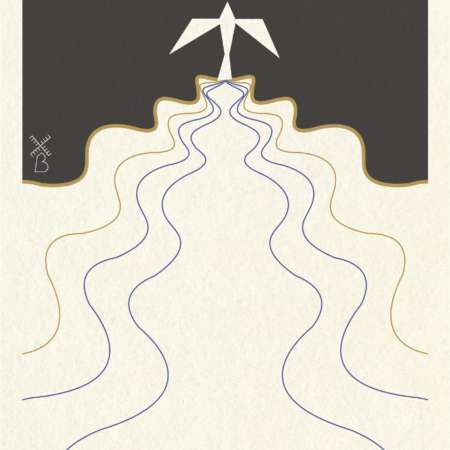
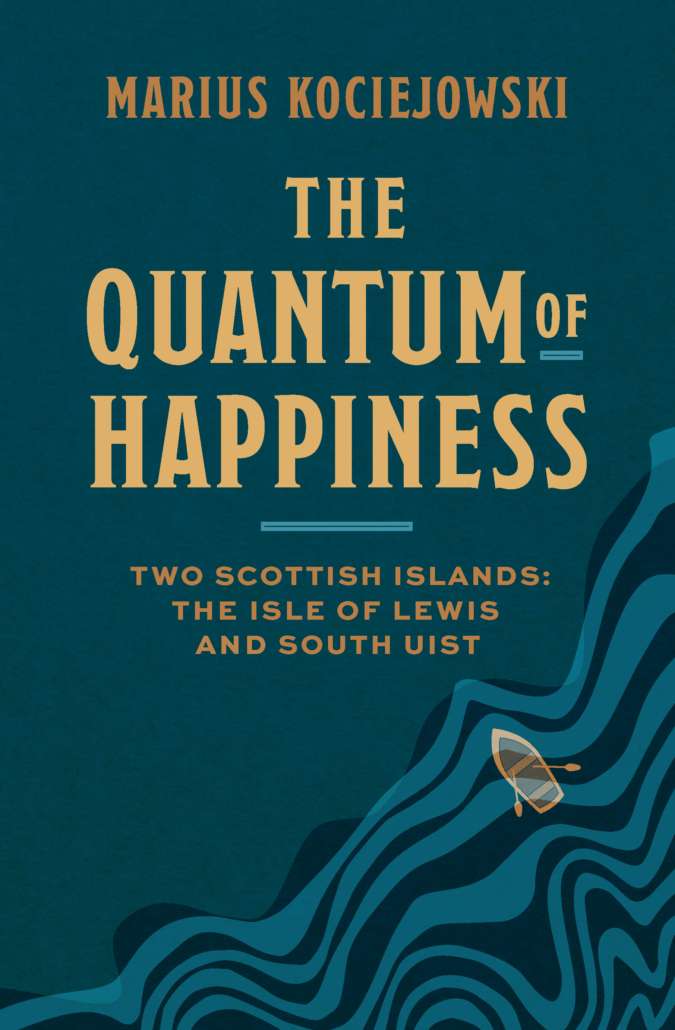
An unconventional travelogue of three journeys taken to the Isle of Lewis and the South Uist in the Hebrides, taking the reader through the lives of people, past and present, while at the same time placing them within the context of Gaelic culture, religion, and local superstition.
The islands of the Outer Hebrides have long fostered a culture outside of time, a culture since eroded by the Highland Clearances and the suppression of Gaelic. But even now, in this age of electricity, mass media, smartphones, and the overwhelming dominance of the English language, a desire still lingers among most islanders to both tell and be told stories, a desire as ancient as oatcakes.
Marius Kociejowski ranges across the islands of Lewis and South Uist exploring the faith, language, and histories of these last outposts of a traditional Gaelic culture that exists here as it does nowhere else. Part history, part travelogue, The Quantum of Happiness is a book which, like its author, abhors a straight line, but in straying off the main path, guides the reader to unexpected places, proving that even the smallest of islands can hold entire worlds within them.
Praise for The Quantum of Happiness
“I have read many books on the Hebridean islands over the years but this is the freshest and most stimulating of all. It is a rich kaleidoscope survey written from time to time in almost poetic prose which combines travelogue, history, culture, religion, sociology, folk beliefs and much more besides.”
—T.M. Devine, author of The Scottish Nation: A Modern History
Praise for Marius Kociejowski
“Marius Kociejowski is one of life’s great questioners [and] The Serpent Coiled in Naples takes on some of the largest questions that come with searching for this stupendous city’s soul . . . The experience is more of an intellectual joyride than a standard history.”
—Claudia Roth Pierpont, New Yorker
“One of the engines powering [Kociejowski’s] writing is a poet’s relish for language, be it modern street lingo or ‘technically flawless’ fifteenth-century pornographic verse . . . The other is an omnivorous erudition.”
—Times Literary Supplement
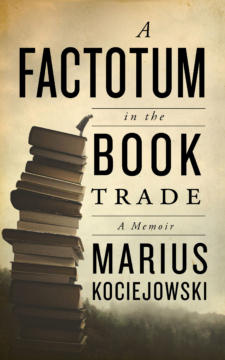
“A Factotum in the Book Trade is memorable because a) it’s well-written, and b) it’s close in touch with the books . . . It’s an account of a life well, happily and grouchily lived.”
—Dwight Garner, New York Times
“An accomplished poet and beguiling essayist . . . [Kociejowski is] spiky and forthright in his views.”
—Michael Dirda, Washington Post
“Eccentric, meandering . . . fascinating.”
—The New Criterion
“It is a witty tribute to a disappearing niche industry, and its wistful reflections complement its sense of passion for unexpected troves.”
—Foreword Reviews