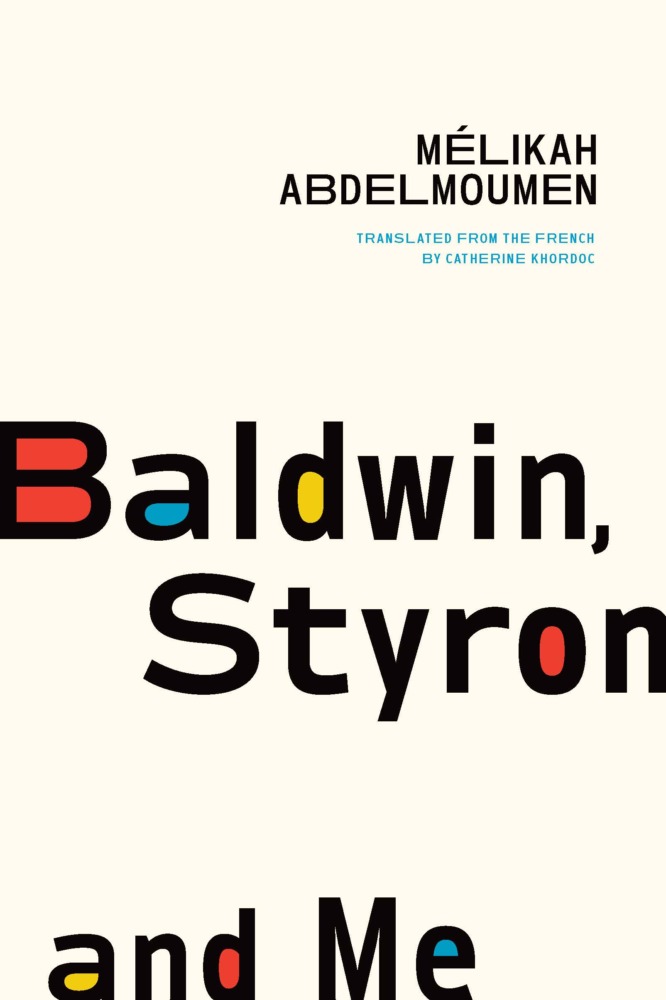
We’re thrilled to share that this morning, on Thursday, October 23, the longlist for the Andrew Carnegie Medal for Excellence in Nonfiction was announced, and included Baldwin, Styron, and Me by Mélikah Abdelmoumen, translated by Catherine Khordoc. The full longlist can be viewed here.
The shortlist will be announced on November 18, and the two medal winners will be announced on January 27, 2026.
The Andrew Carnegie Medals for Excellence in Fiction and Nonfiction, established in 2012, recognize the best fiction and nonfiction books for adult readers published in the US in the previous year and serve as a guide to help adults select quality reading material. They are the first single-book awards for adult books given by the American Library Association and reflect the expert judgment and insight of library professionals who work closely with adult readers. The winning authors (one for fiction, one for nonfiction) receive a $5,000 cash award.
Longlisted for the 2026 Andrew Carnegie Medal for Excellence in Nonfiction • Finalist for the 2025 Governor General’s Literary Award in Translation • Finalist for the 2025 John Glassco Translation Prize
In 1961, James Baldwin spent several months in William Styron’s guest house. The two wrote during the day, then spent evenings confiding in each other and talking about race in America. During one of those conversations, Baldwin is said to have convinced his friend to write, in first person, the story of the 1831 slave rebellion led by Nat Turner. The Confessions of Nat Turner was published to critical acclaim, winning the Pulitzer Prize in 1968, and also creating outrage in part of the African American community.
Decades later, the controversy around cultural appropriation, identity, and the rights and responsibilities of the writer still resonates. In Baldwin, Styron, and Me, Mélikah Abdelmoumen considers the writers’ surprising yet vital friendship from her standpoint as a racialized woman torn by the often unidimensional versions of her identity put forth by today’s politics and media. Considering questions of identity, race, equity, and the often contentious public debates about these topics, Abdelmoumen works to create a space where the answers are found by first learning how to listen—even in disagreement.
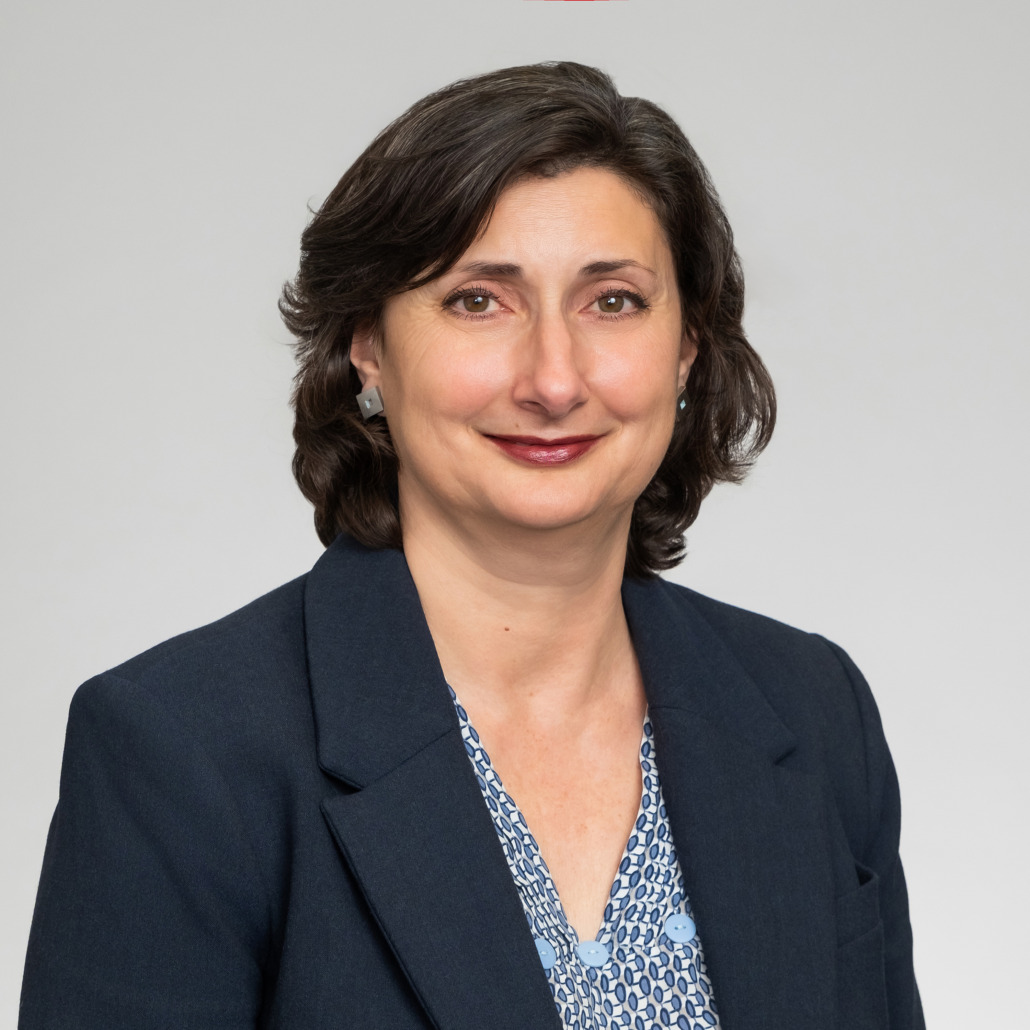
Mélikah Abdelmoumen was born in Chicoutimi in 1972. She lived in Lyon, France, from 2005 to 2017. She holds a PhD in literary studies from the Université de Montréal and has published many articles, short stories, novels, and essays, including Les désastrées (2013), Douze ans en France (2018), and Petite-Ville (2024). She worked as an editor with the Groupe Ville-Marie Littérature in Montreal until 2021. She was the editor-in-chief of Lettres québécoises, a Québec literary magazine, from 2021 to 2024. Baldwin, Styron, and Me is her tenth book (and the first to be translated).
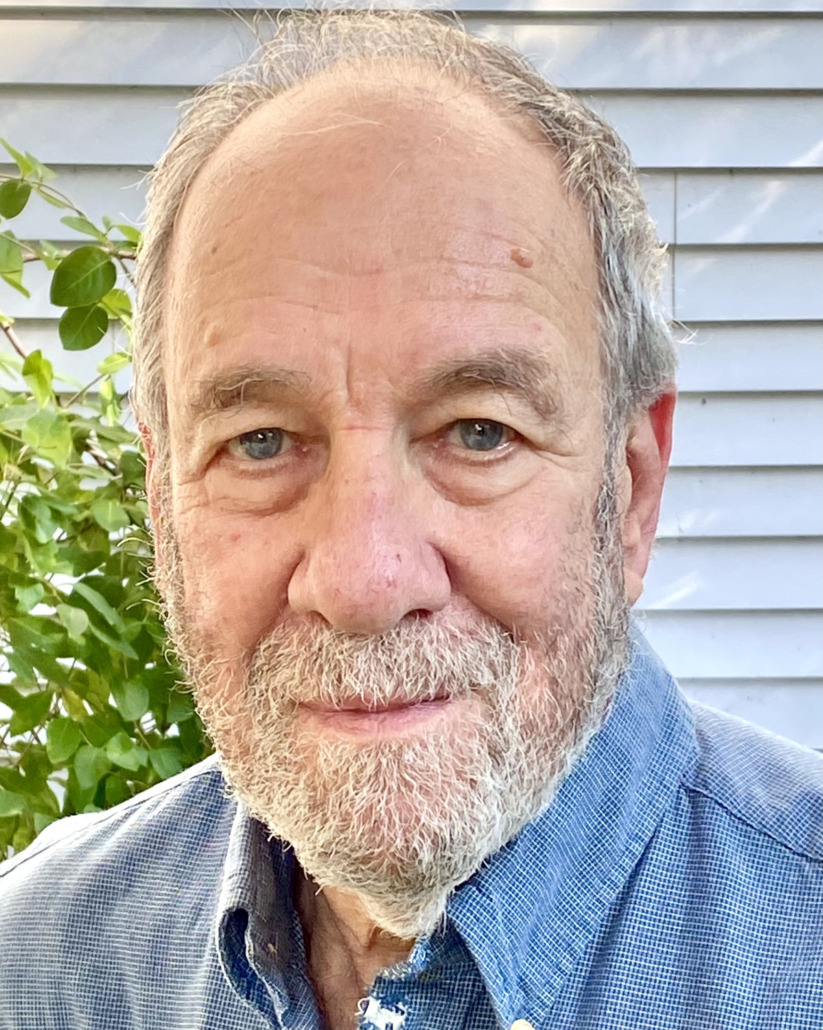
Catherine Khordoc is a professor of French and Canadian Studies at Carleton University in Ottawa. She is the author of Tours et détours: Le mythe de Babel dans la littérature contemporaine (University of Ottawa Press, 2012). She also considers herself in many ways a frontier-dweller.
https://www.biblioasis.com/wp-content/uploads/2025/10/Baldwin_Carnegie.jpg8002000biblioasishttp://biblioasis.com/wp-content/uploads/2014/12/BIBLIOASIS-Logo-500x500-White-300x300.pngbiblioasis2025-10-23 15:40:402025-10-23 15:40:41BALDWIN, STYRON, AND ME longlisted for the 2026 Andrew Carnegie Medal for Excellence in Nonfiction
View the full finalists announcement on the GG Books website here.
The Canada Council for the Arts funds, administers and actively promotes the Governor General’s Literary Awards (GGBooks) which celebrate literature and inspire people to read books by creators from Canada. The award provides finalists and winners with valuable recognition from peers and readers across the country. The monetary award for finalists is $1,000, and $25,000 for each winning book.
The winners of each category will be announced on Thursday, November 6.
Finalist for the 2025 Governor General’s Literary Award in Translation • Finalist for the 2025 John Glassco Translation Prize
In 1961, James Baldwin spent several months in William Styron’s guest house. The two wrote during the day, then spent evenings confiding in each other and talking about race in America. During one of those conversations, Baldwin is said to have convinced his friend to write, in first person, the story of the 1831 slave rebellion led by Nat Turner. The Confessions of Nat Turner was published to critical acclaim, winning the Pulitzer Prize in 1968, and also creating outrage in part of the African American community.
Decades later, the controversy around cultural appropriation, identity, and the rights and responsibilities of the writer still resonates. In Baldwin, Styron, and Me, Mélikah Abdelmoumen considers the writers’ surprising yet vital friendship from her standpoint as a racialized woman torn by the often unidimensional versions of her identity put forth by today’s politics and media. Considering questions of identity, race, equity, and the often contentious public debates about these topics, Abdelmoumen works to create a space where the answers are found by first learning how to listen—even in disagreement.
Catherine Khordoc is a professor of French and Canadian Studies at Carleton University in Ottawa. She is the author of Tours et détours: Le mythe de Babel dans la littérature contemporaine (University of Ottawa Press, 2012). She also considers herself in many ways a frontier-dweller.
Finalist for the 2025 Governor General’s Literary Award in Translation • A Walrus Best Book of Fall 2024 • A Globe 100 Best Book of 2024 • Winner of the 2023 Prix Médicis, Prix Décembre, and Prix Ringuet
Céline Wachowski, internationally renowned architect and accidental digital-culture icon, unveils her plans for the Webuy Complex, her first megaproject in Montreal, her hometown. But instead of the triumph she anticipates in finally bringing her reputation to bear in her own city, the project is excoriated by critics, who accuse her of callously destroying the social fabric of neighborhoods, ushering in a new era of gentrification, and many even deadlier sins. When she is deposed as CEO of her firm, Céline must make sense of the charges against herself and the people in her elite circle. For the first time in danger of losing their footing, what fictions must they tell themselves to justify their privilege and maintain their position in the world that they themselves have built?
Moving fluidly between Céline’s perspective and the perspectives of her critics, and revealing both the ruthlessness of her methods and the brilliance of her aesthetic vision, May Our Joy Endure is a shrewd examination of the microcosm of the ultra-privileged and a dazzling social novel that depicts with razor-sharp acuity the terrible beauty of wealth, influence, and art.
Donald Winkler is a translator of fiction, non-fiction, and poetry. He is a three-time winner of the Governor General’s Literary Award for French-to-English translation. He lives in Montreal.
https://www.biblioasis.com/wp-content/uploads/2025/10/2025GG_Finalists.jpg8002000biblioasishttp://biblioasis.com/wp-content/uploads/2014/12/BIBLIOASIS-Logo-500x500-White-300x300.pngbiblioasis2025-10-21 12:30:242025-10-21 12:31:112025 Governor General’s Literary Award Finalists: BALDWIN, STYRON, AND ME and MAY OUR JOY ENDURE
Want to get new excerpts, musings, and more from The Bibliophile right away? Sign up for our weekly online newsletter here!
***
The introduction to Voices of Resistance: Diaries of Genocide
Last week another ceasefire was declared in Palestine. This is the third one in two years. I think we all hope this ceasefire will hold, but it is difficult to be certain if it will. In these past two years, we’ve seen countless photos and videos of people in pain, of bombs being dropped on innocent people, of cities in ruin, of Palestinians being starved and stripped of their humanity. It is hard to see all that death and destruction and not want to do something about it.
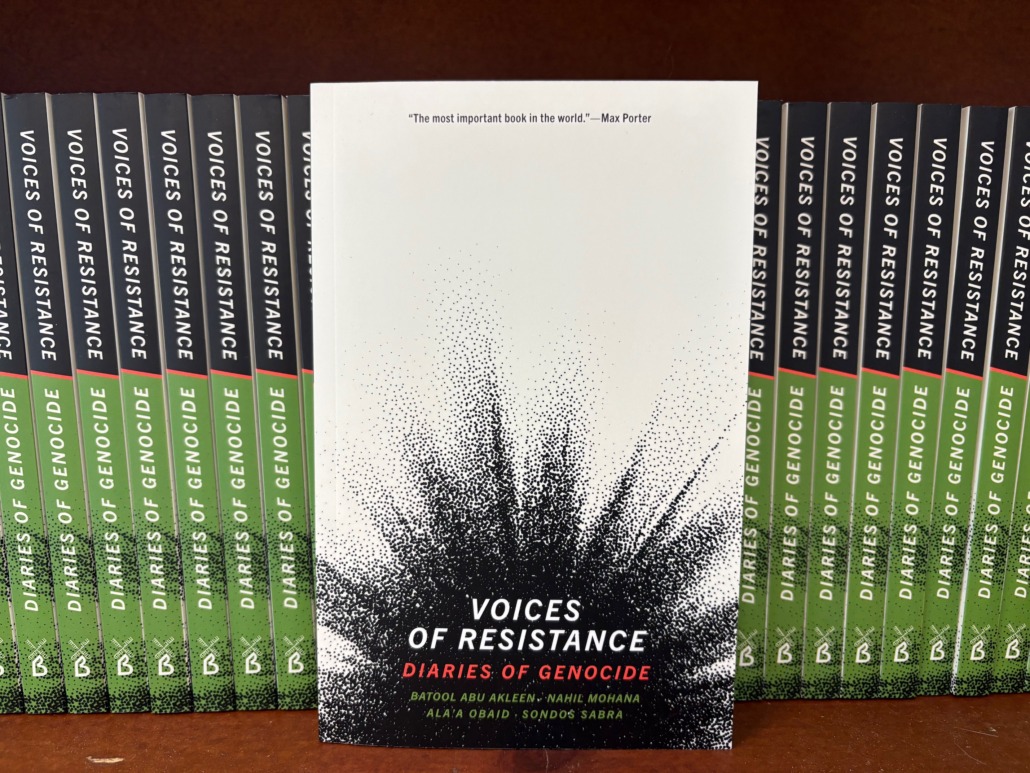
Three days ago, we published the North American edition of Voices of Resistance: Diaries of Genocide, a collection of diaries by Batool Abu Akleen, Nahil Mohana, Ala’a Obaid, and Sondos Sabra; four Palestinian women, all poets and writers, documenting their daily lives in Gaza from October 2023 to March 2025.
Their diaries provide a rare and intimate perspective, giving us an on-the-ground, real-time look at what it is like to live during a genocide. It is a beautifully written, devastating account filled with unimaginable heartbreaking moments and ordinary relatable ones. Faced with constant bombing and multiple displacements, it shows how they adapt and persevere with empathy and humour. Thoughts of fear and death mix with nostalgia for a more peaceful time and the practical, mundane tasks of life that must go on, as well as hope for the future. This is a book about resilience as a form of resistance. It is a reminder of the violence that happened, but also of their humanity and their refusal to be silenced or erased from history.
Below you’ll find the introduction to the collection written by Caryl Churchill. You can also read an excerpt from one of Sondos Sabra’s diaries in the Truthdig, and a new entry from her published yesterday in the Guardian. All the money we make from this book will go directly to the authors and their families. I hope you’ll consider buying a copy.
Ahmed, Publicist
Introduction to Voices of Resistance
by Caryl Churchill
We all know what’s happening in Gaza. Or we know something of it. Some people may not have thought about it before and imagine the trouble started when Hamas broke into Israel in October 2023. Others know more of the history of Palestine including, in relatively modern times, the British Empire, Zionism, the Nakba, the founding of Israel and the oppression and occupation that have gone on for 77 years.
But what very few of us know is what it’s like to be in Gaza. Though we can see it on our screens, we can’t go there. For many years it’s been almost impossible to visit friends or simply visit the place, like any other place, and almost impossible to leave what has effectively become a large prison. After October 2023, what we saw on our screens was heavily weighted towards the Israeli families who’d had hostages taken. Their characters and suffering were individualised while, as more and more Palestinians were being killed, Gazan sufferings were often just reported as numbers. We could learn more from Al Jazeera and sometimes from Channel 4. Even the BBC has recently begun to show what is happening, as people have become more and more incredulous and appalled.
Read the full starred review of Voices of Resistance from Publishers Weekly.
But with any long catastrophe, there’s a danger that those of us outside of it become numbed, or distracted by the ins and outs of our own lives. Whether it’s a war, an earthquake, or a famine, the watcher can begin to feel—however much they know it’s not true—that the suffering people are those suffering people; that it’s somehow not the same as if the bomb had fallen in our own street, or our own children had no water to drink. But for these four women the ins and outs of their lives are suddenly astonishingly changed and we can see and feel that.
History, of course, is often the victors’ story. Israel wants that story to be theirs and is quick to try to suppress others. In 2024, Comma, the [UK] publisher of this book, took a show of Palestinian readings to HOME arts centre in Manchester—it was cancelled because of Zionist protests then reinstated because of local sup-port. It went to Edinburgh and then to the Barbican, where extracts from some of these diaries were added, and where UK Lawyers for Israel labelled it ‘illegal’. Though so much else was happening to them, these readings meant something important to the writers: their voices were being heard.
Read an excerpt of Sondos Sabra’s diaries from Voices of Resistance in Truthdig.
Here is what it’s like to leave your home and leave again and again, be parted from your family, have a bomb fall next door, shells burst through the window, a tank attack you, lose your friend, lose children. And how ordinary things keep on at the same time, anxiety about an exam while under bombardment, and here, ordinary things change: sharing a bathroom with 30 people, queuing hours for bread, looking all day for an egg for a birthday cake, climbing over rubble as you walk down the street. Here are so many loves: for a strong father aged by war, a four-year-old sister helping make dough, a daughter playing games on a phone, a younger brother who likes to wear white and is seized and tortured, a childhood friend to laugh with, so many in each family. Here is food: the biscuit that crumbles like snow and later the food shortage, the boredom of peas. Here is a cat carried in a bag and the fat cats who have fed on rubbish and human corpses. And here is constant death: the big young man whose shroud holds remains as small as a baby’s, the nephew deaf in one ear who liked watching anime, the baby whose first tooth had just come through, the child who died as she slept and her mother’s wail: ‘I wish I hadn’t put her to bed early.’
Here is a birth and what that’s like when hospitals can hardly function, the baby falling on his head but unharmed, the death of the friend who brought baby clothes a few days earlier. Here are jokes about the things Gazans now hold records for, and the noises made by different weapons, and the seller of cigarettes: one for six, two for fifteen. Here are memories of what it was like before and a determination that one day ordinary life can be lived again.
Read the latest diary entry from Voices of Resistance contributor Sondos Sabra, featured in The Guardian.
Batool’s diary is the shortest and heartbreakingly ends with the joy of the January 24 ceasefire and anguish at how hard it will be to go forward. With Sondos and Nahil, we see the relief of the ceasefire and the exhaustion and grief when Israel breaks the truce and the bombing starts again. We know what the diaries don’t reach: how much worse things will get. As I’m writing, in May 2025, there are more deaths every day, terrible hunger, talk of a takeover by Israel, talk of a truce, talk of Gazans forced to live somewhere else, and increasing outrage round the world, though our government shamefully supports Israel while saying it would like peace. The four diarists, I’m told, are alive.
Batool, Sondos, Nahil and Ala’a, thank you for letting me and others read your diaries, thank you for managing to write while so much was happening. Does it seem ridiculous to say your diaries are enjoyable? They’re painful and make us angry but it’s still a pleasure to know something of your lives. And your history.
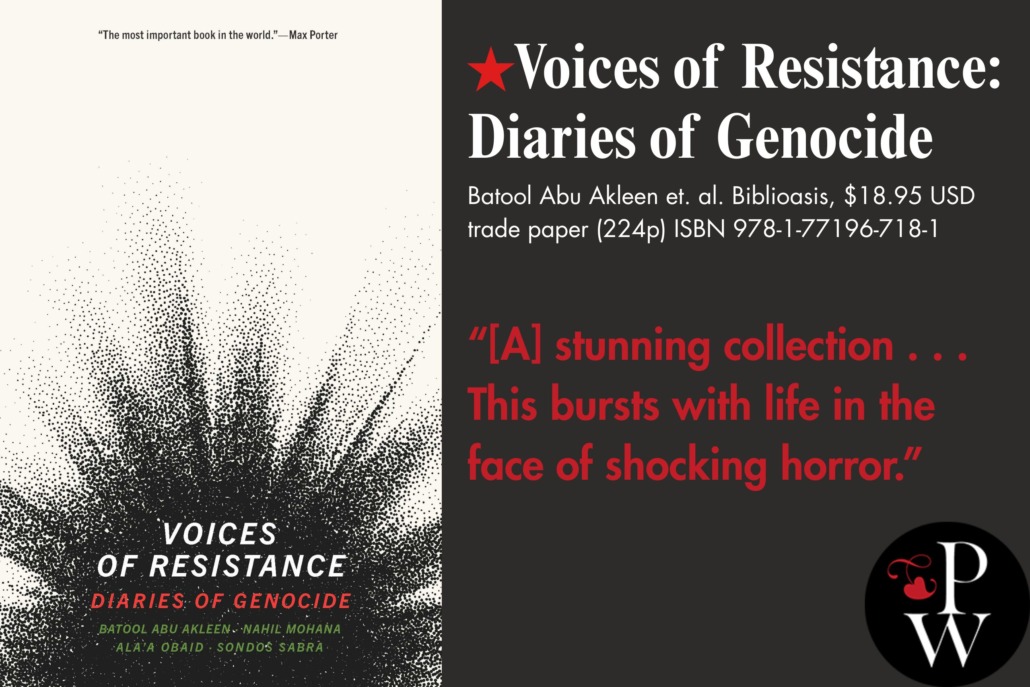
Voices of Resistance: Diaries of Genocide received a starred review from Publishers Weekly: “[A] stunning collection . . . The four women’s descriptions of constant violence are vivid, and so too are their accounts of profound kindness and care . . . This bursts with life in the face of shocking horror.”
Benbeculaby Graeme Macrae Burnet was featured the Guardian’s crime fiction round-up: “Dark, intense and utterly compelling.”
Self Care by Russell Smith was reviewed in the Ottawa Review of Books: “Self Care is a revealing rollercoaster ride, a compassionate yet unflinching window into troubled lives of today’s young adults.”
Baldwin, Styron, and Me by Mélikah Abdelmoumen (trans. Catherine Khordoc) was reviewed in the Ottawa Review of Books: “Important and very timely . . . An enthralling read of enormous value.”
Ray Robertson was featured in the Chatham Daily News about his forthcoming Dust: More Lives of the Poets (with Guitars): “A followup to 2016’s Lives of the Poets (with Guitars), it features more big-name and lesser-known performers, from Danny Kirwan, Handsome Ned, Captain Beefheart and Nico to Duane Allman and Muddy Waters.”
https://www.biblioasis.com/wp-content/uploads/2024/08/unnamed-scaled.jpg6172560biblioasishttp://biblioasis.com/wp-content/uploads/2014/12/BIBLIOASIS-Logo-500x500-White-300x300.pngbiblioasis2025-10-17 14:37:582025-10-17 14:37:59The Bibliophile: A reminder of their humanity
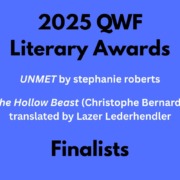
We’re thrilled to share that today, on Wednesday, October 15, two Biblioasis books have been announced as finalists for the 2025 Quebec Writers’ Federation Literary Awards! UNMET by stephanie roberts was shortlisted for the A. M. Klein Prize for Poetry, and Lazer Lederhendler’s translation of The Hollow Beast by Christophe Bernard was shortlisted for the Cole Foundation Prize for Translation.
View the full finalists announcement on the QWF website here.
The winners of QWF Literary Awards’ seven prestigious prizes will be announced at the 2025 QWF Literary Awards Gala on Monday, November 10 at Cabaret Lion d’Or (1676 Ontario St. E.). The ceremony begins at 8:00 pm, preceded by a cocktail reception from 6:30 to 7:30 pm. The event will be hosted by broadcaster, arts journalist, and translator Shelley Pomerance.
Each award comes with a purse of $3,000. The cash prize for the Ian Ferrier Spoken Word Prize will be split equally between one to three winners.
This is what comes of taking dreams / off the horizon. It is the sun / or nothing else, you would scream / if you weren’t caught up in the chorus.
Leaning deliberately on the imagined while scrutinizing reality and hoping for the as-yet-unseen, UNMET explores frustration, justice, and thwarted rescue from a perspective that is Black-Latinx, Canadian, immigrant, and female. Drawing on a wide range of poetics, from Wallace Stevens to Diane Seuss, roberts’s musically-driven narrative surrealism confronts such timely issues as police brutality, respectability politics, intimate partner violence, and ecological crisis, and considers the might-have-been alongside the what-could-be, negotiating with the past without losing hope for the future.
stephanie roberts is the prize-winning author of the poetry collections UNMET and rushes from the river disappointment, which was a finalist for the 2020 A. M. Klein Prize for Poetry. Her work has been critically praised and widely featured in numerous periodicals and anthologies such as Poetry, Arc Poetry, Event Magazine, The New Quarterly, Verse Daily, Crannóg (Ireland), The Stockholm Review of Literature, and elsewhere. Winner of The Sixty-Four: Best Poets of 2018 (Black Mountain Press), she was born in Panama, grew up in NYC, and has lived most of her life in Quebec.
Winner of the 2025 French-American Translation Prize in Fiction • Finalist for the 2024 Governor General’s Literary Award in Translation • A Globe and Mail Most Anticipated Spring Title
1911. A hockey game in Quebec’s Gaspé Peninsula. With the score tied two-two in overtime, local tough guy Billy Joe Pictou fires the puck directly into Monti Bouge’s mouth. When Pictou’s momentum carries them both across the goal line in a spray of shattered teeth, Victor Bradley, erstwhile referee and local mailman, rules that the goal counts—and Monti’s ensuing revenge for this injustice sprawls across three generations, one hundred years, and dozens of dastardly deeds. Fuelled by a bottomless supply of Yukon, the high-proof hooch that may or may not cause the hallucinatory sightings of a technicolor beast that haunts not just Monti but his descendants, it’s up to Monti’s grandson François—and his floundering doctoral dissertation—to make sense of the vendetta that’s shaped the destiny of their town and everyone in it. Brilliantly translated into slapstick English by Lazer Lederhendler, The Hollow Beast introduces Christophe Bernard as a master of epic comedy.
Lazer Lederhendler is a veteran literary translator specializing in Québécois fiction and non-fiction. He has also translated 20th-century Yiddish literature. His work has earned distinctions in Canada, the UK, and the USA, most recently the French-American Foundation’s 2025 Translation Prize for The Hollow Beast. Among the authors he has translated are Gaétan Soucy, Nicolas Dickner, Edem Awumey, Perrine Leblanc, Catherine Leroux, Alain Farah, Itzik Manger and Melekh Ravitch. He lives in Montreal with the artist Pierrette Bouchard.
https://www.biblioasis.com/wp-content/uploads/2025/10/QWF_web.jpg8002000biblioasishttp://biblioasis.com/wp-content/uploads/2014/12/BIBLIOASIS-Logo-500x500-White-300x300.pngbiblioasis2025-10-15 15:32:212025-10-21 12:31:37THE HOLLOW BEAST and UNMET shortlisted for the QWF Literary Awards!
Want to get new excerpts, musings, and more from The Bibliophile right away? Sign up for our weekly online newsletter here!
***
A few notes from John Metcalf, followed by a Biblioasis interview with Elise Levine, author of Big of You
When I happened upon Elise Levine’s stories in 1994 or thereabouts I was editing for Porcupine’s Quill press. What struck me about even her earliest work—and I do mean ‘struck’—was how polished and sophisticated it was; she was aeons ahead of her contemporaries having been reading Beckett at the age of fifteen.
“In his works I find a means with which to capture the psychic and emotional states of betweenness, constraint, defiance, the craft involved in giving shape to the tension between the abjection of self-exile and the unyielding human voice. I grasp how what is not said on the page can speak volumes: how silence itself can render an eloquent and moving subtext, and wrenchingly convey the unspeakable” (Elise Levine, Off the Record, Biblioasis 2023).
She refers more than once—though not directly—to Beckett’s play Not I (1973), a play in which Billie Whitelaw was shrouded entirely in black cloth with only her mouth illuminated—and the spotlit mouth delivered at tumbling speed a flooding monologue. This is the way I hear Elise’s fictions; her stories can be described as instruments performing a voice. She has no patience for plot, for ‘what happens next’; her stories are intricate solos; she wants us not to think but to listen; she demands our surrender to the performance.
John Metcalf
A Biblioasis Interview with Elise Levine
DB: Big of You was my introduction to your work. I loved it so much, I’ve been working my way backwards through your catalogue. I’m curious to know how you see Big of You as being different, or a shift away, from your previous books.
EL: Thank you for the love! Big of You extends what I’ve done in previous books, in which I’ve explored questions about power and voiced-over lives and defiance. I carried these concerns with me in writing Big of You, but I also saw it from the outset as more focused than my first two story collections and at times lighter in tone and more sardonic than my novels and novellas. This book full-on centers ambition, striving, the puncturing of expectations, the capacity for self-deceit, and the delight in potentialities and capabilities. Before I began writing the stories in Big of You, I saw it having a clear overall architecture: I would braid the stories together by linking some of the characters through paired narratives in which the characters appear at different points of their lives or otherwise intersect with the situations and preoccupations of other characters. I knew too, before I began writing any of the stories, that I would lean heavily on fabulist or surreal elements to capture lives lived—or entertaining the possibility of living—beyond imposed expectations, and that these elements would help get at the strange internal weather and sea changes over time that personhood can entail.
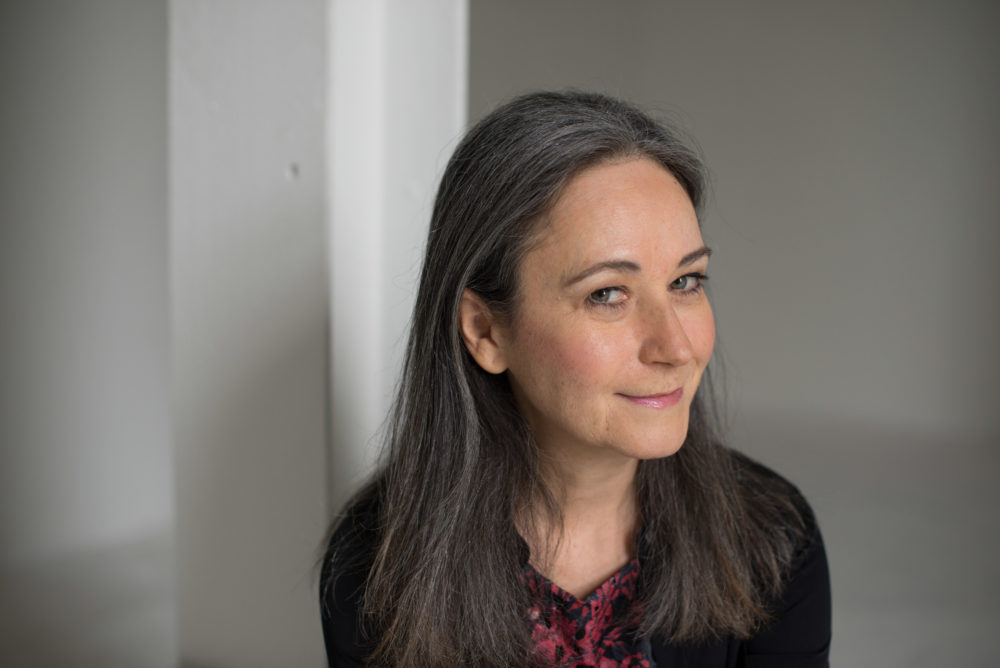
Elise Levine. Photo credit: Britt Olsen-Ecker.
Big of You strikes me as primarily character-driven. It’s also very attentive to language, but I imagine largely as a means of representing the peculiarities of character (correct me if I’m wrong). What is it about character that appeals to you? How do you discover and approach a new character? Do you ever find the seeds of character in your own life?
I’ve always been a character-driven writer, and yes, I use language—foregrounding it, even—fully in service of evoking character, because in character lies the Big Question: we have these single lifetimes—as far as I know—and what do we do with them? In view of the dark door of individual extinction we all must pass through. And the possibility, that continues to rapidly feel more pressing, of the extinction of humans as a species, along with every other living thing on this planet. My initial ideas for character strike out of the blue and then I spend time in what I think of as a pre-writing stage: writing partial scenes, especially the opening and endings, and making notes on who the characters might be, what their situation is. Fully developing the character, their story, typically takes me a scandalous amount of time and a crazy number of drafts in which I keep digging deeper, further in, asking what does this character really want, what do they fear? Sometimes characters do initially lift from my own life. I mean, I was once a teenage girl let loose for a summer in Europe, as in the story “Arnhem,” which opens the book. I once lived in an apartment in which the living room was dominated—menaced?—by a baby grand piano, as in “Penetrating Wind Over Open Lake.” But with both of these stories, as was the case with others in which I borrowed details from my own life, when I began writing them in earnest the narratives soon wildly diverged from my personal histories and took on their own beast lives.
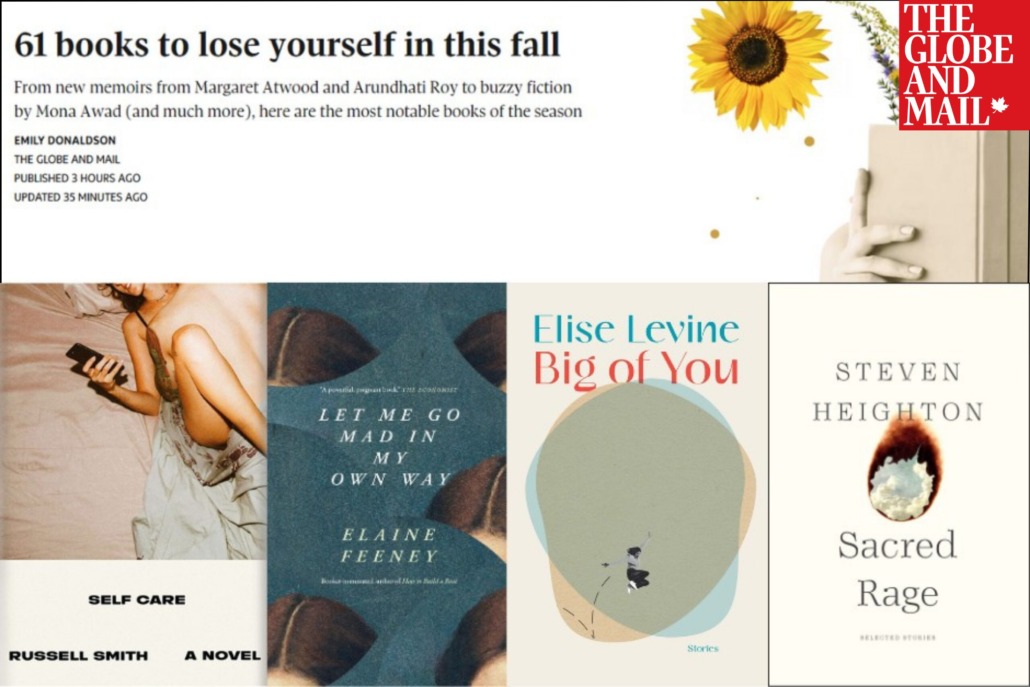
Don’t miss Big of You and other great Biblioasis titles on the Globe and Mail’s Fall 2025 books list!
One of my favourite stories in Big of You is the three-part “Cooler.” For those who haven’t read it yet, the first part follows a sad-sack casino worker, the second an isolated spacecraft, and the third part features a grumpy, supernatural creature with a blue tail (these short descriptions really don’t do the story justice). The three sections are wildly different in tone. In a recent interview with The Ex-Puritan, you explain that the story arose from an interest in the concept of “coolness” and how what’s cool might be variously depicted. I love that, and wonder if any of the other stories in Big of You began in distinct ways (even if not necessarily derived from a concept)?
Yes, each of the other stories in the book did begin in distinct ways, but usually with a strong sense of character and situation, and a sense of voice and form. For example, I knew from the outset that for “Return to Forever,” which is about three older women who vacation together in the desert at Joshua Tree, while a fourth friend remains back home in a memory-card ward, I would use the first-person-plural point of view and sweeping, single-paragraph sections to evoke a communal voice. In “Witch Well,” the final story, I knew I wanted, before I even began writing it, to use a heightened fabulist approach and a kind of Stepford Wives vibe—along with a tone of perky defiance—to portray a woman’s grief and confusions over a profound loss against a backdrop of the seductive erasures of affluence.
Read Elise’s new interview with Zilla Jones in All Lit Up.
I mentioned that “Cooler” is one of my favourites in the collection. Do you have a favourite story, or perhaps a character that you still think about with fondness or a sense of kinship?
I do feel a weird tenderness toward the main character in “Once Then Suddenly Later,” Adrien Tournachon, a nineteenth-century historical figure whose older brother, Gaspard-Félix Tournachon—better known by his pseudonym Nadar—is a central figure in the history of early modernity. He was a noted proponent of heavier-than-air flight—which led to the development of airplanes—which he advocated for through a series of catastrophic balloon flights. Along the way he invented aerial photography and air mail and underground photography, and was celebrated for his vivid, individualistic photographic portraits of luminaries such as George Sand, Victor Hugo, and Sarah Bernhardt. But his younger brother, Adrien, my main character, suffers from living in the shadow of his older and successful brother. My character is his own worst enemy: he drinks and squanders his time and lesser talents, at one point steals his famous older brother’s identity, lies about his own whereabouts and stature, and never fails to wallow in bitter self-pity. I don’t feel kinship with him, but I do feel for him: he stands in for the perils of striving to lead an artistic, creative life.
You’ve been a professor for a while now, and you teach in the program at Johns Hopkins University. How do you think teaching writing has influenced your own work?
Teaching fosters the excellent practice of generosity as a reader: it keeps me reading closely, open to a multiplicity of stylistic and formal approaches, and with an admiration and respect for other writers’ willingness to explore the infinite ways of what it means to be human. All of which keeps the creative wheels spinning in terms of my own work. Beyond a doubt, it’s a generative circuit, teaching writing and writing.
Have you read anything lately that you’d like to recommend?
Well, a ton of books! But I’ll try to keep myself decent and mention just a few. The story collections Other Worlds by André Alexis and Hellions by Julia Elliott: both are great examples of using fabulist elements to explore the shifts and surprises of selfhood, and both use language and form in innovative ways. Two Booker-longlisted novels: Audition by Katie Kitamura and Flesh by David Szalay, both of whose previous books I’ve loved. In these latest by Kitamura and Szalay, each very distinct from the other, language and form are nearly electric, and used to pose questions about hairpin twists and turns of identity. Another novel, The Passenger Seat by Vijay Khurana, I admired for its brilliantly controlled sentences and pacing, its taut and suspenseful narrative and vivid interiority—and its ability to generate tremendous empathy, despite the moral horrors it depicts. I also recommend two poetry collections, also quite different from each other: New and Collected Hell by Shane McCrae and Little Mercy by Robin Walter. Both books possess tremendous formal clarity and a just-go-for-it approach to digging deep into what it means to be conscious in this strange world we inhabit, for better or for worse. I habitually read a lot of books in translation and I’ll mention here just one of my favourites (okay, it’s actually a two-fer): On the Calculation of Volume (Books I and II), part of a seven-novel series by Solvej Balle, translated into English from Danish by Barbara J. Haveland. These first two in the series offer a lovely, surreal portrait of a woman experiencing suspended time, and uses a circumspect, minimalist tone and style—which achieves a nearly hallucinatory quality through its ultra-grounded and slow-paced approach to revealing the beauty and constancy of the many ordinary details of existence. I can’t wait for the remaining books in the series to come out in translation.
Self Care by Russell Smith: “Smith is still at it in this story of a female journalist whose relationship with a man she’s ostensibly interviewing for an article on incel culture starts crossing into risky sexual and emotional territory.”
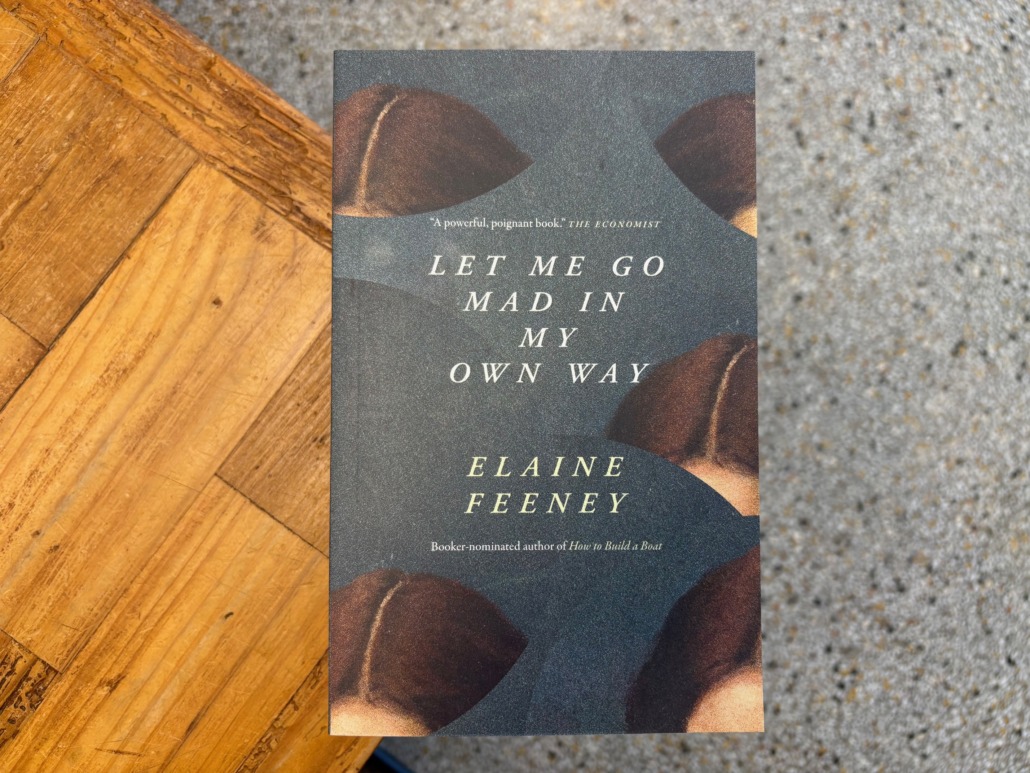
Let Me Go Mad in My Own Way by Elaine Feeney: “The Irish author’s follow-up to the Booker-nominated How to Build a Boat involves a woman who [returns home] in the wake of her mother’s death and her father’s cancer diagnosis.”
Big of You by Elise Levine: “Reading the still criminally underappreciated Levine is a visceral experience that seems to demand engagement of all one’s senses.”
Sacred Rage: Selected Stories by Steven Heighton: “[Heighton] believed the short story was his greatest contribution to literature. For this collection, [his editor] Metcalf assembled 15 of what he deems the author’s best.”
Benbecula by Graeme Macrae Burnet was reviewed in the Daily Mail and on FictionFan’s Book Review Blog:
Daily Mail: “A furtive, cagey novel reminiscent of Macrae’s Booker-shortlisted gem, His Bloody Project . . . In recounting one murder, Macrae subtly introduces the idea of another to produce a consummate slice of alternative true crime.”
FictionFan’s Book Review blog: “Burnet’s writing is wonderful, as always, and diving deeply into complex characters is one of his great strengths . . . Highly recommended.”
Marcello Di Cintio was interviewed about Precarious: The Lives of Migrant Workers on the Collisions YYC podcast: “From farms to care homes, Marcello illuminates a hard truth: we rely on foreign labour to survive, yet deny these workers a place to truly belong.”
Dark Like Under by Alice Chadwick was reviewed in Necessary Fiction: “Chadwick’s prose is rich and poetic, containing surprising images and gorgeous complexities . . . leaving the reader hungry to see what the author will do next.”
https://www.biblioasis.com/wp-content/uploads/2024/08/unnamed-scaled.jpg6172560biblioasishttp://biblioasis.com/wp-content/uploads/2014/12/BIBLIOASIS-Logo-500x500-White-300x300.pngbiblioasis2025-10-14 16:13:502025-10-14 16:13:52The Bibliophile: The Unyielding Human Voice
Want to get new excerpts, musings, and more from The Bibliophileright away? Sign up for our weekly online newsletterhere!
***
Elaine Feeney’s latest novel, Let Me Go Mad in My Own Way, which comes out next week, has been called her most ambitious. And not just by me. It is about many things: colonialism, tradwives, inherited trauma and shame, the politics of the domestic space, the end of love and a second chance at it. The novel follows an Irish woman named Claire who returns to her family home after many years in England. Her parents have recently died. Her long-term relationship ended. She’s alone and spiraling. So she does what most of us do these days: go online and admire those leading perfectly curated lives. And like the best of us, she takes it too far.
What I loved most about it is how the story unfolds, its structure (“baggy, complex” and “hugely satisfying” as Barney Norris in the Guardian said of it in his review), with a narrative that shifts back and forth across time to show us Claire’s past and how the effects of the violence inflicted on her family echoes down the line—and how she tries to change. It’s almost like a sociological approach to literature, telling a story about the institution of repression in Ireland and its connections to modern tradwifery.
It has been great seeing the response to the novel so far, and how the story resonates. It was even included in the inaugural Booksellers’ List from the Canadian Independent Booksellers Association, making it one of the top 20 books of the fall season as voted on by independent Canadian booksellers. Thank you to CIBA and all the booksellers who voted for it.
And if you’re into bookish events, Elaine will be visiting North America later this month for readings and conversations in Vancouver, Ottawa, Connecticut, and New York. Stop by if you can.
And now what you’ve all been waiting for: the interview. I had a chance to ask Elaine a few questions over email. Read on if you’d like to know her thoughts on her book.
All my best,
Ahmed Publicist
A Biblioasis Interview with Elaine Feeney
Can you tell me a bit about yourself and how this book came about?
I live in the west of Ireland in a 1970s bungalow surrounded by fields. It’s one of those Bungalow Bliss houses built from Jack Fitzsimons’ guide back in the 1970’s, this was popular in Ireland where these houses were usually on family land next to the “home house”—a small turn of century cottage that was pretty much just a big kitchen and a loft. Those spaces, and their complicated history, really inspired Let Me Go Mad in My Own Way.
The novel follows the O’Connor family from the west of Ireland, the Black and Tans era right up to the slightly surreal world of tradwife influencers today. I’ve always been drawn to the political power of ordinary domestic spaces, especially the Irish kitchen, which holds so much hidden history and tension and sadness (violence) in Ireland.
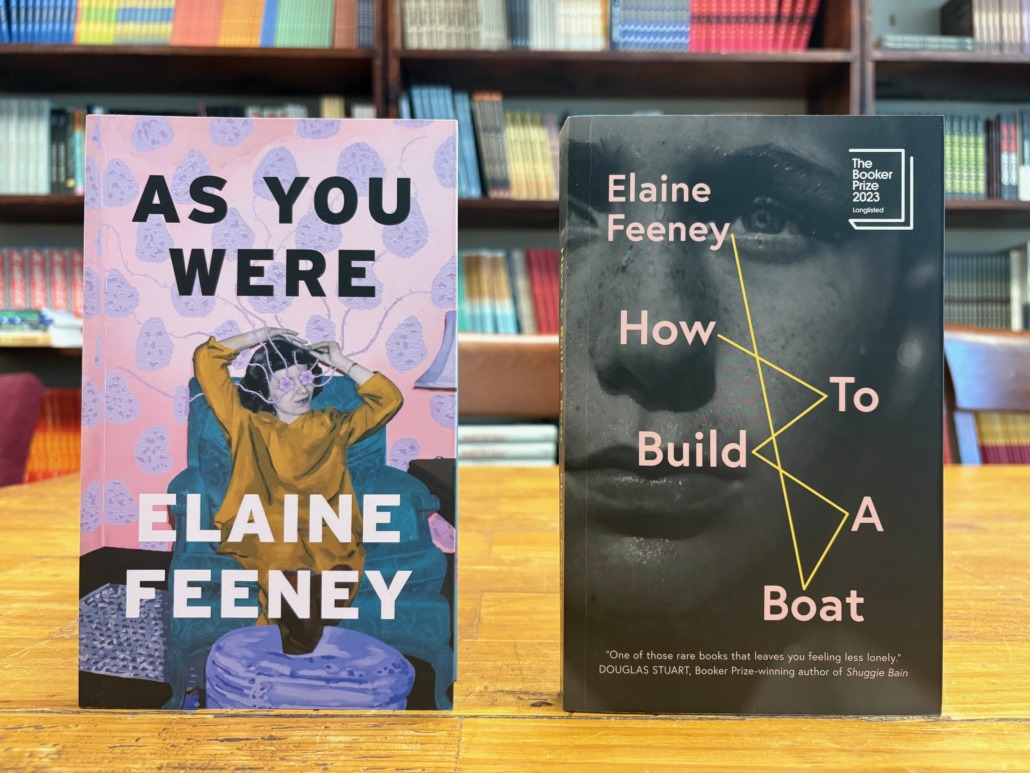
You’ve said previously that you see your three novels so far as examining different institutions: As You Were looked at the hospital, How to Build a Boat looked at the school, and now Let Me Go Mad in My Own Way explores the home/the kitchen. Why the home this time, and what draws you to institutions?
The kitchen has always fascinated me. In Ireland, it’s never just been about cooking or comfort—it’s where history happened. The Black and Tans terrorised people in their kitchens and I really wanted to try to write about this in tandem with Ireland’s dire history of its treatment of women post colonisation: Women were judged, removed, and incarcerated based on what happened within those four walls. It’s been a space of ceremony, loss, survival, and control. I have worked a lot with the long history of institutions in Ireland, and the kitchen seems the most political.
Across my books, I keep coming back to places where care and coercion live side by side. Hospitals, schools, homes—they’re all institutions that are supposed to help, but have historically often end up judging or punishing people instead.
The novel starts with a quote by Annie Ernaux about shame. What role does shame play in the family and the story?
Shame runs deep through the O’Connors’ story. After Irish independence, land ownership became a symbol of respectability and survival. Families clung to that image, and women were made the moral gatekeepers. A spotless house, well-behaved kids, clean laundry—it all reflected on the family’s name. This fascinates me with the rise again of fascism and tradwifery.
Claire, the oldest daughter in the novel, inherits not just her family’s bungalow, but the silence, secrets, and expectations that come with it. The shame of what happened to her mother weighs on her heavily. It becomes this silent, suffocating burden that shapes her actions and her grief.
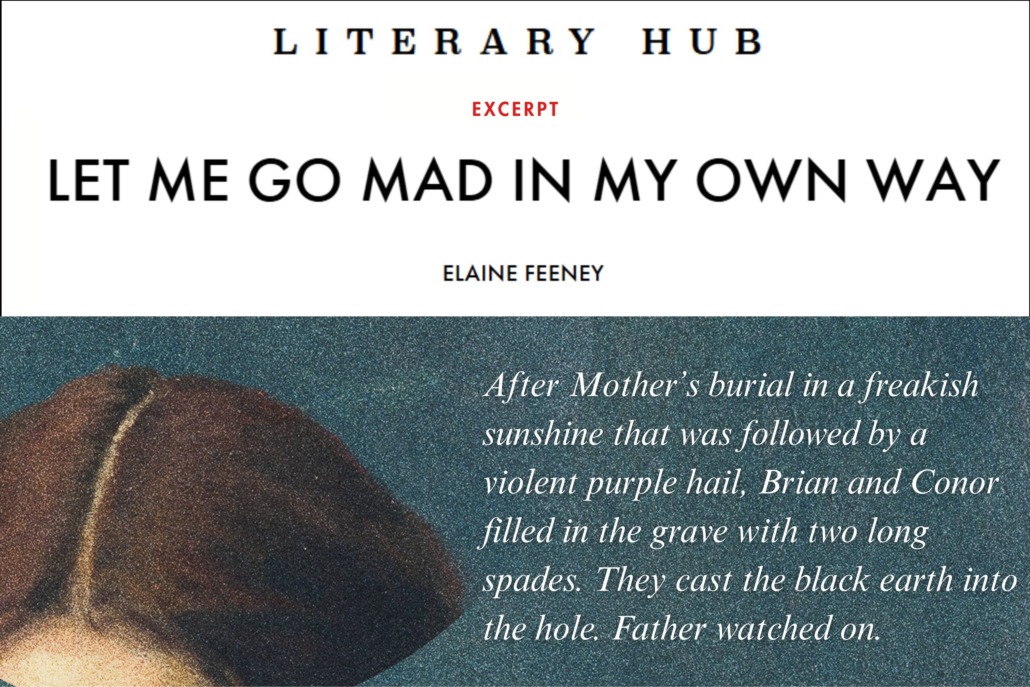
Read an excerpt from Let Me Go Mad in My Own Way featured in Literary Hub.
Claire and her brothers also grieve their parents very differently. What were you trying to show with that?
I wanted to show how siblings experience family history and loss in very different ways. Claire retreats into obsessive domestic rituals to avoid facing her grief and the painful truth of her mother’s death, while her brother Conor carries the family’s legacy in a more external way.
The family is haunted not just by recent grief, but by the trauma of a century of violence, loss, and silence. In Ireland, history has a habit of lingering at the kitchen table, and for the O’Connors that’s definitely true.
Claire turns to a tradwife influencer as a way of coping, which on the surface seems to help her. Where did that idea come from?
It came from my own doom-scrolling, honestly! I kept coming across these soft-spoken, perfect women on Instagram or TikTok, arranging lemons or lighting candles in perfectly curated kitchens while the world burned outside. It fascinated (and unsettled) me. Was it harmless escapism or a soft return to old-fashioned control of women’s roles?
For Claire, following “Kelly Purchase”—my fictional tradwife influencer—isn’t about nostalgia. It’s about desperately trying to impose control over a life that feels completely out of control. It gives her temporary comfort but ultimately isolates her even more.
I love how the novel is structured, moving back and forth across time. Why did you decide to shape it that way?
I wanted it to feel like the piecing together an old family heirloom that’s been damaged or lost over time. Claire’s mind is fragmented, disoriented by grief and avoidance, so the structure mirrors that. It is also very much about the juxtaposition of banality and brutality. (The present in tandem with the future).
In a way, it’s also how so many Irish family histories are passed down—in fragments, in silences, and in stories half-told around the kitchen table. The shifting timelines let me explore how unresolved trauma and silence can distort identity and memory.
Is there anything you hope people take away after reading the novel?
I hope people think about what domestic order hides as well as what it provides. The Irish kitchen has been a place of warmth and nourishment, yes—but also of judgement, punishment, and even violence.
This tradwife trend might seem harmless on the surface, but I wanted to explore how it risks reinforcing systems we’ve fought hard to dismantle. Claire’s journey shows how dangerous it can be to seek safety through compliance and control.
Seamus Heaney said, “Whatever you say, say nothing,” but I wanted this novel to say something: that history is never truly in the past, and silence can become a prison.
In good publicity news:
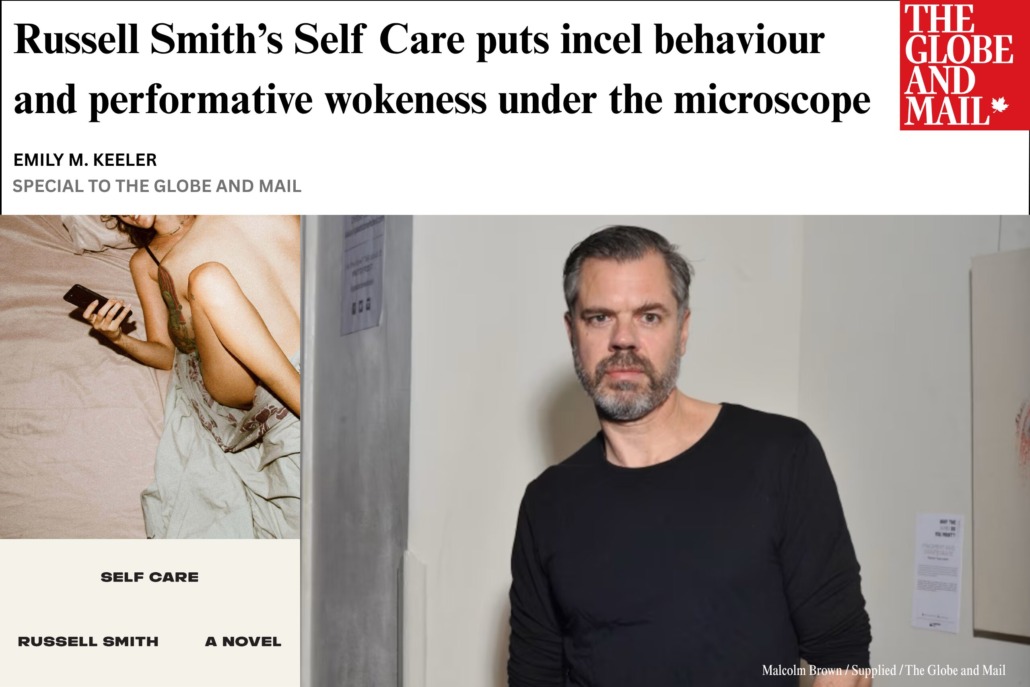
Self Care by Russell Smith was featured twice in the Globe and Mail:
Reviewed by Emily M. Keeler: “Smith’s bleak, horny comedy holds up a funhouse mirror to an aspect of the human condition that feels unique but has always endured . . . There is an undeniably stylish brutality to his portrait of desperately lonely urbanites; when it hits you, you just might laugh.”
Benbeculaby Graeme Macrae Burnet appeared in several outlets this week:
Reviewed in The Scotsman: “Elegant, eerie . . . Perhaps the most impressive feature of the novella is the sense of simmering . . . Macrae Burnet conjures an atmosphere of suppression.”
On Oil by Don Gillmor was reviewed in Alberta Views: “A short, incisive, at times rollicking book.”
Seth’s 2025 Christmas Ghost Stories were reviewed in The Book Beat: “Each story, from cover to inside decorations . . . sets the scene and mood, while never giving anything away: They’re the creaky door that invites you inside, the things bumped into in the night.”
https://www.biblioasis.com/wp-content/uploads/2024/08/unnamed-scaled.jpg6172560biblioasishttp://biblioasis.com/wp-content/uploads/2014/12/BIBLIOASIS-Logo-500x500-White-300x300.pngbiblioasis2025-10-03 15:49:142025-10-03 15:49:16The Bibliophile: History is never truly in the past