

John Metcalf on Alex Pugsley
In this week’s Bibliophile, we’re pleased to feature the following guest article by Biblioasis senior editor John Metcalf on the works of Alex Pugsley. Silver Lake, the third installment of Pugsley’s Aubrey McKee series, publishes next week on May 19. Find it at your local bookstore!
Some ancient readers may recall Lawrence Durrell’s Alexandria Quartet. Starting in 1957 with Justine, the subsequent novels in the quartet were Balthazar (1958), Mountolive (1958) and Clea (1960).
In a recent TLS, British author, Jonathan Keates reviewed Larry, a new biography of Durrell by Michael Haag:
Beginning with the publication, in 1957, of Justine, Lawrence Durell’s Alexandria Quartet soon hollowed out its singular niche in cultural history. The four novels, under their austere Faber jackets, seemed to encompass a dizzying range of literary tropes and flavours, blending modernist experiment with the outlines of a Bildungsroman and further enlivened by hints from spy stories, impressionistic travelogue and a touch or two of upmarket pornography. From Justine’s opening page, with its “sky of hot nude pearl” and “lime-laden dust of summer afternoons,” the author’s style gagged us perfectly with its promises of seduction.
We yearned for the place itself, that very Alexandria, a polyglot port city whose millennial allure presented it as an ideal backdrop for every kind of faithlessness and transgression.
On the basis of this achievement and the novels that followed, Tunc, Nunquam, Quinx and the rest, Durrell was seriously put forward as a candidate for the Nobel prize. He was hailed as a worthy successor to James Joyce, a British avatar of his favoured confidant Henry Miller, a virtuoso in metaphor and paradox whose masterly enchantments brought us, amid “the cicadas throbbing in the great planes and the summer Mediterranean in all its magnetic blueness,” an Alexandria more potent via his particular mise en scène than in its rundown actuality following the Suez Crisis and Nasser’s seizure of power in Egypt.
Like almost everything else Durrell wrote, the Quartet has not aged well. The air of contrivance for which Darley, their narrator, blames Justine’s “wretched expenditure of energy” nowadays seems to hang about too much of what he sought to accomplish as the sequence continued. With the exception of Mountolive (1958)—“tame and naturalistic,” as Durrell called it, intended to surprise the complacent reader with something more like Graham Greene or Eric Ambler—considerations of structure, plot and narrative did not especially bother him. What results is a flimsiness in the underlying armature of the ensemble that leaves us with the impression of an over-extended style exercise, a project that might have looked satisfying on a creative writing course, but hardly serves to engage our sympathy and imaginative absorption over the course of four volumes.
The Oxford Companion to Twentieth-Century Literature in English, edited by Jenny Stringer notes in part:
“Published in a single edition in 1962, The Alexandria Quartet, which has been both praised and condemned for the poetic opulence of its prose . . .”
The Oxford Companion to English Literature, edited by Margaret Drabble, notes in part:
“The style is ornate, lyrical and sensual, perhaps too much so for English tastes, as the Quartet tend to be more highly regarded abroad than in Britain.
“sky of hot nude pearl”
“hot pearl?”
“nude pearl?”
“nude?”
I have been referring to Durrell’s much touted pseudo-lyrical Quartet because in stark contrast to it a series is now emerging in Canada which is far better written and far more entrancing.
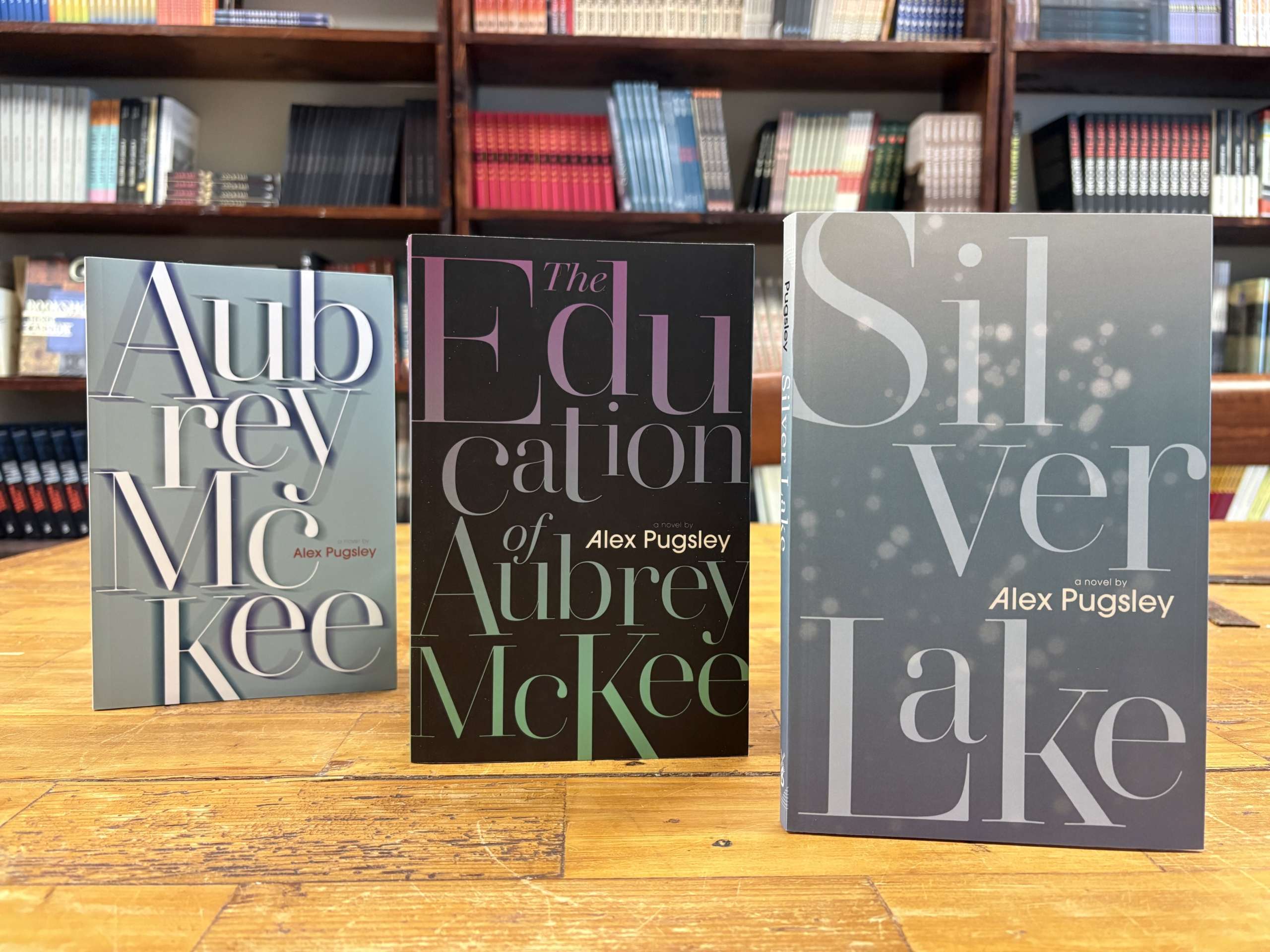
Alex Pugsley’s series is made up of Aubrey McKee (2020), The Education of Aubrey McKee (2024), and appearing in spring 2026, Silver Lake. A subsequent volume, tentatively entitled Mad Hatters, is in progress.
Of the first volume, Aubrey McKee, Nick Mount, the crown jewel of the University of Toronto’s English department, wrote:
Aubrey McKee is a story about growing up mixed up and mixed in with the story of a city. I loved the characters, large and small, the good, the bad, and the weird, which is pretty much all of them: the precociously strange Cyrus Mair, the magnetic Karin Friday, the supporting cast of bullies, dealers, alcoholics, eccentrics, friends, and demented grandparents, and most of all their bemused chronicler, the unquenchable Aubrey McKee. I loved the novel’s quixotically genteel style, Aubrey’s voice, his infectious delight in words and wit and everything and everyone around him. As a story, as writing, as cultural history, it’s easily the best book about Halifax I have ever read or ever will read. My favourite book of the year, highly recommended for anyone who ever knew Halifax or was ever young and confused.
There’s only one other novelist in Canada playing on the same sort of field as Pugsley whose work rivals his and that’s Russell Smith. I still remember the immense pleasure I felt on reading the typescript of his first novel How Insensitive (1994). It is no coincidence. They both grew up in Halifax and have been friends since they were children. Both are widely read. Both have tugged a forelock to Evelyn Waugh and Henry Green.
In 1996 I read in a now-defunct literary magazine, Blood & Aphorisms, a short story, “Deedee at the 7-11” by a writer called Alex Pugsley. The story began thus:
“So what the fuck have you been doing, Veeper?” Wendell’s voice is all loud and angry in the empty parking lot. “What the fuck, man? Where is it?”
I’m out on the highway and I lift my head up and look at Wendell in the distance there. It’s Friday night and we always meet at the 7-Eleven but I guess I’m a little late. It’s pretty dark but you can see Wendell because of the lights of the 7-Eleven store. Well you can’t really see his face, but you can see his black baseball hat and his blond hair and his jacket’s undone even though it’s February.
“Veeper?”
I was startled and enraptured by the writing—so sophisticated—and got in touch with him saying that if he ever had a manuscript I’d be delighted to read him.
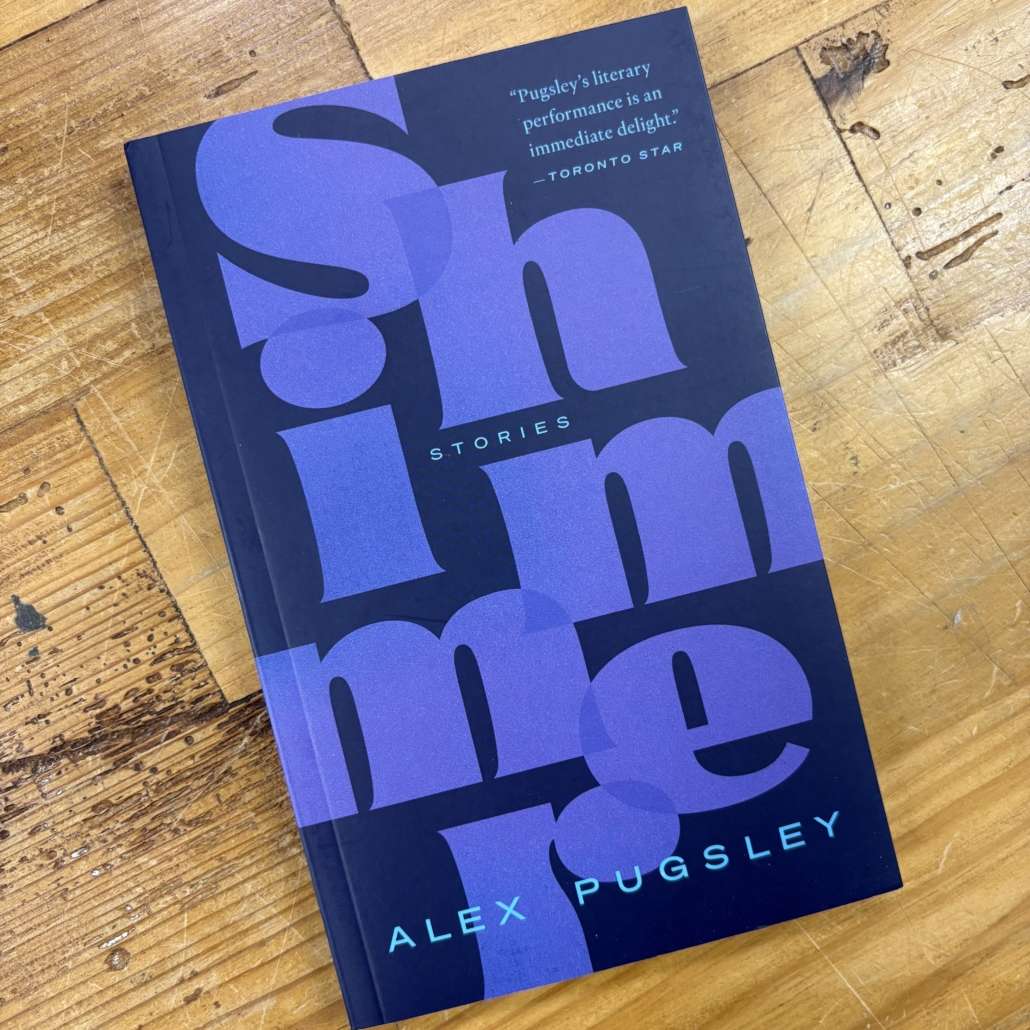
Twenty years later he sent me Aubrey McKee and in 2022 Biblioasis published “Deedee at the 7-Eleven” as the lead story in a collection called Shimmer which it indeed did.
The Toronto Star wrote in review: “Pugsley’s performance is an immediate delight.”
Why had I been so rash in 1996 to contact him on the strength of what I think was his first published story? The short answer is that I recognized him within a few sentences. Reading good prose requires us to listen, to listen to the voice or voices, the cadences and vocabulary the voices use. Good writers and good editors are something like cougars, solitary beasts that range over thousands of acres and find each other by scent.
Reading good prose is like touching skin or an animal’s fur. Reading good prose is like touching between thumb and forefinger a hanging rope bearing a great weight, a pallet, say, of concrete blocks; the rope is so stressed, so taut, that one can hear its inaudible hum.
In other multiple-volume works in our time, A Dance to the Music of Time, say, by Anthony Powell, we long for the appearances of the rapaciously ambitious politician Kenneth Widmerpool but even dedicated fans admit that in the twelve volumes there are longueurs.
In Alex Pugsley’s work there are no such patches. His writing sweeps along in a whitewater spate of literary pleasure.
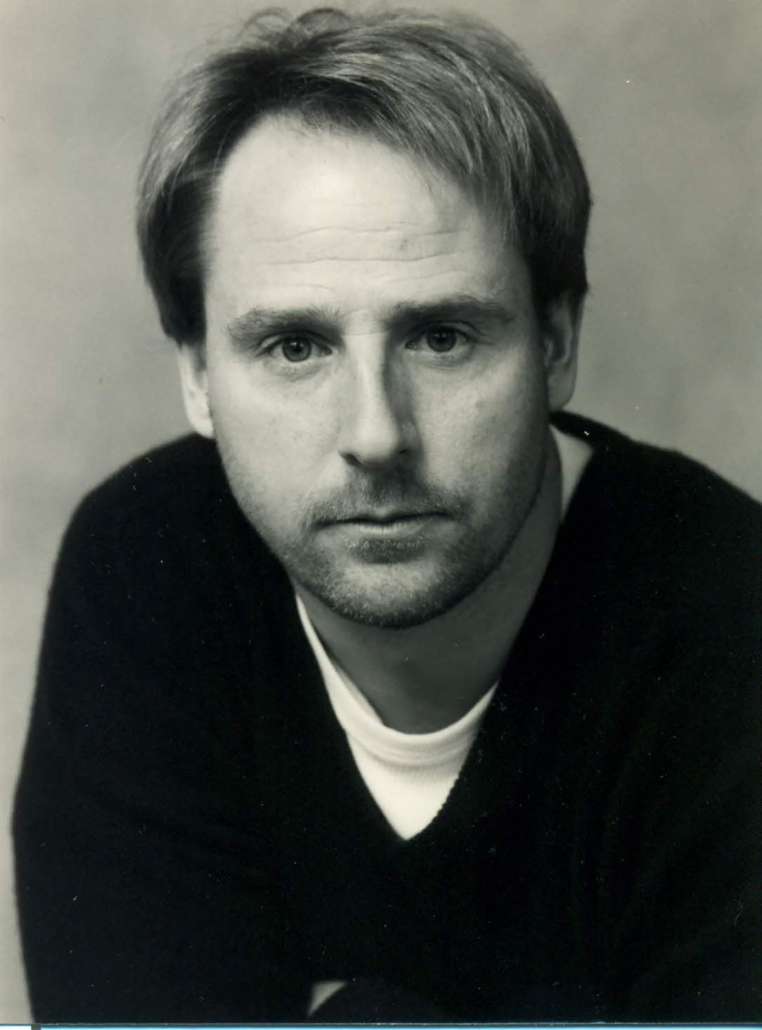
Alex Pugsley is one of a tiny number of Canadian writers deserving of international reputation. This is extremely unlikely to happen if he remains a writer appreciated at home only by a tiny Canadian coterie. At Biblioasis we take huge pleasure in his prodigious talent. In the wings, awaiting publication, another story collection, Glance, and a ravishing novella, The Hungarian Ballroom.
Talking of Glance reminds me that Alex was floating the idea in recent conversation of doing a Twyla book, homage to the character Twyla, the voice in one of the Shimmer stories.
Here’s how she made her debut in a session with Dr. C.A. Symons, psychotherapist:
“I think we’re living in the Golden Age of Fuck Off. I really do. What the fuck even matters anymore? Because let me ask you a question and I’m curious about this, when you talk to your other patients, who all look fucking crazy by the way. I’ve seen them in the lobby futzing with their Kleenex and how you even talk to those freaks is beyond me—it’s called personal hygiene, people—but how many of your patients are just fed up with the rest of the world? Because you know how on your laptop the X that appears in the corner of pop-up screens? I just want one of those. But for other people. So I can click on the X and they disappear and go back into the darkness. Do you know what I mean, though? What is it with people? Ah, I fucking hate this week.”
Pugsley’s writing is obviously in company with that of Munro, Gallant, Norman Levine, Richler, Faessler, Blaise, Rooke, Russell Smith . . . a writer to be relished, one of Canada’s literary adornments.
John Metcalf
Senior Editor at Biblioasis

In good publicity news:
- Cherry Beach by Don Gillmor was reviewed by Margaret Cannon in the Globe and Mail: “This is one of the best Canadian crime novels of this or any year . . . Toronto now takes its place with Los Angeles, New York, and Boston as a character in the action and it’s great.”
- The Given World by Melissa Harrison was reviewed by John Self in The Times: “One of the things Harrison does well is express the experiences of rural life, human and animal. Her depictions come to life. A robin “tremulously releases a trickle of song”; when church bells ring, we hear “the notes complicating themselves into a kind of ecstasy before falling back and untangling again”. These are descriptions that change how you see and hear things in the real world.”
- Heaven and Hell by Jón Kalman Stefánsson (trans by Philip Roughton) was reviewed by Joy Williams in Book Post: “A perfect little novel . . . enthralling, seductive . . . Heaven and Hell embraces and defies the categories of story—adventure, historical, romance, ghost, metaphysical.”
- Oblivious: Residential Schools, Segregated Hospitals, and the Use of Indigenous Peoples as Slaves of Race Science by Elaine Dewar had a number of media hits this week:
- CBC Ideas aired an episode dedicated to the books, including a final interview between Elaine Dewar and host Nahlah Ayed, and coverage of the book’s Toronto launch last month.
- Reviewed in Publishers Weekly: “This riveting blend of exposé and memoir from the late Canadian journalist Dewar (The Handover) contends with the abusive experiments conducted on Indigenous people in Canada’s residential schools and segregated hospitals.”
- Reviewed by Sheilla Jones in the Winnipeg Free Press: “Dewar’s writing is engaging . . . It is an apt final story for a tenacious investigative journalist who dared to open a door of revelation.”
- Excerpted in the Toronto Star
- Silver Lake by Alex Pugsley was featured on the CBC Books list of “40 new Canadian books to check out this May.”