Description
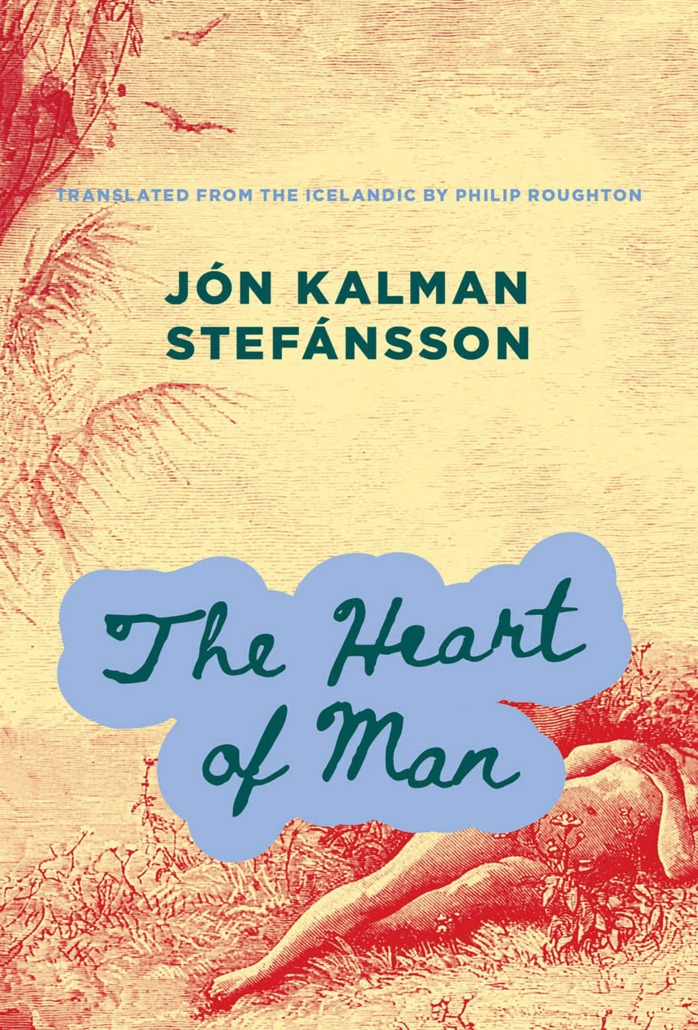
The final installment of Jón Kalman Stefánsson’s Trilogy About the Boy is a profound exploration of life, love and desire written with a sublime simplicity.
After coming through the blizzard that almost cost them everything, the postman Jens and the boy are far from home in a fishing community at the edge of the world. It is a strange place, with otherworldly inhabitants, including flame haired Alfheidhur, who makes the boy wonder whether it is possible to love two women at once; he had believed his heart was lost to Ragnheidur, the daughter of the wealthy merchant in the village, to which he must now return.
Set in the awe-inspiring wilderness of the extreme north of Iceland, The Heart of Man, the final book in Jón Kalman Stefánsson’s audacious Trilogy About the Boy, is a profound exploration of life, love and desire, written with a sublime simplicity.
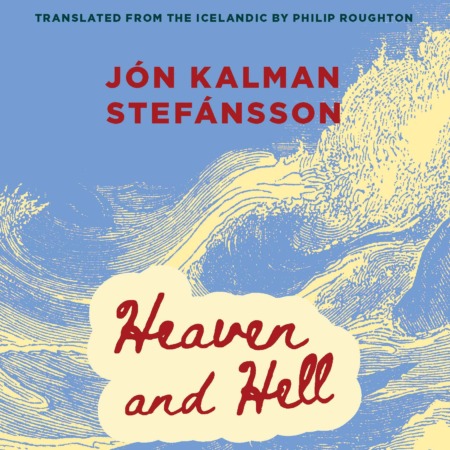
Praise for Heaven and Hell
“Stefansson’s narrative voice is the book’s most striking quality. It has something in common with the ‘slow prose’ of Jon Fosse: run-on sentences, rich in repeated motifs, that tap into different layers of thought. A typical line in Philip Roughton’s translation is flexible and supple, telescoping from close-up to wider view . . . Once the reader is settled into the rhythms of Stefansson’s prose, we’ll go anywhere with him.”
—John Self, New York Times
“A moving story of loss and courage told in prose as crisp and clear as the Icelandic landscape where it takes place. . . Stefánsson writes like an epic poet of old about the price the natural world exacts on humans, but he’s not without sympathy or an ability to find affirming qualities in difficult situations.”
—Kirkus Reviews (starred review)
“Stefánsson plumbs the depths of a young man’s grief in this ruminative and piercing bildungsroman . . . Readers willing to go the distance will reap plenty of rewards.”
—Publishers Weekly
“The novel is lyrical in detailing hardscrabble life along polar sea shores, where everyone has lost someone, yet the fishing boats keep launching . . . A poetic soul sets out on a quest to honor his lost friend in the aching, trilogy-opening novel Heaven and Hell.”
—Foreword Reviews
“[A] brief, elegiac novel . . . Written in dense, poetic prose, with more emphasis on mood than plot, this novel circles through the many ways of surviving in a harsh place.”
—Booklist
“Some novels are so extraordinary, it’s hard to do them justice in a review. This is one of them, remarkable for its alluring articulation of the daunting arctic weather, and the hovering uncertainty that’s so bound up within it.”
—Kassie Rose, WOSU The Longest Chapter
Praise for Jón Kalman Stefánsson
“Stefánsson shares the elemental grandeur of Cormac McCarthy.”
—Times Literary Supplement
“Like fellow Scandinavian authors Jon Fosse and Karl Ove Knausgaard, Mr. Stefánsson joins plainspoken depictions of daily life to intimations of mysticism, creating a spectral, haunted atmosphere . . . Questioning, vulnerable and openly sentimental, [Your Absence is Darkness] is an absorbing commemoration of what the author calls the paradox that rules our existence, the vivifying joy and paralyzing sorrow of loving another person.”
—Sam Sacks, Wall Street Journal
“Wistful and whimsical . . . [Stefánsson’s] writing is fertile, yielding extraordinary imagery. There are many tears in these stories and in this village, but there is also hope, because even unfulfilled dreams offer guidance, ‘they evaporate and settle like dew in the sky, where they transform into the stars in the night.’”
—Minneapolis Star Tribune
“Jón Kalman Stefánsson’s lyrical style has earned him a dedicated following of readers in Iceland. [In] Summer Light and Then Comes the Night each standalone story describes life in a small village in West Iceland, normal people—their insecurities and anxieties, their courage and loneliness. Together, these episodes create one, coherent whole; there’s no set narrator, but rather, it’s the village that tells these stories of hope, cruelty, life, and death.”
—Literary Hub