Description
“There are novels that make something inside you come awake, and make you want to keep it awake. Maybe that’s what a classic is: not only a work that endures but one that makes something endure in you—something that lasts even after you may have forgotten the whole story and the characters’ names. Such is the case with the Icelandic novelist Jón Kalman Stefánsson’s ‘Trilogy About the Boy’.”—Salvatore Scibona, New Yorker
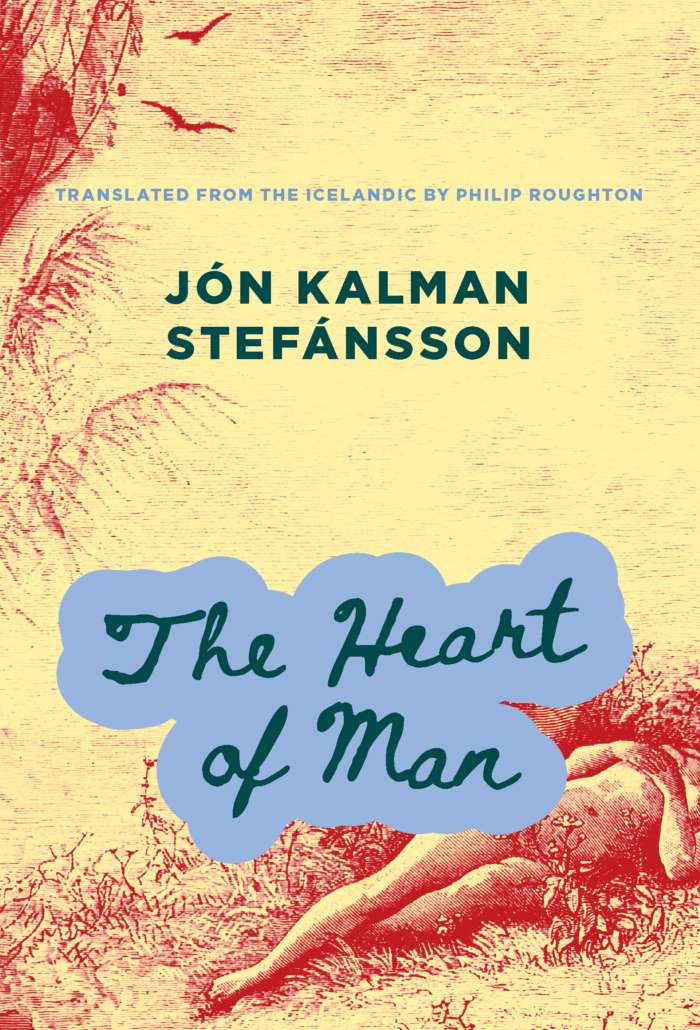
The final installment of Jón Kalman Stefánsson’s Trilogy About the Boy is a profound exploration of life, love and desire written with a sublime simplicity.
After coming through the blizzard that almost cost them everything, the postman Jens and the boy rest in a fishing community at the edge of the world to recover from their ordeal before returning once again to their village. But the northern summers are short and the sea is always present, and fish remain more valuable than men. And the chorus of drowned fisherfolk whisper tales full of silver, regret, smiles, and cruelty, in the hope that hidden within such stories are words that will free us from this tug of war between Heaven and Hell.
Set in the awe-inspiring wilderness of the north of Iceland, The Heart of Man concludes a modern Icelandic saga about a boy and the community of the living and dead who congregate around him, offering a profound exploration of life, love, and desire.
Praise for The Heart of Man
“Translated by Philip Roughton with finesse and rhythmic beauty, they have the mythic, twilit quality of Scandinavian legends . . . Stefánsson also grounds these books in the material realities of their time, capturing the privation of villages built on what seems like the end of the world. The trilogy probes the spiritual conditions of hardship—what life is like on the brink of being extinguished . . . The sensation of being lost in a snow drift is frequent in this trilogy, where eruptions of extreme weather lend an otherworldly feel to the storytelling. Mr. Stefánsson’s writing evokes this sense of fulsome disorientation.”
—Sam Sacks, Wall Street Journal
“There are novels that make something inside you come awake, and make you want to keep it awake. Maybe that’s what a classic is: not only a work that endures but one that makes something endure in you—something that lasts even after you may have forgotten the whole story and the characters’ names. Such is the case with the Icelandic novelist Jón Kalman Stefánsson’s ‘Trilogy About the Boy’ . . . few contemporary novels dare, as these books do, to confront the dilemmas of body, mind, soul, and spirit with equal urgency, to bring the reader right to the edge of the absolute, and leave you, after more than nine hundred pages, so elated that you feel the wind under your feet.”
—Salvatore Scibona, New Yorker
“The Heart of Man is less about what happens than about what the boy observers and learns: strengths measured by weaknesses, what we do versus what we dream, the two sides of the human heart—happiness and despair—the music of life, the silence of death. Introspective and philosophical, it carries readers along a turn-of-the-last-century journey to spend time in places they most likely would never visit, meet people they most likely would never encounter, and yet deeply experience the universal human condition. It touches the heart, activates the mind, and reveals a soul. Exquisite.”
—K.M. Sandrick, Historical Novels Review
“Exquisite . . . A poetic and rich text to spend time with and savor . . . As the final part of its unnamed protagonist’s story, The Heart of Man ties up the threads of the Boy’s coming-of-age plot while fulfilling the many existential themes of Stefánsson’s literary ambitions.”
—Daniel P. Haeusser, World Literature Today
“Infused with the lyrical poetry and dryly humorous worldview pioneered by Laxness . . . Stefánsson’s trilogy is an artistic achievement of the highest order, inviting us to walk in the frozen footsteps of another while recognizing our own path through life in each snowy print.”
—Doug McIntyre, Los Angeles Daily News
“[The Heart of Man] moves fluidly between earthy village gossip and passages of aching, almost hymn-like meditation on love, grief, and mortality. Those ponderings are echoed throughout the books by ghostly voices haunting the margins, reminiscent of a classic Greek chorus . . . There’s a real kinship here with the Havamál (an Old Norse saga of proverbial wisdom attributed to Odin, much like Homer’s Odyssey). Both contain short, aphoristic bursts of hard-won wisdom embedded inside the longer story. It’s part of the tone, but runs much deeper than that. The trilogy posits that words and reputation outlast a person once his body is gone, a belief that fundamentally shapes its style and plot.”
—Adam H. Douglas, The Epoch Times
“A trilogy about a youth’s search for belonging finds its completion in a moody, lyrical, deeply life-affirming final installment . . . Stefánsson excels at capturing the rhythms of village life—the gossip, grief, and constant threat of sea and storm—while offering moody reflections on life and death in a place shaped by the forces of nature. What’s also forceful is the power of language. Words surround the poetry-struck boy like fog creeping in from the sea . . . An engrossing tale as brooding, unpredictable, and invigorating as the sea and storms affecting the characters’ lives.”
—Kirkus Reviews (starred)
“A forceful and intricate trilogy . . . With Heaven and Hell, also published by Biblioasis, Stefánsson introduced readers to the boy, whose close companion freezes to death after being distracted by Paradise Lost. The boy returned in The Sorrow of Angels, where he links up with a proud postman, Jens, for a risky delivery that will change both of their lives. While familiarity with those two novels enriches reading of the third, The Heart of Man is compelling enough on its own, with its lyrical story of a single summer. ‘Some people never get to encounter those whom they ought to know,’ the boy realizes when tragedy strikes. At least we have been given this opportunity to know him.”
—Literary Review of Canada
“Superb . . . You’re never far away from a phrase or sentence that makes you sit up and take notice. The language is beautiful, flowing, with many a wry twist or pithy remark, whether it’s the chorus urging us to enjoy life while we can, the laconic descriptions of life in the village or simply the little joys of life.”
—Tony Malone, Tony’s Reading List
“Stefánsson writes with the soul of an Icelandic epic poet, his grand romantic spirit and poetic prose is rooted in the sagas of the past but directed at a contemporary audience . . . To read this tale, then, is to surrender to the music of the language, because the real question at its heart is: what is the worth of poetry and knowledge? . . . The Trilogy About the Boy does come to a dramatic conclusion at the end of The Heart of Man, but it is one that is not without ambiguity. Of all of the volumes in this trilogy, this is perhaps the one that reads best as a standalone work, but again, the pieces that fall together will have a stronger impact if the earlier books are read first.”
—Joseph Schreiber, roughghosts
Praise for Jón Kalman Stefánsson
“Stefansson’s narrative voice is the book’s most striking quality. It has something in common with the ‘slow prose’ of Jon Fosse: run-on sentences, rich in repeated motifs, that tap into different layers of thought. A typical line in Philip Roughton’s translation is flexible and supple, telescoping from close-up to wider view . . . Once the reader is settled into the rhythms of Stefansson’s prose, we’ll go anywhere with him.”
—John Self, New York Times
“Stefánsson writes his ‘Trilogy About the Boy’ in an omniscient narrative voice that at times resembles the chorus of Greek theater with its often-dogmatic observational statements about the human condition in general and the metaphorical insights into the specific characters of the story. One of the consistent, foundational themes that comes out through this is that even among all the uncertainty and harsh beauty of existence, humans have a drive for survival even when all seems to be exhausted.”
—Daniel P. Haeusser, World Literature Today
“A perfect little novel . . . enthralling, seductive . . . Heaven and Hell embraces and defies the categories of story—adventure, historical, romance, ghost, metaphysical.”
—Joy Williams, Book Post
“Heaven and Hell (the first part of a trilogy) is the most powerful novel I’ve read in the longest time. An unforgettable depiction of life in the north of Iceland in the 19th century—a true masterpiece.”
—Amitav Ghosh, author of Ghost-Eye
“A moving story of loss and courage told in prose as crisp and clear as the Icelandic landscape where it takes place. . . Stefánsson writes like an epic poet of old about the price the natural world exacts on humans, but he’s not without sympathy or an ability to find affirming qualities in difficult situations.”
—Kirkus Reviews (starred review)
“Stefánsson plumbs the depths of a young man’s grief in this ruminative and piercing bildungsroman . . . Readers willing to go the distance will reap plenty of rewards.”
—Publishers Weekly
“The novel is lyrical in detailing hardscrabble life along polar sea shores, where everyone has lost someone, yet the fishing boats keep launching . . . A poetic soul sets out on a quest to honor his lost friend in the aching, trilogy-opening novel Heaven and Hell.”
—Foreword Reviews
“[A] brief, elegiac novel . . . Written in dense, poetic prose, with more emphasis on mood than plot, this novel circles through the many ways of surviving in a harsh place.”
—Booklist
“Some novels are so extraordinary, it’s hard to do them justice in a review. This is one of them, remarkable for its alluring articulation of the daunting arctic weather, and the hovering uncertainty that’s so bound up within it.”
—Kassie Rose, WOSU The Longest Chapter
“Stefánsson shares the elemental grandeur of Cormac McCarthy.”
—Times Literary Supplement
“Like fellow Scandinavian authors Jon Fosse and Karl Ove Knausgaard, Mr. Stefánsson joins plainspoken depictions of daily life to intimations of mysticism, creating a spectral, haunted atmosphere . . . Questioning, vulnerable and openly sentimental, [Your Absence is Darkness] is an absorbing commemoration of what the author calls the paradox that rules our existence, the vivifying joy and paralyzing sorrow of loving another person.”
—Sam Sacks, Wall Street Journal
“Wistful and whimsical . . . [Stefánsson’s] writing is fertile, yielding extraordinary imagery. There are many tears in these stories and in this village, but there is also hope, because even unfulfilled dreams offer guidance, ‘they evaporate and settle like dew in the sky, where they transform into the stars in the night.’”
—Minneapolis Star Tribune
“Jón Kalman Stefánsson’s lyrical style has earned him a dedicated following of readers in Iceland. [In] Summer Light and Then Comes the Night each standalone story describes life in a small village in West Iceland, normal people—their insecurities and anxieties, their courage and loneliness. Together, these episodes create one, coherent whole; there’s no set narrator, but rather, it’s the village that tells these stories of hope, cruelty, life, and death.”
—Literary Hub