Posts

The Bibliophile: Knowing, searching, hunting

Want to get new excerpts, musings, and more from The Bibliophile right away? Sign up for our weekly online newsletter here!

***

Excerpts from the introductions to the Best Canadian Series 2026
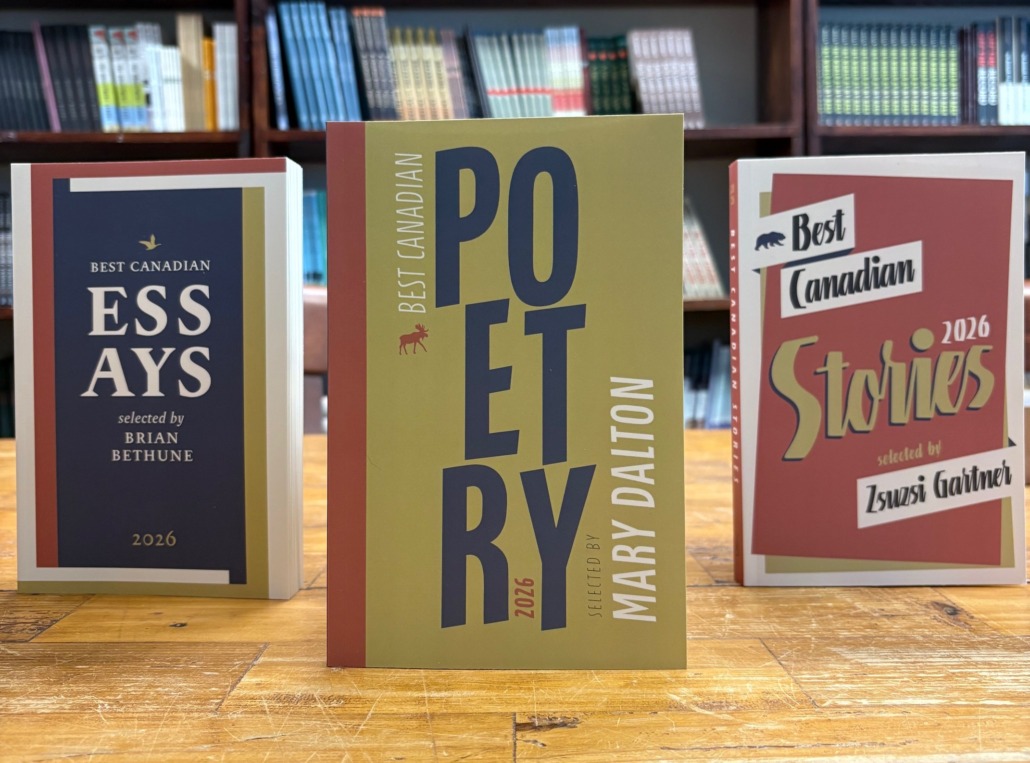
Best Canadian Essays 2026, Best Canadian Poetry 2026, and Best Canadian Stories 2026. Series designed by Ingrid Paulson.

It’s always been a pleasure of mine to help organize and assist with the annual Best Canadian EssaysBest Canadian Poetry, and Best Canadian Stories anthologies, and this year has been no different.

Our editors for the latest editions—Brian Bethune, Mary Dalton, and Zsuzsi Gartner—have all shown such enthusiasm and care during the selections for these anthologies (revisit our contributor announcement), and in the months since, through production and publicity, as we head towards publication next Tuesday, November 18.

On that note, we’d also like to highlight the various launches happening across Canada for each book. For those in the area, we hope you’ll join our contributors and editors in celebrating great Canadian literature and poetry:

  • Best Canadian Stories in Vancouver (Nov 18 at 6:30PM)
  • Best Canadian Poetry in Toronto (Nov 19 at 6:30PM)
  • Best Canadian Stories in Montreal (Nov 24 at 7PM)
  • Best Canadian Stories in Toronto (Nov 26 at 7PM)
  • Best Canadian Poetry in St. John’s (Nov 30 at 7:30PM)
  • A combined Best Canadian Poetry 2025/2026 event in Vancouver (Dec 11 at 7PM)
  • Best Canadian Essays in Toronto (Jan 2026: time and date TBA!)

In today’s Bibliophile, we’d like to present a few brief excerpts from the introductions, letting each editor share, in their own words, a little of their journeys to finding the poems, essays, and stories that they considered to be the best.

Happy reading to all,

Ashley Van Elswyk
Editorial Assistant
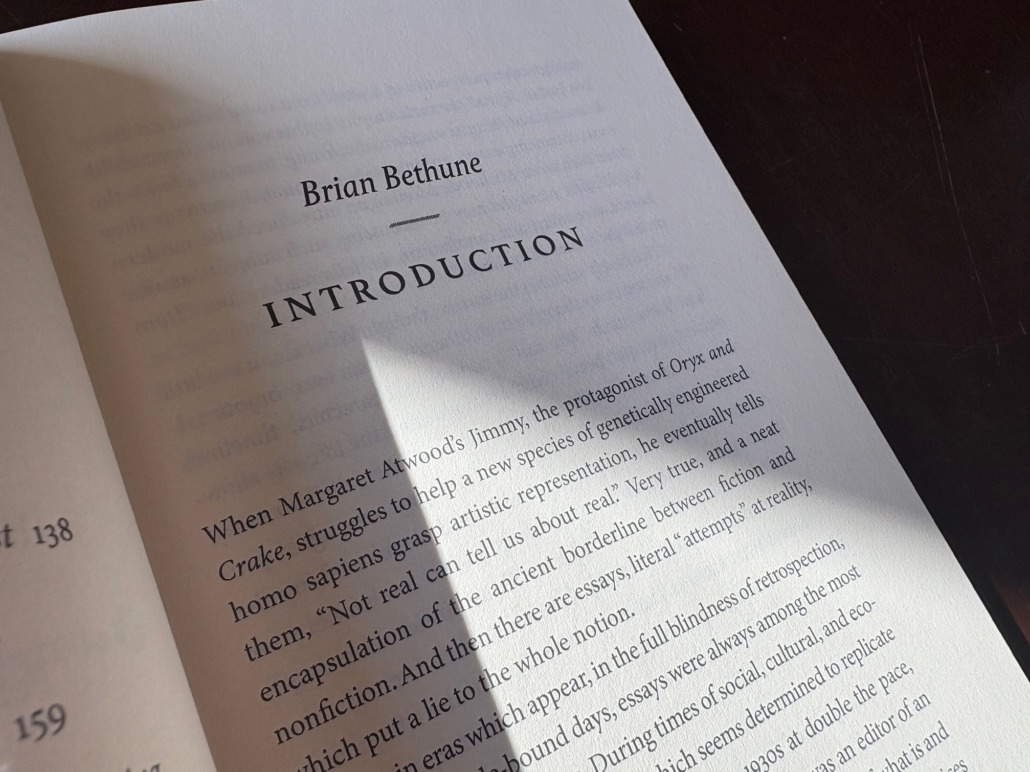

An excerpt from the Introduction to Best Canadian Essays 2026

by Brian Bethune

When Margaret Atwood’s Jimmy, the protagonist of Oryx and Crake, struggles to help a new species of genetically engineered homo sapiens grasp artistic representation, he eventually tells them, “Not real can tell us about real.” Very true, and a neat encapsulation of the ancient borderline between fiction and nonfiction. And then there are essays, literal “attempts” at reality, which put a lie to the whole notion.

Even in eras which appear, in the full blindness of retrospection, to have been rule-bound days, essays were always among the most protean of literary forms. During times of social, cultural, and economic upheaval like our own, which seems determined to replicate Auden’s “low, dishonest decade” of the 1930s at double the pace, essays are slippery indeed. There surely never was an editor of an essay collection who had a good, working definition of what is and is not an essay. Or, for that matter, didn’t introduce their choices without muttering about the genre’s highly permeable edges.

I am honoured to follow that tradition. Some questions about definition are easy to answer. Can there be too much “I” and not enough other perspective in a work for it to be called an essay? No, just no. For all the varied topics in this volume, from childlessness to catfishing to suicide to mourning, to name a few—the most entrancing essays are intensely personal. Exactly as they have been since Michel de Montaigne introduced the modern world’s first essais: he may be discussing such subjects as war horses, inequality, and cannibalism, he tells readers, but “I am myself the matter of my book.”

That barely scratches the surface, though. What about too little “I” and too many thoughts from others—is it an essay or journalism? How much “not real”—composite characters, timelines subject to torque, heavily edited dialogue and the like—is allowable in a piece of “real” writing that can still be called an essay, nonfiction by definition? To which Montaigne once again provides the only answer: que sais-je? In the end, there’s nothing else to do when defining an essay’s boundaries but to channel your inner Potter Stewart, the US Supreme Court justice who simply gave up on identifying obscenity: “I know it when I see it.”

This is what I saw in the essays here. Beautiful writing, acute observation, thought-provoking arguments. And a deep interiority, a kind of personal revelation, sometimes overt, sometimes inadvertent, at times compellingly ambiguous. Sometimes, “real” presents the same human uncertainty and possibility “not real” does.
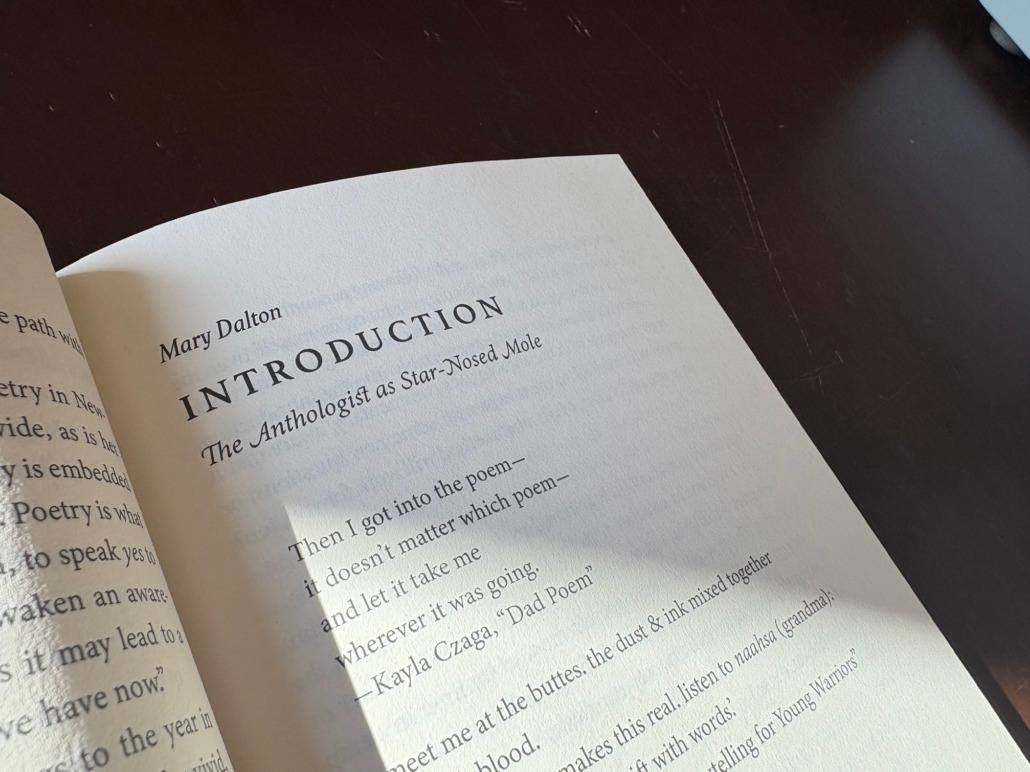

An excerpt from the Introduction to Best Canadian Poetry 2026

by Mary Dalton

The Anthologist as Star-Nosed Mole

Dear Reader, in making your star-nosed way through this anthology, looking for “something written” (to echo the ideal reader of M. W. Miller’s poem), you will likely make observations and linkages other than my own. Think of the following account as one side of a conversation with you. Reading anthologies myself over the years I’ve developed a habit of leaping headlong into the works assembled; afterwards I settle comfortably into the introduction, eager to engage with the anthologist’s commentary, aware that it might send me back to the poems with some new questions, or some new perspective. Maybe that method will work for you, too?

*

Let me tell you about the star-nosed mole. It’s a curious creature, one I’ve come to associate with the process of searching out the energies pulsing in a genuine poem, whether one is maker or reader. The star-nosed mole spends most of its time in damp underground tunnels. It goes by touching, feeling its way along, navigating by means of the twenty-two fleshy tentacles (the star) at the end of its snout. Those tentacles have over 100,000 nerve fibres; the star-nosed mole has the most sensitive touch organs of any known mammal. Its nose has been called “the nose that sees.” Constantly on the move in its search for food, it is a voracious eater, needing to consume 50 percent of its body weight every day. According to The Guinness Book of Records, it is, among the mammals, the fastest eater on earth.

There’s a headlong, unwilled quality to the activity of the star-nosed mole, a blind searching quality that seems to me akin to the energies operating in the creating of a poem, as well as in the process of discovery involved in reading a good poem. When Dennis Lee, in his essay “Cadence, Country, Silence,” gives the name cadence to the particular aspect of poetry which he tries to summon forth, he is attempting to describe something similar:

I speak of “hearing” cadence, but the sensation isn’t auditory. It’s more like sensing a constantly changing tremor with your body: a play of movement and stress, torsion and flex—as with the kinaesthetic perception of the muscles.

In my reading for Best Canadian Poetry 2026 I quested like the star-nosed mole, snout aquiver for the vital pulse. I aimed to read without program, without preference for particular poetics, region, gender, age, or ethnicity—not with the territorial sweep of the eye but sniffing and snuffling along for the spoor of the genuine.

There were certain touchstones, such as Edward Hirsch’s observation that “the lyric poem exists somewhere in the region—the register—between speech and song.” As well, the myriad manners in which form may fuse with content became apparent in the course of my explorations. The poems which distinguished themselves drew in a variety of ways upon the range of resources available to the poet: among them line- and stanza-shaping, image, figure, and voice.

There is, of course, a variety of themes and types of poems. Some of the types and techniques to be found are: ghazal; ode; monologue; catalogue poems, prose poems; dream narratives; pieces inspired by diary format and online comments format; pieces drawing on vernacular and dialogue. A surreal element operates in several poems, as does humour, often of a wryly ironic sort. The dominant mode is free verse, with its music derived from chains of consonance and assonance. In some instances, anaphora drives the rhythm. The couplet, that wily stanza with its capacity to evoke now confinement and now a ramped-up surging energy, is a frequent structural device.

At this point, looking back over the terrain of the gathering I’ve made, I’m feeling my way among the poems once again, in a mole-like sensing of the contours of the collection—and recognizing again the truth of Adam Sol’s observation, made in his How A Poem Moves: A Field Guide for Readers of Poetry, that this is a golden age for the art of poetry.
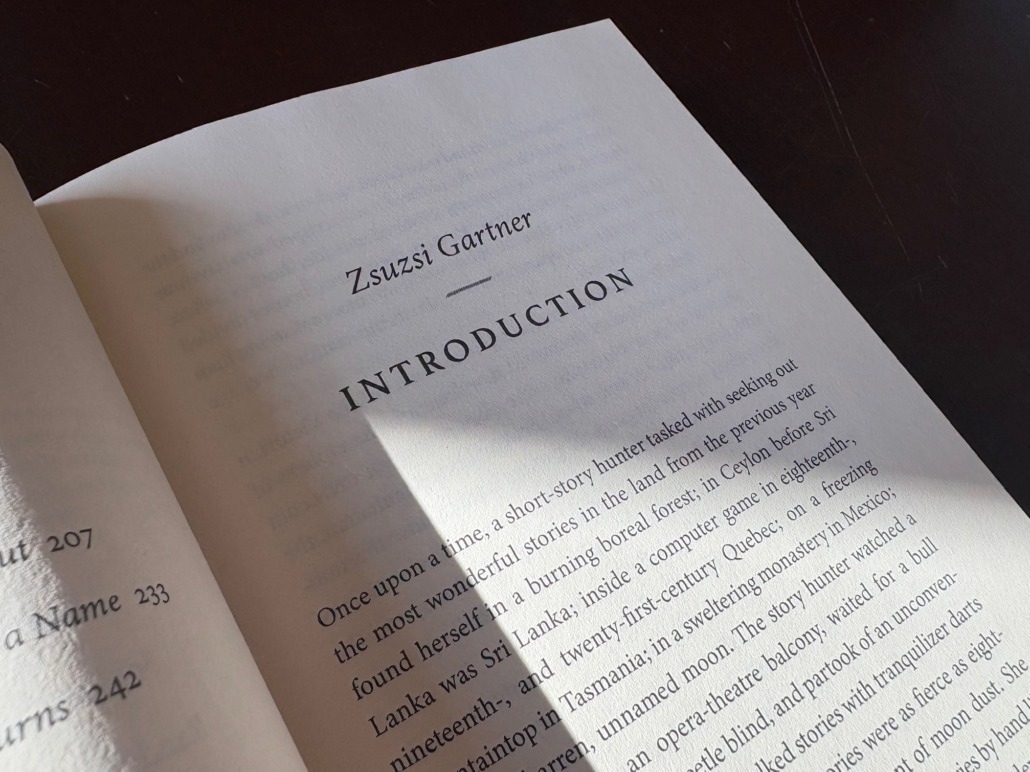

An excerpt from the Introduction to Best Canadian Stories 2026

by Zsuzsi Gartner

Once upon a time, a short-story hunter tasked with seeking out the most wonderful stories in the land from the previous year found herself in a burning boreal forest; in Ceylon before Sri Lanka was Sri Lanka; inside a computer game in eighteenth-, nineteenth-, and twenty-first-century Quebec; on a freezing mountaintop in Tasmania; in a sweltering monastery in Mexico; and on a barren, unnamed moon. The story hunter watched a woman fall from an opera-theatre balcony, waited for a bull moose behind a pine-beetle blind, and partook of an unconventional Christmas feast. She stalked stories with tranquilizer darts and with a butterfly net, as some stories were as fierce as eight-year-old girls, others as elusive as the scent of moon dust. She hunched next to mountain streams scooping stories by hand like a grizzly scoops salmon, tossing back the fry too undeveloped yet to satisfy her vast appetites.

Many of these marvels were not easy to find, hidden as they were amidst the forests of sameness and swamplands of meh. The cities and suburbs and ex-urbs hid stories as well. The story hunter donned mufti and went knocking door to door to find the stories inside houses where the air was crisped to sixty-four degrees while temperatures blistered outside, houses where detoxing teens oozed drugs through their pores, houses divided into apartments where the online world was more satisfying than anything IRL, and apartments in a nineteenth-century heritage building set ablaze.

Like the naturalists and scientific explorers of the Victorian era, the story hunter discovered new lexicons: the ciphers of amateur cyber cryptographers, the close parsing of CNN.com and NYT required of aspirational newcomers to Manhattan, the deceptively simple language of gaming commands, the non-linear communication style of the Intergalactic Federation of Research Camaraderie, the coded meanings of emojis, and the lingua franca of children wielding their otherworldly power at the beach: Boomshaka. Lingwalla. Boomwalla!

Boomwalla, indeed! The story hunter had tumbled down a rabbit hole and was surrounded by an eclectic array of stories all deserving her full attention, like Alice in the midst of her furred and feathered coterie. And like the Dodo after the mad Caucus-race, the story hunter determined that all were winners and all must have prizes. She hopes the authors will accept these accolades in lieu of sugary confections and a thimble.


In other good publicity news:

  • Benbecula by Graeme Macrae Burnet was reviewed in the Chicago Tribune: “Burnet has written the novel from a smattering of historical documents described in an afterward, and he has brewed a powerful spell imagining the darkness surrounding these events . . . For the right reader, Benbecula will be a powerful experience.” Burnet was also interviewed about the book in the Scotsman.
  • Every Time We Say Goodbye by Ivana Sajko (trans. Mima Simić) was reviewed in the Irish Times: “However grim the subject matter, the writing remains exceptionally good, with long, majestic sentences that curl unpredictably around the subject. This profound novel is superbly translated by Simić.
  • Baldwin, Styron, and Me by Mélikah Abdelmoumen (trans. Catherine Khordoc) got a shout-out in the Irish Times: “An intriguing set of essays by a leading Quebec writer who explores the conflicted legacies of William Styron and James Baldwin to reflect on identity politics in the contemporary world.”
  • Self Care by Russell Smith was reviewed in the Winnipeg Free Press: “Self Care isn’t just poking fun. It is also, in many ways, deeply sympathetic to its characters, who are struggling with a world very different from the ones their parents grew up in.
  • Heaven and Hell by Jón Kalman Stefánsson was reviewed in roughghosts: “[Heaven and Hell] combines old-fashioned drama with contemporary literary sensibility, a tale of loss and bravery that makes for a truly glorious read.” Its sequel, The Sorrow of Angels was excerpted in Lit Hub.
  • Ray Robertson was interviewed about Dust: More Lives of the Poets (with Guitars) for the Booked on Rock podcast.
  • Big of You by Elise Levine was excerpted in Open Book: “A masterclass from an author that has few equals in the form . . . Full of disarming tenderness, Big of You showcases Levine’s signature brilliance through language and craft.
  • Precarious: The Lives of Migrant Workers was included in the Hamilton Review of Books’ staff picks list, “What We’re Reading.”
The Bibliophile: Small (or Large) Machines

Want to get new excerpts, musings, and more from The Bibliophile right away? Sign up for our weekly online newsletter here!

***

Introducing Best Canadian Poetry 2025

It’s been a few years since it fell to me to send the acceptances for the three Best Canadian anthologies: Ashley Van Elswyk, our editorial assistant, has lately managed this massive and potentially unwieldy task with her usual good humour and organizational grace. But as I recall, the poets’ responses tended to be the most entertaining. These ranged from effusive thanks directed to the messenger, who truly deserved none—all credit to series editor Anita Lahey and our guest editors, who annually make the selections, buoyed by seemingly bottomless stores of enthusiasm and curiosity—to what amounted to gentle phishing accusations, so surprised are some writers to learn they’ve made the year’s list. I have certainly felt the same way on the receiving end of one of those magical emails dispatched from the mysterious island of editors: Who are you, really, and why are you subjecting me to such a cruel joke? Writing is failure, as a wise soul reminds us, but every now and then—annually, for at least fifty Canadian poets—maybe it isn’t, and readers of Best Canadian Poetry are the rich recipients of these successes.

Photo: A stack of the new Best Canadian Poetry 2025 selected by Aislinn Hunter, with longtime series editor Anita Lahey.

Occasionally a writer would ask me what it was we meant by “best,” or by “Canadian,” though I can’t remember a poet asking what we meant by “poetry.” I doubt this is because we each have an answer ready. It’s far more likely that we are glancing sideways at each other and hoping not to be asked, either because we haven’t a clue at the moment, or because we know precisely and with a fierce certainty we’d either be embarrassed to assert or afraid to argue for and fail to defend. On my brighter days I believe and happily insist that what poetry is is an attempt to understand what poetry is, and on my darker ones I lament the same. On my pedantic days, of which one is Friday, November 22, I am partial to the offerings of William Carlos Williams—“A poem is a small (or large) machine made of words”—and Robert Frost: “a momentary stay against confusion.” I like the Williams for the veneer of exactitude it undercuts at the same time it declares itself, how its metaphor invites extending. Small like a pencil sharpener, or like a really big humidifier? Large like Linotype, or like a particle accelerator? Yes, and yes, and yes and yes. Frost, of course, is Frostier: as the key turns in the sonnet’s lock, for at least that instant, something has tumbled into place.

Inevitably our BCP editors must face this question and its endless answers again and again as they compile their initial list of one hundred poems and meet over a period of months to discuss and refine that selection to just fifty. I don’t envy them their task—every poem, and every acknowledged answer, means another crossed off the list—yet those decisions yield yet another entryway, another place to stand. Having completed her selection for BCP25, Aislinn Hunter, this year’s guest editor, writes in her introduction:

I believe that poems behave like living things. They open and close, they shift and grow. Poetry’s essential elements move into us—letter and word shapes swimming past retinal neurons and along phonological and lexical routes, eventually meeting neurons and synapses that light up the forest / the temple / the mess hall of our brains. Language—poetry’s essence—changes our physiology, which is to say that a poem’s doing to us is as real as rain on skin. Of course, the power of the art we’re meeting matters, as does the state of alertness we’re in.

In our disembodied age, in which we are increasingly more likely to encounter one another as pixels than as people, what a beautifully embodied understanding of the ways that poems can do their work on us, can remind us how to slow and even stop, if only for a momentary stay.

And so, Dear Reader, I leave you with three of my favourites from this year’s edition: Molly Peacock’s “Honey Crisp,” Bertrand Bickersteth’s “A Poem about Black Boy’s Horse,” and “He/him” by Y.S. Lee. Each is accompanied by the poet’s biography and their comments on the making of the poem, a favourite feature among BCP readers old and new. I hope they’ll find you, wherever you are, and leave you feeling a little bit more real, open to yourself and to the world we share.

p.s. Books, I’m told, make great holiday gifts, especially ones that come price-bundled and beautifully wrapped in Ingrid Paulson’s superb Best Canadian Series design.

Vanessa Stauffer,
Managing Editor

***

Honey Crisp

Molly Peacock

Hello wizenface, hello apple,
understudy in the fridge
since March (it’s September).
Hello wrinkly red cheeks,
I’ll bet you’re almost a year old,
born last autumn,
kept in the fruit storage built
half-underground on the farm,
then, in the snow, sold to me.
Hello my honey crisp (well,
my honey, no longer crisp . . .),
are you asking why you
haven’t been eaten by now?

Because that man hewed to his routines:
an apple for lunch every day,
the same red punctuation.
You were earmarked for the date
he slipped from my arms & we both
slid to the floor, red angel, are you
listening? 911, hospital, hospice,
and ten days later (you were
about six months old then),
he died and was carried
to a cold shelf.

Hello smiley-stem, hello days
moving you from spot to spot.
Hello week where I forgot
and left you at the back and
went about my new life.
Greetings new groceries!
Their jumble causes a re-
arrangement of your bin,
so I have to pick you up
—would you rather
have been eaten and
lived on as energy?
Not yet, not yet, my pomme.
Hello soft wrinkled
face in my palms.

—from The Walrus

Molly Peacock lives in Toronto and has published eight books of poems, including The Widow’s Crayon Box (W. W. Norton, 2024). She inaugurated The Best Canadian Poetry series in 2008 with Tightrope Books, editing it until 2017, and is delighted to return as a contributor. Peacock is also the author of two biographies of women artists, The Paper Garden (Emblem Editions, 2011) and Flower Diary (ECW Press, 2021), and the memoir Paradise, Piece by Piece (Riverhead, 1998).

Of “Honey Crisp,” Peacock writes, “After my husband died, I cried for twenty-eight days straight. On the twenty-ninth day, I woke without tears, picked up a blue mechanical pencil, and began to write the poems that would become The Widow’s Crayon Box. ‘Honey Crisp’ literally began when I walked to the refrigerator. There was my husband’s last apple—I couldn’t throw it out. In the back of my mind was William Blake, who spoke to a Tyger. Could I write a poem where I spoke to the apple, telling it what happened to my husband, reminding it of its origins, how I bought it, and why it would never be eaten? That idea could go very, very wrong! But widowhood made me fearless. I pulled out a purple pad (what other colour do widows use?) and drafted the poem. It amazed me that if I was simple and direct, like a seventeenth-century poet talking to an animal, I could infuse the poem with all I felt. P.S. The apple stayed in the fridge after the poem. I painted a watercolour of it. Then put it back. A long time after that, I buried the almost-dried apple with the geraniums in my balcony garden.”

***

A Poem about Blackboy’s Horse

Bertrand Bickersteth

Boy’s horse stepped in a badger’s hole, lost her footing
and fell. Boy was flipped

in the air. His foot caught in the stirrup. He felt a pain
shoot through his ankle,

felt the inertia of his flight take over the topography, twist
westerly, still tilting to the east.

His body was a loose spigot pivoting around the fulcrum
of a meaningless ankle.

He felt his fingers slipping through her withers, felt the fear
of the horse rushing to the ground

above him. He couldn’t stop any of it. Couldn’t stop himself
from imagining the unknowable

impact or the whistle of weight to follow. He knew what was
coming. He knew the soil

he was headed for. Knew its knowledge. The chemistry of
its creativity: mildly gleysolic

chernozem, churning life and his livelihood as he knew it.
Knew it, too, as foreign, as far

from familiar as he was from family. He tried to imagine a family
but their image burst into the falling

air before him, before fading, as always, into the darkness
of dirt. Then came the weight

of sadness and the piercing pain of the forgone, unmentioned,
unmurmured, like that flash of green,

that patch of wild timothy whose individual blades know nothing
of their shared past,

know nothing of their sibling entanglement, nothing at all
of their intertwined roots

whose domain is the catacombs beneath the crust, whose action
is downward groping, like fingers of ancestry,

a blind quest in the sorrow of soil, forever fumbling, forever finicking
for the unknowable mother of darkness.

—from The Fiddlehead

Bertrand Bickersteth lives in Moh’kins’tsis (Calgary) in Treaty Seven. He is the author of The Response of Weeds (NeWest Press, 2020), which was the recipient of multiple awards, including the Gerald Lampert Memorial Award and the Stephan G. Stephansson Award for Poetry. He currently teaches at Olds College and is writing a collection of poems on Black cowboys.

Of “A Poem about Blackboy’s Horse,” Bickersteth writes, “After suffering from a year-long bout of writer’s block—brought on by the murder of George Floyd in the summer of 2020—I eventually found my way back to writing through the topic of Black cowboys. I was struck by how iconic cowboys are to the west and yet how unknown the existence of Black cowboys is (yes, Black cowboys here in Canada). I began writing a series of poems fleshing out their histories and, for some reason, I became obsessed with the moment of death in one of their lives. John Ware, the most famous/unknown cowboy in Canada, died tragically, ironically, when his horse tripped and fell on top of him. I was compelled to write poems that repeated this moment from different vantages. I think knowing that our national awareness of Black cowboys was doomed to die, I wanted to hold on to him as long as I could, stubbornly pause everything in the moment before the end, desperately cling to that moment when his Black life still mattered.”

***

He / him

Y. S. Lee

At seventeen, you almost crashed the Firebird
on a road whose name we’ve long forgotten.
Flare of yellow in the headlights, then
you stood on the spongy brakes,
wrenched the wheel hard right. We lurched
into stillness, just shy of the ditch

In the minute afterward
engine ticking
cicadas silenced
you asked, Does life feel real to you now?
I think I laughed. I definitely thought
No

When you tell me your big news
it’s like that moment when the optometrist
flicks one final lever and the soggy letters
suddenly surface, bold and sleek
against a field of light. Oh,
there you are.

—from Grain

Y. S. Lee lives in Kingston, Ontario. She is the author of a poetry chapbook, Exit Permit (Anstruther Press, 2023), and a winner of Contemporary Verse 2’s Foster Poetry Prize. Her fiction includes the award-winning YA mystery series The Agency (Candlewick Press) and a forthcoming picture book, Mrs. Nobody (Groundwood Books).

Lee writes, “I wrote ‘He/him’ for my high-school bestie when he came out as a trans man. I was thrilled for him and wanted to celebrate his identity. Gender transition is sometimes seen as slow and arduous, but I also want to keep sight of what a triumph it is. Plus, he and I did our share of impulsive stuff as teens and I’m interested in how even dumbass near-disasters can offer moments of insight, if we pay attention.”

***

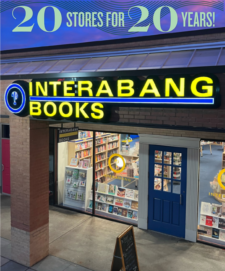
20 Stores for 20 Years: Interabang

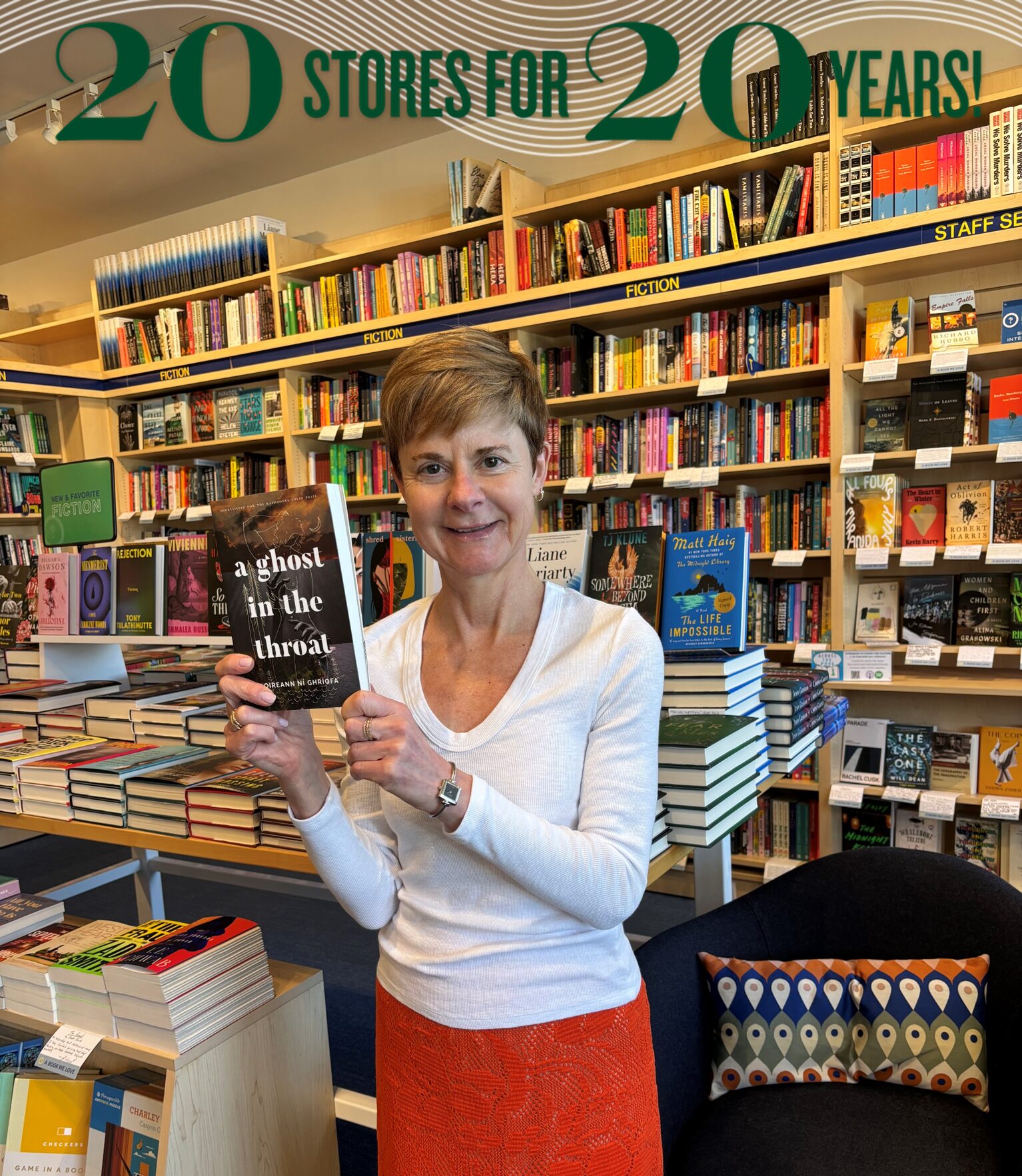
The second independent bookstore we’re celebrating as part of our “20 stores for 20 years” anniversary project is Interabang Books, located in Dallas, Texas. Lori Feathers, bookseller extraordinaire, chose the genre bending memoir A Ghost in the Throat by Doireann Ní Ghríofa as her favorite Biblioasis pick, and our publisher Dan shared why he knew Lori would be an amazing advocate for our books from their first meeting.

Photo: The eye-catching front entrance of Interabang Books invites all to come in and browse for their next read.

Dan first met Lori at  the 2019 Winter Institute where she quickly became a vocal champion for Lucy Ellmann’s Ducks, Newburyport—and went on to champion many more of our books. Dan says, “I’ve met few other people as committed to the vocation of bookselling, and to independent publishing and literature in translation, as Lori. She’s fearless as a bookseller and literary critic; and as a champion of exceptional books, her enthusiasm and commitment knows no bounds and has resulted in some of my favourite literary things, including her podcast (with Sam Jordison) Across the Pond and her North American edition of The Republic of Consciousness Prize. I wasn’t surprised to learn that she’s also a dancer: she’s as nimble and elegant as they come.”

And here’s why Lori chose A Ghost in the Throat as her favorite Biblioasis book: “More than almost any other book that I’ve read in the past few years, Doireann Ní Ghríofa’s beautifully bewitching A Ghost in the Throat has stayed with me. In it a young, stay-at-home mother becomes obsessed with another woman, long deceased. Her muse is Eibhlín Dubh who, as a young mother herself, composed a legendary, 18th-century lament for her murdered husband, The Keen for Art O’Laoghaire. Although centuries and social class separate the two women, the narrator is irresistibly drawn to Dubh’s Keen. Ghost depicts the narrator’s quest to uncover the essence of Eibhlín Dubh from a history in which she has been silenced. This extraordinary book reclaims Dubh for posterity, reanimating her via Ní Ghríofa’s extraordinary and resonant writing.”

Photo: Lori Feathers posing with her Biblioasis pick, A Ghost in the Throat by Doireann Ní Ghríofa.

***

In good publicity news:

Media Hits: YOUR ABSENCE IS DARKNESS, THE FUTURE, THE EDUCATION OF AUBREY MCKEE, and more!

IN THE NEWS!

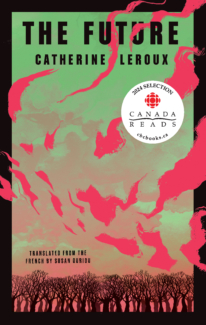
THE FUTURE

The Future by Catherine Leroux, translated by Susan Ouriou (Sep 5, 2024) was featured on Michigan Public Radio. The feature was reported online on February 28, 2024. You can read (and listen!) to the MPR piece here.

Rachel Ishikawa and Olivia Mouradian write:

“The novel contends with histories of forced migration, poverty, and environmental degradation … [and] speak[s] more broadly to the ways cities will be forced to change in the face of climate change.”

The Future was also reviewed in the Ottawa Review of Books on February 28, 2024. You can read the full review here.

Tim Niedermann writes:

“Leroux immerses the reader in these children’s world as they experience it … Trees and animals, wind and water speak to them in ways adults have forgotten…A paean to the wisdom that childhood possesses and the promise that it holds.”

Leroux read from The Future on CBC As It Happens on February 28, 2024. You can listen to the full episode here.

Grab your copy of The Future here!

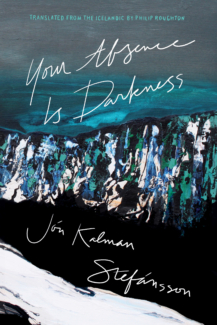
YOUR ABSENCE IS DARKNESS

Your Absence Is Darkness by Jón Kalman Stefánsson, translated by Philip Roughton (Mar 5, 2024) has been reviewed in the Wall Street Journal! The review was published online on Mar 1, 2024. You can read the full review here.

Sam Sacks writes:

“Like fellow Scandinavian authors Jon Fosse and Karl Ove Knausgaard, Mr. Stefánsson joins plainspoken depictions of daily life to intimations of mysticism, creating a spectral, haunted atmosphere … Questioning, vulnerable and openly sentimental, this is an absorbing commemoration of what the author calls the paradox that rules our existence, the vivifying joy and paralyzing sorrow of loving another person.”

Your Absence Is Darkness featured by the Historical Novel Society as a forthcoming book to watch for. The article was published online on February 29, 2024.

You can read the full Historical Novel Society article here.

Get Your Absence Is Darkness here!

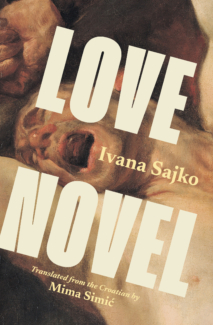
LOVE NOVEL

Love Novel by Ivana Sajko, translated by Mima Simić (Feb 6, 2024) was featured on Lit Hub as having one of the best book covers of February! Check out the full article here.

Get Love Novel here!

HOW TO BUILD A BOAT

How to Build a Boat by Elaine Feeney (Nov 7, 2023) was reviewed in The Arts Fuse. The article was published online on March 1, 2024 and you can read the full review here.

Roberta Silman calls the book:

“[A] work of such depth and compassion that it was no surprise to learn that it was on the Long List for last year’s Booker prize … This is a book that should be read by every child and adult who is convinced he doesn’t ‘fit in.’ A book whose allusions and concerns broaden our view of the world.”

Get How to Build a Boat here!

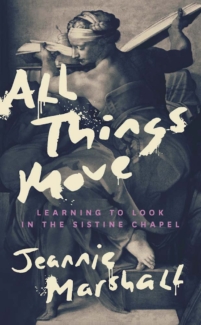
ALL THINGS MOVE

All Things Move: Learning to Look in the Sistine Chapel by Jeannie Marshall (Apr 4, 2023) has been reviewed in Commonweal Magazine. The article was published online on February 26, 2024, and you can read the full review here.

Jeff Reimer writes:

“Marshall does not set up her unbelief as a barrier to encounter. Rather, she allows herself to be addressed by the paintings. She opens herself to them … Marshall is as much seeker as skeptic.”

Get All Things Move here!

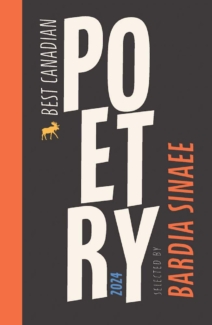
BEST CANADIAN POETRY 2024

The Best Canadian Poetry 2024 anthology (Nov 14, 2023) has been featured on CBC Victoria and in Victoria Buzz, in advance of the Victoria book launch. Both pieces were published on February 28, 2024. You can listen to the CBC interview feature here.

Get Best Canadian Poetry 2024 here!

Check out all three Best Canadian anthologies here!

Celebrating Poetry Month with Biblioasis Poets!

It’s National Poetry Month, and Biblioasis is celebrating virtually with our brilliant poets! Each day we’re featuring a different poet on our social media, who not only reads from their work, but gives a little insight into their poetry as well. Join us for this exciting month of paying tribute to poetic excellence by checking out their readings so far below!


Starting off the month was a throw-back to an event from last year, A Best Canadian Poetry Virtual Event, with Anita Lahey and Luke Hathaway. Featuring readings from, and discussions about, Best Canadian Poetry 2020 anthology!

Sanna Wani is the first of our individual poet readings, beginning with her poem “As I pray”, which was in Best Canadian Poetry 2020, and originally published in canthius:

Geoff Pevlin reads and discusses “clumper crackies/Ice Pan Puppies”, from Best Canadian Poetry 2020, originally published in The Fiddlehead:

Fiona Tinwei Lam leads us into her poem “Ode to the Potato”, featured in Best Canadian Poetry 2020, and originally published in The New Quarterly:

Next up, Dallas Hunt reads “Louise”, featured in Best Canadian Poetry 2020, and originally published in Contemporary Verse 2:

Susan Haldane gives a lovely reading of “Thin-Skinned”, featured in Best Canadian Poetry 2020, and originally published in Grain Magazine:

Rob Budde discusses his poem “Blockade”, featured in Best Canadian Poetry 2020, and first published in The Goose Journal:

Kevin Spenst’s poem, “It Will Rain Like Rods On the Hillside in Sweden” is read not by one, but various people to to articulate the presence of rain across the world. Spenst is featured in Best Canadian Poetry 2020, and his poem was originally published in Taddle Creek.

Dell Catherall brings us outside with her poem “Fig Sestina”, featured in Best Canadian Poetry 2020, and originally published in The New Quarterly:

Rounding out the first half of the month is Erín Moure, reading “Odiama”, which was featured in Best Canadian Poetry 2020, and first published in Arc Poetry Magazine:


But Poetry Month’s not over yet! Follow along on Facebook, Twitter, and YouTube throughout the rest of April to continue listening to more from our amazing poets!


Purchase Best Canadian Poetry 2020 from Biblioasis here, or from your local bookstore!