
Posts

Our seasons

An interview with David Macfarlane, author of On Sports
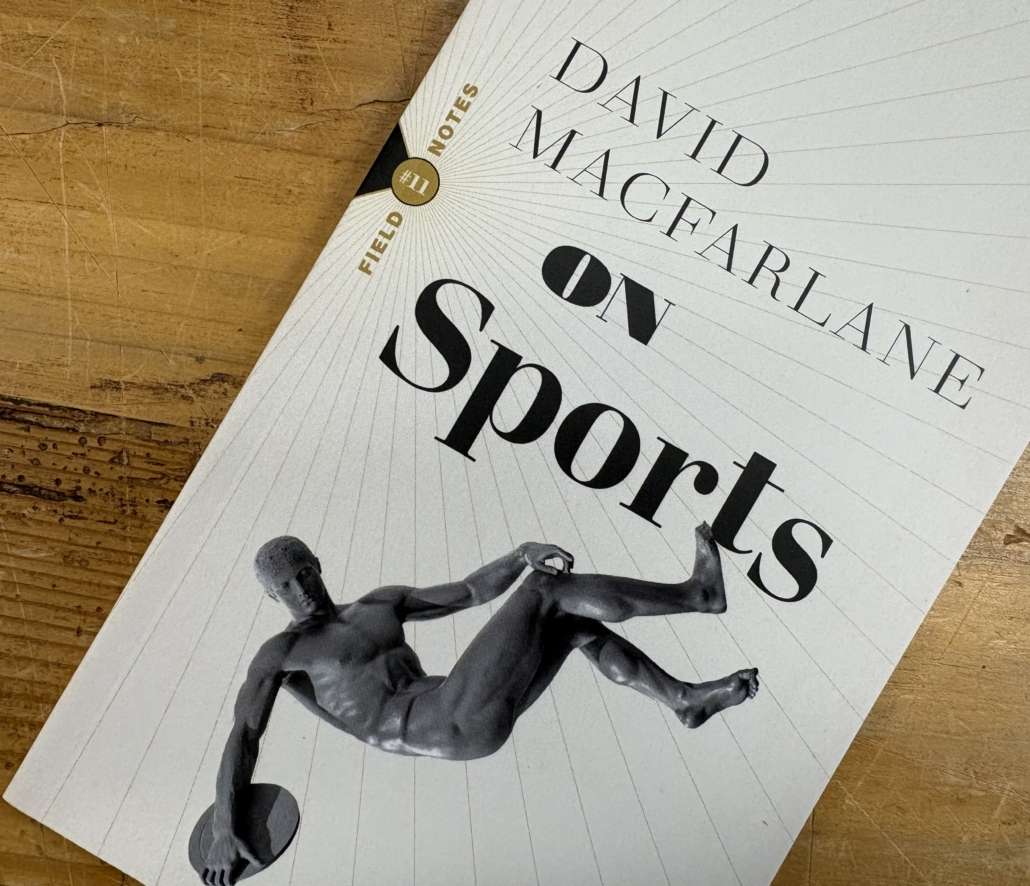
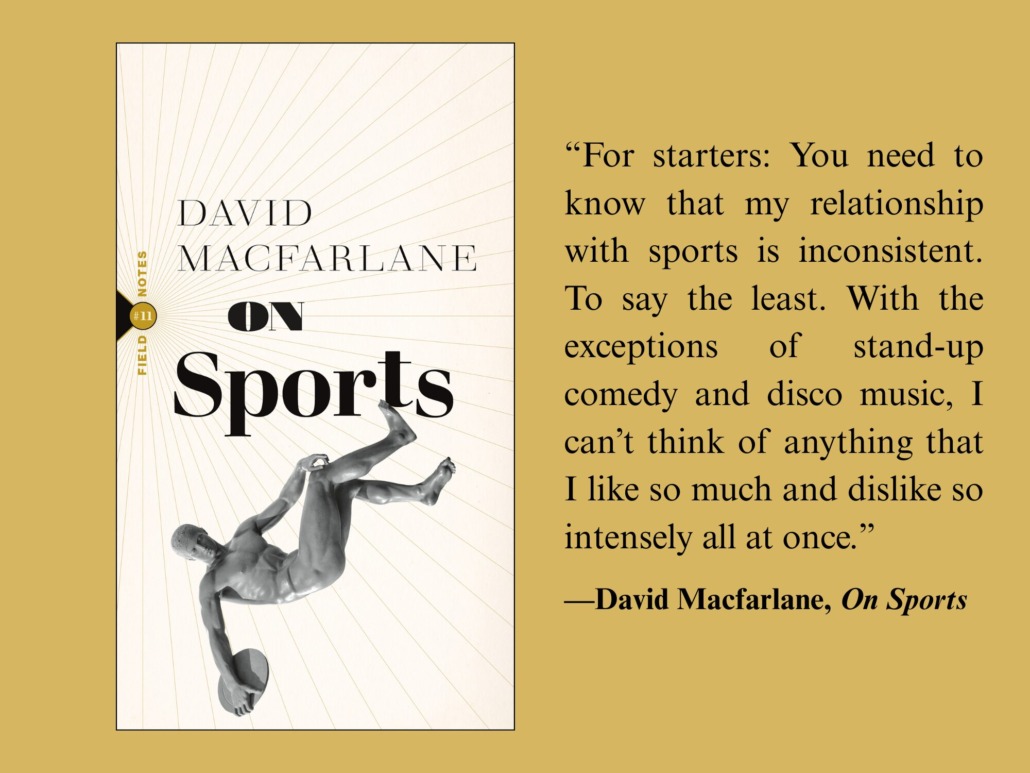
Photo: On Sports by David Macfarlane. Cover designed by Ingrid Paulson.

The other week, in The Tyee, the writer Cole Nowicki wrote an excellent essay about sports and money, using David Macfarlane’s new book, On Sports, as a way to explore the ineffable magic of sports, fandom, and the ways money spoils the fun. It’s a great piece and I recommend you all read the full thing, but I’ll highlight this lovely bit of praise from Nowicki because it describes exactly what I love about this book:

On Sports is a showcase of [Macfarlane’s] breezy control over the nuts and bolts of professional and amateur athletics, their cultural import as well as the rhythms (and seasons) of sports writing.

The book makes its most memorable connections when Macfarlane, with his often beautiful prose, tunes into that deeper emotional frequency—the personal, communal, spiritual and profound—that sports are uniquely capable of hitting.”

On Sports eloquently examines the ways money has worsened our enjoyment of sports today, but it’s Macfarlane’s personal anecdotes, about his childhood and his days as a sports reporter, that make this a fun and special read.

I was reminded this week that the NHL playoffs start tomorrow. And I think On Sports is the perfect book to read during the game’s commercial breaks. Its chapters are short enough and Macfarlane’s words are infinitely more engaging than the gambling ads they’ll push on you.

I had the chance to ask Macfarlane a few questions about his book and you can read his responses below.

All best,

Ahmed
Publicist


A Biblioasis Interview with David Macfarlane

Author of On Sports

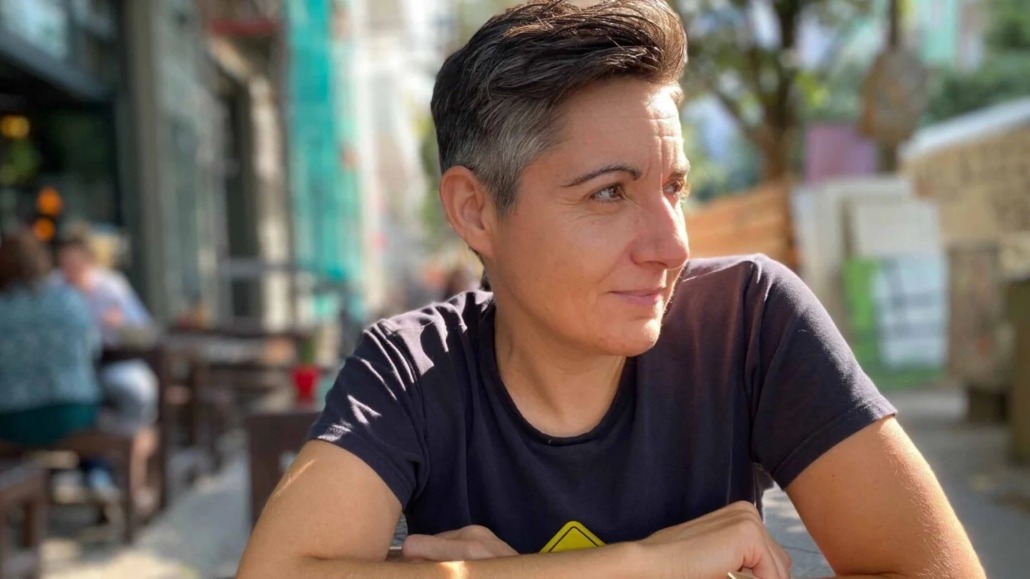
Photo: David Macfarlane.

Can you start by telling me a bit about yourself and how this book came about?

From (approx.) 1980 to 2010 I worked primarily as a magazine/newspaper writer. I covered a wide range of subjects, but always enjoyed sports-writing assignments—even winning a few Sports Writing awards over the years. I’ve admired sports writers almost as long as I’ve admired athletes.

This is a book about your love of sports but also your discomfort with them today, primarily because of money (the gambling, the ticket prices, the salaries). Of sports, you write that “Athleticism is what redeems them. And money is what fucks them up.” What do you think is the worst way that money has fucked them up? What have we lost because of it?

No shortage of possible answers, but I guess it has to be gambling that is the worst—gambling as condoned by professional sports leagues and broadcasters. There are lots of other money-related problems: the cost of tickets; the demands of advertisers; the gap in earning power between male and female pros. But gambling is the nasty genie that we won’t get back in the bottle. I hope I’m wrong, but I think professional sports will be largely about gambling in the future. This is an enormous change. There was a kind of purity to sports—pure in that athleticism was the most important aspect. No more.

Windsor folks: Come see David at his launch at Biblioasis Bookshop on May 4, alongside Alex Pugsley (Silver Lake) and Don Gillmor (Cherry Beach)!

In the book you mention that the biggest story in sports today is the popularity of women’s sports. Why do you think that is? You also mention that going to a PWHL game was the most fun you’ve had recently at a professional game. Is because they’re not as fucked up by money yet, or is it something else?

It’s an over-used term, but I think toxic masculinity plays a big role in professional sports. But I don’t think the source, at least not the primary source, is the athletes. My theory (based entirely on anecdotal evidence) is that it is the ring of men (always men) who always surround athletes—the broadcasters, the advertisers, the publicists, the agents, the commentators, the journalists, the managers, etc.—who propagate and celebrate the bro myth. Because it gives them the kind of narrative hook that salesmen need. And perhaps there’s nothing inherently wrong with the bro myth other than how tedious it gets, but I find that it gets very tedious indeed. It was a great (and unexpected) relief to go to a PWHL game and discover that it was gone—and that good, exciting hockey remained.
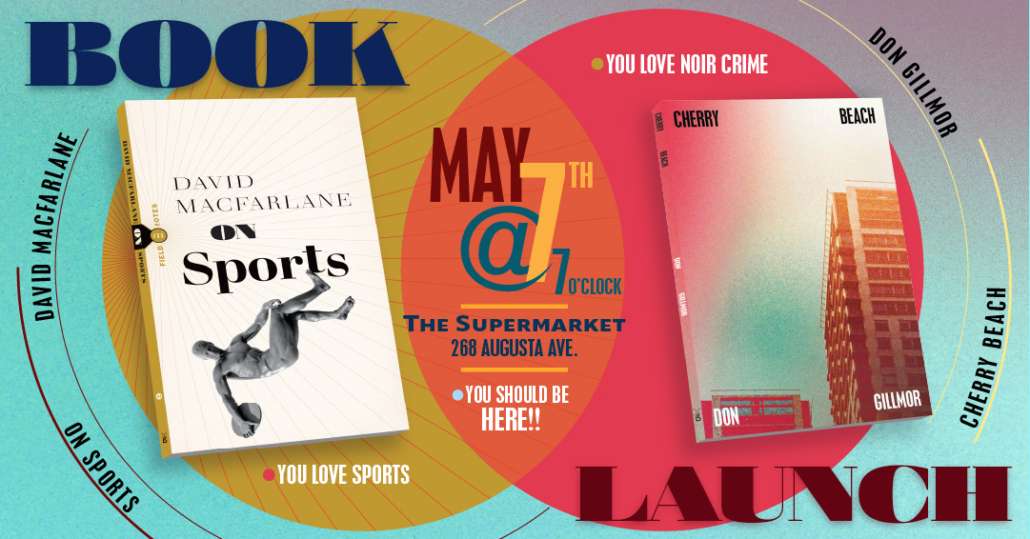
Toronto readers can meet David at his other launch on May 7 at The Supermarket alongside Don Gillmor (Cherry Beach).

Can you talk about seasons? The book is broken up into seasons, and I know your friend, the writer Alison Gordon, who is mentioned throughout the book, was adamant about baseball never going over its regular schedule. And as a kid, it seems as though you would measure time by what sports you were playing. Why did you decide to structure the book as different seasons? And how important are seasons for how we think about sports?

To be born when I was, into a middle class North American family, made the overlay of sports on the calendar almost automatic. And that’s simply because kids played outside, and the weather dictated our recreational activity. Football, hockey, baseball were our seasons—summer being less single-minded in its athletic presentation. In this way, sports were almost always connected to weather. This is a deep, almost spiritual connection, and Alison was offended that baseball saw fit to extend its season, for no reason pertaining to baseball, into a season that had nothing to do with curve balls and double plays. No ball player and no fan in (let’s say) 1954 ever thought that the season was too short. It wasn’t. Like the dimensions of a baseball diamond, it was perfect. To malign perfection, for the sake of money, is (so Alison believed) a sin.

You mention that part of what you loved most about sports was reading about the games in newspapers, and you talk a lot about your favourite sports writers in the book. I see On Sports as kind of an homage to great sports writing. How did those sports writers influence how you watch and/or think about the games? And how have they influenced your own writing?

Around the time that I was starting to think I wanted to become a writer, I began noticing examples of what I now categorize as “good writing.” I’m not quite sure what that is in its specifics—some combination of cadence, clarity, wit, and love of language—but it was sports writing that first drew my attention to skillful, informative, entertaining prose. Of course, that may have had something to do with the fact that sports writing was almost all I was reading at the time. Nonetheless, until I hit James Bond, there were no books I found more exciting (thank you public library) than books about players, or teams, or coaches or games. And when I began writing for magazines, it was reading Roger Angell on baseball and Herbert Warren Wind on golf and John McPhee on tennis (all New Yorker writers) who opened the possibilities (for me) of what today is called long-form journalism. And I ended up having the same experience as a writer that I’d had as a reader. After a slog of political and business profiles, I was assigned a story on Maple Leaf Gardens. And writing about sports reminded me that writing (like reading) can be fun.


In good publicity news:

  • Benbecula by Graeme Macrae Burnet has been shortlisted for the 2026 Walter Scott Prize for Historical Fiction and longlisted for the 2026 Crime Writers Association Historical Dagger Award!
  • Smash & Grab by Mark Anthony Jarman was reviewed in the Literary Review of Canada: “Jarman gathers disparate threads, memories, and digressions into something greater than the sum of its parts. As much as the outside world may disturb, in these pages, readers will find a rich inner life on full display.
  • Who Else in the Dark Headed There by Garth Martens was also reviewed in the print Literary Review of Canada: “The language is sensory, emotive, and inexplicably captivating. Arresting fragments emerge from a relentless invocation of half scenes, stitched together with the singular logic of poetic memory (which is to say, with mystery.)
  • The Passenger Seat by Vijay Khurana was reviewed in The Fiddlehead: “The performative nature of masculinity is something that Khurana captures with skill . . . The Passenger Seat, while no light read, is a genuine artistic statement—a simple story with deep resonances. While Adam and Teddy take the road to nowhere, this story might take the rest of us somewhere, somewhere better.
  • Best Canadian Poetry 2026 edited by Mart Dalton was reviewed in The Miramichi Reader: “Best Canadian Poetry is an annual treat. I love the cream-skimmed aspect, the cross-section of what people are thinking about and how they are expressing it. It’s a sort of snapshot of the Canadian poetic zeitgeist.

Biblioasis Winter Preview: Part I

Want to get new excerpts, musings, and more from The Bibliophile right away? Sign up for our weekly online newsletter here!

***

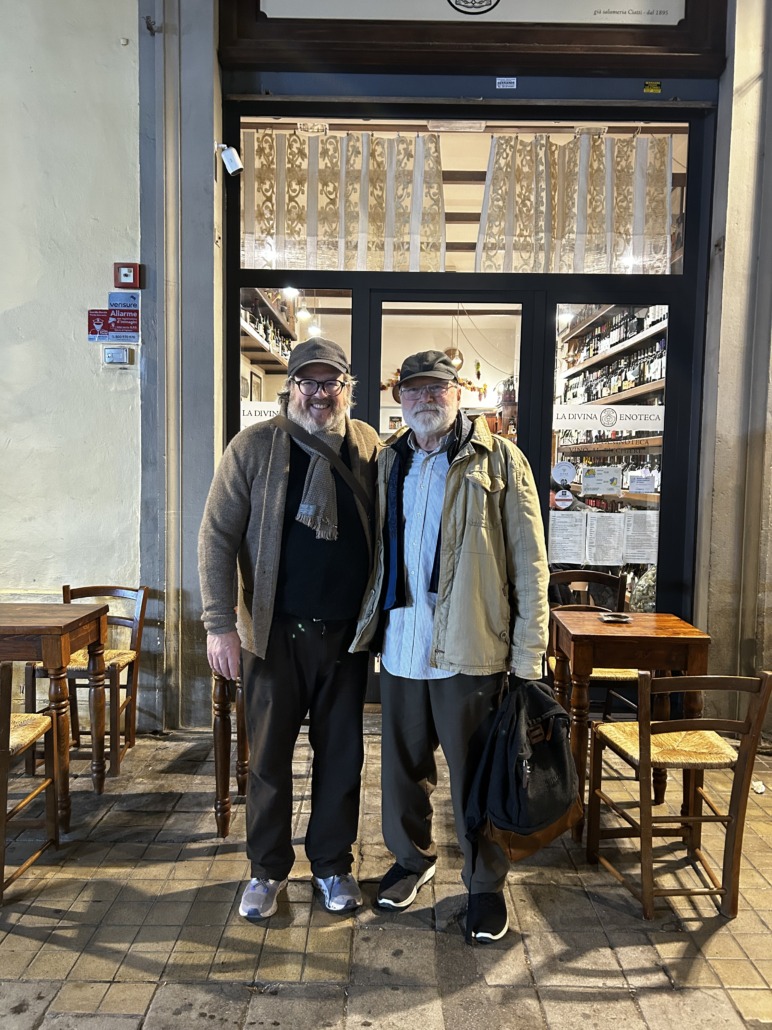
We took an extended break this year at the Bibliomanse, and my own was extended further still by five inches of snow in Paris and Amsterdam, even if a short purgatory in Dante’s city is nothing to kvetch about. Besides, it came with the added benefit of having a couple of drinks with the author of our first title of the season, Mark Anthony Jarman.

Photo: Our globetrotting publisher Dan Wells (left) meets up with Mark Jarman (right) in Florence.

Still, I’m not sure I’ve ever been so happy to be back behind this desk and working on new books, while planning to help broaden the spotlight to include some of our previously published ones as well. (Backlist is Bullshit.) This is only my third full day in office this year (if you don’t count my cramped work at 35,000 feet over the Atlantic) and I’m grateful for many things as we begin 2026, including the great people I get to work with during the creation of these many books, and their enthusiasm and willingness to try new things as we continue to figure out how to make this most difficult of professions make sense, while having a little fun along the way.

Rather than overwhelming you with the complete list of everything we have coming over the first half of this year, or even during the Winter Season, we thought we’d share the first three titles we’re publishing in 2026, breaking this preview up over a few posts over the coming weeks.


Smash & Grab

by Mark Anthony Jarman

A mischievous medley of stories that blur the lines between the real and the imagined.

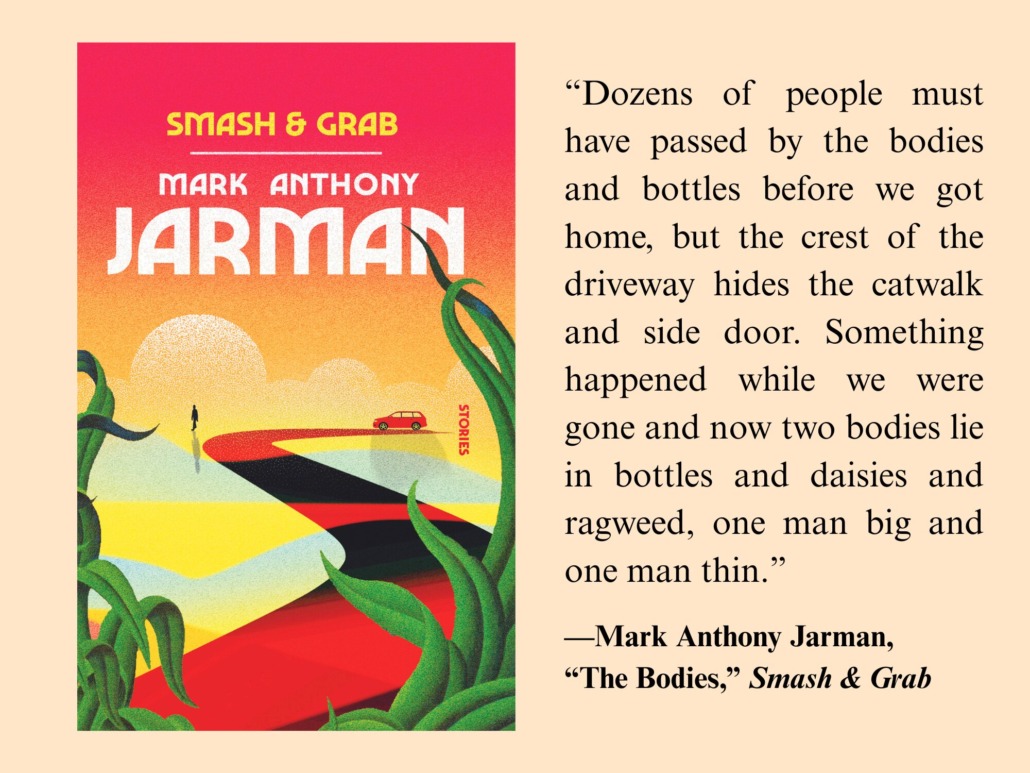
Photo: Smash & Grab: Stories by Mark Anthony Jarman. Cover designed by Kate Sinclair.

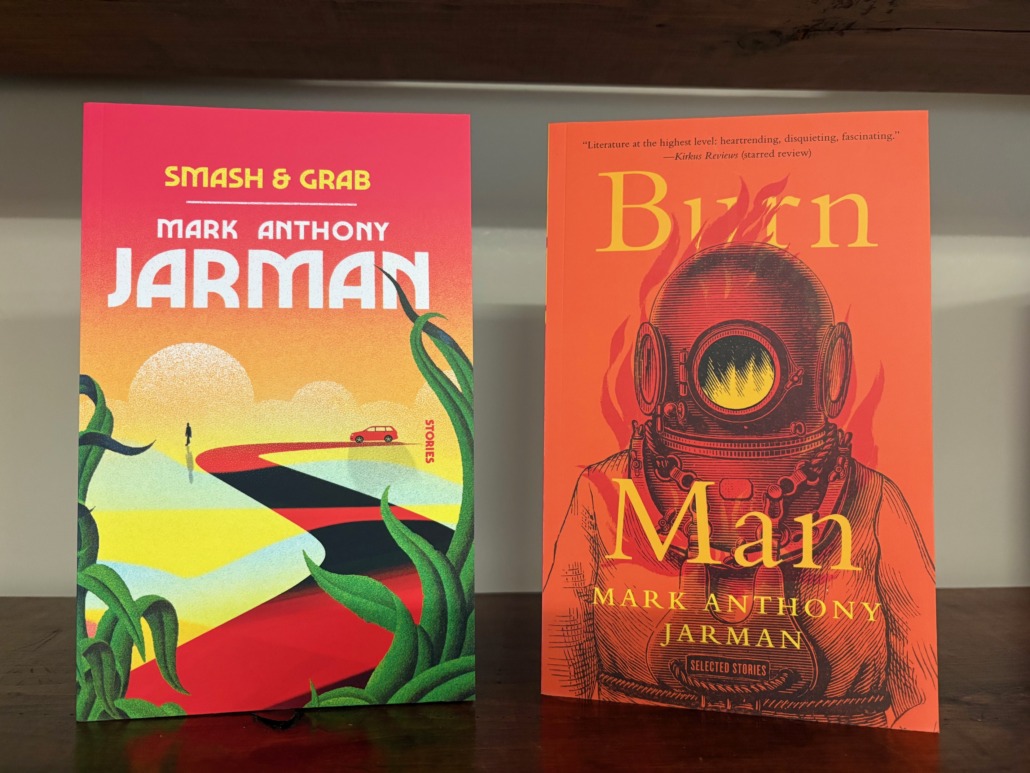
Smash & Grab brings together fourteen new stories . . . or performances . . . or pieces by one of the most inventive prose stylists at work today, blurring the line between the real and the imagined. His first new collection of short fiction in more than a decade—and first since we collected the best of his previous work in Burn Man: Selected Stories, a book that saw rave reviews from the New York TimesWall Street JournalKirkusGlobe and Mail, and elsewhere—these are stories that work their own musical magic distinct from that of any other writer today, stories shaped like strange loops, which gather in the reader’s mind as a collage might, layering word and image.

Photo: Smash & Grab alongside Mark Jarman’s previous book, Burn Man: Selected Stories (cover designed by Michel Vrana).

His language, as Jarman himself said of one of his literary idols Barry Hannah, is “a weird mixture of Elizabethan and cracker”; his world, whether it is set in Venice or the deep south or on the bloody moon, is violent and bizarre and always slant. Reading an excellent Jarman story—and this book has several of them—will leave you slightly off-kilter. It doesn’t matter what they’re about—the summary of some of them have the feel of a barroom joke: ie, a former military policeman, a veterinarian, and a French poet walk into a bar and debate the Vietnam War—it’s the experience of them that counts. So go ahead . . . experience them. Smash & Grab is already finding its way into bookstores, though it only officially launches five weeks from now.


Every Time We Say Goodbye

by Ivana Sajko, translated from the Croatian by Mima Simić

An extended soliloquy of self-examination, upheaval, loss, hope, disillusionment, ambition, and failure; and a profoundly stark and furious novel.

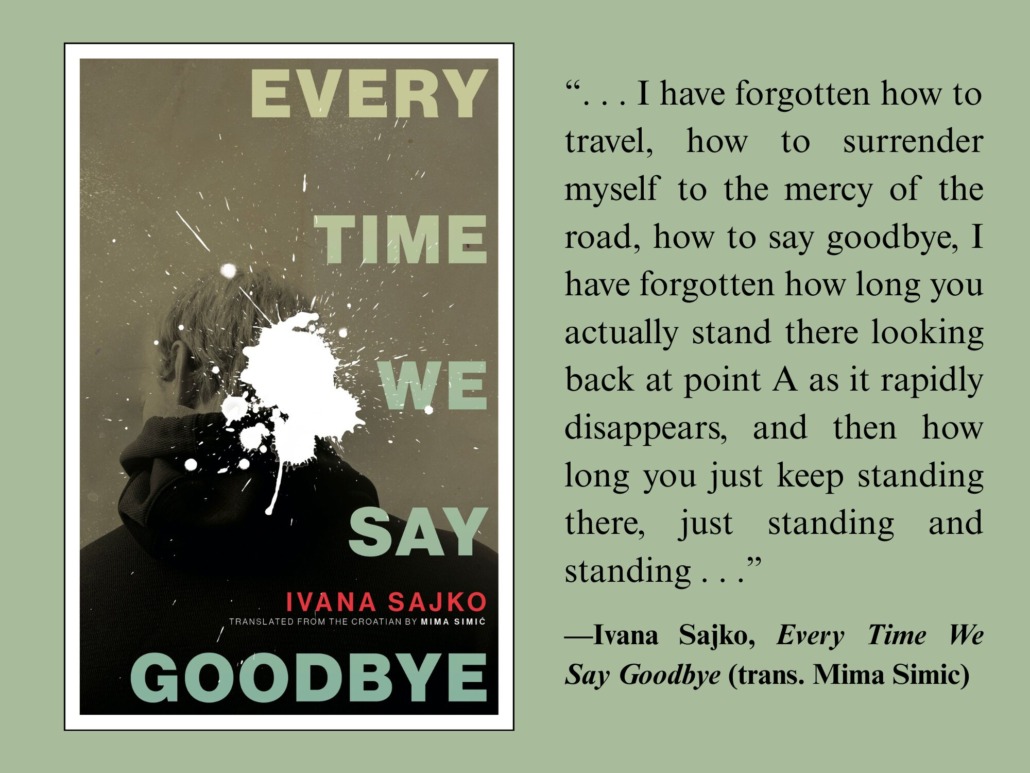
Photo: Every Time We Say Goodbye by Ivana Sajko, translated by Mima Simić. Cover designed by Ingrid Paulson.

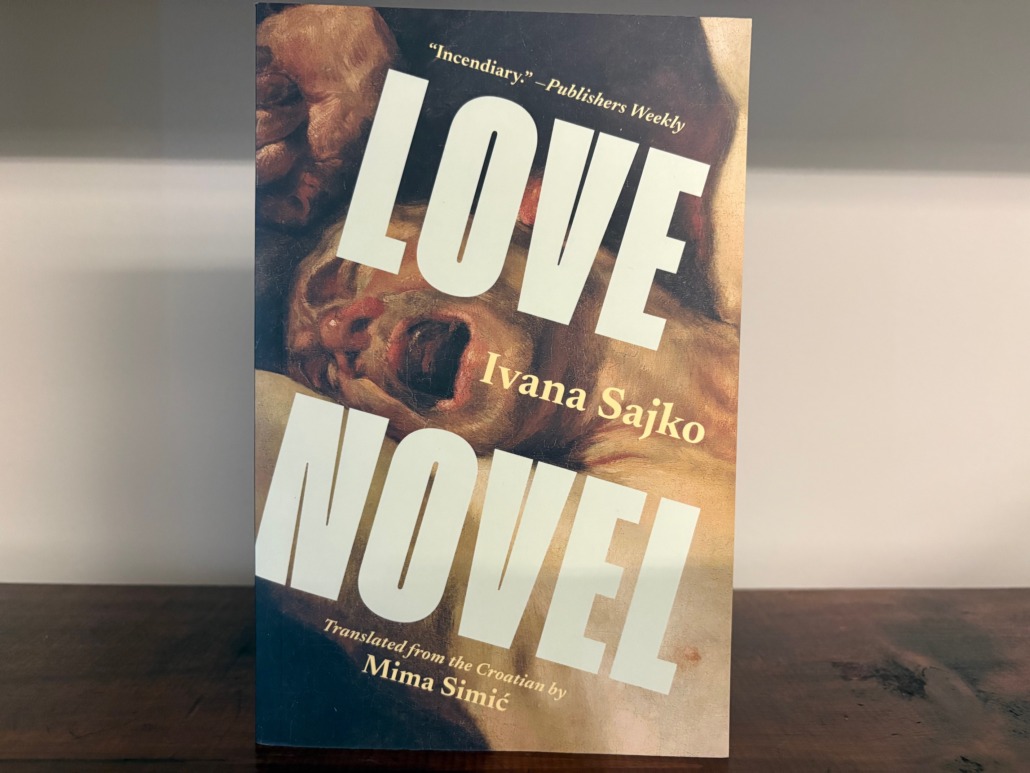
We discovered Ivana Sajko when her first book in translation, Love Novel, made the Dublin Literary Award shortlist a few years ago. Three of us read it here in as many days, more or less each in a sitting, and each of us were blown away, in the fantastic translation by Mima Simić, by its energy and humour, its compassion and rage. We went on to publish it in February 2024 as our own anti-Valentine to the literary world.

Photo: Love Novel by Ivana Sajko, translated by Mima Simić. Cover designed by Jason Arias.

Reading Sajko is intense and claustrophobic, pleasurable and energizing. A longtime playwright and theatre director, her work often takes the form of a dramatic monologue, which is the case in her next novel, Every Time We Say Goodbye, which we will be publishing in March. A man on a train, propelled from his small town on the eastern edge of Europe to Berlin by a pattern of violence from which he is trying to flee, meditates feverishly on everything that has brought him to this point, moving further and further away from the only person he’s ever loved.

Reading Sajko is not for the faint of heart: Every Time We Say Goodbye is a bruising book, a book relevant to this moment and time, but also one that is deeply personal, since all failings begin as such. Yet despite this, there is hope here, as the narrator moves fatefully on towards his final destination, and this feeling has lingered with me in my memory as much as the bleakness and blackness her narrator refuses to look away from. There are very few writers to whom we are as committed as Sajko. Read this book, and Love Novel, and everything that follows: she is one of the very best writers working in any language.


On Sports

by David Macfarlane

In On Sports, journalist David Macfarlane considers the origins of his love of sport against his discomfort with their commodification.

Photo: On Sports by David Macfarlane. Cover designed by Ingrid Paulson.

On Sports, the latest volume in our Field Notes series, reads like a conversation between friends at the ballpark in those golden days before the kiss cam and college co-eds with T-shirt cannons spoiled the fun; a book that feels of the sun on your forehead and the breeze in your hair, beer and laughter on your lips; a book that celebrates communion and friendship and the beauty of these games—whether it be baseball or football or soccer or tennis or cricket—that we’ve designed to distract ourselves from the end of the world. It is a book about what 7Up tastes like when drunk from the Grey Cup, which, true story, a young Macfarlane once found in the china cabinet at a childhood friend’s house, and into which they poured their favourite soft drink, raising it to their lips like their heroes, detecting notes on the palate of lime, dust, and Silvo. It’s about everyday heroism and the near impossibility of language to properly capture athletic excellence. It’s about the beauty of excellent sports copy; the ephemerality of even the biggest sports story; how it remains perpetually powered by the eleven-year-old still residing in all of us. It’s a book about rediscovering the spirit of sport before online gambling and the manufactured spectacle that most professional sports have become suffocates the last of it.

Photo: David Macfarlane.

I came to sports late as a kid, but became one of the most fanatical of sports fans, especially for baseball: I could probably still quote Rick Monday’s and Fergie Jenkins’ and Mike Schmidt’s 1983 baseball stats from the back of their OpeeChee cards. But over the years I’ve become increasingly ambivalent about sports. Macfarlane shares and acknowledges this ambivalence, but also reminds us of their beauty and humanity. Less an argument than a gentle, generous meander, On Sports has helped once again make me a sports fan, and I think it could appeal broadly to anyone who feels wonder about what feats humans can perform with their bodies, or, otherwise, almost all of us.

Photo of far side of the moon: NASA/Goddard Space Flight Center/Arizona State University.

In good publicity news:

Events

Biblioasis Spring Launch: Windsor!

Join us in celebrating the launches of three Biblioasis spring books: On Sports by David Macfarlane, Cherry Beach by Don Gillmor, and Silver Lake by Alex Pugsley! Hosted by our publisher Dan Wells, the launch will be held at Biblioasis Bookshop and will include readings from each author, a discussion and Q&A, and of course books will be available for sale and signing.

The launch will take place on Monday, May 4 at 7PM.

Grab On Sports here!

Grab Cherry Beach here!

Grab Silver Lake here, or check out the rest of the Aubrey McKee series here!

ABOUT ON SPORTS

What are sports, really? What do we love about them? And what, in our digital age, have they become?

On Sports reads like a conversation between friends at the ballpark in those golden days before the kiss cam and college co-eds with T-shirt cannons spoiled the fun; a book that feels like the sun on your forehead and the breeze in your hair, beer and laughter on your lips; a book that celebrates communion and friendship and the beauty of these games—whether it be baseball or football  or soccer or tennis or cricket—that we’ve designed to distract ourselves from the end of the world. It’s about what 7Up tastes like when drunk from the Grey Cup, how much work it takes for talent to shine, and the near impossibility of language to properly capture athletic excellence. It’s about the beauty of good sports copy, the ephemerality of even the biggest sports story, and how sport remains perpetually powered by the eleven-year-old in all of us. It’s a book about rediscovering the spirit of sport, before online gambling and the manufactured spectacle of today’s professional sports suffocates the last of it; and it’s about where that spirit today is best found.

ABOUT DAVID MACFARLANE

David Macfarlane‘s family memoir, The Danger Tree, was described by Christopher Hitchens as “one of the finest and most intriguing miniature elegies that I have read in many a year.” Macfarlane’s novel, Summer Gone, was shortlisted for the Giller Prize. Based on The Danger Tree, “The Door You Came In,” a two-man show (co-written and performed with Douglas Cameron) has been produced, to acclaim, from St. John’s, Newfoundland, to Stratford, Ontario. Macfarlane lives in Toronto with his wife, the designer, Janice Lindsay.

ABOUT CHERRY BEACH

A brutal murder exposes secret real estate deals, a corrupt police force, and the dark heart of a city simmering with unrest.

When two girls are found murdered in a rundown Toronto highrise, Jamieson Abel and his partner are first on the scene. Abel is a law school dropout turned police detective chronically at odds with his colleagues and perpetually on the brink of being terminated, and Davis is the department’s only female officer of colour. Both understand their being partnered as a form of banishment, but when the details of the murder go public at the start of an excruciatingly hot summer, they find themselves thrust into the centre of a front page investigation that will bring to a head the city’s long history of shady real estate deals and racist disenfranchisement.

Intricately plotted and brilliantly layered, Cherry Beach is a gripping literary crime novel that examines class, race, and corruption in the most multicultural city in the world.

ABOUT DON GILLMOR

Don Gillmor is the author of To the River, which won the Governor General’s Award for nonfiction. He is the author of five novels, Cherry BeachBreaking and EnteringLong ChangeMount Pleasant, and Kanata; a two-volume history of Canada, Canada: A People’s History; and nine books for children, two of which were nominated for the Governor General’s Award. He was a senior editor at The Walrus, and his journalism has appeared in Rolling Stone, GQ, Saturday NightToronto Life, the Globe and Mail, and the Toronto Star. He has won twelve National Magazine Awards and numerous other honours. He lives in Toronto.

ABOUT SILVER LAKE

It was on a fully dark February night when I went to the Communist’s Daughter to meet a friend who never showed that my life in movies began.

So begins the third installment in a series of standalone novels about the life and travels of Aubrey McKee. Set in Toronto and Silver Lake, a creative neighbourhood in Los Angeles, the novel chronicles with infectious élan Aubrey’s journey from broken-hearted derelict to B-movie production assistant, comedy writer, and science-fiction screenwriter, all the way up to feature film director. Along the way, he encounters long-ago childhood friends, manic producers, NHL players turned talk show hosts, Victoria’s Secret models, impulsive movie stars . . . and his own rising destiny.

ABOUT ALEX PUGSLEY

Alex Pugsley has worked on over 185 produced episodes of television, writing for performers such as Lauren Ash, Scott Thompson, Dan Aykroyd, and Michael Cera. He wrote and directed the feature film Dirty Singles which won for him the Irving Avrich Emerging Filmmaker Award at TIFF. Following the publication of his first novel, Aubrey McKee, he was named one of CBC’s Writers to Watch. His first story collection, Shimmer, was nominated for the ReLit Award for Short Fiction, and his most recent novel, The Education of Aubrey McKee, was long listed for the Toronto Book Awards. His next book, The Hungarian Ballroom, an Aubrey McKee novella, is forthcoming from Biblioasis. More information can be found at www.alexpugsley.com.

CHERRY BEACH and ON SPORTS: Toronto Launch!

Toronto readers! Join us for the double book launch of Don Gillmor’s Cherry Beach and David Macfarlane’s On Sports. The launch, hosted by our intrepid sales coordinator Hilary, will be held at The Supermarket, and include a reading, conversation and Q&A, and books will be for sale and signing from Ben McNally.

The launch takes place on Thursday, May 7 at 7PM EST.

Grab Cherry Beach here!

Grab On Sports here!

ABOUT CHERRY BEACH

A brutal murder exposes secret real estate deals, a corrupt police force, and the dark heart of a city simmering with unrest.

When two girls are found murdered in a rundown Toronto highrise, Jamieson Abel and his partner are first on the scene. Abel is a law school dropout turned police detective chronically at odds with his colleagues and perpetually on the brink of being terminated, and Davis is the department’s only female officer of colour. Both understand their being partnered as a form of banishment, but when the details of the murder go public at the start of an excruciatingly hot summer, they find themselves thrust into the centre of a front page investigation that will bring to a head the city’s long history of shady real estate deals and racist disenfranchisement.

Intricately plotted and brilliantly layered, Cherry Beach is a gripping literary crime novel that examines class, race, and corruption in the most multicultural city in the world.

ABOUT DON GILLMOR

Don Gillmor is the author of To the River, which won the Governor General’s Award for nonfiction. He is the author of five novels, Cherry BeachBreaking and EnteringLong ChangeMount Pleasant, and Kanata; a two-volume history of Canada, Canada: A People’s History; and nine books for children, two of which were nominated for the Governor General’s Award. He was a senior editor at The Walrus, and his journalism has appeared in Rolling Stone, GQ, Saturday NightToronto Life, the Globe and Mail, and the Toronto Star. He has won twelve National Magazine Awards and numerous other honours. He lives in Toronto.

ABOUT ON SPORTS

What are sports, really? What do we love about them? And what, in our digital age, have they become?

On Sports reads like a conversation between friends at the ballpark in those golden days before the kiss cam and college co-eds with T-shirt cannons spoiled the fun; a book that feels like the sun on your forehead and the breeze in your hair, beer and laughter on your lips; a book that celebrates communion and friendship and the beauty of these games—whether it be baseball or football  or soccer or tennis or cricket—that we’ve designed to distract ourselves from the end of the world. It’s about what 7Up tastes like when drunk from the Grey Cup, how much work it takes for talent to shine, and the near impossibility of language to properly capture athletic excellence. It’s about the beauty of good sports copy, the ephemerality of even the biggest sports story, and how sport remains perpetually powered by the eleven-year-old in all of us. It’s a book about rediscovering the spirit of sport, before online gambling and the manufactured spectacle of today’s professional sports suffocates the last of it; and it’s about where that spirit today is best found.

ABOUT DAVID MACFARLANE

David Macfarlane‘s family memoir, The Danger Tree, was described by Christopher Hitchens as “one of the finest and most intriguing miniature elegies that I have read in many a year.” Macfarlane’s novel, Summer Gone, was shortlisted for the Giller Prize. Based on The Danger Tree, “The Door You Came In,” a two-man show (co-written and performed with Douglas Cameron) has been produced, to acclaim, from St. John’s, Newfoundland, to Stratford, Ontario. Macfarlane lives in Toronto with his wife, the designer, Janice Lindsay.