
The Bibliophile; A Certain Faith

On Tuesday morning I took the 5:35 train to Toronto to spend the day down in Elaine Dewar’s home office, helping the family sort through papers and ready things for a possible archive acquisition. It was strange to be down there again: though the bookshelves were a little more bare than they had been in September, her desks were as she had left them when she took a break to go on vacation last August; when she went to the hospital she never expected that she’d not be back down there again.
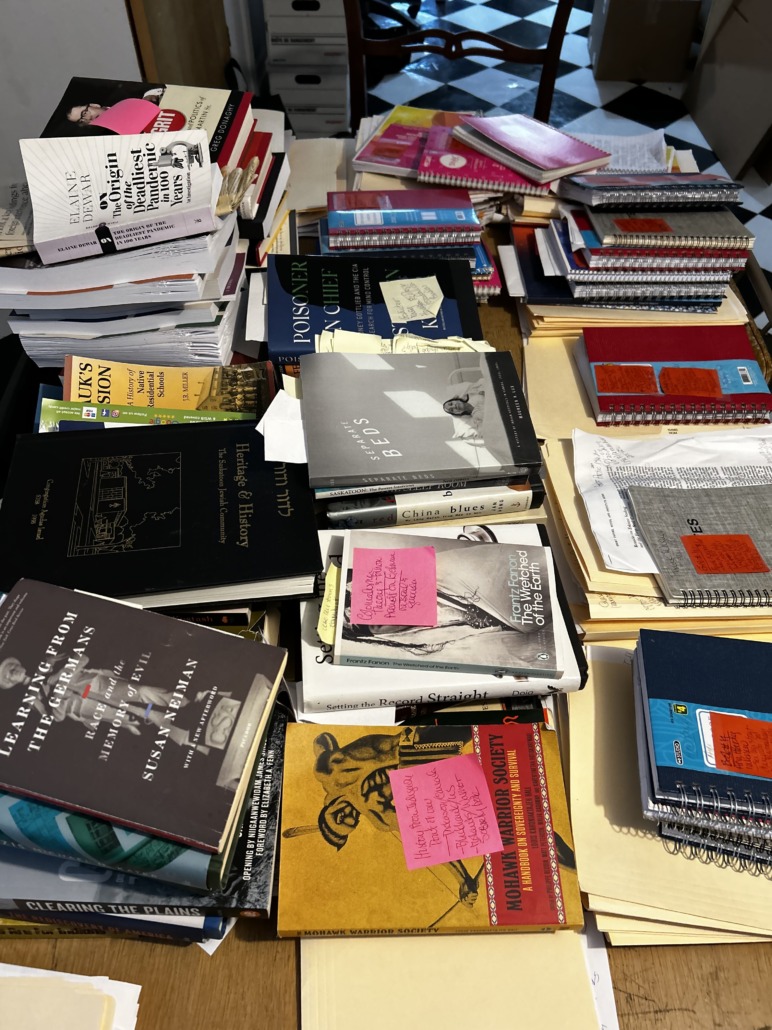
Photo: Elaine Dewar’s piles of notebooks and research material for Oblivious, as she had left it.

I put together some bankers boxes and got to work, and as I began to read and sort and label I was reminded repeatedly of her fierce dedication to what she understood to be her journalistic vocation. There were the dozens of notebooks recording the interviews that went into the making of Oblivious: Residential Schools, Segregated Hospitals, and the use of Indigenous Peoples as Slaves of Race Science, that we will be publishing later in April; the files of fact-checking, the piles of books that looked as if they’d been torn through in a rage: they were folded and scored and bent and scribbled on, though organized in piles directly related to what she was working on. There were boxes of newspaper clippings and academic research papers; the folders of freedom for information requests and her correspondence with officials about their delays or withholdings; there were notes-to-self about things to follow-up on. There was a budget for the production of the book that she had produced for a funding body as part of a grant application: working on a shoestring, she estimated the book would cost her more than $75,000.00. Between advance and some small works-in-progress grants I could direct her way I may have got her close to a third of that amount. I know that she got a Canada Council grant and some additional provincial funding, but far too much of that total would have come out of her own pocket. Which is, far too often, what is required of Canadian writers, especially of researched nonfiction.
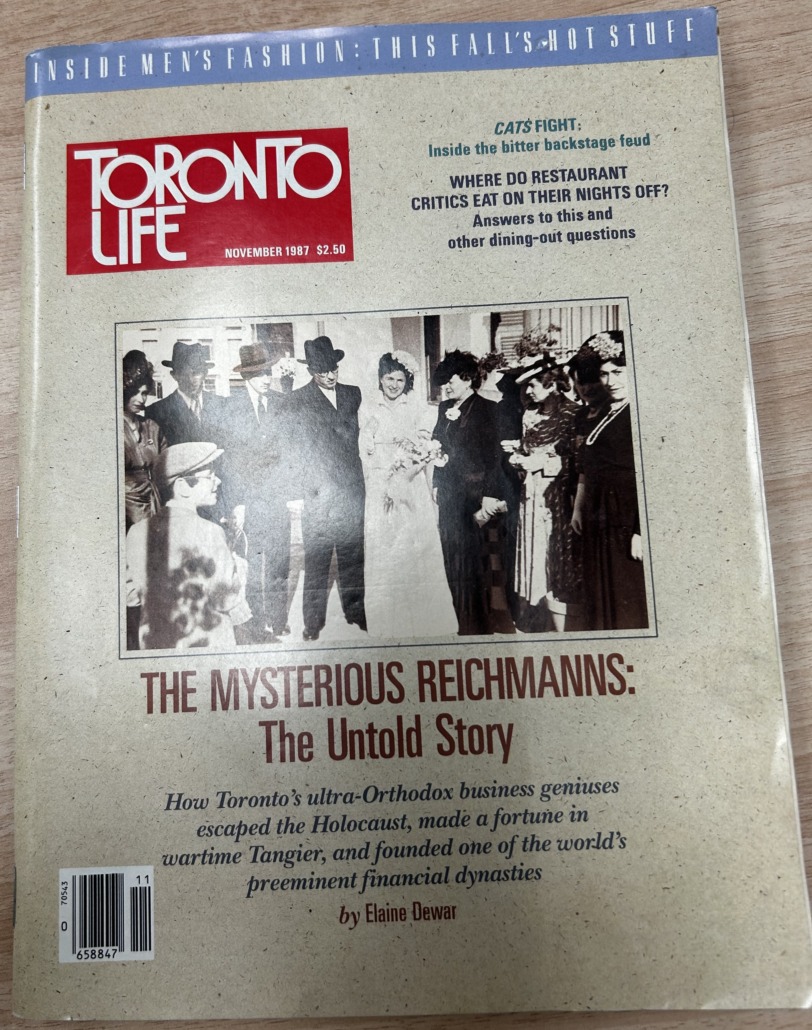
Photo: A copy of the November 1987 issue of Toronto Life magazine, featuring Elaine Dewar’s profile “The Mysterious Reichmanns.”

I filled 10 bankers boxes with the materials that went into the making of Oblivious, and then moved onto boxing up other documents, including some early essays I found by a teenage Elaine Landa where her voice and vocation was already evident. But what I’ve been thinking about since I located them was approximately a foot of documents tied to the Reichmann trial that resulted from her November 1987 Toronto Life profile “The Mysterious Reichmanns: The Untold Story.” This resulted in the Reichmann’s suing Elaine and Toronto Life, as I’ve heard more than one commentator say, into the stone age, costing her a book deal with Random House worth, if memory serves, $60,000, an estimated $250,000 in other lost revenue, the destruction of years of work, damage to her reputation, and an inhuman amount of stress. Lesser mortals, which means almost all of us, would have crumpled under the weight of it all, as was no doubt expected of Elaine. And yet in these surviving documents, and in the supreme court dispositions and typescripts, which must total close to 800 pages, you can see Elaine fighting back and continuing to kick against the pricks, refusing to give up her sources, maintaining her dignity and fighting for her profession and her own professional life. Sitting down in that cold and increasingly bare office, I couldn’t help but cheer her on forty years after the fact. I felt such an appreciation for how she conducted herself, not just for herself but for all of us. And though almost no one under a certain age remembers this trial or knows of its significance, what Elaine endured helped to change the shape of libel law in this country and made it safer for writers to do the work that they needed to get to the truth, and, as Elaine believed, to afflict the comfortable and comfort the afflicted.
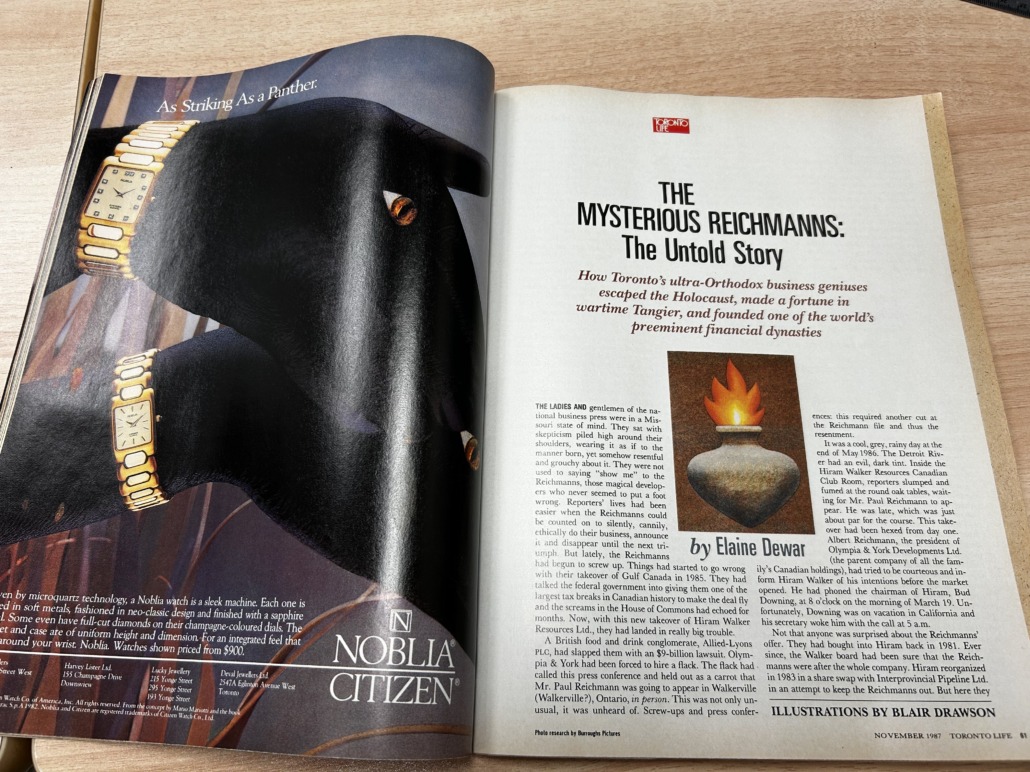
Photo: The first page of the article, “The Mysterious Reichmanns.”

Among the notes I found was a request she made for me to have Mark Bourrie read her manuscript for libel when it was finished. So I sent a note off to Mark about it, forgetting that at that moment he was receiving the Pierre Berton Award from the Governor General. He gave a speech at its reception that he’s just posted on his own excellent Substack, which you can read here, but which I will selectively quote from below because it ties into something I’ve been thinking about since finding those files in Elaine’s office:

I want to talk about the fact right now we are in the midst of a revolution. Anybody who chooses to ignore it is simply going to find that out later. This is “elbows up” time in Canada. You would not know it from our policy-setters, who have let our country’s publishing and historic story-telling wither. We will be celebrating at the Canadian Museum of History tomorrow. Not everyone in the building will be happy—67 people in that organization have been told they are going to lose their jobs because of federal cuts.

. . .

I would like to be able to do more advocacy. We need to find ways to get the word out about our books. We need to fix the problems with the Copyright Act that, effectively, gave schools the “right” to take our work without paying. And we need to have a funding system that takes the financial risk of producing public history off the shoulders of families like mine.
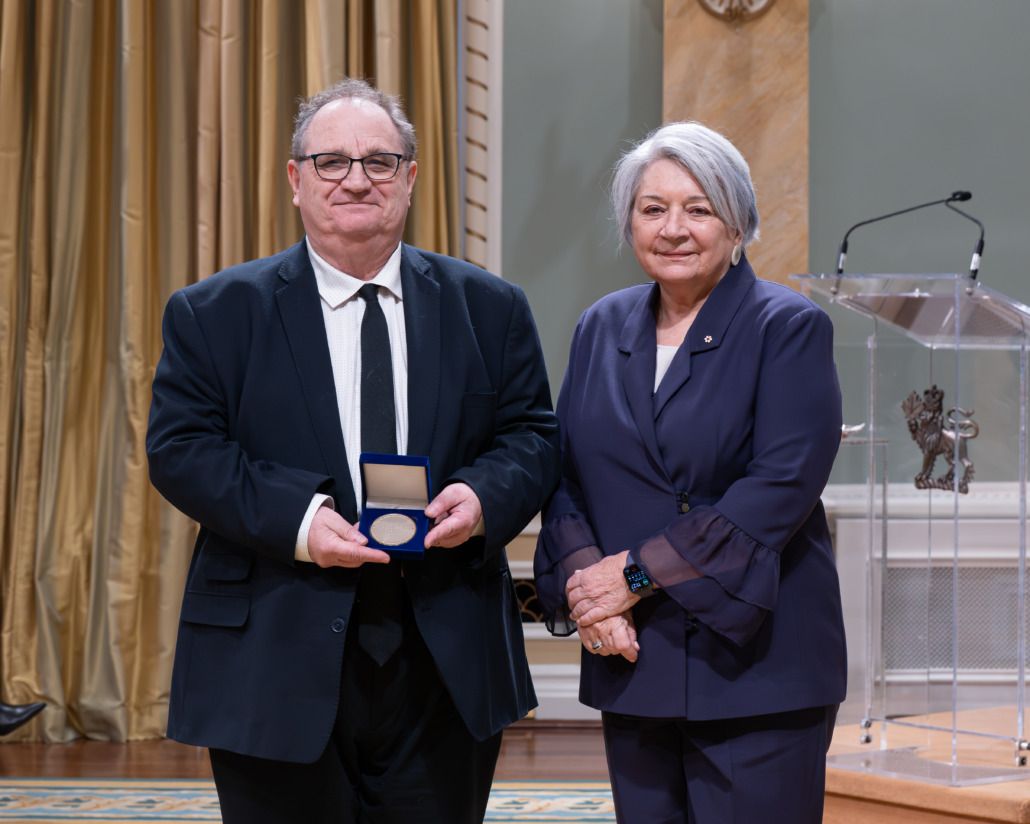
Photo: Her Excellency the Right Honourable Mary Simon, Governor General of Canada, presents the Governor General’s History Awards at Rideau Hall, Ottawa, on January 23, 2026. Photo Credit: PO 2 Louis Dubé, Rideau Hall © OSGG, 2026

The problem, of course, is that it has always been thus, at least when it comes to the cultural life of this country. Change has always been dependent on individuals, families, or small groups who resist the powerful or the indifferent and push forward despite the very real costs of doing so. I don’t anticipate at this moment that we’re in for substantial change for the better, however much I wish it were otherwise. Mark Carney may have quoted Thucydides and Václev Havel in his Davos speech, but almost a year into his leadership of the country I don’t think I’ve yet heard him say anything in defence of Canadian culture. If we’re going to improve things, we’ll have to take matters into our own hands, and this is why the examples of people like Elaine Dewar and Mark Bourrie (and so many of my small press publishing colleagues) mean so much to me at the moment. It’s difficult, it’s impossible, but they carry on. Which reminds me of a quote I first read on Derek Weiler’s arm, taken from an Irish writer I’ve since grown to love.

You must go on. I can’t go on. I’ll go on.

Greg Kelly, CBC Ideas producer, was in town yesterday to give a speech to the University of Windsor’s Humanities Research Group. Titled “Quiet Piggy: Private Codes as Public Discourse,” it was about the breakdown between the private and public and the hijacking of so-called authentic expression in the service of authoritarianism. During his conclusion he spoke of the necessity of action as a form of faith. There’s no guarantee that what we do will make any difference, though we know quite clearly what the consequences of our inaction are. It is through the slow accretion of our efforts, hopefully alongside others, that things change. This is a faith I can accept as my own. Perhaps it’s the remaining glow from my Italian sojourn, but I remain hopeful that we can continue to nudge the cultural needle in the right direction. After all, what choice do we have?

Dan Wells,
Publisher


In good publicity news:

  • Benbecula by Graeme Macrae Burnet was featured in the Historical Novels Review: “While Benbecula is a tragic story of murder, the empathy that the author feels for his characters and the circumstances that they’re living in is beautifully expressed . . . Consider this reader fully engaged by Benbecula.
  • Smash & Grab by Mark Anthony Jarman was reviewed in Quill & Quire: “Jarman packs more into his sentences than any half dozen other authors combined . . . [Smash & Grab’s] cumulative riches are plentiful and unique to one of the most invigorating and unconventional writers of short fiction around.”
  • On Sports by David Macfarlane was reviewed in The Seaboard Review: “An authentic and resonant read, On Sports should appeal to sports fans who have had their misgivings about sport and where it’s headed, though anyone interested in sports more generally might enjoy reading about Macfarlane’s experiences, his emotional connections to sport, and his philosophical musings about its pros and cons.
  • Precarious: The Lives of Migrant Workers by Marcello Di Cintio was reviewed by Anne Logan on CBC’s The Homestretch.
  • The Passenger Seat by Vijay Khurana is a shortlisted contender in The Tournament of Books! Will Vijay win the Rooster? We certainly hope so!
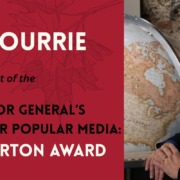
Mark Bourrie wins the 2025 Governor General’s History Award for Popular Media: The Pierre Berton Award

We’re thrilled to share that Mark Bourrie, author of titles including the RBC Taylor Prize-winning Bush Runner: The Adventures of Pierre-Esprit Radisson and Crosses in the Sky: Jean de Brébeuf and the Destruction of Huronia, has been recognized with the 2025 Governor General’s History Award for Popular Media: The Pierre Berton Award.

View the recipients’ announcement on the Canada’s History website here.

Check out Mark Bourrie’s books here.

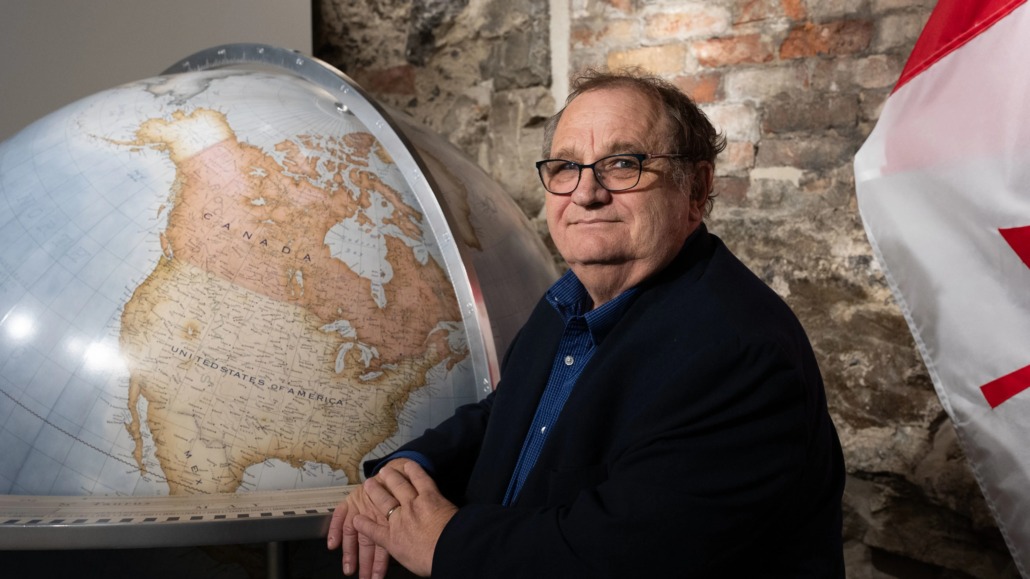
Photo: Mark Bourrie (courtesy Canada’s National History Society)

Mark Bourrie is an Ottawa-based author, lawyer, and journalist. He holds a master’s in journalism from Carleton University and a PhD in history from the University of Ottawa. In 2017, he was awarded a Juris Doctor degree and was called to the bar in 2018. He has won numerous awards for his journalism, including a National Magazine Award, and received the RBC Charles Taylor Prize in 2020 for his book Bush Runner: The Adventures of Pierre-Esprit Radisson. His most recent books include Big Men Fear Me: The Fast Life and Quick Death of Canada’s Most Powerful Media Mogul, the national bestseller Crosses in the Sky: Jean de Brébeuf and the Destruction of Huronia, and Ripper: The Making of Pierre Poilievre.

The Governor General’s History Award for Popular Media: the Pierre Berton Award recognizes individuals who have helped increase understanding of Canadian history through popular media, including but not limited to publications, film, radio, television, theatre, or digital media platforms. The $5,000 Pierre Berton Award, as it is also known, is administered by Canada’s National History Society, with the support of the Government of Canada through the Department of Canadian Heritage, and Power Corporation of Canada.

In their press release, president and CEO of Canada’s History Society Melony Ward praises,

“Mark Bourrie makes our country’s history as vivid as anything happening today. He embraces the complexity of the past to create works that brim with conflict, struggle, and larger-than-life characters, all firmly grounded in research.”

The eleven recipients being honoured by this year’s history awards, will receive their awards from Governor General Mary Simon at an upcoming ceremony in Ottawa.

A huge congratulations from all of us at Biblioasis to Mark!

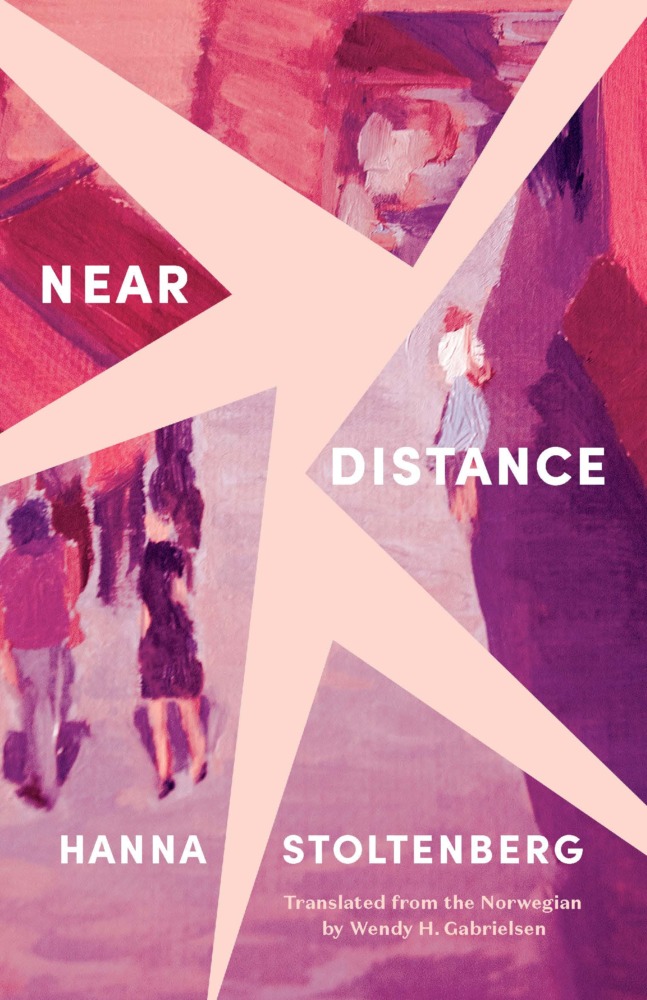
NEAR DISTANCE shortlisted for the NBCC 2025 Gregg Barrios Book in Translation Prize!

We’re thrilled to share that today, the National Book Critics Circle Award announced their finalists for the 2025 Gregg Barrios Book in Translation Prize, which includes Wendy H. Gabrielsen’s translation of Near Distance by Hanna Stoltenberg! View the full list of finalists on their website, here.

Grab a copy of Near Distance here!

As judge Mandana Chaffa describes, the Barrios shortlist features “remarkable books by notable authors, which are only available to English readers because of the gifted translators and committed publishers who bring them to life.

The NBCC’s Gregg Barrios Book in Translation Prize, launched in 2022, seeks to highlight the artistic merit of literature in translation and recognize translators’ valuable work, which expands and enriches American literary culture by bringing world literature to English-language readers. The prize honors the best book of any genre translated into English and published in the United States.

A finalists reading will be be held on March 25, 2026; the awards ceremony and reception will be on March 26, and is open to the public.

ABOUT NEAR DISTANCE

A Finalist for the 2025 Gregg Barrios Book in Translation Prize

For her entire life, Karin has fled anything and anyone that tries to possess her. Her job demands little, she mostly socializes with men she meets online, and she’s rarely in touch with Helene, her adult daughter. But when Helene’s marriage is threatened, she turns, uncharacteristically, to her mother for commiseration, and a long weekend away in London. As the two women embark on their uneasy companionship, Karin’s past, and the origins of her studied detachments, are cast in a new light, and she can no longer ignore their effects—on not only herself and her own relationships, but on her daughter’s as well.

An unnerving, closely observed study of character—and the choices we do and do not make—Near Distance introduces Hanna Stoltenberg as a writer of piercing insight and startling lucidity.

ABOUT WENDY H. GABRIELSEN

Wendy Harrison Gabrielsen moved to Oslo in 1987 after completing an MA in Translation at the University of Surrey. She has translated works of fiction as well as nonfiction, and in 2022 she was awarded the Wigeland Prize by the American-Scandinavian Foundation for an excerpt from her translation of Hanna Stoltenberg’s Near Distance.

ABOUT HANNA STOLTENBERG

Hanna Stoltenberg (born 1989) grew up in Oslo and studied English at the University of Bristol. She is a regular contributor to the Norwegian literary journal Vinduet and works as an editor at the Munch museum. Her first novel, Near Distance (Nada in Norwegian) was published in 2019. It won the prestigious Tarjei Vesaas first book award and the NATT&DAG Oslo prize for best literary work. She is currently working on her second novel.

Biblioasis Winter Preview: Part I

Want to get new excerpts, musings, and more from The Bibliophile right away? Sign up for our weekly online newsletter here!

***

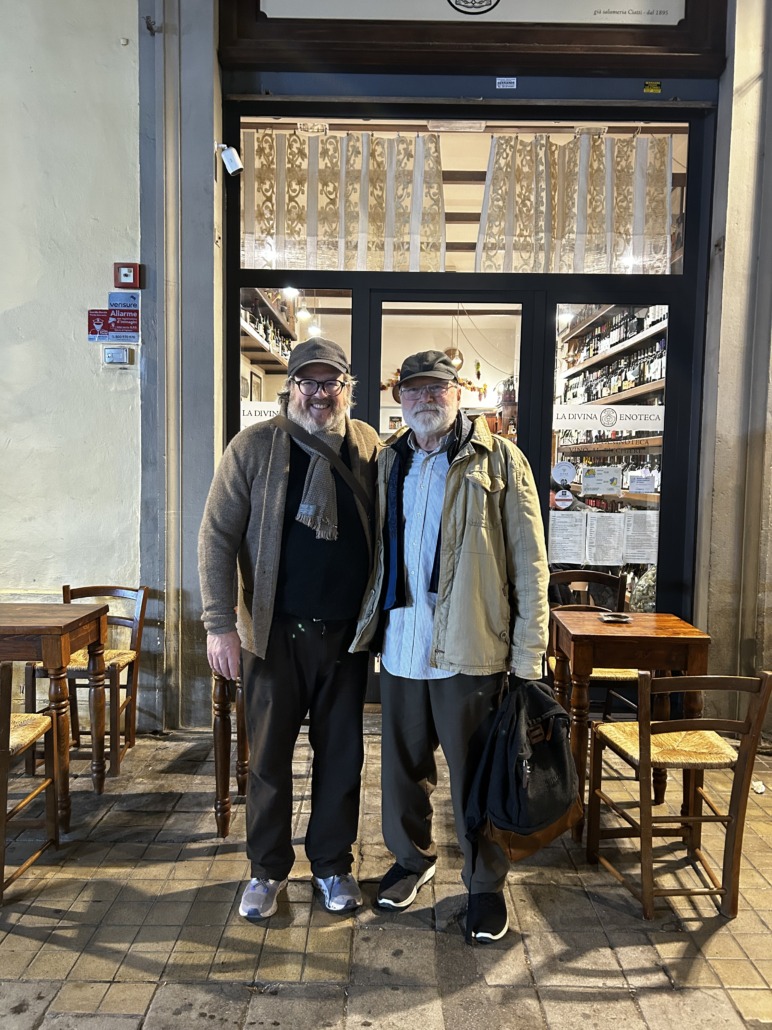
We took an extended break this year at the Bibliomanse, and my own was extended further still by five inches of snow in Paris and Amsterdam, even if a short purgatory in Dante’s city is nothing to kvetch about. Besides, it came with the added benefit of having a couple of drinks with the author of our first title of the season, Mark Anthony Jarman.

Photo: Our globetrotting publisher Dan Wells (left) meets up with Mark Jarman (right) in Florence.

Still, I’m not sure I’ve ever been so happy to be back behind this desk and working on new books, while planning to help broaden the spotlight to include some of our previously published ones as well. (Backlist is Bullshit.) This is only my third full day in office this year (if you don’t count my cramped work at 35,000 feet over the Atlantic) and I’m grateful for many things as we begin 2026, including the great people I get to work with during the creation of these many books, and their enthusiasm and willingness to try new things as we continue to figure out how to make this most difficult of professions make sense, while having a little fun along the way.

Rather than overwhelming you with the complete list of everything we have coming over the first half of this year, or even during the Winter Season, we thought we’d share the first three titles we’re publishing in 2026, breaking this preview up over a few posts over the coming weeks.


Smash & Grab

by Mark Anthony Jarman

A mischievous medley of stories that blur the lines between the real and the imagined.

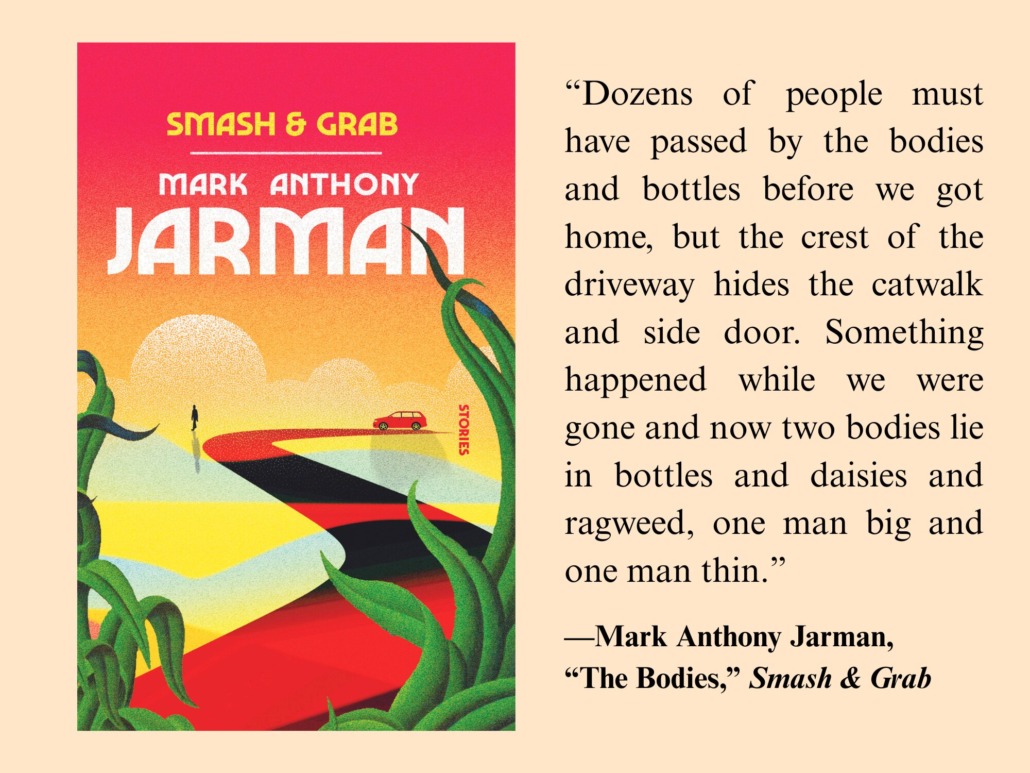
Photo: Smash & Grab: Stories by Mark Anthony Jarman. Cover designed by Kate Sinclair.

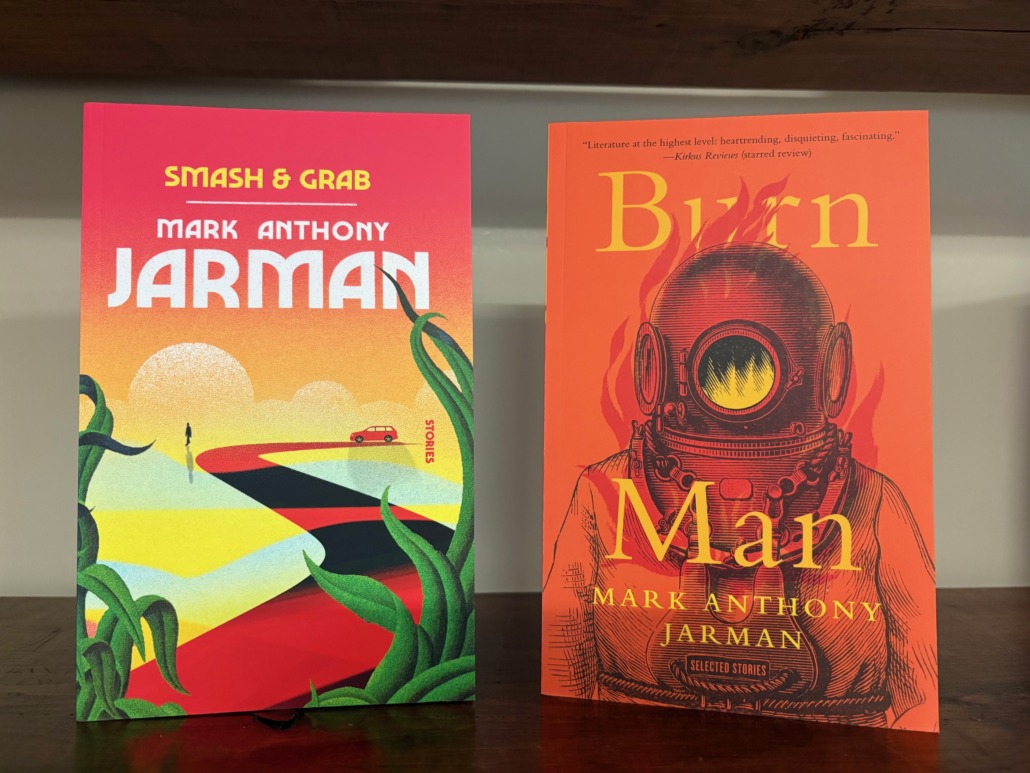
Smash & Grab brings together fourteen new stories . . . or performances . . . or pieces by one of the most inventive prose stylists at work today, blurring the line between the real and the imagined. His first new collection of short fiction in more than a decade—and first since we collected the best of his previous work in Burn Man: Selected Stories, a book that saw rave reviews from the New York TimesWall Street JournalKirkusGlobe and Mail, and elsewhere—these are stories that work their own musical magic distinct from that of any other writer today, stories shaped like strange loops, which gather in the reader’s mind as a collage might, layering word and image.

Photo: Smash & Grab alongside Mark Jarman’s previous book, Burn Man: Selected Stories (cover designed by Michel Vrana).

His language, as Jarman himself said of one of his literary idols Barry Hannah, is “a weird mixture of Elizabethan and cracker”; his world, whether it is set in Venice or the deep south or on the bloody moon, is violent and bizarre and always slant. Reading an excellent Jarman story—and this book has several of them—will leave you slightly off-kilter. It doesn’t matter what they’re about—the summary of some of them have the feel of a barroom joke: ie, a former military policeman, a veterinarian, and a French poet walk into a bar and debate the Vietnam War—it’s the experience of them that counts. So go ahead . . . experience them. Smash & Grab is already finding its way into bookstores, though it only officially launches five weeks from now.


Every Time We Say Goodbye

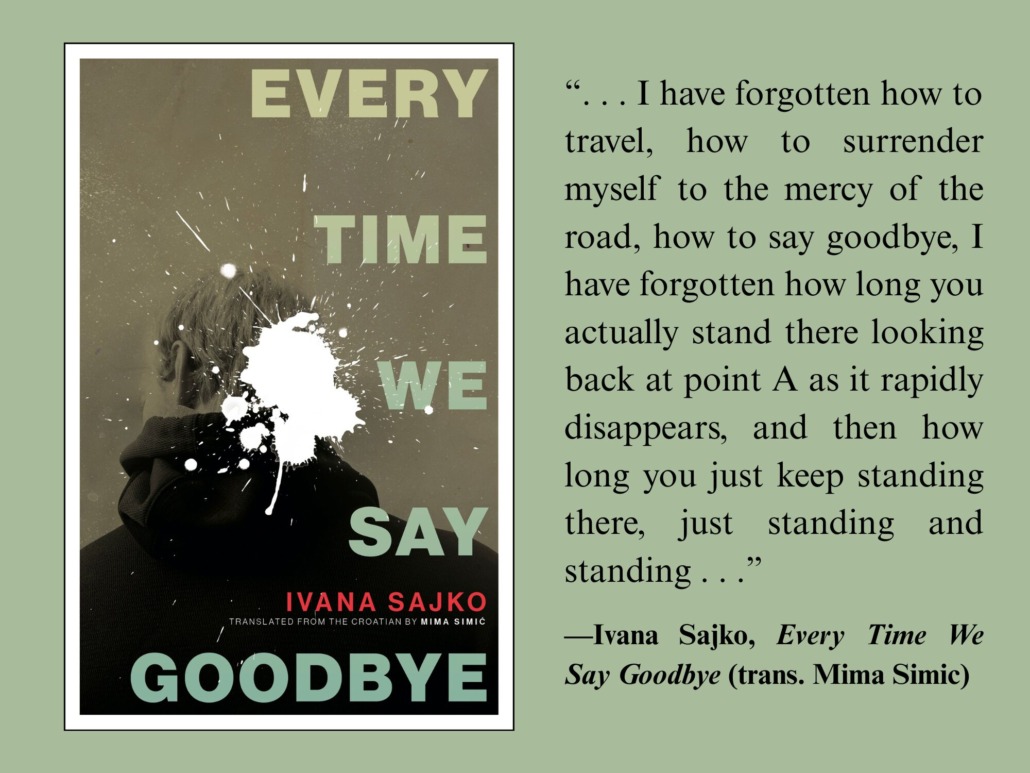
by Ivana Sajko, translated from the Croatian by Mima Simić

An extended soliloquy of self-examination, upheaval, loss, hope, disillusionment, ambition, and failure; and a profoundly stark and furious novel.

Photo: Every Time We Say Goodbye by Ivana Sajko, translated by Mima Simić. Cover designed by Ingrid Paulson.

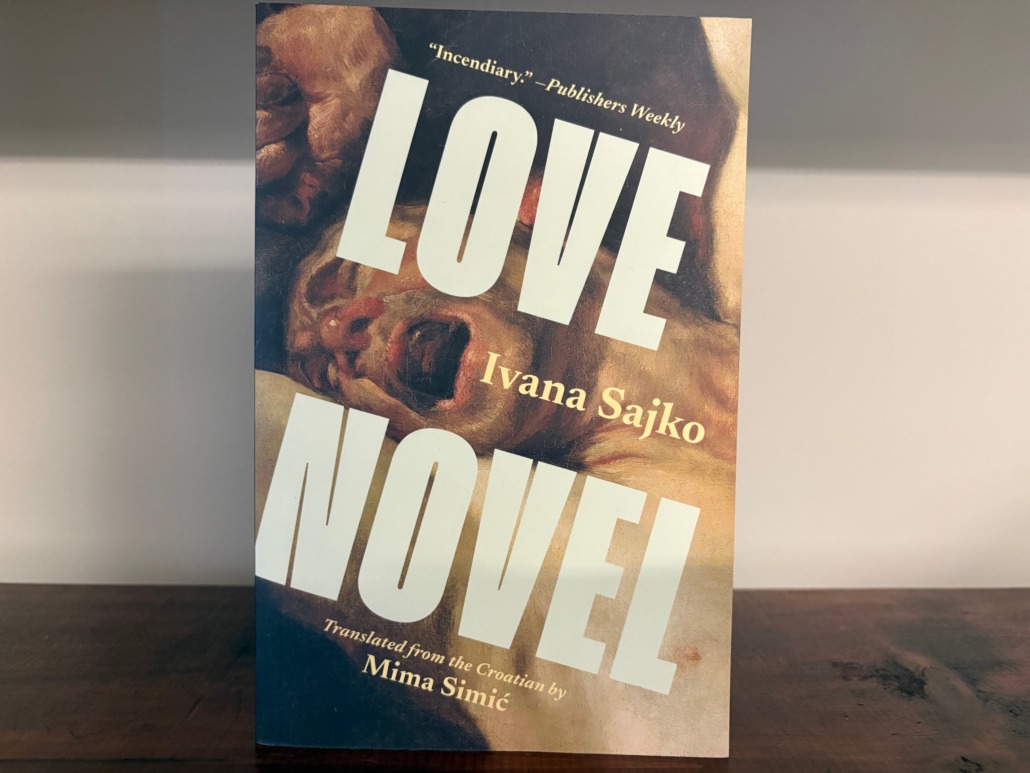
We discovered Ivana Sajko when her first book in translation, Love Novel, made the Dublin Literary Award shortlist a few years ago. Three of us read it here in as many days, more or less each in a sitting, and each of us were blown away, in the fantastic translation by Mima Simić, by its energy and humour, its compassion and rage. We went on to publish it in February 2024 as our own anti-Valentine to the literary world.

Photo: Love Novel by Ivana Sajko, translated by Mima Simić. Cover designed by Jason Arias.

Reading Sajko is intense and claustrophobic, pleasurable and energizing. A longtime playwright and theatre director, her work often takes the form of a dramatic monologue, which is the case in her next novel, Every Time We Say Goodbye, which we will be publishing in March. A man on a train, propelled from his small town on the eastern edge of Europe to Berlin by a pattern of violence from which he is trying to flee, meditates feverishly on everything that has brought him to this point, moving further and further away from the only person he’s ever loved.

Reading Sajko is not for the faint of heart: Every Time We Say Goodbye is a bruising book, a book relevant to this moment and time, but also one that is deeply personal, since all failings begin as such. Yet despite this, there is hope here, as the narrator moves fatefully on towards his final destination, and this feeling has lingered with me in my memory as much as the bleakness and blackness her narrator refuses to look away from. There are very few writers to whom we are as committed as Sajko. Read this book, and Love Novel, and everything that follows: she is one of the very best writers working in any language.


On Sports

by David Macfarlane

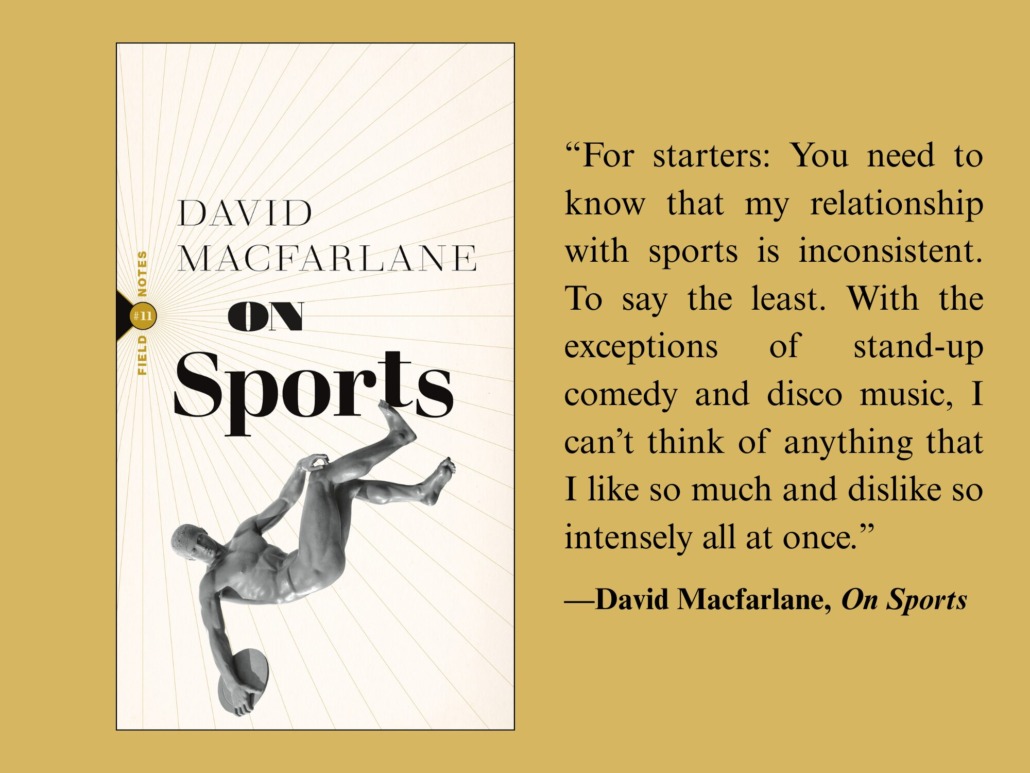
In On Sports, journalist David Macfarlane considers the origins of his love of sport against his discomfort with their commodification.

Photo: On Sports by David Macfarlane. Cover designed by Ingrid Paulson.

On Sports, the latest volume in our Field Notes series, reads like a conversation between friends at the ballpark in those golden days before the kiss cam and college co-eds with T-shirt cannons spoiled the fun; a book that feels of the sun on your forehead and the breeze in your hair, beer and laughter on your lips; a book that celebrates communion and friendship and the beauty of these games—whether it be baseball or football or soccer or tennis or cricket—that we’ve designed to distract ourselves from the end of the world. It is a book about what 7Up tastes like when drunk from the Grey Cup, which, true story, a young Macfarlane once found in the china cabinet at a childhood friend’s house, and into which they poured their favourite soft drink, raising it to their lips like their heroes, detecting notes on the palate of lime, dust, and Silvo. It’s about everyday heroism and the near impossibility of language to properly capture athletic excellence. It’s about the beauty of excellent sports copy; the ephemerality of even the biggest sports story; how it remains perpetually powered by the eleven-year-old still residing in all of us. It’s a book about rediscovering the spirit of sport before online gambling and the manufactured spectacle that most professional sports have become suffocates the last of it.

Photo: David Macfarlane.

I came to sports late as a kid, but became one of the most fanatical of sports fans, especially for baseball: I could probably still quote Rick Monday’s and Fergie Jenkins’ and Mike Schmidt’s 1983 baseball stats from the back of their OpeeChee cards. But over the years I’ve become increasingly ambivalent about sports. Macfarlane shares and acknowledges this ambivalence, but also reminds us of their beauty and humanity. Less an argument than a gentle, generous meander, On Sports has helped once again make me a sports fan, and I think it could appeal broadly to anyone who feels wonder about what feats humans can perform with their bodies, or, otherwise, almost all of us.

Photo of far side of the moon: NASA/Goddard Space Flight Center/Arizona State University.

In good publicity news: