
Our seasons
An interview with David Macfarlane, author of On Sports
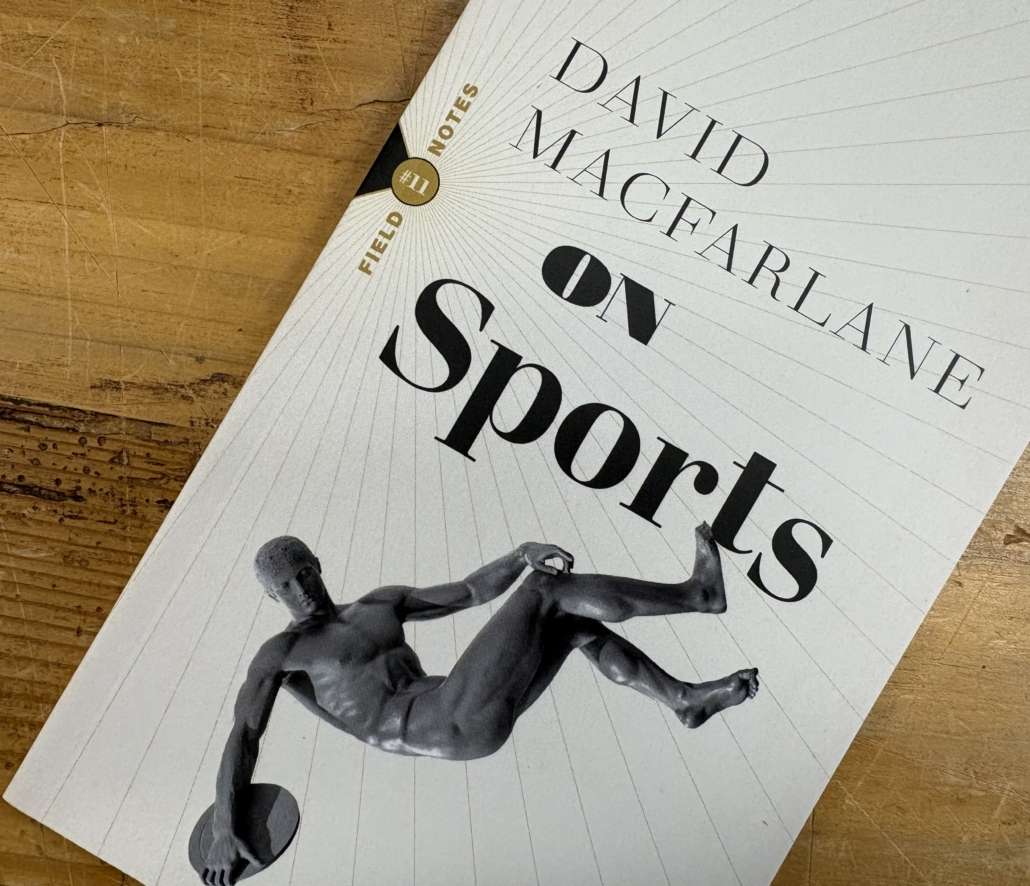
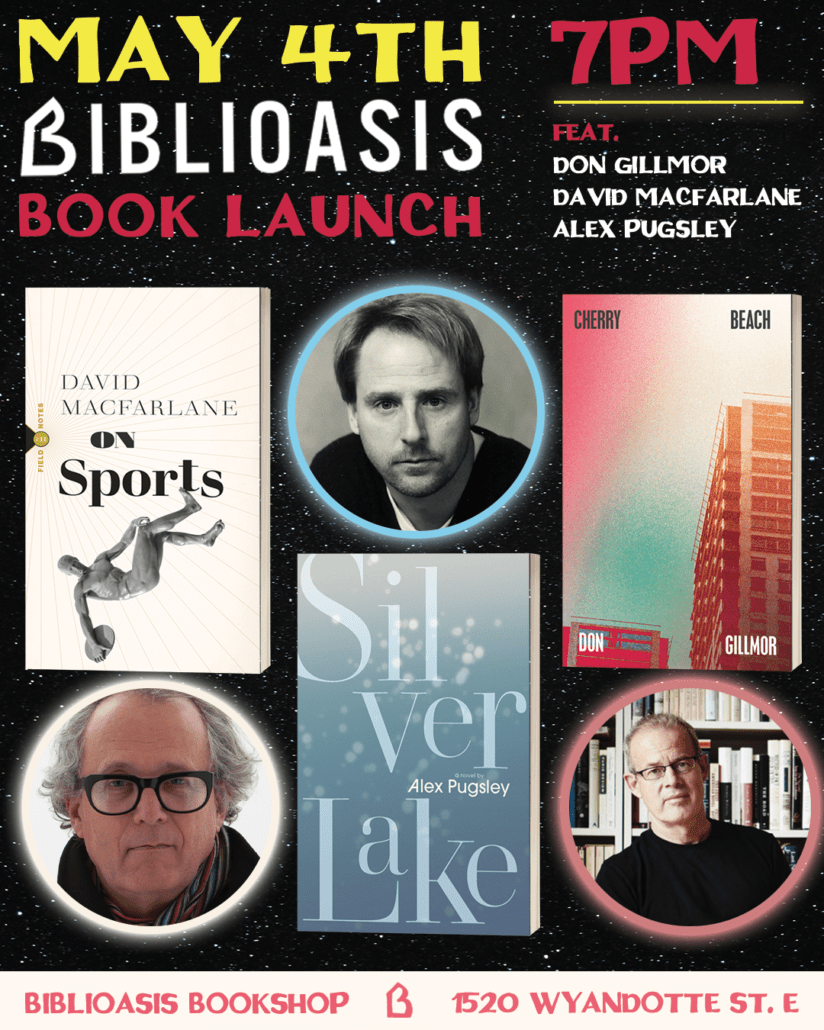
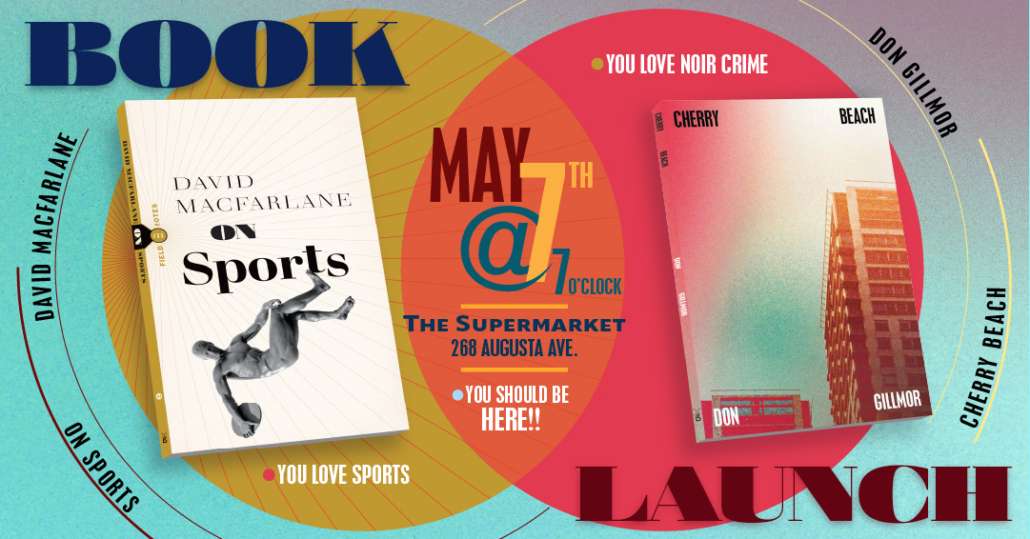
The other week, in The Tyee, the writer Cole Nowicki wrote an excellent essay about sports and money, using David Macfarlane’s new book, On Sports, as a way to explore the ineffable magic of sports, fandom, and the ways money spoils the fun. It’s a great piece and I recommend you all read the full thing, but I’ll highlight this lovely bit of praise from Nowicki because it describes exactly what I love about this book:
“On Sports is a showcase of [Macfarlane’s] breezy control over the nuts and bolts of professional and amateur athletics, their cultural import as well as the rhythms (and seasons) of sports writing.
The book makes its most memorable connections when Macfarlane, with his often beautiful prose, tunes into that deeper emotional frequency—the personal, communal, spiritual and profound—that sports are uniquely capable of hitting.”
On Sports eloquently examines the ways money has worsened our enjoyment of sports today, but it’s Macfarlane’s personal anecdotes, about his childhood and his days as a sports reporter, that make this a fun and special read.
I was reminded this week that the NHL playoffs start tomorrow. And I think On Sports is the perfect book to read during the game’s commercial breaks. Its chapters are short enough and Macfarlane’s words are infinitely more engaging than the gambling ads they’ll push on you.
I had the chance to ask Macfarlane a few questions about his book and you can read his responses below.
All best,
Ahmed
Publicist
A Biblioasis Interview with David Macfarlane
Author of On Sports

Can you start by telling me a bit about yourself and how this book came about?
From (approx.) 1980 to 2010 I worked primarily as a magazine/newspaper writer. I covered a wide range of subjects, but always enjoyed sports-writing assignments—even winning a few Sports Writing awards over the years. I’ve admired sports writers almost as long as I’ve admired athletes.
This is a book about your love of sports but also your discomfort with them today, primarily because of money (the gambling, the ticket prices, the salaries). Of sports, you write that “Athleticism is what redeems them. And money is what fucks them up.” What do you think is the worst way that money has fucked them up? What have we lost because of it?
No shortage of possible answers, but I guess it has to be gambling that is the worst—gambling as condoned by professional sports leagues and broadcasters. There are lots of other money-related problems: the cost of tickets; the demands of advertisers; the gap in earning power between male and female pros. But gambling is the nasty genie that we won’t get back in the bottle. I hope I’m wrong, but I think professional sports will be largely about gambling in the future. This is an enormous change. There was a kind of purity to sports—pure in that athleticism was the most important aspect. No more.
In the book you mention that the biggest story in sports today is the popularity of women’s sports. Why do you think that is? You also mention that going to a PWHL game was the most fun you’ve had recently at a professional game. Is because they’re not as fucked up by money yet, or is it something else?
It’s an over-used term, but I think toxic masculinity plays a big role in professional sports. But I don’t think the source, at least not the primary source, is the athletes. My theory (based entirely on anecdotal evidence) is that it is the ring of men (always men) who always surround athletes—the broadcasters, the advertisers, the publicists, the agents, the commentators, the journalists, the managers, etc.—who propagate and celebrate the bro myth. Because it gives them the kind of narrative hook that salesmen need. And perhaps there’s nothing inherently wrong with the bro myth other than how tedious it gets, but I find that it gets very tedious indeed. It was a great (and unexpected) relief to go to a PWHL game and discover that it was gone—and that good, exciting hockey remained.
Can you talk about seasons? The book is broken up into seasons, and I know your friend, the writer Alison Gordon, who is mentioned throughout the book, was adamant about baseball never going over its regular schedule. And as a kid, it seems as though you would measure time by what sports you were playing. Why did you decide to structure the book as different seasons? And how important are seasons for how we think about sports?
To be born when I was, into a middle class North American family, made the overlay of sports on the calendar almost automatic. And that’s simply because kids played outside, and the weather dictated our recreational activity. Football, hockey, baseball were our seasons—summer being less single-minded in its athletic presentation. In this way, sports were almost always connected to weather. This is a deep, almost spiritual connection, and Alison was offended that baseball saw fit to extend its season, for no reason pertaining to baseball, into a season that had nothing to do with curve balls and double plays. No ball player and no fan in (let’s say) 1954 ever thought that the season was too short. It wasn’t. Like the dimensions of a baseball diamond, it was perfect. To malign perfection, for the sake of money, is (so Alison believed) a sin.
You mention that part of what you loved most about sports was reading about the games in newspapers, and you talk a lot about your favourite sports writers in the book. I see On Sports as kind of an homage to great sports writing. How did those sports writers influence how you watch and/or think about the games? And how have they influenced your own writing?
Around the time that I was starting to think I wanted to become a writer, I began noticing examples of what I now categorize as “good writing.” I’m not quite sure what that is in its specifics—some combination of cadence, clarity, wit, and love of language—but it was sports writing that first drew my attention to skillful, informative, entertaining prose. Of course, that may have had something to do with the fact that sports writing was almost all I was reading at the time. Nonetheless, until I hit James Bond, there were no books I found more exciting (thank you public library) than books about players, or teams, or coaches or games. And when I began writing for magazines, it was reading Roger Angell on baseball and Herbert Warren Wind on golf and John McPhee on tennis (all New Yorker writers) who opened the possibilities (for me) of what today is called long-form journalism. And I ended up having the same experience as a writer that I’d had as a reader. After a slog of political and business profiles, I was assigned a story on Maple Leaf Gardens. And writing about sports reminded me that writing (like reading) can be fun.
In good publicity news:
- Benbecula by Graeme Macrae Burnet has been shortlisted for the 2026 Walter Scott Prize for Historical Fiction and longlisted for the 2026 Crime Writers Association Historical Dagger Award!
- Smash & Grab by Mark Anthony Jarman was reviewed in the Literary Review of Canada: “Jarman gathers disparate threads, memories, and digressions into something greater than the sum of its parts. As much as the outside world may disturb, in these pages, readers will find a rich inner life on full display.”
- Who Else in the Dark Headed There by Garth Martens was also reviewed in the print Literary Review of Canada: “The language is sensory, emotive, and inexplicably captivating. Arresting fragments emerge from a relentless invocation of half scenes, stitched together with the singular logic of poetic memory (which is to say, with mystery.)”
- The Passenger Seat by Vijay Khurana was reviewed in The Fiddlehead: “The performative nature of masculinity is something that Khurana captures with skill . . . The Passenger Seat, while no light read, is a genuine artistic statement—a simple story with deep resonances. While Adam and Teddy take the road to nowhere, this story might take the rest of us somewhere, somewhere better.”
- Best Canadian Poetry 2026 edited by Mart Dalton was reviewed in The Miramichi Reader: “Best Canadian Poetry is an annual treat. I love the cream-skimmed aspect, the cross-section of what people are thinking about and how they are expressing it. It’s a sort of snapshot of the Canadian poetic zeitgeist.”