
Posts

The Mechanics of Obliviousness

An excerpt from one of the last interviews with Elaine Dewar

I was heading down I-75 in Michigan on a short family vacation almost four years ago to the day that I am writing this note when my phone rang. It was Elaine Dewar. She’d been contacted by an Indigenous psychologist and teacher of Native Studies, Roland Chrisjohn, who had worked on the Truth and Reconciliation Commission, and he had urged her to investigate what he claimed were a series of unethical experiments conducted on Indigenous students by McGill psychologist Ewen Cameron as part of MK-Ultra. I was almost embarrassed to admit that I had no idea what she was talking about. She filled me in on the background. Her nose was tingling, she said; she could smell a big story, and though she wasn’t yet exactly sure of its contours, she knew she was on the cusp of something important. I had already worked with Elaine on two previous books and I knew enough to trust her instincts. I told her to keep at it and to let me know if she discovered anything.
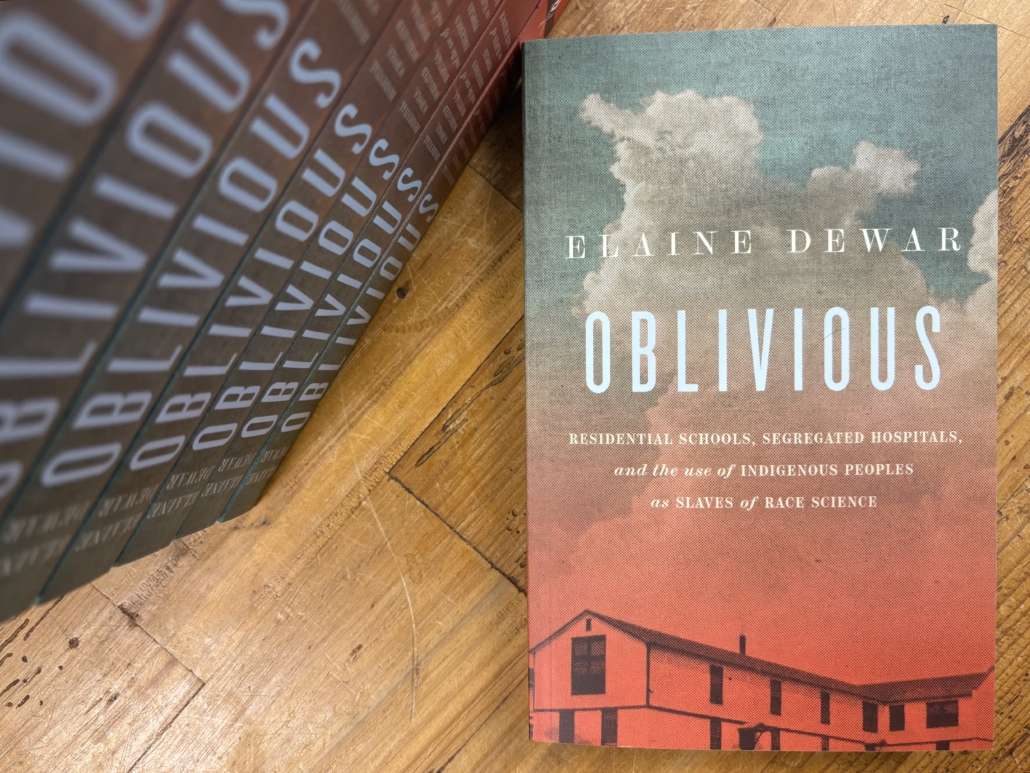
Oblivious: Residential Schools, Segregated Hospitals, and the Use of Indigenous Peoples as Slaves of Race Science by Elaine Dewar. Cover designed by Ingrid Paulson.

What Elaine discovered is the subject of her final, most personal, and arguably most important book, Oblivious: Residential Schools, Segregated Hospitals, and the Use of Indigenous Peoples as Slaves of Race Science. If she found no evidence that Ewen Cameron conducted such experiments on Indigenous students, she found ample evidence that a range of unethical and race-based experiments had been performed over several decades on large swaths of Canada’s Indigenous population, often under false pretenses, dangling health care as a lure to command obeisance. As she dug, she also learned about the segregated Indian hospital system, which brought her back to her childhood in Saskatchewan as the daughter of a doctor, and challenged her to question how it is that she had remained so oblivious to what was happening to Canada’s Indigenous people for so long. So Elaine turned her fierce journalistic eye on herself to fact-check what she knew, what she should have known, and what governmental and psychological machinery had contributed to her own (and all of our) obliviousness in what she came to think of as Mississippi North.

The resulting book is many things: it’s a memoir of a young Jewish girl who grew up in the post-war prairies—the best place and time to be Jewish in the history of her people—and the story of how she became one of the fiercest investigative journalists this country has seen. It’s also an investigation into decades of unethical race-based experiments conducted by leading academics, institutions, and the government that did irreparable harm to Indigenous communities. It’s an investigation into the segregated Indian hospital system which existed in Canada for most of the twentieth century and still remains largely unknown outside of academic study; and it reveals that we gave control of substantial parts of Indigenous healthcare in the country between the mid-50s and 70s to a former Nazi doctor immersed in that regime’s ideas of hygiene, who came to the country in the early 1950s as a farm labourer before getting his accreditation and heading to the North, where he wielded tremendous authority over Indigenous people. It’s a book about the serial betrayal of trust, and the damage that continues to the present day as a result of it; and what must be done to acknowledge it if we’re ever going to repair the relations between Canada’s Indigenous people, our institutions, and the rest of our population. And perhaps most importantly, it’s an investigation into what she calls variously the machinery and architecture of obliviousness, the policies and beliefs and institutions and stories that allowed people not to see, or to quickly forget, the evidence that our country was complicit in the genocide of its Indigenous people.
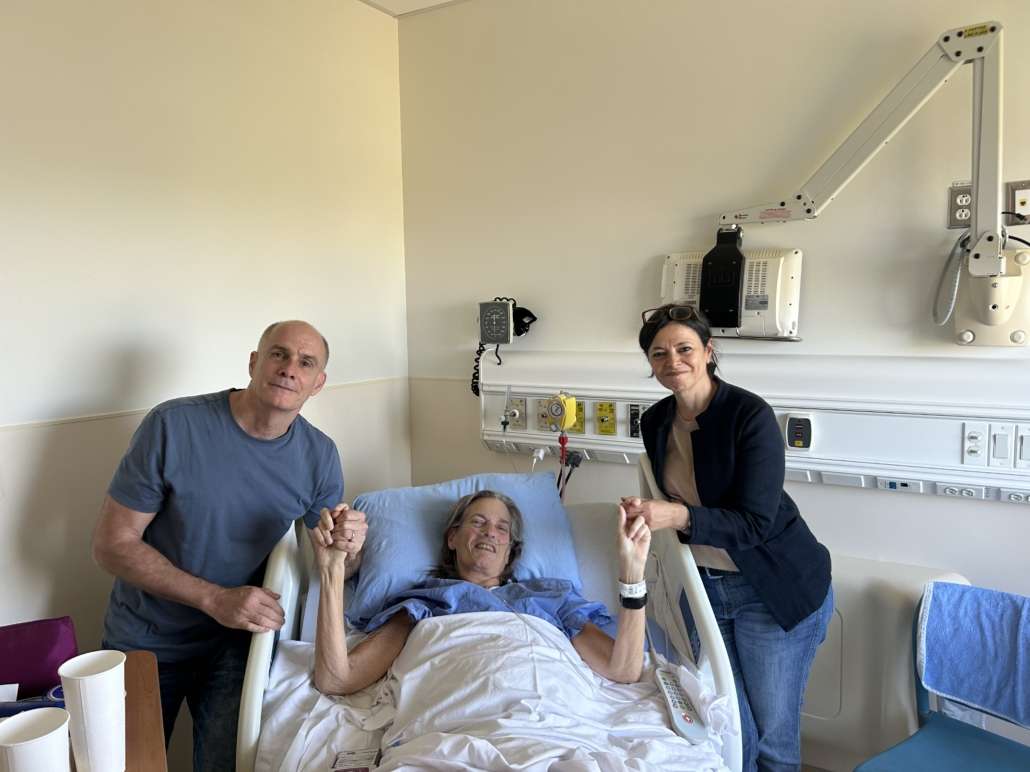
Photo: Elaine Dewar in hospice, with Greg Kelly and Nahlah Ayad from CBC.

Elaine Dewar died after a short battle with an aggressive cancer in September 2025. I went to Toronto to work with her in hospice to finalize editorial before she ended her life via MAID; working with her over those days was one of the greatest and hardest pleasures of my professional life. I try to keep her example front of mind when I feel overwhelmed: her intelligence, care, humour, and rage at injustice continued until the end. As did her faith in her readers. It was you, about to embark on this, her last book, which provided her solace; that she’d been given enough time to do this necessary work and lay out her case. In this way, Oblivious is both a private and public accounting. Like Elaine, I too place my faith in you, and together this book will teach us to face up to what most of the time we’d prefer not to see, in the perpetual hope that we can together continue to move the needle in the direction of justice.

With respect and appreciation,

Dan Wells
Publisher


Don’t miss our Toronto launch of Elaine Dewar’s Oblivious next week (April 29, at 6PM) at Massey College.

Below is part of an interview between Elaine Dewar and friend and journalist Marci McDonald, recorded on September 15, 2025.

MM: How did this whole thing begin?

ED: I got an email from a guy named Roland Chrisjohn who, in his younger years, was one of the founders of AIM Canada. So, back in the 1970s, he was already an activist with regards to Indigenous people. He sent me an email demanding that I investigate the genocide of Indigenous people in Canada by the government of Canada. And I sort of looked at the email, and the question in my head was: “Delete or not delete?” Is this just another guy who has questions he can’t resolve for himself and can’t let it go, or is this a guy who actually knows something? And it turned out he knew quite a lot, starting with what a genocide really is. So that’s how it started: one email, one query.

What was the most shocking revelation to you?

That there was a whole group of so-called “Indian hospitals” that were set up, mainly in the west between 1945 and 1981, where Indigenous people were treated in substandard conditions, by doctors and nurses who often did not have qualifications. And that I had walked by one of them probably every day for two weeks and never noticed the word “Indian” hospital—as in, segregated hospital—at all.

It said that I lived in a segregated society that was so perfect in its segregation that I never noticed. It resonated with everything going on in the United States with the civil rights movement, with what happened to Jews in Germany between 1933 and 1945 . . . It was inconceivable to me that we lived in the same society.
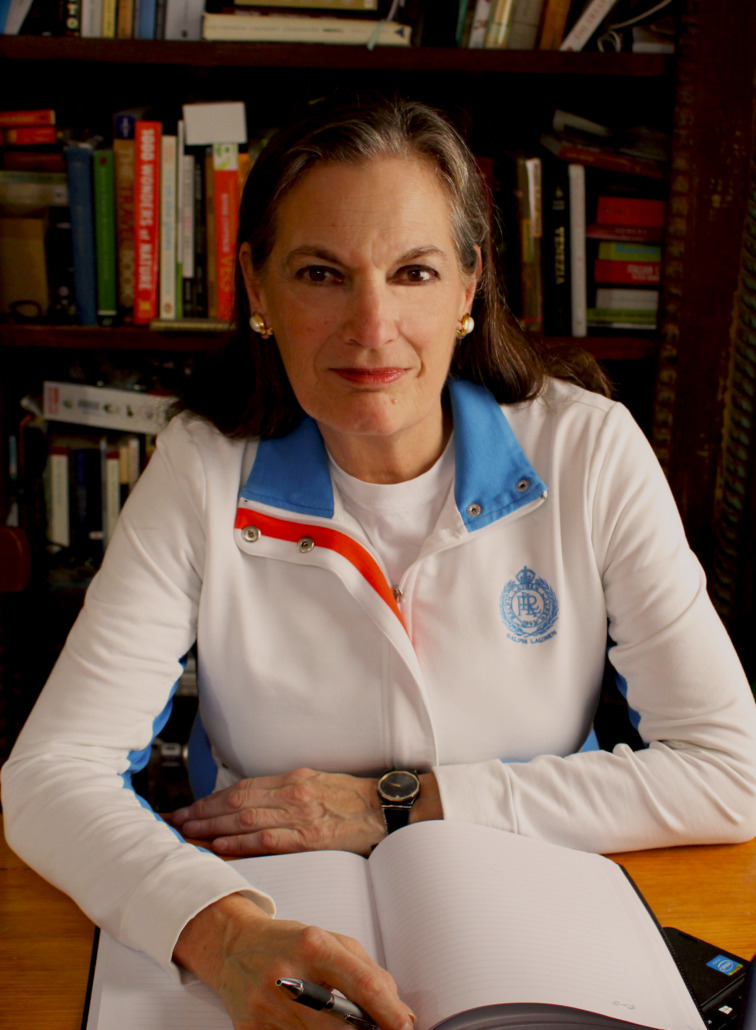
Elaine Dewar. Credit: Danielle Dewar.

Now, this began with an assignment to find out if there was a genocide, which is a very charged word. And before I read your book, I didn’t know that it was coined in relation to the Holocaust. At what point did you realize that these two seemingly disparate narratives had a link?

The thing that disturbed me about the use of the word [genocide] was numbers. I was looking at 6 million people, at least, who were murdered between 1942 and 1945. Compare that to what the Truth and Reconciliation Commission put forward as the possible numbers of deaths in the residential schools: between 3,000 and 4,500 over the course of 150 years. So 6 million in 3 years or 3,000–4,500 across 150 years. As soon as I looked at these numbers, I thought we can’t be talking about the same phenomenon. And yet, when I read John Milloy’s book—which he drew from the research he did for the Royal Commission on Aboriginal Peoples in the 1990s—the meanness, the torture, the unbelievable cruelty of the residential school system really began to change the shape of the ideas in my head about what a genocide is.

It also mattered that the Truth and Reconciliation Commission called it a cultural genocide, which is not a term in Genocide Convention law. Cultural genocide, in [Milloy’s] view, was a way of escaping the truth. I wasn’t so sure about that, because Lemkin—who actually created the word—his view was that the genocide in Germany began with the rules and laws and regulations post the Nazi election of 1933, that cultural genocide is the precursor of physical genocide. And what Canada was doing was wiping out the cultural history, the sense of self, that makes Indigenous people Indigenous people. The point was to get rid of all of it, to turn them into taxpaying, non-revenue-receiving Canadians.

So that’s a theoretical / thematic link. When did you find there might be an actual link?

I was reading up on the science done by Nazi physicians on Jews, Slavs, prisoners of war. And what I saw was a level of cruelty that was just unspeakable. But not that far off the beaten path, in northern Canada . . . entire Indigenous communities became human subjects. The lure of medical care was used to allow physicians, physical anthropologists, nutritionists, to have free access on the grounds that they were acting in a beneficent way.

They [Indigenous people] were specimens, slaves of race science . . . No permissions. We know, from the survivors, that they thought they were just being treated for medical issues . . . except that it hurt.
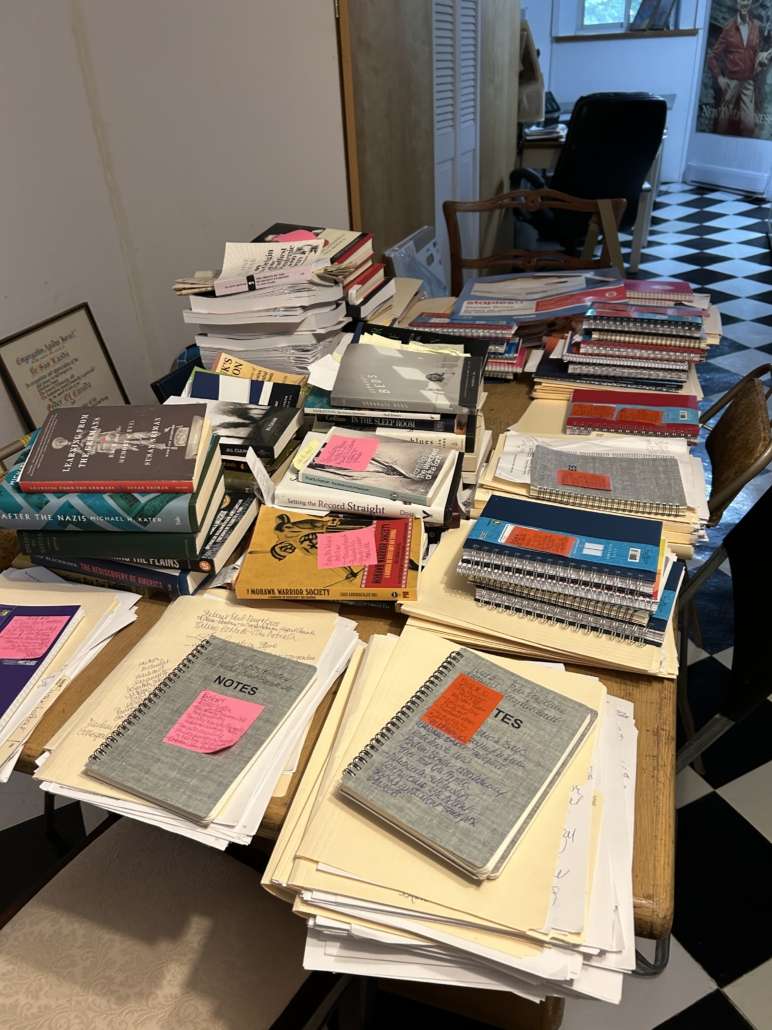
Photo: Elaine’s office table, with her research for Oblivious lined up chapter by chapter.

What about Otto Schaefer?

Otto Schaefer had a very interesting history, which he tried very hard to cover up. He was studying as a medical student in Nazi Germany, at Heidelberg. He studied under the leaders of Hitler’s hygiene program, which was their science of race. And their race science was based on the notion that Aryans were somehow the top rung of human beings, and everybody else was way down below, and at the very bottom were what were called Untermenschen, meaning ‘sub-humans’. Jews are described as sub-humans; Slavs are described as sub-humans; and to sub-humans, in Germany, anything could be done.

Photo: Otto Schaefer.

And Schaefer came to Canada why?

He apparently read Rasmussen and Boas, who were early investigators of Inuktituk societies. And he told everybody that that’s what he really wanted to do: to come to Canada and study the Inuit.

He ends up, within two years, in charge of the Arctic, in charge of medicine delivery to both Dene and Inuit communities across the North. By 1974, I believe, he’s in charge of research all across the Arctic for the government of Canada.

And he gets an Order of Canada the same year as my mum and dad. That was one of the more disturbing moments: when I realized it was the same year [1976].

This ends up as an indictment of the Canadian medical society. Willful ignorance, willful blindness . . .

Racism. The notion that some people are better than others. That some people deserve protection, and others do not. The CMA apologized to an Indigenous community in British Columbia, and I read the documents that they posted to explain the nature of their apology. What they clearly did was go through their own archival material to see how often they asked any questions about the health of Indigenous people, and what was being done and not being done. They missed almost all of it: they didn’t ask any questions. I don’t know how much deeper of an indictment I can come up with than that.

What do you want people to take away from this book?

That we can’t be oblivious to each other, that we have to respond to suffering. We have to look at it, in its face, and respond to it, and not run away.
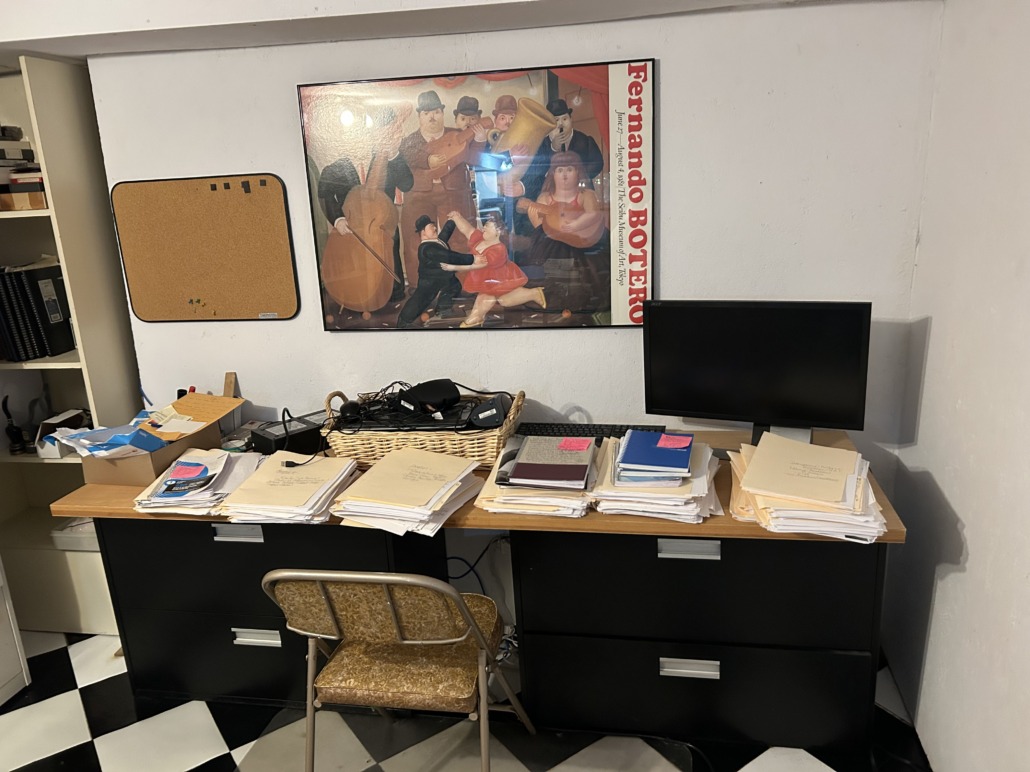
Photo: Elaine’s writing desk, with more chapters of Oblivious.

You talk about the mechanics of obliviousness. What does that mean?

One of the things I was really anxious to understand: Was any of this written about anywhere? And two things were just astonishing to me. One: there was almost no actual history written about Indigenous peoples in this country until John Milloy followed on his research for the Royal Commission on Aboriginal Peoples. And that’s in the 1990s. And the other thing: What about my senior colleagues? Did they write about this? Did they investigate it? Did they do anything about it?

The mechanics of oblivion and obliviousness seem to me about leaving things out of the narrative. And by leaving things out, you create the capacity to ignore what’s in front of your face. It’s not written about, not in a really thorough way. It’s not described with language particular to us. There is no history; there’s nothing until the 1990s.

So, all those years I’m oblivious, it’s because we’re leaving things out of the story. Because they’re uncomfortable.

So how do we change that?

We better be uncomfortable. We better be better journalists. We better remember who’s afflicted.


In good publicity news:

  • Smash & Grab by Mark Anthony Jarman was reviewed in The Miramichi Reader: “You may be caught in the middle of a Jarman story wondering what exactly is going on, but you will never be caught in the middle of a Jarman story bored. Jarman’s language here, as always, is pyrotechnic.
  • The Notebook by Roland Allen got a shout-out from Ryan Holiday on MSN NOW, as part of his recommended reading list.
  • Sacred Rage by Steven Heighton was reviewed by Anne Logan in I’ve Read This: “I think of Heighton as a true artist in every sense of the word . . . It’s a fitting tribute to a writer lost too soon.

Our seasons

An interview with David Macfarlane, author of On Sports

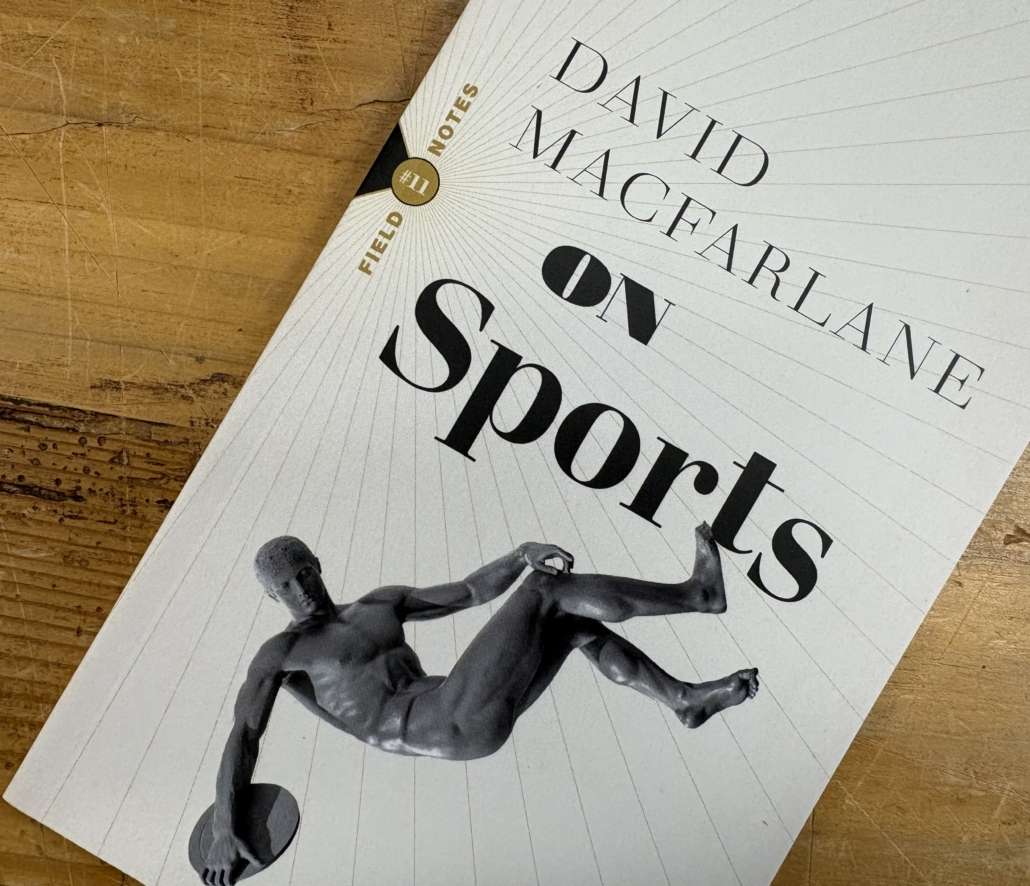
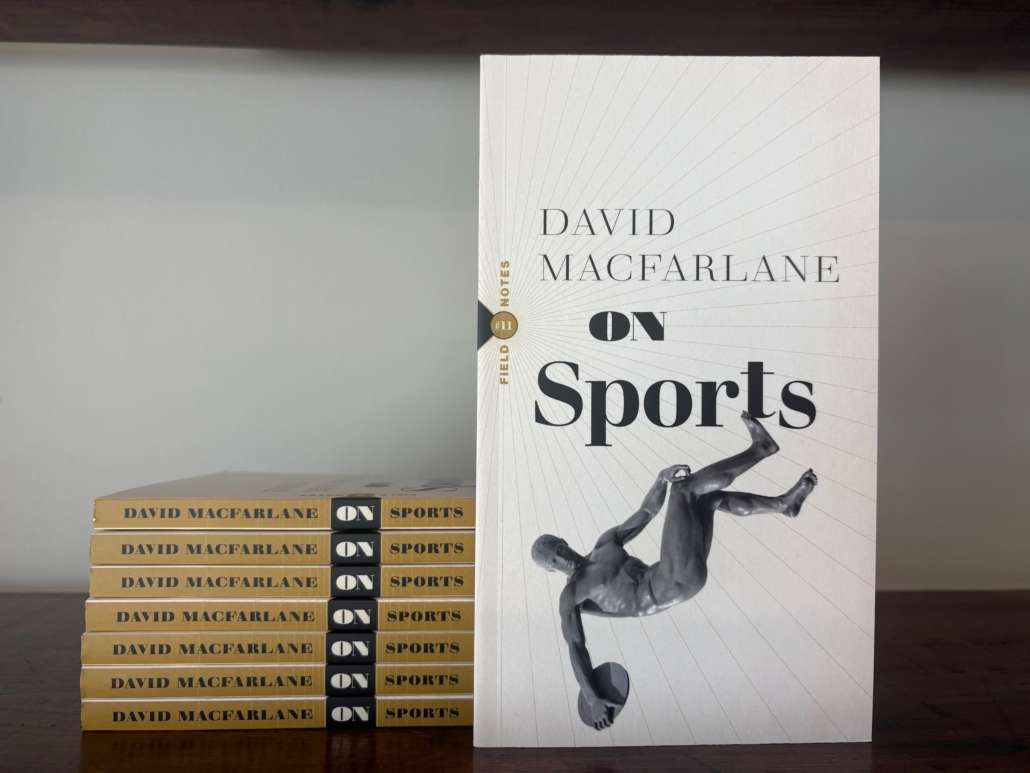
Photo: On Sports by David Macfarlane. Cover designed by Ingrid Paulson.

The other week, in The Tyee, the writer Cole Nowicki wrote an excellent essay about sports and money, using David Macfarlane’s new book, On Sports, as a way to explore the ineffable magic of sports, fandom, and the ways money spoils the fun. It’s a great piece and I recommend you all read the full thing, but I’ll highlight this lovely bit of praise from Nowicki because it describes exactly what I love about this book:

On Sports is a showcase of [Macfarlane’s] breezy control over the nuts and bolts of professional and amateur athletics, their cultural import as well as the rhythms (and seasons) of sports writing.

The book makes its most memorable connections when Macfarlane, with his often beautiful prose, tunes into that deeper emotional frequency—the personal, communal, spiritual and profound—that sports are uniquely capable of hitting.”

On Sports eloquently examines the ways money has worsened our enjoyment of sports today, but it’s Macfarlane’s personal anecdotes, about his childhood and his days as a sports reporter, that make this a fun and special read.

I was reminded this week that the NHL playoffs start tomorrow. And I think On Sports is the perfect book to read during the game’s commercial breaks. Its chapters are short enough and Macfarlane’s words are infinitely more engaging than the gambling ads they’ll push on you.

I had the chance to ask Macfarlane a few questions about his book and you can read his responses below.

All best,

Ahmed
Publicist


A Biblioasis Interview with David Macfarlane

Author of On Sports

Photo: David Macfarlane.

Can you start by telling me a bit about yourself and how this book came about?

From (approx.) 1980 to 2010 I worked primarily as a magazine/newspaper writer. I covered a wide range of subjects, but always enjoyed sports-writing assignments—even winning a few Sports Writing awards over the years. I’ve admired sports writers almost as long as I’ve admired athletes.

This is a book about your love of sports but also your discomfort with them today, primarily because of money (the gambling, the ticket prices, the salaries). Of sports, you write that “Athleticism is what redeems them. And money is what fucks them up.” What do you think is the worst way that money has fucked them up? What have we lost because of it?

No shortage of possible answers, but I guess it has to be gambling that is the worst—gambling as condoned by professional sports leagues and broadcasters. There are lots of other money-related problems: the cost of tickets; the demands of advertisers; the gap in earning power between male and female pros. But gambling is the nasty genie that we won’t get back in the bottle. I hope I’m wrong, but I think professional sports will be largely about gambling in the future. This is an enormous change. There was a kind of purity to sports—pure in that athleticism was the most important aspect. No more.

Windsor folks: Come see David at his launch at Biblioasis Bookshop on May 4, alongside Alex Pugsley (Silver Lake) and Don Gillmor (Cherry Beach)!

In the book you mention that the biggest story in sports today is the popularity of women’s sports. Why do you think that is? You also mention that going to a PWHL game was the most fun you’ve had recently at a professional game. Is because they’re not as fucked up by money yet, or is it something else?

It’s an over-used term, but I think toxic masculinity plays a big role in professional sports. But I don’t think the source, at least not the primary source, is the athletes. My theory (based entirely on anecdotal evidence) is that it is the ring of men (always men) who always surround athletes—the broadcasters, the advertisers, the publicists, the agents, the commentators, the journalists, the managers, etc.—who propagate and celebrate the bro myth. Because it gives them the kind of narrative hook that salesmen need. And perhaps there’s nothing inherently wrong with the bro myth other than how tedious it gets, but I find that it gets very tedious indeed. It was a great (and unexpected) relief to go to a PWHL game and discover that it was gone—and that good, exciting hockey remained.

Toronto readers can meet David at his other launch on May 7 at The Supermarket alongside Don Gillmor (Cherry Beach).

Can you talk about seasons? The book is broken up into seasons, and I know your friend, the writer Alison Gordon, who is mentioned throughout the book, was adamant about baseball never going over its regular schedule. And as a kid, it seems as though you would measure time by what sports you were playing. Why did you decide to structure the book as different seasons? And how important are seasons for how we think about sports?

To be born when I was, into a middle class North American family, made the overlay of sports on the calendar almost automatic. And that’s simply because kids played outside, and the weather dictated our recreational activity. Football, hockey, baseball were our seasons—summer being less single-minded in its athletic presentation. In this way, sports were almost always connected to weather. This is a deep, almost spiritual connection, and Alison was offended that baseball saw fit to extend its season, for no reason pertaining to baseball, into a season that had nothing to do with curve balls and double plays. No ball player and no fan in (let’s say) 1954 ever thought that the season was too short. It wasn’t. Like the dimensions of a baseball diamond, it was perfect. To malign perfection, for the sake of money, is (so Alison believed) a sin.

You mention that part of what you loved most about sports was reading about the games in newspapers, and you talk a lot about your favourite sports writers in the book. I see On Sports as kind of an homage to great sports writing. How did those sports writers influence how you watch and/or think about the games? And how have they influenced your own writing?

Around the time that I was starting to think I wanted to become a writer, I began noticing examples of what I now categorize as “good writing.” I’m not quite sure what that is in its specifics—some combination of cadence, clarity, wit, and love of language—but it was sports writing that first drew my attention to skillful, informative, entertaining prose. Of course, that may have had something to do with the fact that sports writing was almost all I was reading at the time. Nonetheless, until I hit James Bond, there were no books I found more exciting (thank you public library) than books about players, or teams, or coaches or games. And when I began writing for magazines, it was reading Roger Angell on baseball and Herbert Warren Wind on golf and John McPhee on tennis (all New Yorker writers) who opened the possibilities (for me) of what today is called long-form journalism. And I ended up having the same experience as a writer that I’d had as a reader. After a slog of political and business profiles, I was assigned a story on Maple Leaf Gardens. And writing about sports reminded me that writing (like reading) can be fun.


In good publicity news:

  • Benbecula by Graeme Macrae Burnet has been shortlisted for the 2026 Walter Scott Prize for Historical Fiction and longlisted for the 2026 Crime Writers Association Historical Dagger Award!
  • Smash & Grab by Mark Anthony Jarman was reviewed in the Literary Review of Canada: “Jarman gathers disparate threads, memories, and digressions into something greater than the sum of its parts. As much as the outside world may disturb, in these pages, readers will find a rich inner life on full display.
  • Who Else in the Dark Headed There by Garth Martens was also reviewed in the print Literary Review of Canada: “The language is sensory, emotive, and inexplicably captivating. Arresting fragments emerge from a relentless invocation of half scenes, stitched together with the singular logic of poetic memory (which is to say, with mystery.)
  • The Passenger Seat by Vijay Khurana was reviewed in The Fiddlehead: “The performative nature of masculinity is something that Khurana captures with skill . . . The Passenger Seat, while no light read, is a genuine artistic statement—a simple story with deep resonances. While Adam and Teddy take the road to nowhere, this story might take the rest of us somewhere, somewhere better.
  • Best Canadian Poetry 2026 edited by Mart Dalton was reviewed in The Miramichi Reader: “Best Canadian Poetry is an annual treat. I love the cream-skimmed aspect, the cross-section of what people are thinking about and how they are expressing it. It’s a sort of snapshot of the Canadian poetic zeitgeist.

Night shift with the bicycle cops

An interview with Don Gillmor, author of Cherry Beach

Cherry Beach by Don Gillmor. Cover designed by Kate Sinclair.

Don Gillmor’s latest book—a layered literary crime thriller called Cherry Beach—comes out next Tuesday and has already been leading our Canadian sales for the past couple of weeks. It recently made the CIBA Booksellers’ List—a list of favourite spring releases voted on by indie Canadian booksellers. It’s always extra special when indie bookstores vote for books by indie presses, and honestly kind of annoying when they don’t. (6/20 of the books on this spring list are indie, but who’s counting?)

Cherry Beach is one of those novels that succeeds at being for all kinds of readers. Gillmor, who’s written on a wide range of topics over the course of his career—as a journalist, as well as a novelist—knows how to fill a story with the tidbits of information that make up the substance of real life. I learned some Toronto geography; I also learned how to make a nice jalapeño marinade for my pork tenderloin. On the one hand, this is a propulsive, gripping detective story. On the other, Cherry Beach has the qualities I love of a plotless literary novel, including the interiority of a lonely, slightly-delusional protagonist I can relate to.

Readers have been comparing Cherry Beach to The Wire for the ways it characterizes a city (Toronto in this case, instead of Baltimore), and the ways it balances racial and economic tensions while gradually revealing a complex, shadowy network of crime. But it’s also interesting to me that a 263-page book could even be comparable to a show that takes approximately 60 hours to watch. Yet it is. Gillmor doesn’t waste space, and I’m still thinking through some of the book’s connections, as the intensifying summer heat of the novel seeps into the hours spent away from it.

I had the pleasure of sending Don Gillmor a handful of questions about Cherry Beach, which he graciously answers below.

Dominique,
Publicity & Marketing Coordinator


A Biblioasis Interview with Don Gillmor

Author of Cherry Beach (April 14, 2026)

Don Gillmor. Credit Ryan Szulc.

You’ve written many kinds of books (literary novels, a memoir, books for children, a field note about oil, a fictionalized history of Canada). What made you want to write a crime novel?

I’ve always wanted to write a detective novel. In university, I began reading some of the classic detective novels from the 1930s, 40s and 50s—Dashiell Hammett, Raymond Chandler, Ross Macdonald, Chester Hines. It was partly a relief from Eighteenth Century British Literature courses. At the time I thought it would be interesting to write one. It took me a while to get around to it.

How much of Cherry Beach is based on true events and real people?

There are parts of the novel that are informed by, if not based on, real events or people. Years ago, when I was doing a lot of journalism, I wrote an article for Toronto Life on 51 Division, which was then sometimes called the Punishment Station because bad cops from other divisions were sent there. At the time, they were also experimenting with community policing—mostly young cops on bicycles engaging with the community. So there was a clash of cultures—two very different views on policing. To a degree, I revived that idea in Cherry Beach. I went out on the night shift with the bicycle cops and there are a few scenes that are taken from that experience, including the opening conversation with the sex worker. I also went out in police cars with the hardcore cops in the division. An interesting perspective.

I wrote a magazine article that took me to Kingston, Jamaica, looking for a suspected murderer (I didn’t find him), but the trip into the red hills and the conversation with the Justice Minister are based on my own experience there.

And Torontonians may recognize aspects of a former mayor.

Toronto readers! Don’t miss Don’s launch at The Supermarket with fellow Biblioasis author David Macfarlane (On Sports).

In Cherry Beach, Toronto is essentially the main character, and we witness its character development throughout the book. How was writing the character of Toronto different from writing a human character (or was it the same)?

I wanted the city to be a large part of the book. In part because it’s a complex place, claiming to be the most multicultural city in the world. So we’re sort of a global experiment. In many ways, we’re a grand success. But there remains a lot of work to be done. There are issues of affordability and racism, and our traffic is amongst the worst in North America.

As a reader, I always enjoy seeing cities from a literary perspective, whether it’s Dennis Lehane’s Southie neighbourhood in Boston, or Elmore Leonard’s Detroit, or the Venice of Donna Leon. So I wanted to look at Toronto from the perspective of its extremes—the privileged and the underclass. There was a time when the richest and poorest neighbourhoods (Rosedale and Regent Park respectively) were essentially adjacent to one another, though the area has since gone through major changes.

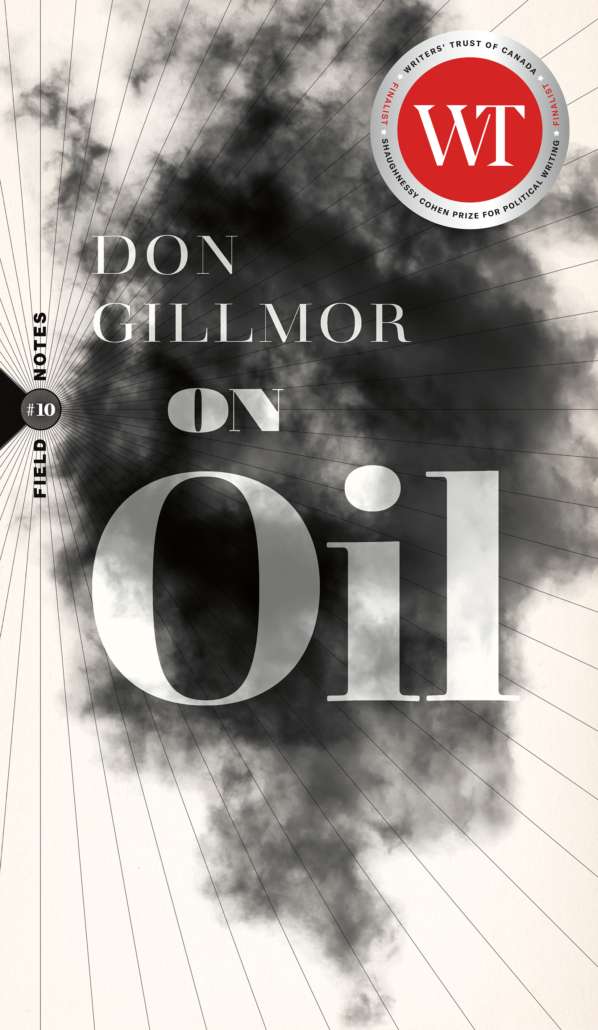
Don Gillmor’s other book with Biblioasis, On Oil, was recently announced as a finalist for the Writers’ Trust Shaughnessy Cohen Prize.

Detective Jamieson Abel is a great cook, and this book is full of wonderful recipes. I’m interested to know more about your decision to include this aspect of his character.

It’s mostly an extension of my own interest in cooking. I learned to cook as a matter of survival—a series of girlfriends with many wonderful qualities, but no interest whatsoever in cooking. So I started to learn. Cooking opens up a world. I think it’s one of the reasons for the success of cooking shows; they form a kind of community and bridge cultures. Abel is quite isolated—a single, middle-aged man who has alienated much of the department he works for. Cooking is a way for him to engage with the world.

What were some of your influences for Cherry Beach, literary or otherwise?

There are two different directions as far as influences go. On the one hand, Jamieson Abel is (sort of) in the tradition of what were once called hard boiled detectives—Ross Macdonald’s Lew Archer, Chandler’s Philip Marlowe et al. But there is also a tradition of literary novelists like Kate Atkinson, John Banville, and Michael Redhill, who all write detective novels as well. I understand the appeal of crime fiction for literary novelists, but it presents certain challenges as well. As a rule, literary novelists don’t have to concern themselves with plot. But with crime fiction, you need plot, and it has given me a fresh appreciation for those writers who do it well.

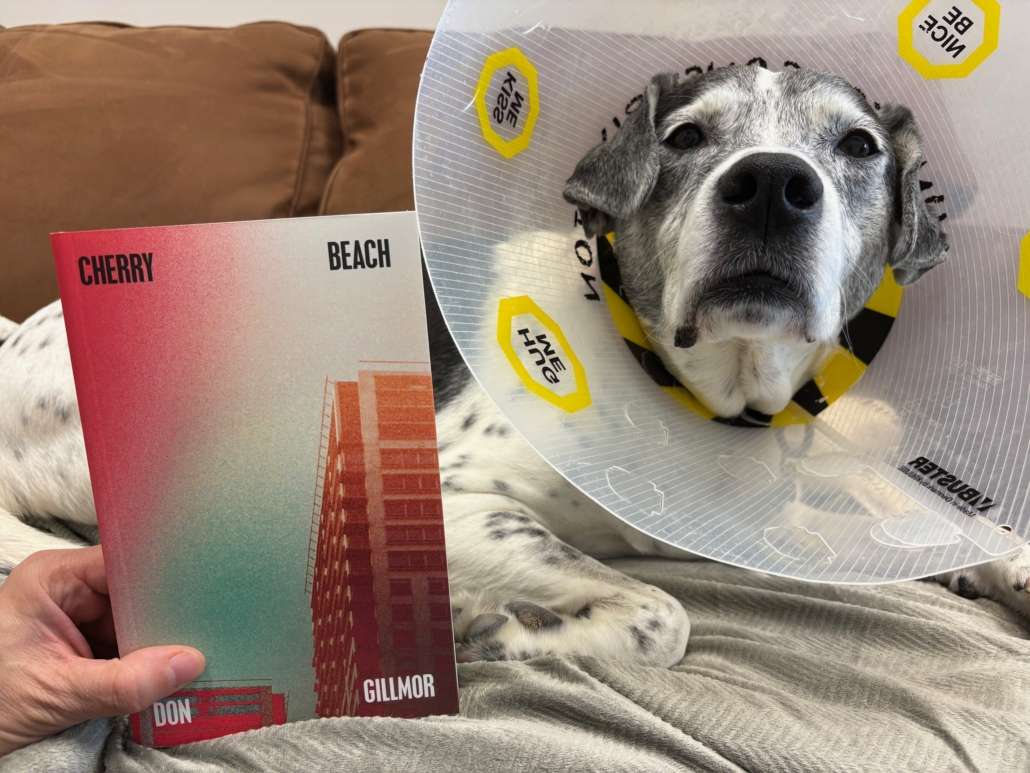
Bonus pic of our office dog Sammy with his copy of Cherry Beach!

In good publicity news:

  • Cherry Beach by Don Gillmor has been included in the CIBA Spring 2026 Booksellers List: “If the dayglo film-filtered cover of an aging high rise on a summer day doesn’t intrigue you, maybe a comparison to The Wire but ‘make it Toronto’ will do the trick. Cherry Beach is a propulsive genre mash-up of Canadian crime and literary fiction.” (Robyn York, Beach Reads Bookshop)
  • On Sports by David Macfarlane was featured in The Tyee: “A showcase of [Macfarlane’s] breezy control over the nuts and bolts of professional and amateur athletics, their cultural import as well as the rhythms (and seasons) of sports writing.
  • Every Time We Say Goodbye by Ivana Sajko (trans. Mima Simić) was reviewed in On the Seawall: “Mima Simić translates all of this with clarity and verve . . . alternately riveting and heartbreaking.” The book was also featured in Electric Lit’s list of 15 Must-Read Small Press Books of Spring 2026: “Every sentence sings with emotional resonance and is imbued with the protagonist’s regret . . . a master class in both economy of language and expansiveness of feeling.
  • Decadence by Richard Kelly Kemick was reviewed in Publishers Weekly: “Kemick’s wit and curmudgeonly self-regard is offset by his palpable adoration of his partner, Litia, evoking the work of David Sedaris. It’s a weird and rewarding ride.

The sound of the crowd

Welcoming baseball season with an excerpt from On Sports by David Macfarlane

On Sports by David Macfarlane (Field Notes #11). Series designed by Ingrid Paulson.

It’s the start of baseball season. I’m sure most of you already knew that. I don’t watch much baseball these days. To be honest, I don’t even really remember the rules, and can’t remember if I ever have. I love the movies though (Bull DurhamField of DreamsAngels in the Outfield, etc.) and have seen them countless times. They bring to mind happy memories. As a kid, they inspired me to play sports (badly) and watch games live, which gave me and my friends something to look forward to as the seasons and years went on. We’d rendezvous in the playground to discuss how our team (be it the Winnipeg Jets, Goldeyes, or the Bombers) were doing and what they should be doing better. Like I’m sure many of you have. But that was back then. Today watching pro sports can feel like kind of a drag. Like most things nowadays, too much money and greed has ruined a good thing. Now it’s harder than ever to enjoy sports because of online gambling, the increased cost of tickets to attend a game or even just to stream it, and the noise and spectacle that only distracts you from the game itself in an attempt to keep your attention to sell you more ads.

Something you may not know is that this week also saw the publication of David Macfarlane’s On Sports in Canada (it’s out in the US on April 7th), the latest addition to our Field Notes series. On Sports is a book that responds to our collective exhaustion with the commodification of sports, but in a charming, meandering way. This is a nostalgic book. At times it almost feels like an elegy to a time when watching sports was about the games and the athletes and less about people’s parlays and the TV incessantly hitting you with BetMGM ads. But it’s also rather funny and heartwarming. I found it to be a delightful love/hate letter from someone who cares deeply about sports and the amazing things athletes can do, and who is also deeply disappointed with the commercialisation of competition. Reflections on some of the biggest stories in the sports world are interspersed with anecdotes from his childhood and his days as a sports writer, and it’s wonderful how he’s able to weave all these threads together to paint of picture of what sports have meant to us and what they no longer mean today.

Personally, my experience with sports the last few years had been just occasionally glancing at the TV in whatever bar my friends and I happen to be in that day and sometimes commentating on what’s happening on screen but not really paying attention. Or rewatching Bull Durham. But reading On Sports, I was reminded of all the significant impressions sports have left on my own life, which is a beautiful thing a book can give you, and left me somewhat hopeful as reading how much Macfarlane cares for baseball, hockey, football or any sport really, made me pay more attention to them in a way I had almost forgotten how to do.

So to kick-off the start of the season, please find below a short excerpt from an early part of the book, where Macfarlane reminisces about attending a Blue Jays spring training game and reflects on the joys of being amongst fans just watching a baseball game.

All my best,

Ahmed
Publicist


Spring

An excerpt from On Sports

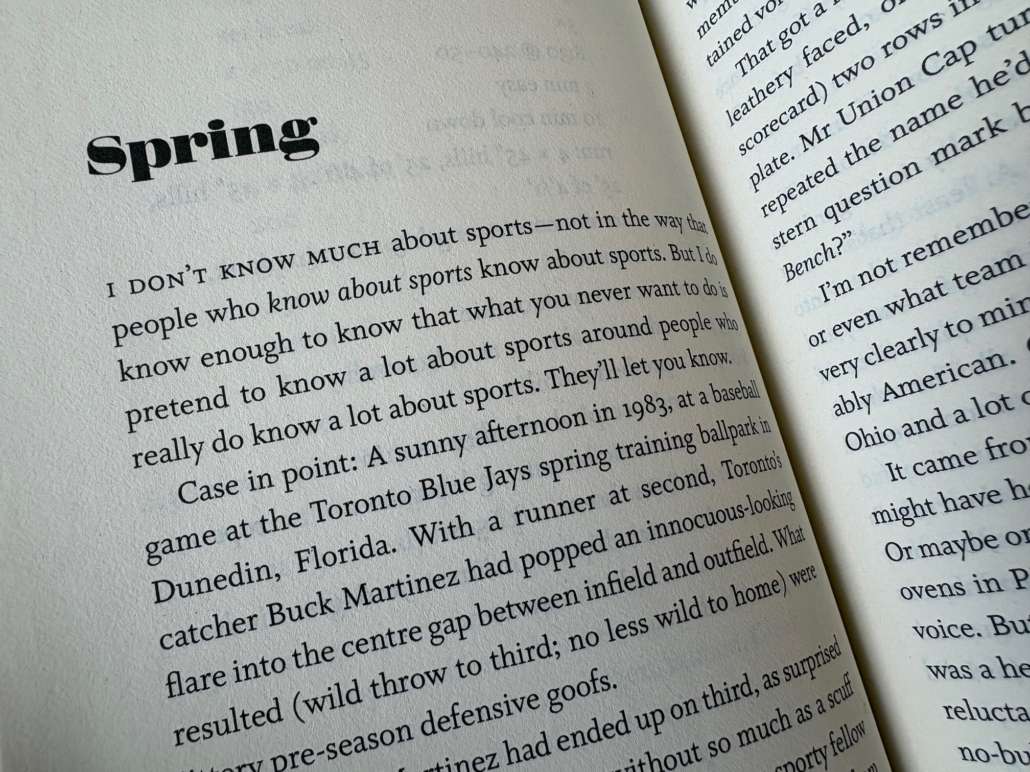
Interior of On Sports, featuring the chapter excerpted below.

I don’t know much about sports—not in the way that people who know about sports know about sports. But I do know enough to know that what you never want to do is pretend to know a lot about sports around people who really do know a lot about sports. They’ll let you know.

Case in point: A sunny afternoon in 1983, at a baseball game at the Toronto Blue Jays spring training ballpark in Dunedin, Florida. With a runner at second, Toronto’s catcher Buck Martinez had popped an innocuous-looking flare into the centre gap between infield and outfield. What resulted (wild throw to third; no less wild to home) were jittery pre-season defensive goofs.

As a result, Martinez had ended up on third, as surprised as anyone to be standing there without so much as a scuff of baseline dirt on his pants. That was when a sporty fellow (lime-green polo shirt, cargo shorts) a few rows down from my seat stood and shouted, “Attaboy, Buck.”

I don’t think Mr Lime-Green expected to be heard so clearly by so many people. His exclamation happened to coincide with a momentary pause in the cheering, as if all the happy Toronto fans were catching their breath at the same time. Mr Lime-Green was suddenly conspicuous.

Having inadvertently claimed the attention of the crowd, he felt compelled to say something more than “attaboy.” Baseball is a sport that traditionally demands a certain wit and knowledge from its more outspoken audience members. So Mr Lime-Green added, jauntily and with sustained volume, “Johnny Bench has got nothing on you.”

That got a reaction. Specifically, it got a reaction from a leathery faced, old-school baseball fan (UAW ball cap, scorecard) two rows in front of me, a little closer to home plate. Mr Union Cap turned slowly and deliberately. He repeated the name he’d just heard and affixed not just a stern question mark but also, somehow, italics: “Johnny Bench?

I’m not remembering the game. I can’t recall who won, or even what team Toronto was playing. What I can bring very clearly to mind, though, is that voice. It was unmistakably American. Gravelly. Unadorned. At a guess, I’d say Ohio and a lot of Luckies.

It came from an older generation of voices—voices you might have heard on an aircraft carrier in the Pacific in ’43. Or maybe on the line at a Ford plant in Dearborn or the coke ovens in Pittsburgh after the war. It didn’t talk a lot, that voice. But it knew claptrap when it heard it. It knew who was a hero and who wasn’t. It was a voice that, when it was reluctantly put to use, had something to say. The voice of a no-bullshit collectivity of America that is, alas, long gone. Lost and by the wind grieved. Missing in the din of podcasts and comments and panel debate. That tough old Lucky Strike voice. Is there a sadder lyric in the American songbook than “Where have you gone, Joe DiMaggio?”?

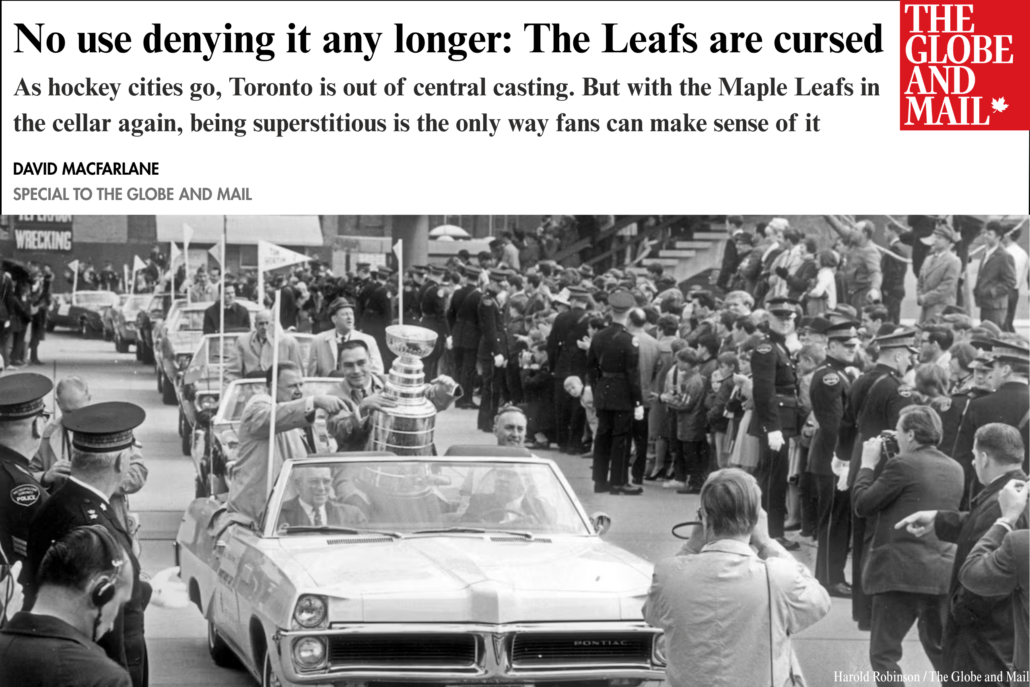
For more on sports, check out David Macfarlane’s recent op-ed on hockey in the Globe and Mail.

Martinez getting to third without so much as a pro forma slide on a midfield bloop that should have been a single, if that, was the cause of giddy celebration among Blue Jays fan—which is to say, in Dunedin, almost everybody. A hometown crowd’s volume doesn’t distinguish much between crazy-good luck and skill. A stand-up triple is a stand-up triple.

I thought I heard something in the cheering that was more than robust applause. There was a cocky effervescence that I wasn’t sure I’d heard from a Toronto crowd before. To call it a swagger would be an exaggeration—an Americanization, in fact—but it was a happy assertion of Canadianness that you wouldn’t have heard from northern visitors to Florida of previous generations—especially in regards to something as American as baseball. At least that’s what I wrote in my article, although it should be taken into account that I was a magazine writer looking for a story and inclined, therefore, toward meaningful explanations of things that may have had no meaning at all. The crowd’s cheerfulness may only have been the burble of sun-screened holidayers. Toronto fans simply happy to be warm.

Mr Union Cap did not burst the bubble of the crowd’s enjoyment. He was on the funny side of serious, but only just. There was something good-natured in his gruffness, as if he recognized that he was a stock character—a curmudgeonly, old-school baseball fan of the sort who was (as I did not then realize) an endangered species.

Before the advent of powerful sound systems and giant screens, sporadic volleys of unscripted commentary bounced back and forth between fans in the stands. There were always a few such self-appointed colour commentators per section, some of whom were funny, some of whom were knowledgeable, some of whom were both. They had something to say in a sort-of public, sort-of performative way.

The first real baseball game I went to (meaning a game with lights, players in uniform, umpires, ads on the outfield fence, green grass, red-dirt base paths, and thirty-five cent admission) was in the summer of 1960, in Grand Falls, Newfoundland. I was eight years old, in the company of my grandfather. Not a small man. Rarely seen without battered fedora and briar pipe. Known by everybody in Grand Falls. He was, shall we say, a colourful figure, and his voice was a voice with audibility in a crowd—perhaps because it was a few octaves lower than most.

“No need for a mound,” he garumphed as Corner Brook’s lanky pitcher unfolded his beanpole of a frame from the visitors dugout. “Dig him a hole, lads. Dig him a hole.”

Not the funniest line in the world, but one that has stayed with me all my life because I think it was the first time I heard somebody talk like that—a joke, a comment, an observation, made at a volume intended for public consumption but as if in a living room of friends, which is how ball parks used to sound.

By the end of the Grand Falls game, I’d concluded that half the fun of baseball was what my grandfather said about the players on the field and what the people around us said to my grandfather.

A lost art—killed by the kiss-cam. Drowned-out by ads and promotions. But there was a time when the expression of deep baseball insight from somebody a couple of rows over was part of the general fun of a ball game. They were characters, those guys. It was hard to know with old-school baseball fans if they were acting like they were in a Damon Runyan story or that’s the way they really were.

Mr Union Cap had something to say. It was what you used to expect at a ball park—a voice that knew baseball cutting through the cheerful hubbub of a crowd. Possibly, the tremolo of excitement in the Dunedin stands that afternoon was only the fun (rare then, almost extinct now) of going to a non-blaring, non-big-screen-dominant, non-merch- selling, non-ad-blasting ballpark to watch ballplayers play baseball. On a nice spring day. Undistracted by electronic loudness and pixelated screens and ads and contests and walk-up songs and who knows what all.

Photo: David Macfarlane.

My friend, the writer Alison Gordon, who died unexpectedly in 2015, covered the Blue Jays for the Toronto Star for five seasons. (By way of establishing Gordon’s unusual range of life experiences, I shall here insert a segue-defying biographic detail: Some years before Alison Gordon became the first female reporter in the American League, she was in the hotel bedroom in Montreal with Yoko Ono and John Lennon when they recorded “Give Peace a Chance.” One of those voices is hers.)

Gordon had her likes and dislikes, and much as she loved baseball she didn’t care for the bombast of a contemporary ballpark. She once proposed to Blue Jays executives that a single home-game per season be designated Old-Fashioned Day and the ballpark be allowed to sound like ballparks used to. Ballparks where you could say something, if, that is, you had something to say. Ballparks where you could cheer when you felt like cheering. And jeer when you felt otherwise.

And what happened to her proposal, I asked her at the last baseball game we attended together. She passed me the unshelled peanuts while Mötley Crüe or AC/DC or Metallica loudly walked-up the next batter. What do you think happened, she shouted pleasantly.

A quaintly lower decibel level was one of the things that made spring training so much fun. Those old Florida ballparks were smaller, friendlier, quieter, more intimately idiosyncratic.

Spring training was a magical idea. It was proof to the skeptical Canadian that, even though it might seem otherwise (in the north, in February) planet earth wasn’t frozen in space. Winter, as far as Alison Gordon was concerned, was the dark side of the moon—a time to sip a whisky by the fire, talk with friends, laugh, and wait for the season to turn. As it would, of course. Eventually. But spring came earlier in Florida than it does in Toronto. It used to be fun to meet it at a ball game.


In good publicity news:

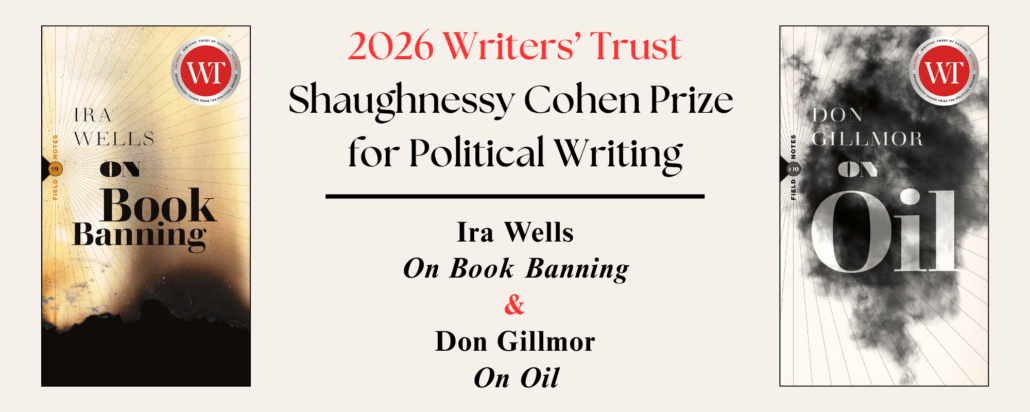
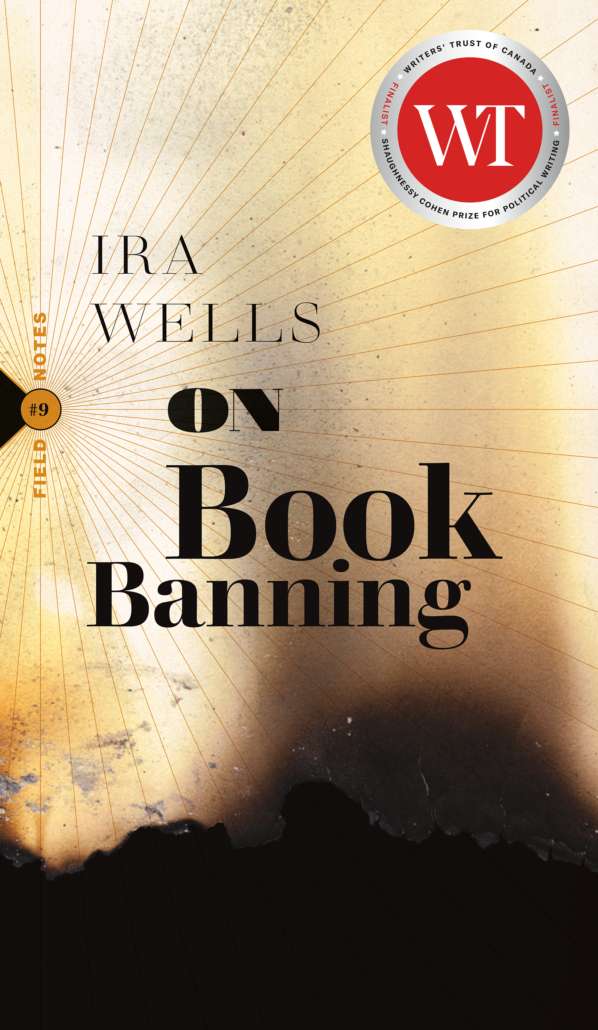
ON BOOK BANNING and ON OIL finalists for the 2026 Writers’ Trust Shaughnessy Cohen Prize!

Biblioasis is thrilled to share that this morning on Wednesday, March 18, the Writers’ Trust announced their finalists for the 2026 Shaughnessy Cohen Prize for Political Writing, which included both On Book Banning by Ira Wells and On Oil by Don Gillmor!

About On Book Banning, the jury wrote:

“Ira Wells offers direct and incisive writing that brings suppressed voices into the light and challenges readers to question the moral authority of censorship. Refusing both academic detachment and easy provocation, Wells presents rigorous research with clarity and balance, pairing the ridiculous with the brilliant. His work is passionate and compassionate, inviting sustained reflection on freedom, responsibility, and the imperfect humanity behind all writing, and leaving readers with a deeper, more self-aware engagement with literature.”

About On Oil, the jury wrote:

“At once a memoir, a meditation, and a polemic, Don Gillmor drills deep into one of Canada’s most controversial natural resources in On Oil. Drawing on his experience as a roughneck during the 1970s Alberta oil boom, he explores the central role the petroleum industry plays in Canadian politics and business. Stories from Gillmor’s life on the rig ground his examination of the ongoing tension between oil as a driver of prosperity and values held by many other Canadians. With humour and polite insistence, Gillmor asks the questions that are at the heart of Canada’s relationship with its resource bounty.”

The two books are part of the Biblioasis Field Notes series, which explores timely issues of public interest and features writers and thinkers from a range of disciplines: philosophy, public policy, history, economics, cultural criticism, and more.

The annual $40,000 prize, now in its 26th year, recognizes literary nonfiction about a political subject that is relevant to Canadian readers. The winner of this year’s prize will be announced in Ottawa at the Politics and the Pen gala on April 29.

Grab a copy of On Book Banning here!

Grab a copy of On Oil here!


ABOUT ON BOOK BANNING

A Finalist for the 2026 Writers’ Trust Shaughnessy Cohen Prize for Political Writing • A Winnipeg Free Press Best Book of 2025

The freedom to read is under attack.

From the destruction of libraries in ancient Rome to today’s state-sponsored efforts to suppress LGBTQ+ literature, book bans arise from the impulse toward social control. In a survey of legal cases, literary controversies, and philosophical arguments, Ira Wells illustrates the historical opposition to the freedom to read and argues that today’s conservatives and progressives alike are warping our children’s relationship with literature and teaching them that the solution to opposing viewpoints is outright expurgation. At a moment in which our democratic institutions are buckling under the stress of polarization, On Book Banning is both rallying cry and guide to resistance for those who will always insist upon reading for themselves.

ABOUT IRA WELLS

Ira Wells is a critic, essayist, and an associate professor at Victoria College in the University of Toronto, where he teaches in the Northrop Frye stream in literature and the humanities in the Vic One program. His writing has appeared in The Atlantic, Globe and Mail, Guardian, The New Republic, and many other venues. His most recent book is Norman Jewison: A Director’s Life. He lives in Toronto with his wife and children.


ABOUT ON OIL

A Finalist for the 2026 Writers’ Trust Shaughnessy Cohen Prize for Political Writing

A journalist, and former roughneck, considers our long, complex, tortured relationship with oil.

Oil has dominated our lives for the last century. It has given us warmth, progress, and life-threatening pollution. It has been a gift and is now a threat. It has started wars, ended wars, and infiltrated governments—in some cases, effectively become the government. And now oil’s enduring mythology is facing a messy, complicated twilight.

In On Oil, Don Gillmor, who worked as a roughneck on oil rigs during the seventies oil boom in Alberta, looks at how the industry has changed over the decades and illustrates the ways our dependence on oil has led to regulatory capture, in Canada and elsewhere, and contributed to armed conflict and war across the world. Gillmor documents the myriad ways that oil companies have misdirected environmental action and misinformed the public about climate concerns and illuminates where we went wrong—and how we might yet change course.

ABOUT DON GILLMOR

Don Gillmor is the author of To the River, which won the Governor General’s Award for nonfiction. He is the author of five novels, Cherry BeachBreaking and EnteringLong ChangeMount Pleasant, and Kanata; a two-volume history of Canada, Canada: A People’s History; and nine books for children, two of which were nominated for the Governor General’s Award. He was a senior editor at The Walrus, and his journalism has appeared in Rolling Stone, GQ, Saturday NightToronto Life, the Globe and Mail, and the Toronto Star. He has won twelve National Magazine Awards and numerous other honours. He lives in Toronto.

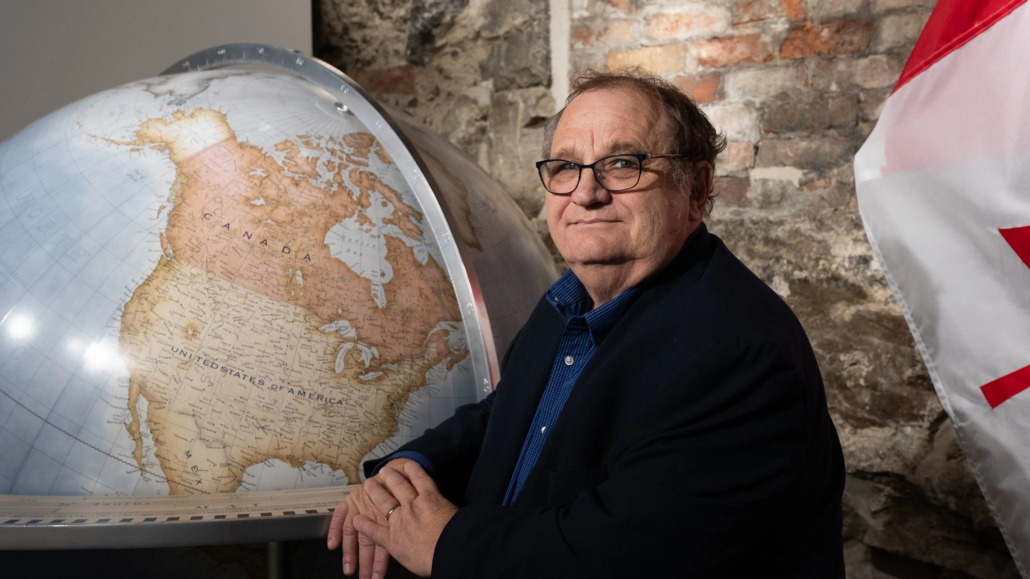
Mark Bourrie wins the 2025 Governor General’s History Award for Popular Media: The Pierre Berton Award

We’re thrilled to share that Mark Bourrie, author of titles including the RBC Taylor Prize-winning Bush Runner: The Adventures of Pierre-Esprit Radisson and Crosses in the Sky: Jean de Brébeuf and the Destruction of Huronia, has been recognized with the 2025 Governor General’s History Award for Popular Media: The Pierre Berton Award.

View the recipients’ announcement on the Canada’s History website here.

Check out Mark Bourrie’s books here.

Photo: Mark Bourrie (courtesy Canada’s National History Society)

Mark Bourrie is an Ottawa-based author, lawyer, and journalist. He holds a master’s in journalism from Carleton University and a PhD in history from the University of Ottawa. In 2017, he was awarded a Juris Doctor degree and was called to the bar in 2018. He has won numerous awards for his journalism, including a National Magazine Award, and received the RBC Charles Taylor Prize in 2020 for his book Bush Runner: The Adventures of Pierre-Esprit Radisson. His most recent books include Big Men Fear Me: The Fast Life and Quick Death of Canada’s Most Powerful Media Mogul, the national bestseller Crosses in the Sky: Jean de Brébeuf and the Destruction of Huronia, and Ripper: The Making of Pierre Poilievre.

The Governor General’s History Award for Popular Media: the Pierre Berton Award recognizes individuals who have helped increase understanding of Canadian history through popular media, including but not limited to publications, film, radio, television, theatre, or digital media platforms. The $5,000 Pierre Berton Award, as it is also known, is administered by Canada’s National History Society, with the support of the Government of Canada through the Department of Canadian Heritage, and Power Corporation of Canada.

In their press release, president and CEO of Canada’s History Society Melony Ward praises,

“Mark Bourrie makes our country’s history as vivid as anything happening today. He embraces the complexity of the past to create works that brim with conflict, struggle, and larger-than-life characters, all firmly grounded in research.”

The eleven recipients being honoured by this year’s history awards, will receive their awards from Governor General Mary Simon at an upcoming ceremony in Ottawa.

A huge congratulations from all of us at Biblioasis to Mark!

2025 Governor General’s Literary Award Finalists: BALDWIN, STYRON, AND ME and MAY OUR JOY ENDURE

We’re excited to share that this morning on Tuesday, October 21, two Biblioasis books were announced as finalists for the 2025 Governor General’s Literary Award for Translation: Catherine Khordoc’s translation of Baldwin, Styron, and Me by Mélikah Abdelmoumen and Donald Winkler’s translation of May Our Joy Endure by Kev Lambert!

View the full finalists announcement on the GG Books website here.

The Canada Council for the Arts funds, administers and actively promotes the Governor General’s Literary Awards (GGBooks) which celebrate literature and inspire people to read books by creators from Canada. The award provides finalists and winners with valuable recognition from peers and readers across the country. The monetary award for finalists is $1,000, and $25,000 for each winning book.

The winners of each category will be announced on Thursday, November 6.

About BALDWIN, STYRON, AND ME

Finalist for the 2025 Governor General’s Literary Award in Translation • Finalist for the 2025 John Glassco Translation Prize

In 1961, James Baldwin spent several months in William Styron’s guest house. The two wrote during the day, then spent evenings confiding in each other and talking about race in America. During one of those conversations, Baldwin is said to have convinced his friend to write, in first person, the story of the 1831 slave rebellion led by Nat Turner. The Confessions of Nat Turner was published to critical acclaim, winning the Pulitzer Prize in 1968, and also creating outrage in part of the African American community.

Decades later, the controversy around cultural appropriation, identity, and the rights and responsibilities of the writer still resonates. In Baldwin, Styron, and Me, Mélikah Abdelmoumen considers the writers’ surprising yet vital friendship from her standpoint as a racialized woman torn by the often unidimensional versions of her identity put forth by today’s politics and media. Considering questions of identity, race, equity, and the often contentious public debates about these topics, Abdelmoumen works to create a space where the answers are found by first learning how to listen—even in disagreement.

Catherine Khordoc is a professor of French and Canadian Studies at Carleton University in Ottawa. She is the author of Tours et détours: Le mythe de Babel dans la littérature contemporaine (University of Ottawa Press, 2012). She also considers herself in many ways a frontier-dweller.

Grab a copy of Baldwin, Styron, and Me here!

About MAY OUR JOY ENDURE

Finalist for the 2025 Governor General’s Literary Award in Translation • A Walrus Best Book of Fall 2024 • A Globe 100 Best Book of 2024 • Winner of the 2023 Prix Médicis, Prix Décembre, and Prix Ringuet

Céline Wachowski, internationally renowned architect and accidental digital-culture icon, unveils her plans for the Webuy Complex, her first megaproject in Montreal, her hometown. But instead of the triumph she anticipates in finally bringing her reputation to bear in her own city, the project is excoriated by critics, who accuse her of callously destroying the social fabric of neighborhoods, ushering in a new era of gentrification, and many even deadlier sins. When she is deposed as CEO of her firm, Céline must make sense of the charges against herself and the people in her elite circle. For the first time in danger of losing their footing, what fictions must they tell themselves to justify their privilege and maintain their position in the world that they themselves have built?

Moving fluidly between Céline’s perspective and the perspectives of her critics, and revealing both the ruthlessness of her methods and the brilliance of her aesthetic vision, May Our Joy Endure is a shrewd examination of the microcosm of the ultra-privileged and a dazzling social novel that depicts with razor-sharp acuity the terrible beauty of wealth, influence, and art.

Donald Winkler is a translator of fiction, non-fiction, and poetry. He is a three-time winner of the Governor General’s Literary Award for French-to-English translation. He lives in Montreal.

Grab a copy of May Our Joy Endure here!

THE HOLLOW BEAST and UNMET shortlisted for the QWF Literary Awards!

We’re thrilled to share that today, on Wednesday, October 15, two Biblioasis books have been announced as finalists for the 2025 Quebec Writers’ Federation Literary Awards! UNMET by stephanie roberts was shortlisted for the A. M. Klein Prize for Poetry, and Lazer Lederhendler’s translation of The Hollow Beast by Christophe Bernard was shortlisted for the Cole Foundation Prize for Translation.

View the full finalists announcement on the QWF website here.

The winners of QWF Literary Awards’ seven prestigious prizes will be announced at the 2025 QWF Literary Awards Gala on Monday, November 10 at Cabaret Lion d’Or (1676 Ontario St. E.). The ceremony begins at 8:00 pm, preceded by a cocktail reception from 6:30 to 7:30 pm. The event will be hosted by broadcaster, arts journalist, and translator Shelley Pomerance.

Each award comes with a purse of $3,000. The cash prize for the Ian Ferrier Spoken Word Prize will be split equally between one to three winners.

About UNMET

This is what comes of taking dreams / off the horizon. It is the sun / or nothing else, you would scream / if you weren’t caught up in the chorus.

Leaning deliberately on the imagined while scrutinizing reality and hoping for the as-yet-unseen, UNMET explores frustration, justice, and thwarted rescue from a perspective that is Black-Latinx, Canadian, immigrant, and female. Drawing on a wide range of poetics, from Wallace Stevens to Diane Seuss, roberts’s musically-driven narrative surrealism confronts such timely issues as police brutality, respectability politics, intimate partner violence, and ecological crisis, and considers the might-have-been alongside the what-could-be, negotiating with the past without losing hope for the future.

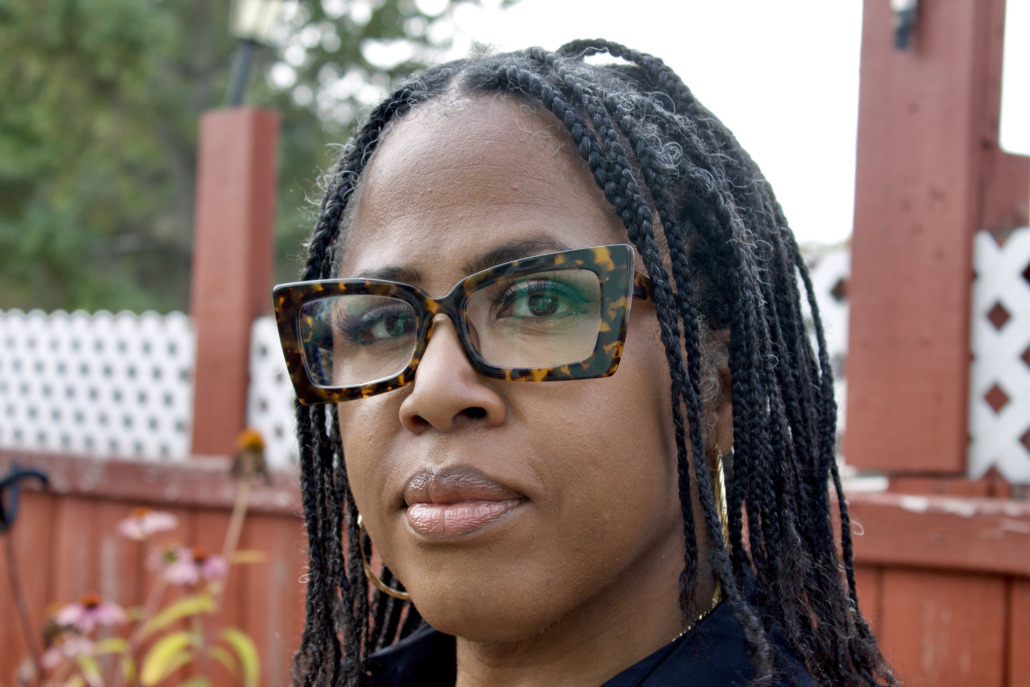
stephanie roberts is the prize-winning author of the poetry collections UNMET and rushes from the river disappointment, which was a finalist for the 2020 A. M. Klein Prize for Poetry. Her work has been critically praised and widely featured in numerous periodicals and anthologies such as Poetry, Arc Poetry, Event Magazine, The New Quarterly, Verse Daily, Crannóg (Ireland), The Stockholm Review of Literature, and elsewhere. Winner of The Sixty-Four: Best Poets of 2018 (Black Mountain Press), she was born in Panama, grew up in NYC, and has lived most of her life in Quebec.

Grab a copy of UNMET here!

About THE HOLLOW BEAST

Winner of the 2025 French-American Translation Prize in Fiction • Finalist for the 2024 Governor General’s Literary Award in Translation • A Globe and Mail Most Anticipated Spring Title

1911. A hockey game in Quebec’s Gaspé Peninsula. With the score tied two-two in overtime, local tough guy Billy Joe Pictou fires the puck directly into Monti Bouge’s mouth. When Pictou’s momentum carries them both across the goal line in a spray of shattered teeth, Victor Bradley, erstwhile referee and local mailman, rules that the goal counts—and Monti’s ensuing revenge for this injustice sprawls across three generations, one hundred years, and dozens of dastardly deeds. Fuelled by a bottomless supply of Yukon, the high-proof hooch that may or may not cause the hallucinatory sightings of a technicolor beast that haunts not just Monti but his descendants, it’s up to Monti’s grandson François—and his floundering doctoral dissertation—to make sense of the vendetta that’s shaped the destiny of their town and everyone in it. Brilliantly translated into slapstick English by Lazer Lederhendler, The Hollow Beast introduces Christophe Bernard as a master of epic comedy.

Lazer Lederhendler is a veteran literary translator specializing in Québécois fiction and non-fiction. He has also translated 20th-century Yiddish literature. His work has earned distinctions in Canada, the UK, and the USA, most recently the French-American Foundation’s 2025 Translation Prize for The Hollow Beast. Among the authors he has translated are Gaétan Soucy, Nicolas Dickner, Edem Awumey, Perrine Leblanc, Catherine Leroux, Alain Farah, Itzik Manger and Melekh Ravitch. He lives in Montreal with the artist Pierrette Bouchard.

Grab a copy of The Hollow Beast here!

Media Hits: COMRADE PAPA, NEAR DISTANCE, A CASE OF MATRICIDE, and more!

IN THE NEWS!

COMRADE PAPA

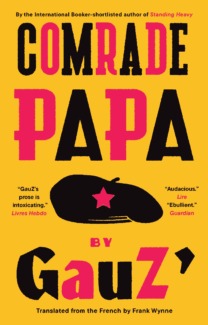
Comrade Papa by GauZ’, translated by Frank Wynne (Oct 8, 2024), was reviewed in the Wall Street Journal! The review was published online on November 14, and is available to read here.

Critic Sam Sacks writes,

“GauZ’ avoids moralizing and is always alive to the humor and peculiarity of his stories. There are very funny scenes of the young Marxist speechifying to his unimpressed elders about the class struggle and the ‘retching of the earth.’ (Frank Wynne’s translation from the French shows a deft touch with Anouman’s malapropisms.)”

Comrade Papa was also a bookseller choice in Electric Literature’s article “The Best Books of the Fall, According to Indie Booksellers”! The list was published November 1, and you can check it out here.

Josh Cook (Porter Square Books) wrote,

“A funhouse mirror version of the colonial adventure story, Comrade Papa pokes, prods, & mocks a whole suite of ideologies & assumptions. GauZ’ has an exuberant, nimble style & an off-center imagination that will keep readers on their toes.”

Get Comrade Papa here!

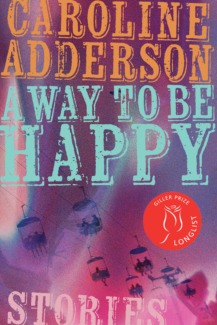
A WAY TO BE HAPPY

Caroline Adderson, author of A Way to Be Happy (Sep 10, 2024), was interviewed on CBC’s The Next Chapter! The interview with Antonio Michael Downing was posted November 15, and you can read it here.

A Way to Be Happy was also reviewed in FreeFall! The review was posted online on November 3, and you can read it here.

Lori Hahnel writes,

“As the author of many books of fiction and non-fiction, the breadth of Adderson’s writing experience is evident in her craft. This clever and meticulously crafted collection from a writer who has mastered her art is a pleasure to read.”

Get A Way to Be Happy here!

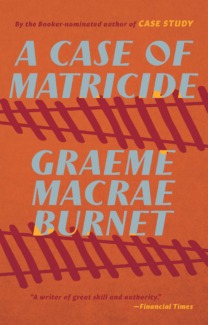
A CASE OF MATRICIDE

A Case of Matricide by Graeme Macrae Burnet (Nov 12, 2024)was reviewed in the Times Literary Supplement on November 15. You can read it in full here.

Critic Nicolas Cree writes,

“A remarkable crime trilogy of doublings and disappearance . . . These are crime novels in which identities are unstable, evidence is slippery and solutions are obscure.”

A Case of Matricide was also reviewed in the Miramichi Reader on November 14, which you can check out here.

Luke Francis Beirne writes,

“The story in A Case of Matricide is intricately woven, with layers of significance throughout . . . Graeme Macrae Burnet has elevated the detective novel to incredible heights.”

Get A Case of Matricide here!

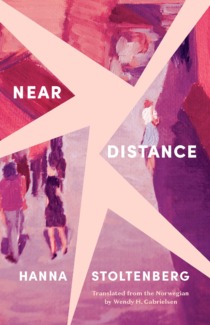
NEAR DISTANCE

Near Distance by Hanna Stoltenberg, translated by Wendy H Gabrielsen (Jan 14, 2025), was reviewed in Kirkus Reviews. The review was published in their November 15 print issue and is available to read online here.

Kirkus writes,

“Grimly fascinating . . . infused with a sense of dread, and observed in microscopic detail from a bemused and calculated remove. Page after page leaves the reader anxiously waiting for the other shoe to drop.”

Preorder Near Distance here!

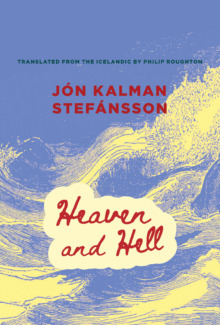
HEAVEN AND HELL

Heaven and Hell by Jón Kalman Stefánsson, translated by Philip Roughton (Feb 4, 2025), was given a starred review in Kirkus Reviews! The review was posted online on November 9, and will appear in their December 15 print issue. Read it here.

Kirkus writes,

“A moving story of loss and courage told in prose as crisp and clear as the Icelandic landscape where it takes place. . . Stefánsson writes like an epic poet of old about the price the natural world exacts on humans, but he’s not without sympathy or an ability to find affirming qualities in difficult situations.”

Preorder Heaven and Hell here!

SETH’S CHRISTMAS GHOST STORIES

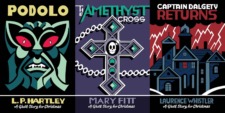
The 2024 Seth’s Christmas Ghost Stories were featured on So Many Damn Books podcast for the Holiday Gift Guide episode! Listen to the full episode here.

Host Christopher Hamelin says,

“Awesome pocket editions of forgotten horror stories, or mystery stories, from the past, in this perfect set . . . This ‘Ghost Story for Christmas’ series is some of the most delightful reading that I do all year.”

Get all three 2024 Christmas Ghost Stories here!

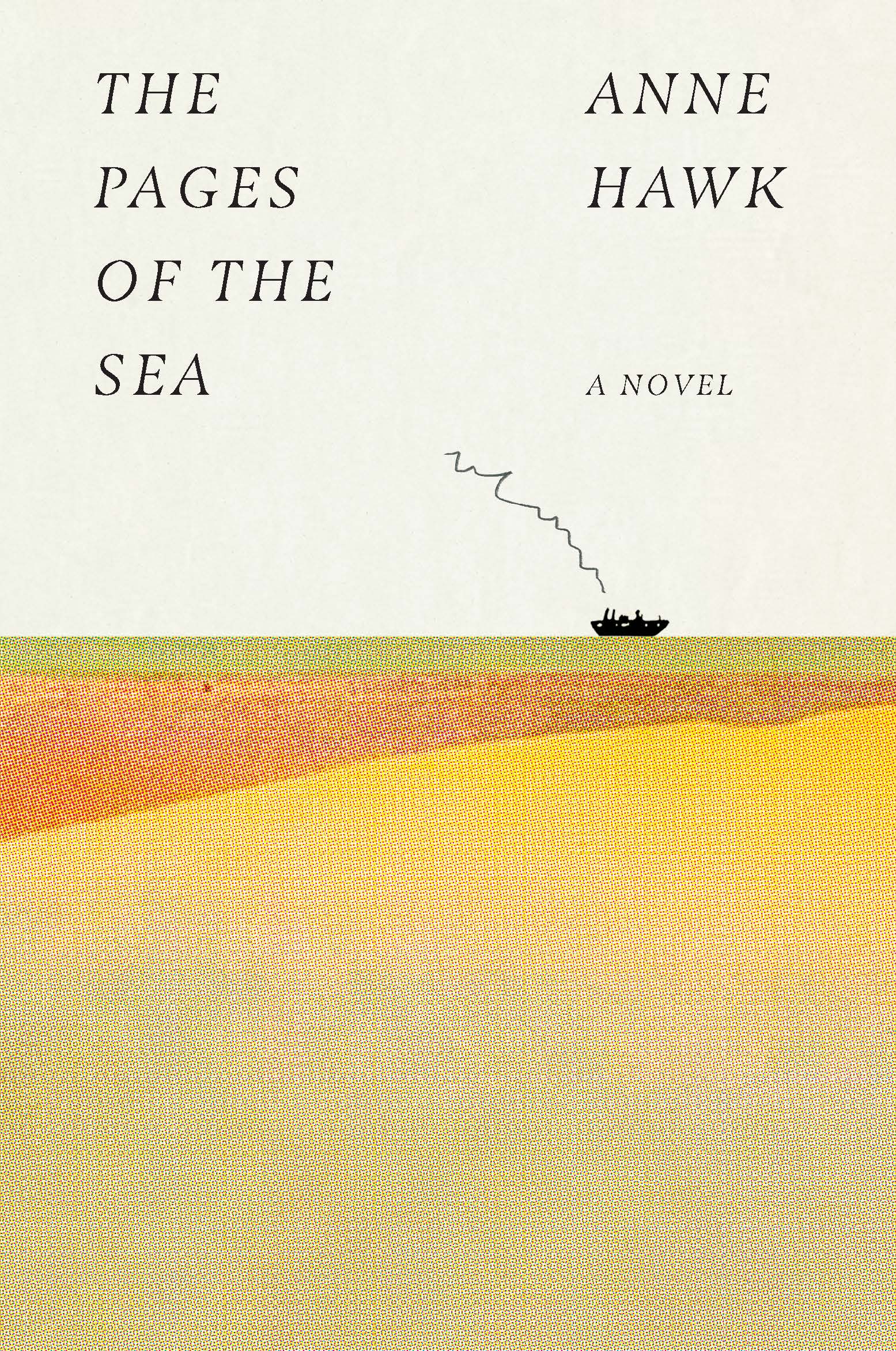
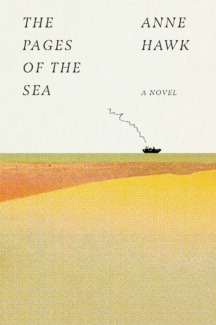
THE PAGES OF THE SEA

The Pages of the Sea by Anne Hawk (Sep 17, 2024) was reviewed in the Ottawa Review of Books. The review was published online, and is available to read here.

Timothy Niedermann writes,

“A moving portrayal of a young girl’s efforts to grow out of a state of melancholy and confusion and acquire self-confidence and assertiveness, despite her young age.”

Get The Pages of the Sea here!

OLD ROMANTICS

Old Romantics by Maggie Armstrong (Apr 1, 2025) was reviewed in The Stinging Fly on November 15, which you can check out here.

Sarah Gilmartin writes,

“Readers of Old Romantics will be swept up in the verve of Armstrong’s storytelling, but the deeper purpose of the humour, as with all good comedic writing, is that of connection, of recognition: this crazy thing called life, tell me you feel it too? The more we laugh, the closer we are to tears. Old Romantics is a collection big on feeling, on living, romanticism with a capital R.”

Preorder Old Romantics here!

Media Hits: THE NOTEBOOK, A WAY TO BE HAPPY, MAY OUR JOY ENDURE, and more!

IN THE NEWS!

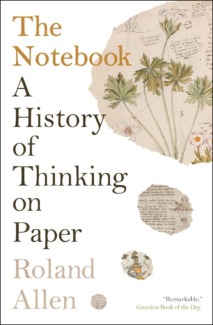
THE NOTEBOOK

The Notebook by Roland Allen (Sep 3, 2024) was excerpted in Lit Hub on September 9. You can check out the excerpt, “Paper Trail: On the Cross-Cultural Evolution of the Notebook” here.

Roland Allen was interviewed by Piya Chattopadhyay for CBC Sunday Magazine. The interview was posted on September 8, and you can check it out in full here.

Grab The Notebook here!

A WAY TO BE HAPPY

A Way to Be Happy by Caroline Adderson (Sep 10, 2024) has been longlisted for the Giller Prize, and is showing up on a number of lists! Publishers Weekly (Sep 5), CBC Books (Sep 4), and Quill & Quire (Sep 4) have all posted about the longlist.

A Way to Be Happy was also highlighted in the Georgia Straight as one of the five books on the Giller longlist by BC authors. You can check out that article here.

A Way to Be Happy was reviewed in the BC Review on September 4. You can read the full review online here.

Reviewer Bill Paul writes,

“For each story, Adderson expertly develops a detailed setting . . . [and] the author carefully constructs vivid characters from every walk of life. Each one of them making their way to some undetermined fate.”

Grab A Way to Be Happy here!

MAY OUR JOY ENDURE

May Our Joy Endure by Kev Lambert, translated by Donald Winkler (Sep 3, 2024), was mentioned in the New York Times in an interview with writer Garth Greenwell. The article was published online on September 5, and you can read the it here.

Kev Lambert was interviewed by Steven W. Beattie about May Our Joy Endure for Quill and Quire, published online on September 5, 2024. You can read the full interview here.

Lambert says in the interview,

“I wanted to challenge the idea that humanizing the person you critique is giving them credit. We hear this sometimes in political or media circles. But I think it’s a fake or a wrong idea . . . I’m starting to think that we should try to have empathy. Which doesn’t mean stop criticizing or saying everything’s fine because we have empathy. But I think it gives you an understanding of humans that is more accurate and more useful for political engagement.”

May Our Joy Endure was listed as one of The Walrus‘s “Best Books of Fall 2024.” The article was published online on September 4, 2024, and you can read it here.

Contributor Michelle Cyca writes,

“Who hasn’t wished a little divine retribution upon the ultrarich for all their sins? Kevin Lambert’s third novel, nimbly translated by Donald Winkler, is an icy, cerebral social novel . . . showcasing Lambert’s gimlet eye for the delusions and designer preferences of the 1 percent.”

May Our Joy Endure also appeared on the Daily Kos‘s list of “Contemporary Fiction Views: A new book season is about to begin,” posted online September 3. You can check out the full article here.

Grab May Our Joy Endure here!

THE PAGES OF THE SEA

The Pages of the Sea by Anne Hawk (Sep 17, 2024) was included in the Toronto Star‘s list of “25 books worthy of a place at the top of your to-read pile.” The list was published on September 1, 2024, and you can view it here.

Get Pages of the Sea here!

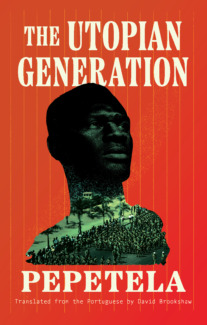
UTOPIAN GENERATION

The Utopian Generation by Pepetela, translated by David Brookshaw (Aug 13, 2024), was reviewed in the Literary Review of Canada. The review will appear in print in their October issue.

The LRC writes,

“A classic post-colonial text . . . This sweeping novel, which moves in roughly ten-year increments from 1961 to 1991, tells the steadily absorbing story of ‘how a generation embarks on a glorious struggle for independence and then destroys itself.'”

Get The Utopian Generation here!

CROSSES IN THE SKY

Crosses in the Sky: Jean de Brébeuf and the Destruction of Huronia by Mark Bourrie (May 21, 2024) was reviewed in The Millstone on August 29. Read the full review here.

Edith Cody-Rice writes,

“[A] fascinating and engrossing tale . . . a meticulously researched book . . . It told me, on nearly every page, something I did not know about the history of this province, of the lives lived here in the 17th century.”

Crosses in the Sky was also mentioned in an interview between actress & director Kaniehtiio Horn and interviewer Jim Slotek in Original Cin, posted on September 5. Check out the article here.

Grab Crosses in the Sky here!

CASE STUDY

Case Study by Graeme Macrae Burnet was included in the Globe and Mail‘s list of “Books we’re reading and loving in September.” The list was published on September 5, and you can check it out here.

Ian Brown writes,

“Graeme Macrae Burnet’s Case Study (longlisted for the 2022 Booker Prize) is the best type of novel: the sharply crafted, deeply intelligent but compulsively readable kind . . . As soon as you stop reading, you’ll want to read it again.”
Get Case Study here!

Preorder Burnet’s forthcoming book, A Case of Matricide, here!