Posts

NEAR DISTANCE shortlisted for the NBCC 2025 Gregg Barrios Book in Translation Prize!

We’re thrilled to share that today, the National Book Critics Circle Award announced their finalists for the 2025 Gregg Barrios Book in Translation Prize, which includes Wendy H. Gabrielsen’s translation of Near Distance by Hanna Stoltenberg! View the full list of finalists on their website, here.

Grab a copy of Near Distance here!

As judge Mandana Chaffa describes, the Barrios shortlist features “remarkable books by notable authors, which are only available to English readers because of the gifted translators and committed publishers who bring them to life.

The NBCC’s Gregg Barrios Book in Translation Prize, launched in 2022, seeks to highlight the artistic merit of literature in translation and recognize translators’ valuable work, which expands and enriches American literary culture by bringing world literature to English-language readers. The prize honors the best book of any genre translated into English and published in the United States.

A finalists reading will be be held on March 25, 2026; the awards ceremony and reception will be on March 26, and is open to the public.

ABOUT NEAR DISTANCE

A Finalist for the 2025 Gregg Barrios Book in Translation Prize

For her entire life, Karin has fled anything and anyone that tries to possess her. Her job demands little, she mostly socializes with men she meets online, and she’s rarely in touch with Helene, her adult daughter. But when Helene’s marriage is threatened, she turns, uncharacteristically, to her mother for commiseration, and a long weekend away in London. As the two women embark on their uneasy companionship, Karin’s past, and the origins of her studied detachments, are cast in a new light, and she can no longer ignore their effects—on not only herself and her own relationships, but on her daughter’s as well.

An unnerving, closely observed study of character—and the choices we do and do not make—Near Distance introduces Hanna Stoltenberg as a writer of piercing insight and startling lucidity.

ABOUT WENDY H. GABRIELSEN

Wendy Harrison Gabrielsen moved to Oslo in 1987 after completing an MA in Translation at the University of Surrey. She has translated works of fiction as well as nonfiction, and in 2022 she was awarded the Wigeland Prize by the American-Scandinavian Foundation for an excerpt from her translation of Hanna Stoltenberg’s Near Distance.

ABOUT HANNA STOLTENBERG

Hanna Stoltenberg (born 1989) grew up in Oslo and studied English at the University of Bristol. She is a regular contributor to the Norwegian literary journal Vinduet and works as an editor at the Munch museum. Her first novel, Near Distance (Nada in Norwegian) was published in 2019. It won the prestigious Tarjei Vesaas first book award and the NATT&DAG Oslo prize for best literary work. She is currently working on her second novel.

NEAR DISTANCE longlisted for the NBCC 2025 Gregg Barrios Book in Translation Prize

We’re thrilled to share that today, the National Book Critics Circle Award announced their longlist for the 2025 Gregg Barrios Book in Translation Prize, which includes Wendy H. Gabrielsen’s translation of Near Distance by Hanna Stoltenberg! View the full longlist on their website, here.

Grab a copy of Near Distance here!

The NBCC’s Gregg Barrios Book in Translation Prize, launched in 2022, seeks to highlight the artistic merit of literature in translation and recognize translators’ valuable work, which expands and enriches American literary culture by bringing world literature to English-language readers. The prize honors the best book of any genre translated into English and published in the United States.

A finalists reading will be be on March 25, 2026, with the awards ceremony and reception on March 26.

ABOUT NEAR DISTANCE

Longlisted for the 2025 Gregg Barrios Book in Translation Prize

For her entire life, Karin has fled anything and anyone that tries to possess her. Her job demands little, she mostly socializes with men she meets online, and she’s rarely in touch with Helene, her adult daughter. But when Helene’s marriage is threatened, she turns, uncharacteristically, to her mother for commiseration, and a long weekend away in London. As the two women embark on their uneasy companionship, Karin’s past, and the origins of her studied detachments, are cast in a new light, and she can no longer ignore their effects—on not only herself and her own relationships, but on her daughter’s as well.

An unnerving, closely observed study of character—and the choices we do and do not make—Near Distance introduces Hanna Stoltenberg as a writer of piercing insight and startling lucidity.

ABOUT WENDY H. GABRIELSEN

Wendy Harrison Gabrielsen moved to Oslo in 1987 after completing an MA in Translation at the University of Surrey. She has translated works of fiction as well as nonfiction, and in 2022 she was awarded the Wigeland Prize by the American-Scandinavian Foundation for an excerpt from her translation of Hanna Stoltenberg’s Near Distance.

ABOUT HANNA STOLTENBERG

Hanna Stoltenberg (born 1989) grew up in Oslo and studied English at the University of Bristol. She is a regular contributor to the Norwegian literary journal Vinduet and works as an editor at the Munch museum. Her first novel, Near Distance (Nada in Norwegian) was published in 2019. It won the prestigious Tarjei Vesaas first book award and the NATT&DAG Oslo prize for best literary work. She is currently working on her second novel.

BALDWIN, STYRON, AND ME a finalist for the 2026 Andrew Carnegie Medal for Excellence in Nonfiction!

We’re excited to share that Baldwin, Styron, and Me by Mélikah Abdelmoumen, translated by Catherine Khordoc, is one of the three finalists for the Andrew Carnegie Medal for Excellence in Nonfiction! The finalist announcement was made this morning on Tuesday, November 18, and can be viewed here.

The other two nonfiction finalists are There Is No Place for Us: Working and Homeless in America by Brian Goldstone and Things in Nature Merely Grow by Yiyun Li. Read more in the ALA’s full finalists press release here.

The two medal winners for Fiction and Nonfiction will be announced on January 27, 2026. A celebratory event will take place at the ALA Annual Conference in June 2026 in Chicago.

The Andrew Carnegie Medals for Excellence in Fiction and Nonfiction, established in 2012, recognize the best fiction and nonfiction books for adult readers published in the US in the previous year and serve as a guide to help adults select quality reading material. They are the first single-book awards for adult books given by the American Library Association and reflect the expert judgment and insight of library professionals who work closely with adult readers. The winning authors (one for fiction, one for nonfiction) receive a $5,000 cash award.

Grab a copy of Baldwin, Styron, and Me here!

ABOUT BALDWIN, STYRON, AND ME

Shortlisted for the 2026 Andrew Carnegie Medal for Excellence in Nonfiction • Finalist for the 2025 Governor General’s Literary Award in Translation • Finalist for the 2025 John Glassco Translation Prize

In 1961, James Baldwin spent several months in William Styron’s guest house. The two wrote during the day, then spent evenings confiding in each other and talking about race in America. During one of those conversations, Baldwin is said to have convinced his friend to write, in first person, the story of the 1831 slave rebellion led by Nat Turner. The Confessions of Nat Turner was published to critical acclaim, winning the Pulitzer Prize in 1968, and also creating outrage in part of the African American community.

Decades later, the controversy around cultural appropriation, identity, and the rights and responsibilities of the writer still resonates. In Baldwin, Styron, and Me, Mélikah Abdelmoumen considers the writers’ surprising yet vital friendship from her standpoint as a racialized woman torn by the often unidimensional versions of her identity put forth by today’s politics and media. Considering questions of identity, race, equity, and the often contentious public debates about these topics, Abdelmoumen works to create a space where the answers are found by first learning how to listen—even in disagreement.

ABOUT MELIKAH ABDELMOUMEN

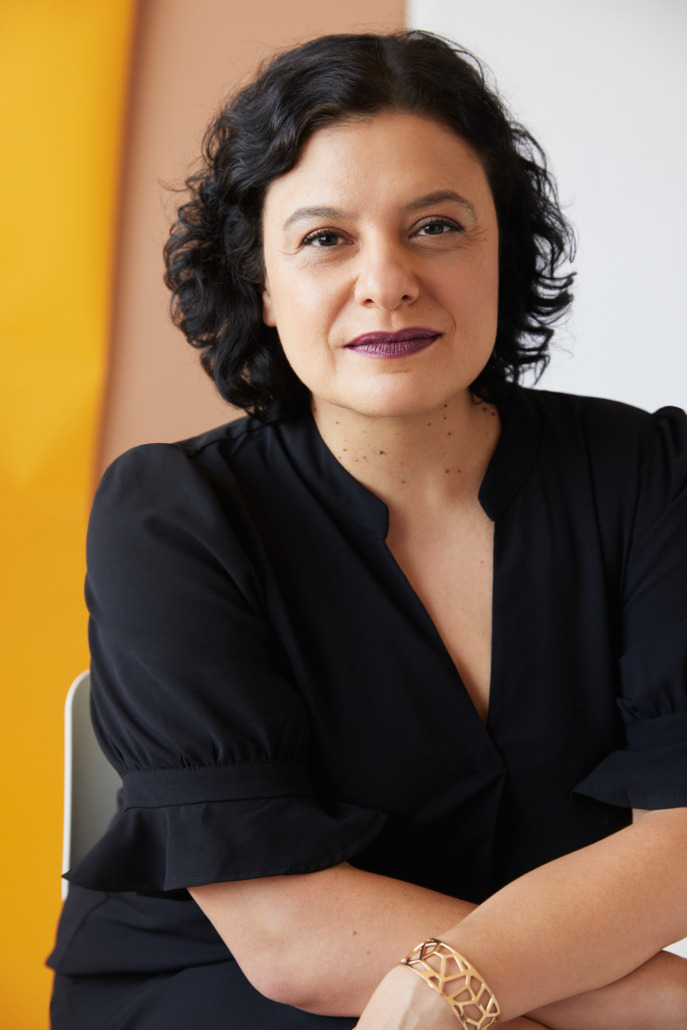
Mélikah Abdelmoumen was born in Chicoutimi in 1972. She lived in Lyon, France, from 2005 to 2017. She holds a PhD in literary studies from the Université de Montréal and has published many articles, short stories, novels, and essays, including Les désastrées (2013), Douze ans en France (2018), and Petite-Ville (2024). She worked as an editor with the Groupe Ville-Marie Littérature in Montreal until 2021. She was the editor-in-chief of Lettres québécoises, a Québec literary magazine, from 2021 to 2024. Baldwin, Styron, and Me is her tenth book (and the first to be translated).

ABOUT CATHERINE KHORDOC

Catherine Khordoc is a professor of French and Canadian Studies at Carleton University in Ottawa. She is the author of Tours et détours: Le mythe de Babel dans la littérature contemporaine (University of Ottawa Press, 2012). She also considers herself in many ways a frontier-dweller.

BALDWIN, STYRON, AND ME longlisted for the 2026 Andrew Carnegie Medal for Excellence in Nonfiction

We’re thrilled to share that this morning, on Thursday, October 23, the longlist for the Andrew Carnegie Medal for Excellence in Nonfiction was announced, and included Baldwin, Styron, and Me by Mélikah Abdelmoumen, translated by Catherine Khordoc. The full longlist can be viewed here.

The shortlist will be announced on November 18, and the two medal winners will be announced on January 27, 2026.

The Andrew Carnegie Medals for Excellence in Fiction and Nonfiction, established in 2012, recognize the best fiction and nonfiction books for adult readers published in the US in the previous year and serve as a guide to help adults select quality reading material. They are the first single-book awards for adult books given by the American Library Association and reflect the expert judgment and insight of library professionals who work closely with adult readers. The winning authors (one for fiction, one for nonfiction) receive a $5,000 cash award.

Grab a copy of Baldwin, Styron, and Me here!

ABOUT BALDWIN, STYRON, AND ME

Longlisted for the 2026 Andrew Carnegie Medal for Excellence in Nonfiction • Finalist for the 2025 Governor General’s Literary Award in Translation • Finalist for the 2025 John Glassco Translation Prize

In 1961, James Baldwin spent several months in William Styron’s guest house. The two wrote during the day, then spent evenings confiding in each other and talking about race in America. During one of those conversations, Baldwin is said to have convinced his friend to write, in first person, the story of the 1831 slave rebellion led by Nat Turner. The Confessions of Nat Turner was published to critical acclaim, winning the Pulitzer Prize in 1968, and also creating outrage in part of the African American community.

Decades later, the controversy around cultural appropriation, identity, and the rights and responsibilities of the writer still resonates. In Baldwin, Styron, and Me, Mélikah Abdelmoumen considers the writers’ surprising yet vital friendship from her standpoint as a racialized woman torn by the often unidimensional versions of her identity put forth by today’s politics and media. Considering questions of identity, race, equity, and the often contentious public debates about these topics, Abdelmoumen works to create a space where the answers are found by first learning how to listen—even in disagreement.

ABOUT MELIKAH ABDELMOUMEN

Mélikah Abdelmoumen was born in Chicoutimi in 1972. She lived in Lyon, France, from 2005 to 2017. She holds a PhD in literary studies from the Université de Montréal and has published many articles, short stories, novels, and essays, including Les désastrées (2013), Douze ans en France (2018), and Petite-Ville (2024). She worked as an editor with the Groupe Ville-Marie Littérature in Montreal until 2021. She was the editor-in-chief of Lettres québécoises, a Québec literary magazine, from 2021 to 2024. Baldwin, Styron, and Me is her tenth book (and the first to be translated).

ABOUT CATHERINE KHORDOC

Catherine Khordoc is a professor of French and Canadian Studies at Carleton University in Ottawa. She is the author of Tours et détours: Le mythe de Babel dans la littérature contemporaine (University of Ottawa Press, 2012). She also considers herself in many ways a frontier-dweller.

2025 Governor General’s Literary Award Finalists: BALDWIN, STYRON, AND ME and MAY OUR JOY ENDURE

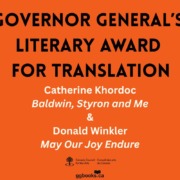
We’re excited to share that this morning on Tuesday, October 21, two Biblioasis books were announced as finalists for the 2025 Governor General’s Literary Award for Translation: Catherine Khordoc’s translation of Baldwin, Styron, and Me by Mélikah Abdelmoumen and Donald Winkler’s translation of May Our Joy Endure by Kev Lambert!

View the full finalists announcement on the GG Books website here.

The Canada Council for the Arts funds, administers and actively promotes the Governor General’s Literary Awards (GGBooks) which celebrate literature and inspire people to read books by creators from Canada. The award provides finalists and winners with valuable recognition from peers and readers across the country. The monetary award for finalists is $1,000, and $25,000 for each winning book.

The winners of each category will be announced on Thursday, November 6.

About BALDWIN, STYRON, AND ME

Finalist for the 2025 Governor General’s Literary Award in Translation • Finalist for the 2025 John Glassco Translation Prize

In 1961, James Baldwin spent several months in William Styron’s guest house. The two wrote during the day, then spent evenings confiding in each other and talking about race in America. During one of those conversations, Baldwin is said to have convinced his friend to write, in first person, the story of the 1831 slave rebellion led by Nat Turner. The Confessions of Nat Turner was published to critical acclaim, winning the Pulitzer Prize in 1968, and also creating outrage in part of the African American community.

Decades later, the controversy around cultural appropriation, identity, and the rights and responsibilities of the writer still resonates. In Baldwin, Styron, and Me, Mélikah Abdelmoumen considers the writers’ surprising yet vital friendship from her standpoint as a racialized woman torn by the often unidimensional versions of her identity put forth by today’s politics and media. Considering questions of identity, race, equity, and the often contentious public debates about these topics, Abdelmoumen works to create a space where the answers are found by first learning how to listen—even in disagreement.

Catherine Khordoc is a professor of French and Canadian Studies at Carleton University in Ottawa. She is the author of Tours et détours: Le mythe de Babel dans la littérature contemporaine (University of Ottawa Press, 2012). She also considers herself in many ways a frontier-dweller.

Grab a copy of Baldwin, Styron, and Me here!

About MAY OUR JOY ENDURE

Finalist for the 2025 Governor General’s Literary Award in Translation • A Walrus Best Book of Fall 2024 • A Globe 100 Best Book of 2024 • Winner of the 2023 Prix Médicis, Prix Décembre, and Prix Ringuet

Céline Wachowski, internationally renowned architect and accidental digital-culture icon, unveils her plans for the Webuy Complex, her first megaproject in Montreal, her hometown. But instead of the triumph she anticipates in finally bringing her reputation to bear in her own city, the project is excoriated by critics, who accuse her of callously destroying the social fabric of neighborhoods, ushering in a new era of gentrification, and many even deadlier sins. When she is deposed as CEO of her firm, Céline must make sense of the charges against herself and the people in her elite circle. For the first time in danger of losing their footing, what fictions must they tell themselves to justify their privilege and maintain their position in the world that they themselves have built?

Moving fluidly between Céline’s perspective and the perspectives of her critics, and revealing both the ruthlessness of her methods and the brilliance of her aesthetic vision, May Our Joy Endure is a shrewd examination of the microcosm of the ultra-privileged and a dazzling social novel that depicts with razor-sharp acuity the terrible beauty of wealth, influence, and art.

Donald Winkler is a translator of fiction, non-fiction, and poetry. He is a three-time winner of the Governor General’s Literary Award for French-to-English translation. He lives in Montreal.

Grab a copy of May Our Joy Endure here!

THE HOLLOW BEAST and UNMET shortlisted for the QWF Literary Awards!

We’re thrilled to share that today, on Wednesday, October 15, two Biblioasis books have been announced as finalists for the 2025 Quebec Writers’ Federation Literary Awards! UNMET by stephanie roberts was shortlisted for the A. M. Klein Prize for Poetry, and Lazer Lederhendler’s translation of The Hollow Beast by Christophe Bernard was shortlisted for the Cole Foundation Prize for Translation.

View the full finalists announcement on the QWF website here.

The winners of QWF Literary Awards’ seven prestigious prizes will be announced at the 2025 QWF Literary Awards Gala on Monday, November 10 at Cabaret Lion d’Or (1676 Ontario St. E.). The ceremony begins at 8:00 pm, preceded by a cocktail reception from 6:30 to 7:30 pm. The event will be hosted by broadcaster, arts journalist, and translator Shelley Pomerance.

Each award comes with a purse of $3,000. The cash prize for the Ian Ferrier Spoken Word Prize will be split equally between one to three winners.

About UNMET

This is what comes of taking dreams / off the horizon. It is the sun / or nothing else, you would scream / if you weren’t caught up in the chorus.

Leaning deliberately on the imagined while scrutinizing reality and hoping for the as-yet-unseen, UNMET explores frustration, justice, and thwarted rescue from a perspective that is Black-Latinx, Canadian, immigrant, and female. Drawing on a wide range of poetics, from Wallace Stevens to Diane Seuss, roberts’s musically-driven narrative surrealism confronts such timely issues as police brutality, respectability politics, intimate partner violence, and ecological crisis, and considers the might-have-been alongside the what-could-be, negotiating with the past without losing hope for the future.

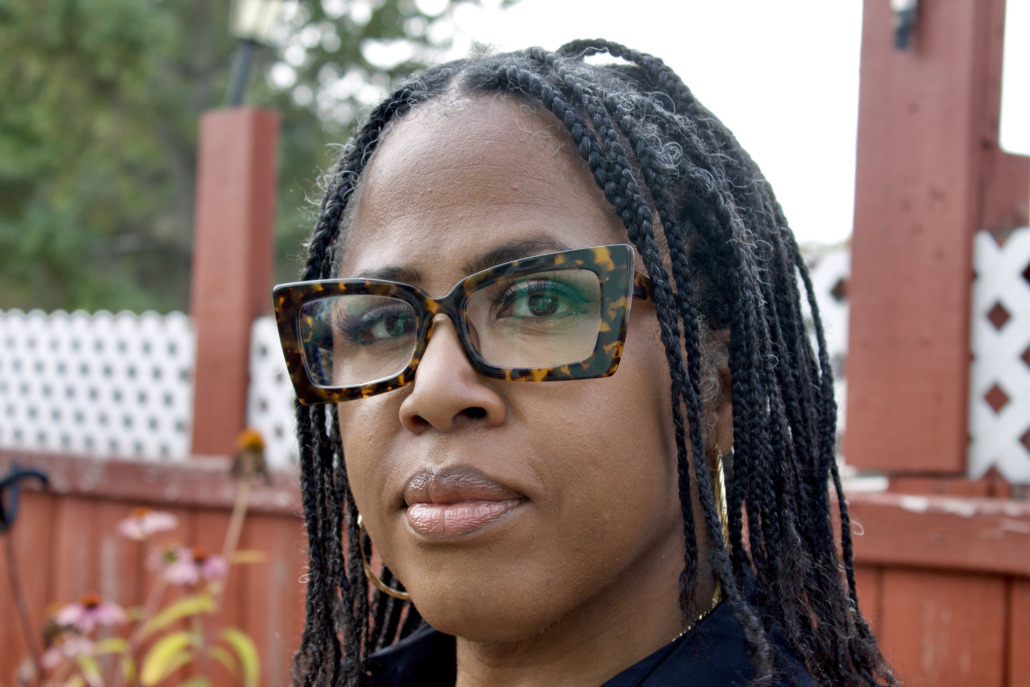
stephanie roberts is the prize-winning author of the poetry collections UNMET and rushes from the river disappointment, which was a finalist for the 2020 A. M. Klein Prize for Poetry. Her work has been critically praised and widely featured in numerous periodicals and anthologies such as Poetry, Arc Poetry, Event Magazine, The New Quarterly, Verse Daily, Crannóg (Ireland), The Stockholm Review of Literature, and elsewhere. Winner of The Sixty-Four: Best Poets of 2018 (Black Mountain Press), she was born in Panama, grew up in NYC, and has lived most of her life in Quebec.

Grab a copy of UNMET here!

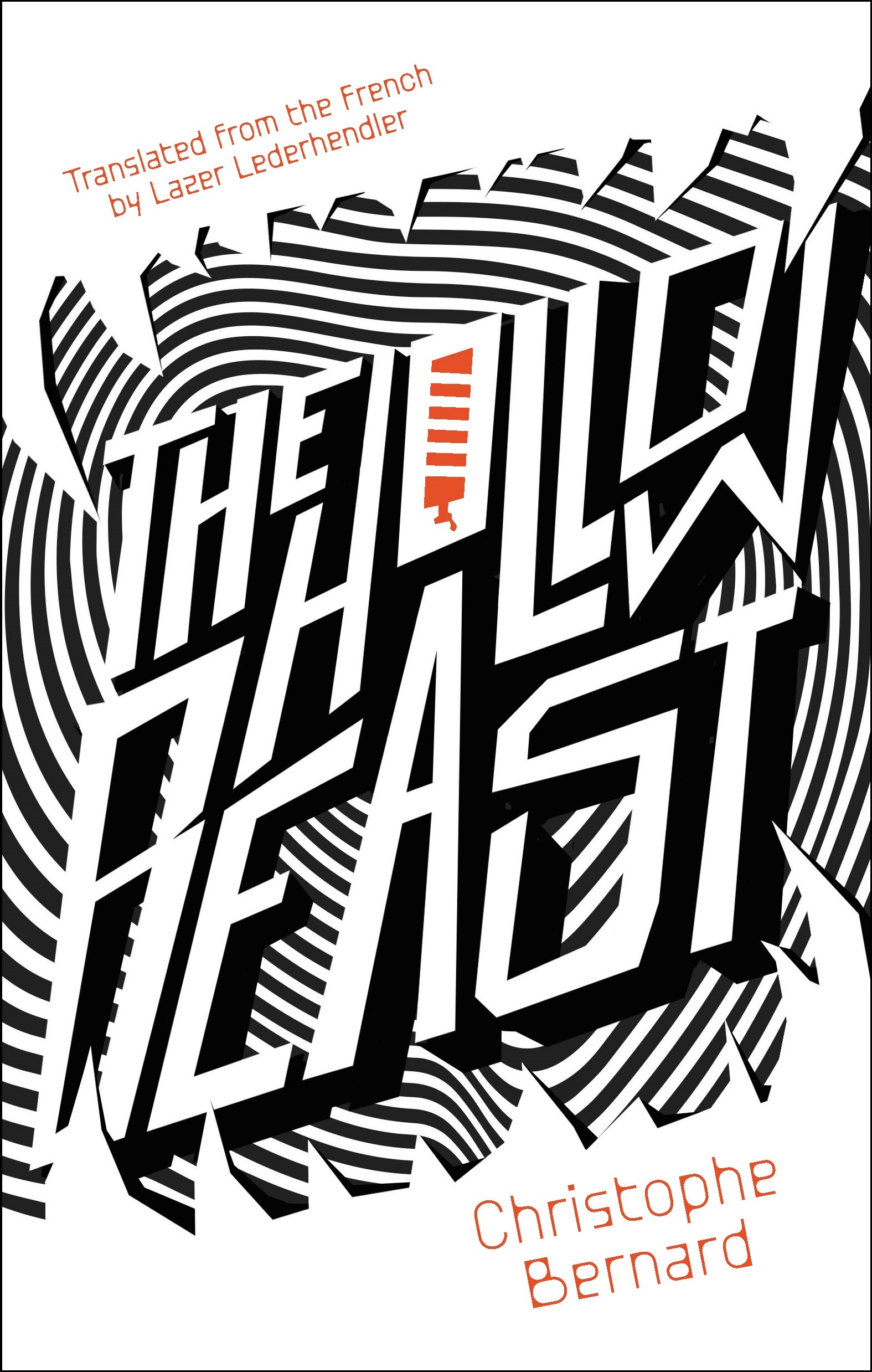
About THE HOLLOW BEAST

Winner of the 2025 French-American Translation Prize in Fiction • Finalist for the 2024 Governor General’s Literary Award in Translation • A Globe and Mail Most Anticipated Spring Title

1911. A hockey game in Quebec’s Gaspé Peninsula. With the score tied two-two in overtime, local tough guy Billy Joe Pictou fires the puck directly into Monti Bouge’s mouth. When Pictou’s momentum carries them both across the goal line in a spray of shattered teeth, Victor Bradley, erstwhile referee and local mailman, rules that the goal counts—and Monti’s ensuing revenge for this injustice sprawls across three generations, one hundred years, and dozens of dastardly deeds. Fuelled by a bottomless supply of Yukon, the high-proof hooch that may or may not cause the hallucinatory sightings of a technicolor beast that haunts not just Monti but his descendants, it’s up to Monti’s grandson François—and his floundering doctoral dissertation—to make sense of the vendetta that’s shaped the destiny of their town and everyone in it. Brilliantly translated into slapstick English by Lazer Lederhendler, The Hollow Beast introduces Christophe Bernard as a master of epic comedy.

Lazer Lederhendler is a veteran literary translator specializing in Québécois fiction and non-fiction. He has also translated 20th-century Yiddish literature. His work has earned distinctions in Canada, the UK, and the USA, most recently the French-American Foundation’s 2025 Translation Prize for The Hollow Beast. Among the authors he has translated are Gaétan Soucy, Nicolas Dickner, Edem Awumey, Perrine Leblanc, Catherine Leroux, Alain Farah, Itzik Manger and Melekh Ravitch. He lives in Montreal with the artist Pierrette Bouchard.

Grab a copy of The Hollow Beast here!

The Bibliophile: Biblioasis Women in Translation

Want to get new excerpts, musings, and more from The Bibliophile right away? Sign up for our weekly online newsletter here!

***
Some of us are still enjoying sun and sand, but we’re bringing the Bibliophile back with a feature for Women in Translation Month, highlighting not only some of our fabulous writers, but the amazing work done by their dedicated translators.

We’ve got novels, nonfiction, and linked stories—including one book forthcoming next year! Check them out below, and join us in celebrating translated works by commenting some of your favourite translations by women (from Biblioasis, or elsewhere).

Ashley Van Elswyk
Editorial Assistant


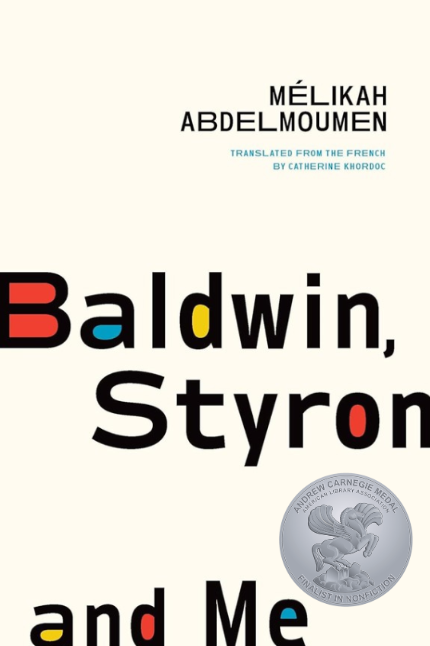
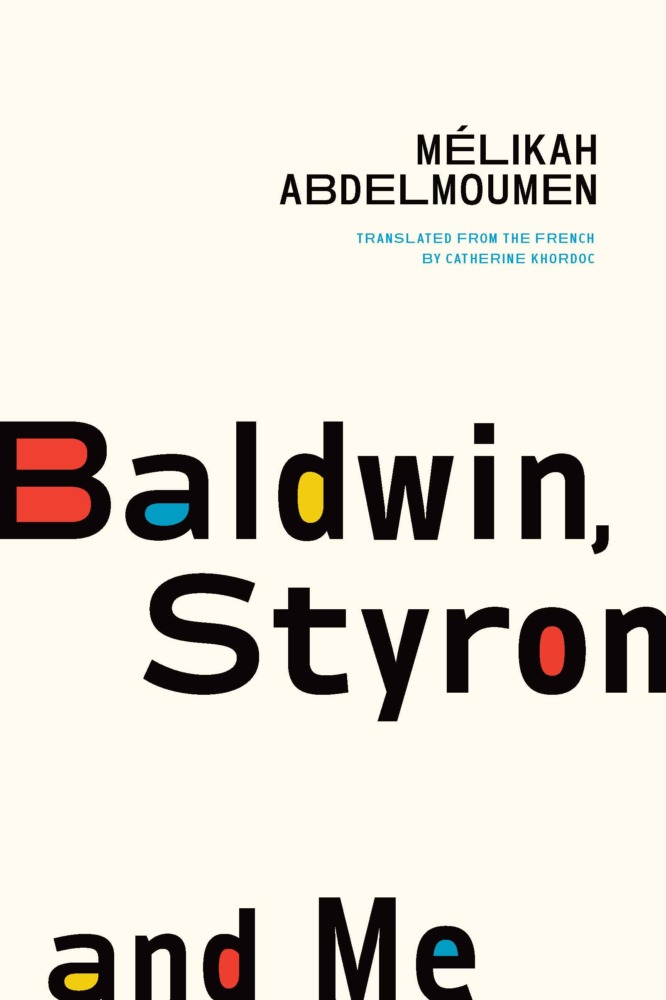
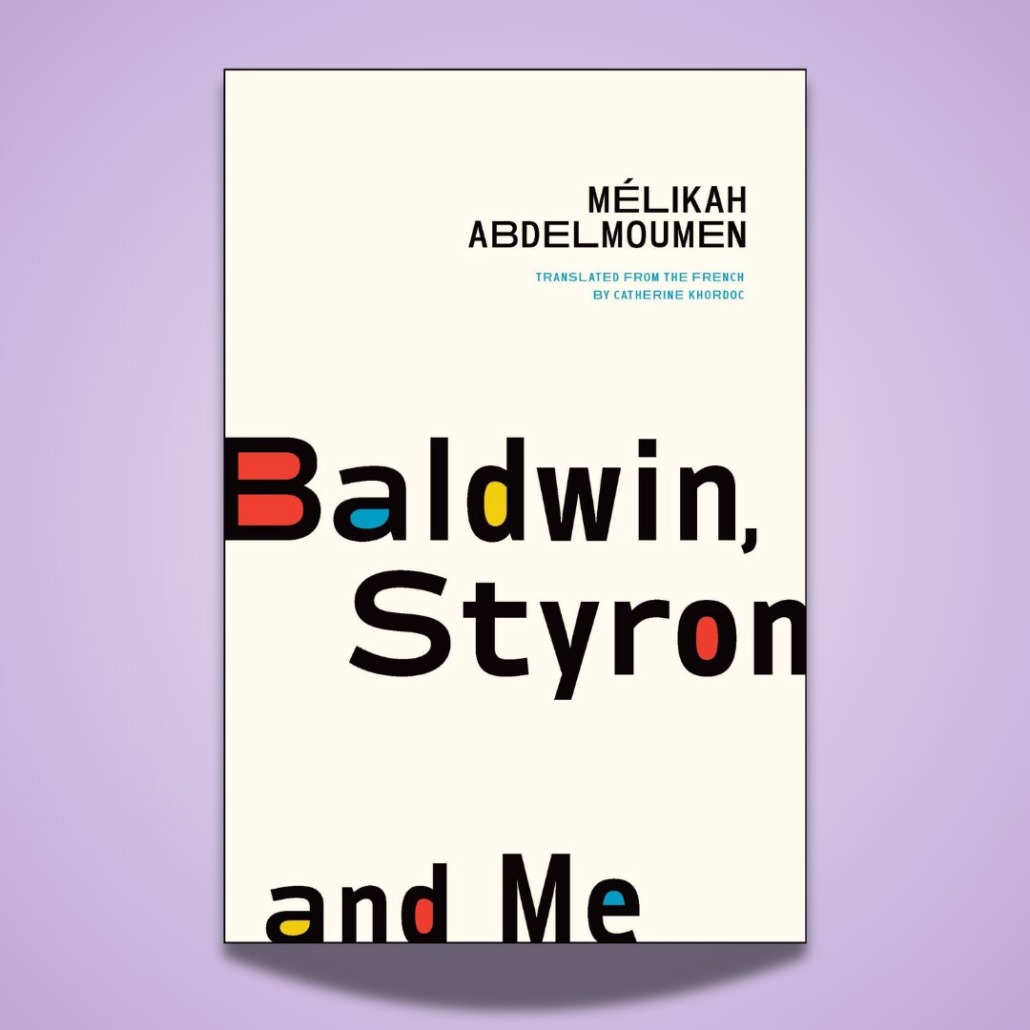
Baldwin, Styron, and Me. Cover designed by Ingrid Paulson.

Baldwin, Styron, and Me

Mélikah Abdelmoumen, translated by Catherine Khordoc

An unlikely literary friendship from the past sheds light on the radicalization of public debate around identity, race, and censorship.

In 1961, James Baldwin spent several months in William Styron’s guest house. The two wrote during the day, then spent evenings confiding in each other and talking about race in America. During one of those conversations, Baldwin is said to have convinced his friend to write, in first person, the story of the 1831 slave rebellion led by Nat Turner. The Confessions of Nat Turner was published to critical acclaim, winning the Pulitzer Prize in 1968, and also creating outrage in part of the African American community.

Decades later, the controversy around cultural appropriation, identity, and the rights and responsibilities of the writer still resonates. In Baldwin, Styron, and Me, Mélikah Abdelmoumen considers the writers’ surprising yet vital friendship from her standpoint as a racialized woman torn by the often unidimensional versions of her identity put forth by today’s politics and media. Considering questions of identity, race, equity, and the often contentious public debates about these topics, Abdelmoumen works to create a space where the answers are found by first learning how to listen—even in disagreement.


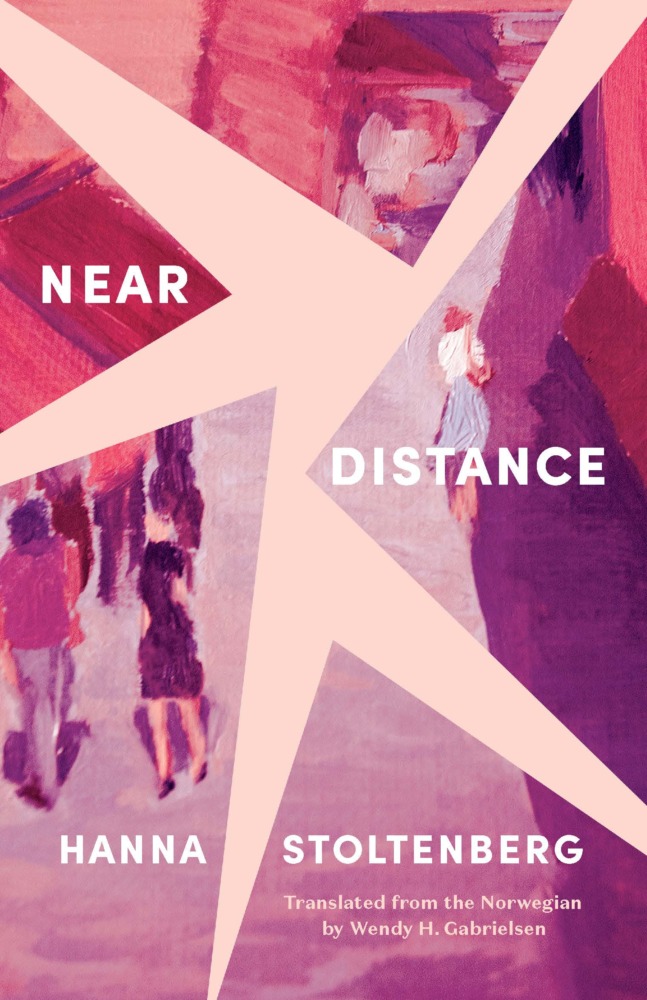
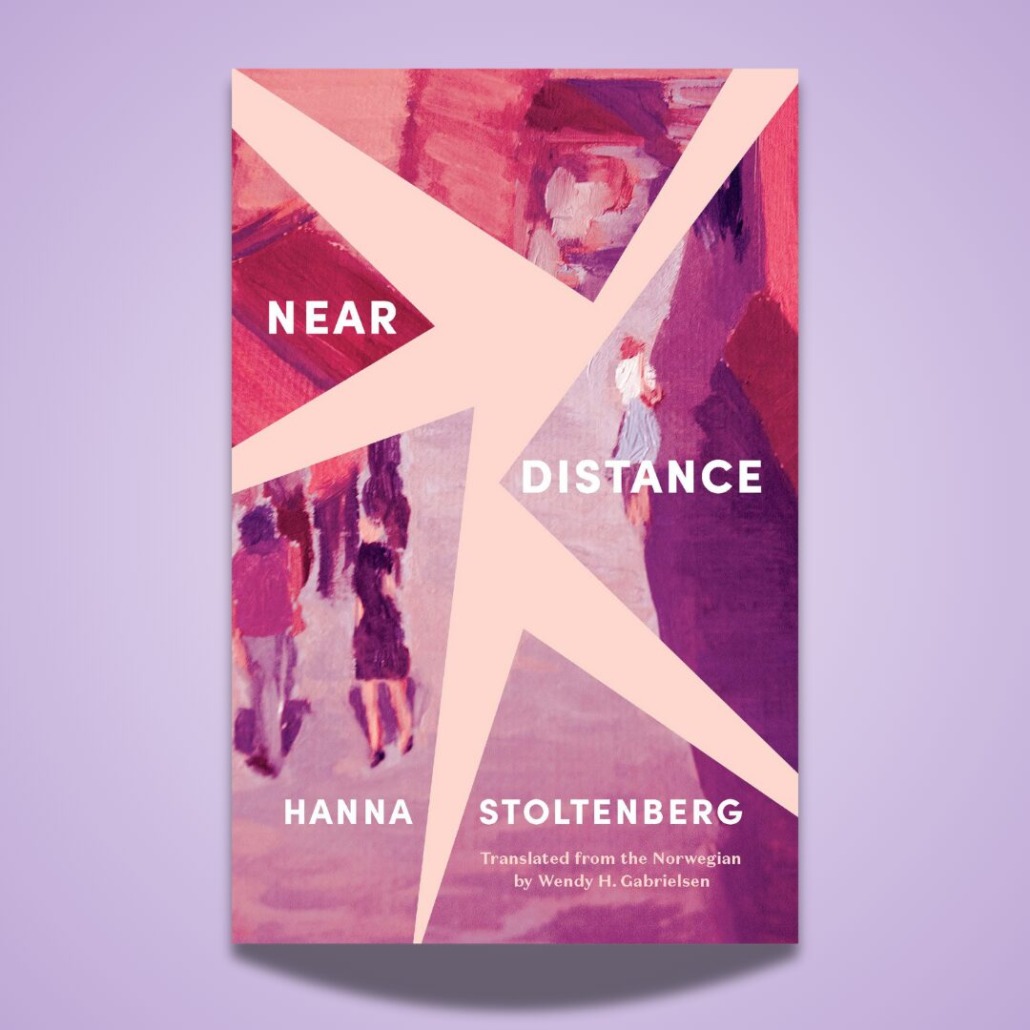
Near Distance. Cover designed by Natalie Olsen.

Near Distance

Hanna Stoltenberg, translated by Wendy H. Gabrielsen

“Stoltenberg’s elegant prose makes each scene . . . so engaging that it gives plot a bad name.”—John Self, Guardian

For her entire life, Karin has fled anything and anyone that tries to possess her. Her job demands little, she mostly socializes with men she meets online, and she’s rarely in touch with Helene, her adult daughter. But when Helene’s marriage is threatened, she turns, uncharacteristically, to her mother for commiseration, and a long weekend away in London. As the two women embark on their uneasy companionship, Karin’s past, and the origins of her studied detachments, are cast in a new light, and she can no longer ignore their effects—on not only herself and her own relationships, but on her daughter’s as well.

An unnerving, closely observed study of character—and the choices we do and do not make—Near Distance introduces Hanna Stoltenberg as a writer of piercing insight and startling lucidity.


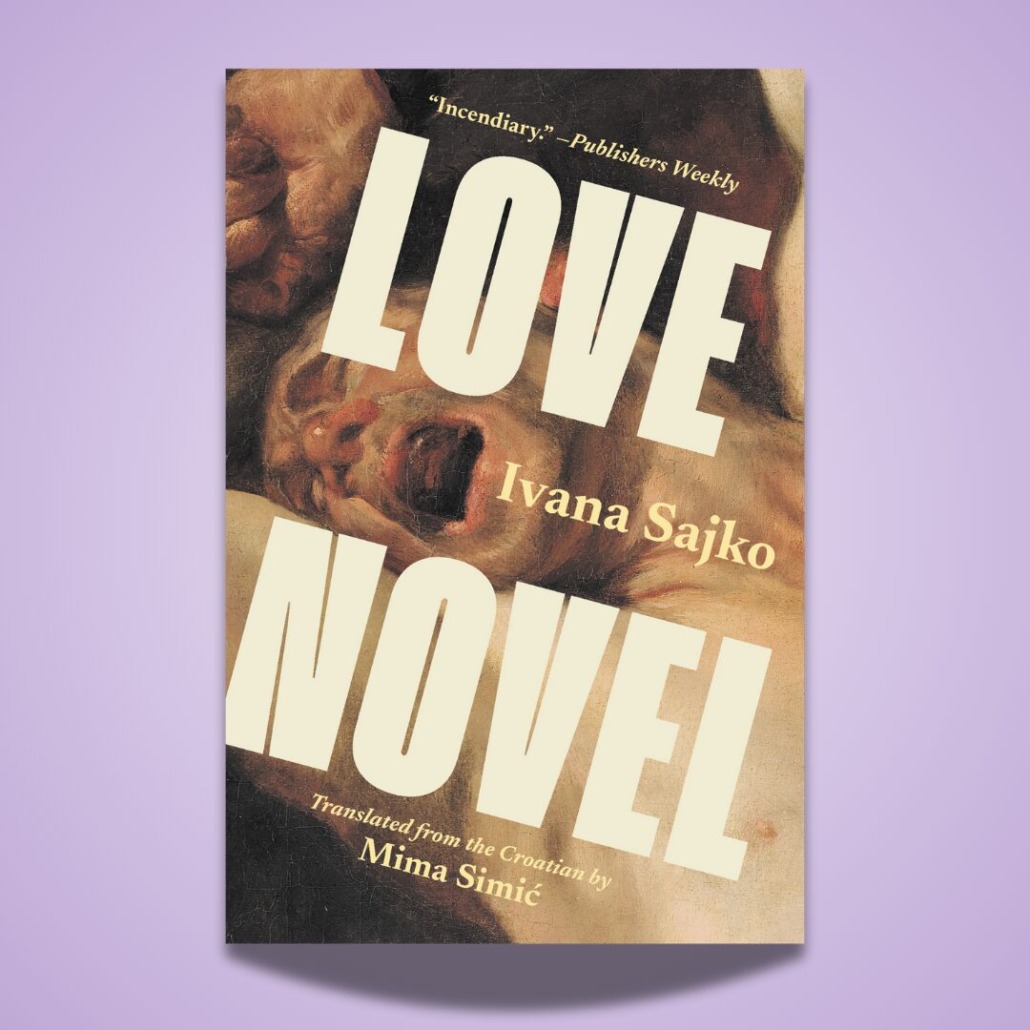
Love Novel. Cover designed by Jason Arias.

Love Novel

Ivana Sajko, translated by Mima Simić

Winner of the HKW Internationaler Literaturpreis • Shortlisted for the 2023 Dublin Literary Award

Love in late capitalism: in an unnamed city, a husband and wife wage a silent war of rage and resentment. He, an out-of-work Dante scholar, is trying to change the world—and write a novel. She was once a passable actress, but now she’s failing at breastfeeding. They take on gigs and debts. He drinks cheap wine; she cleans obsessively. In their two-room flat the tension rises and turns exquisite: the rent is past due, their careers have stalled, the regime is crumbling, and there’s always the baby, the baby who won’t stop crying.

Intense and astutely ironic, devastating and darkly comic, Ivana Sajko’s Love Novel takes a scalpel to the heart of modern married life.

And forthcoming…

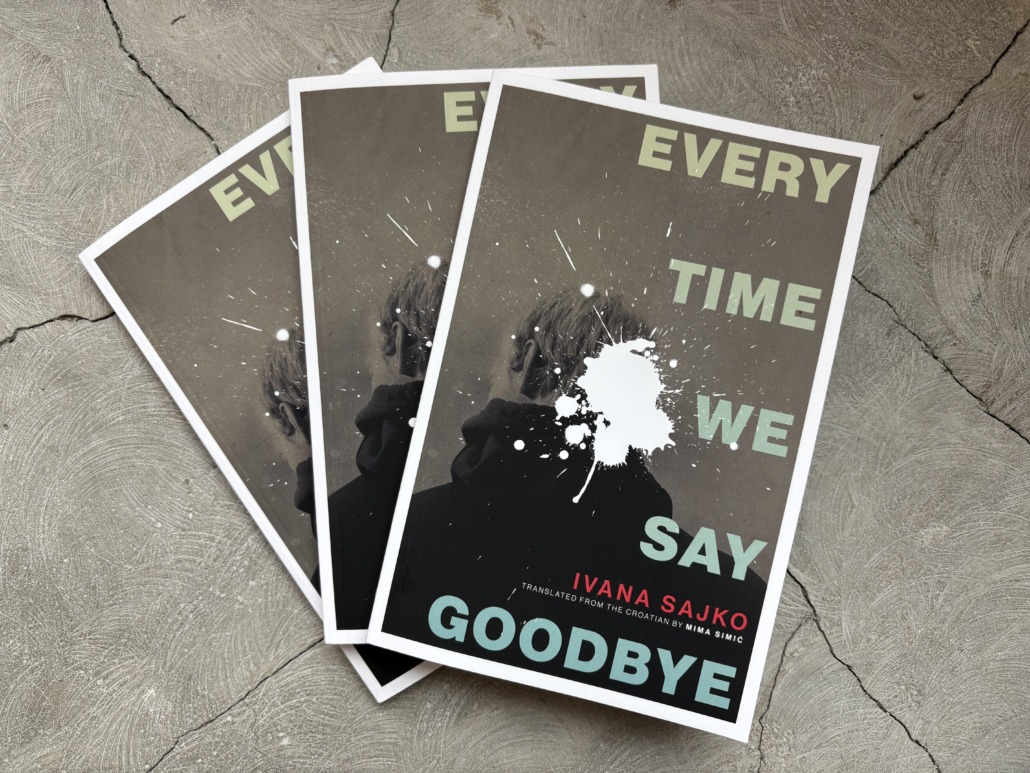
Keep an eye out in January for Ivana Sajko’s next book, translated again by Mima Simić!

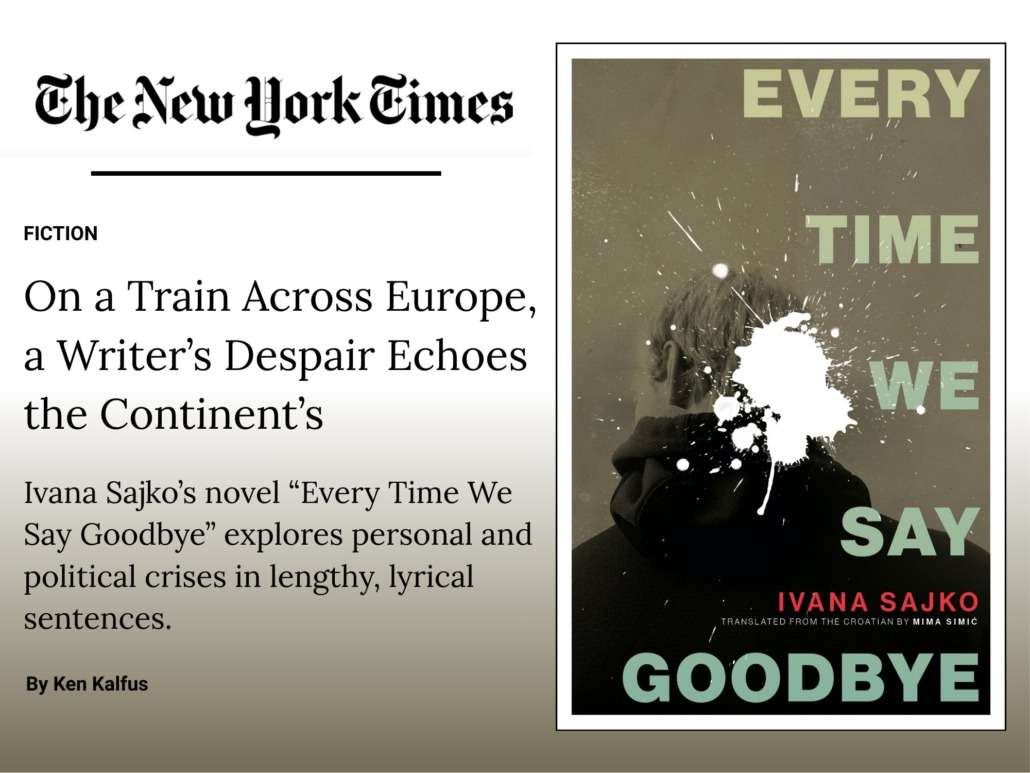
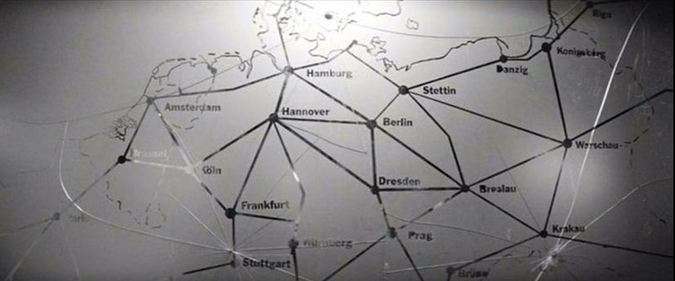
Every Time We Say Goodbye is a novel about departures, about childhood, about the end of love and about the lost idea of ​​escaping to a better place. Each chapter is one long sentence that moves from the past to the present, from the skin of a frightened boy to the suit of an adult man, from one end of Europe to the other, following the fate of a man who travels from a coastal town on the Adriatic to Berlin in order to start again. Ivana Sajko paints a portrait of an intellectual at a crossroads with stylistic care and precision.


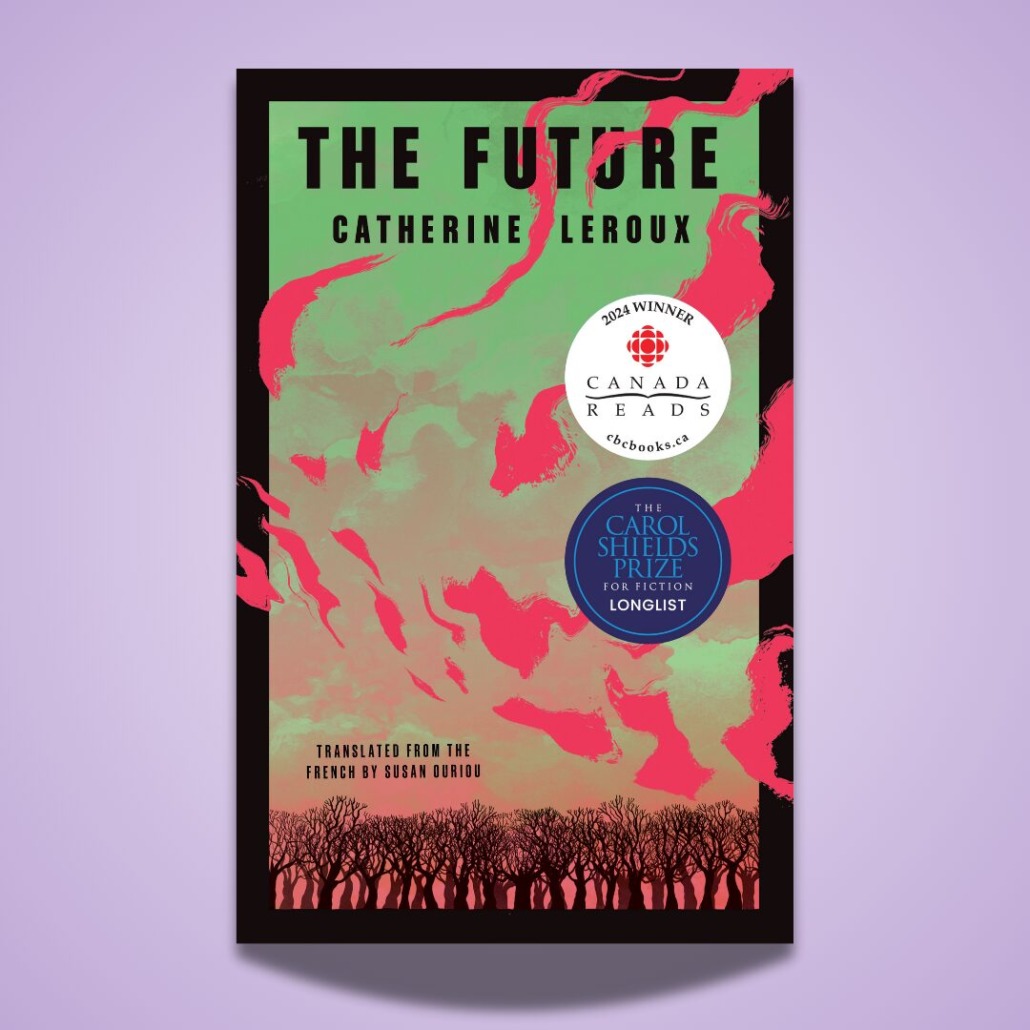
The Future. Cover designed by Natalie Olsen.

The Future

Catherine Leroux, translated by Susan Ouriou

Winner of Canada Reads 2024 • Longlisted for the 2025 Dublin Literary Award • Longlisted for the 2024 Carol Shields Prize for Fiction

In an alternate history of Detroit, the Motor City was never surrendered to the US. Its residents deal with pollution, poverty, and the legacy of racism—and strange and magical things are happening: children rule over their own kingdom in the trees and burned houses regenerate themselves. When Gloria arrives looking for answers and her missing granddaughters, at first she finds only a hungry mouse in the derelict home where her daughter was murdered. But the neighbours take pity on her and she turns to their resilience and impressive gardens for sustenance.

When a strange intuition sends Gloria into the woods of Parc Rouge, where the city’s orphaned and abandoned children are rumored to have created their own society, she can’t imagine the strength she will find. A richly imagined story of community and a plea for persistence in the face of our uncertain future, The Future is a lyrical testament to the power we hold to protect the people and places we love—together.


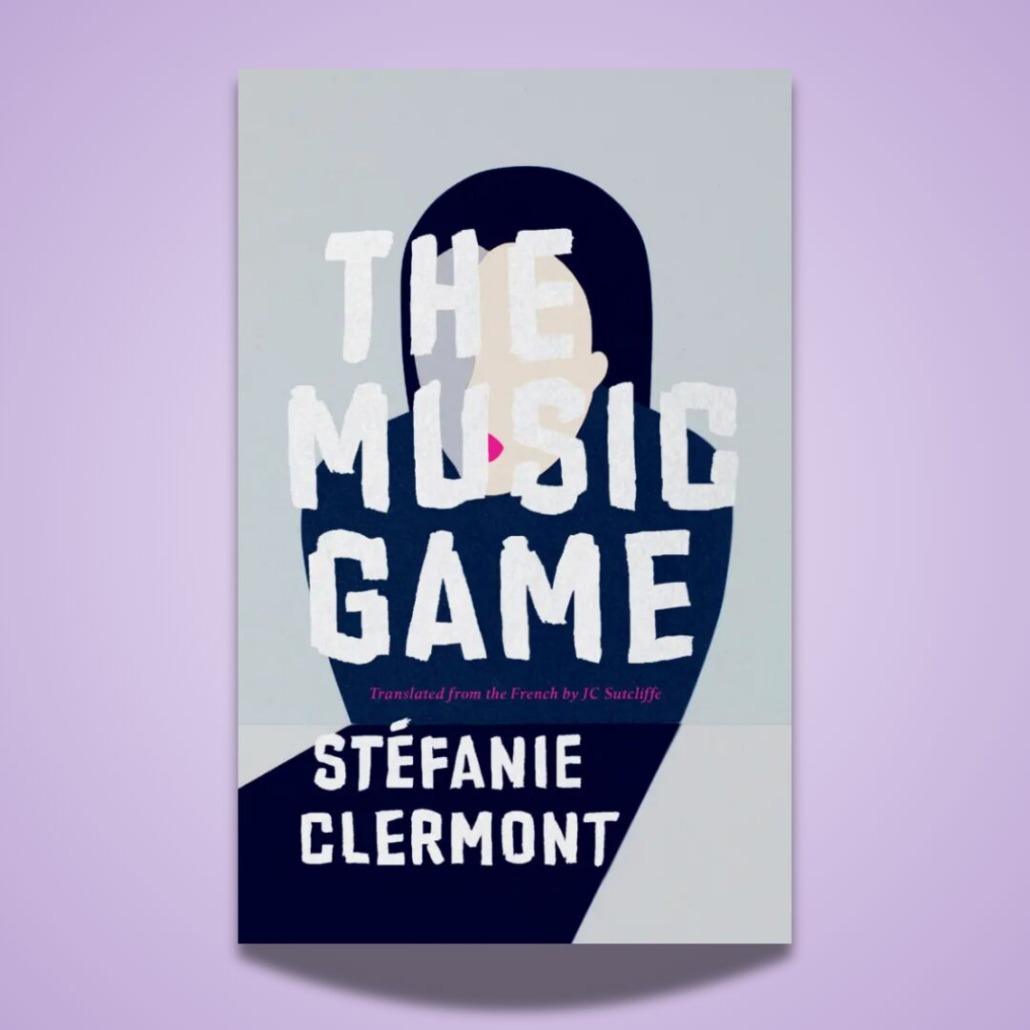
The Music Game. Cover designed by Natalie Olsen.

The Music Game

Stéfanie Clermont, translated by JC Sutcliffe

Winner of the 2023 French-American Translation Prize for Fiction

Friends since grade school, Céline, Julie, and Sabrina come of age at the start of a new millennium, supporting each other and drifting apart as their lives pull them in different directions. But when their friend dies by suicide in the abandoned city lot where they once gathered, they must carry on in the world that left him behind—one they once dreamed they would change for the better. From the grind of Montreal service jobs, to isolated French Ontario countryside childhoods, to the tenuous cooperation of Bay Area punk squats, the three young women navigate everyday losses and fears against the backdrop of a tumultuous twenty-first century. An ode to friendship and the ties that bind us together, Stéfanie Clermont’s award-winning The Music Game confronts the violence of the modern world and pays homage to those who work in the hope and faith that it can still be made a better place.


In good publicity news:

  • The Future by Catherine Leroux (trans. Susan Ouriou) and Baldwin, Styron, and Me by Mélikah Abdelmoumen (trans. Catherine Khordoc) were both included in Read Quebec’s feature for Women in Translation Month.
  • Let Me Go Mad in My Own Way by Elaine Feeney was reviewed in Publishers Weekly“With arresting imagery and skillful shifts in perspective, Feeney weaves together these narrative threads to gut-wrenching effect . . . It’s a potent drama of a family shaped by a nation in upheaval.”
  • Dark Like Under by Alice Chadwick was reviewed in the Winnipeg Free Press“A wholly engrossing, multi-layered story told with a slow burn.”
  • On Oil by Don Gillmor was reviewed in the Literary Review of Canada“Gillmor exposes the many myths of a multi-billion-dollar industry . . . [A] strong indictment of the most earth-destroying economic force that exists today.”
  • Casey Plett, author of On Community, was interviewed on the TELUS Talks podcast.
  • On Book Banning by Ira Wells was reviewed in the Seaboard Review of Books“A thought-provoking read . . . For readers concerned about intellectual freedom, On Book Banning is worth a look.”

THE HOLLOW BEAST wins the French-American Translation Prize!

We’re thrilled to share that on June 5, 2025, the French-American Foundation announced that Lazer Lederhendler, translator of The Hollow Beast by Christophe Bernard, is the winner of the 2025 French-American Translation Prize in Fiction! View the official announcement here. You can also read an interview with Lazer from the Foundation here.

Since 1986, the French-American Foundation has awarded the Translation Prize for the best translation from French to English in both fiction and nonfiction, guiding these important works of French literature to the American market. The prize is awarded to translators to recognize and celebrate their work.

Publisher Dan Wells says of the win:

“Lazer Lederhendler has long been one of the best translators of Quebecois literature in the world. His translations of Nicholas Dickner, Alain Farah, Catherine Leroux, Pascale Quiviger, and others rank among the best published in this country, and we’ve long marvelled at his range and dexterity. With his translation of Christophe Bernard’s Le Bête Creuse, Lazer set himself one of the largest challenges of his career, a quixotically gargantuan beast bred on joual, wordplay, and slapstick. But Lazer has delivered a brilliant rendition of the Quebecois original, and we’re so very grateful that the French American Foundation judges have honoured Lazer’s work as this year’s fiction winner.”

This will be the second Biblioasis title to win the award within the last three years.

Lazer, along with Nonfiction winner John Lambert, will be awarded at an Awards Ceremony on June 25 in New York City. The event is free with RSVP, and seating is limited and first-come, first-served. The Translation Prize, funded by the generous support of the Florence Gould Foundation, is one of the flagship programs of the French American Foundation.

Grab a copy of The Hollow Beast here!

ABOUT THE HOLLOW BEAST

Winner of the 2025 French-American Translation Prize • Finalist for the 2024 Governor General’s Literary Award in Translation • A Globe and Mail Most Anticipated Spring Title

Don Quixote meets Who Framed Roger Rabbit in this slapstick epic about destiny, family demons, and revenge. 

1911. A hockey game in Quebec’s Gaspé Peninsula. With the score tied two-two in overtime, local tough guy Billy Joe Pictou fires the puck directly into Monti Bouge’s mouth. When Pictou’s momentum carries them both across the goal line in a spray of shattered teeth, Victor Bradley, erstwhile referee and local mailman, rules that the goal counts—and Monti’s ensuing revenge for this injustice sprawls across three generations, one hundred years, and dozens of dastardly deeds. Fuelled by a bottomless supply of Yukon, the high-proof hooch that may or may not cause the hallucinatory sightings of a technicolor beast that haunts not just Monti but his descendants, it’s up to Monti’s grandson François—and his floundering doctoral dissertation—to make sense of the vendetta that’s shaped the destiny of their town and everyone in it. Brilliantly translated into slapstick English by Lazer Lederhendler, The Hollow Beast introduces Christophe Bernard as a master of epic comedy.

Photo Credit: Monique Dykstra

ABOUT LAZER LEDERHENDLER

Lazer Lederhendler is a veteran literary translator based in Montreal and specializing in contemporary Québécois fiction and nonfiction. He is a three-time winner of both the Governor General’s Literary Award and the Cole Foundation Translation Prize of the Quebec Writers Federation. His rendering of Nicolas Dickner’s novel Nikolski (Random House Canada) won the 2010 Canada Reads competition. His translations have twice been finalists for the Scotiabank-Giller Prize.

THE HOLLOW BEAST a finalist for the French-American Translation Prize!

We’re thrilled to share that on April 10, the French-American Foundation announced the finalists for the 2025 French-American Translation Prize, which included The Hollow Beast by Christophe Bernard, translated by Lazer Lederhendler!

Since 1986, the French-American Foundation has awarded the Translation Prize for the best translation from French to English in both fiction and nonfiction, guiding these important works of French literature to the American market. The prize is awarded to translators to recognize and celebrate their work.

Winners of the 38th Annual Translation Prize will be announced in May 2025 and celebrated at an Awards Ceremony in June in New York City. The Translation Prize, funded by the generous support of the Florence Gould Foundation, is one of the flagship programs of the French American Foundation.

Grab a copy of The Hollow Beast here!

ABOUT THE HOLLOW BEAST

Finalist for the 2024 Governor General’s Literary Award in Translation • Finalist for the 2025 French-American Translation Prize • A Globe and Mail Most Anticipated Spring Title

Don Quixote meets Who Framed Roger Rabbit in this slapstick epic about destiny, family demons, and revenge. 

1911. A hockey game in Quebec’s Gaspé Peninsula. With the score tied two-two in overtime, local tough guy Billy Joe Pictou fires the puck directly into Monti Bouge’s mouth. When Pictou’s momentum carries them both across the goal line in a spray of shattered teeth, Victor Bradley, erstwhile referee and local mailman, rules that the goal counts—and Monti’s ensuing revenge for this injustice sprawls across three generations, one hundred years, and dozens of dastardly deeds. Fuelled by a bottomless supply of Yukon, the high-proof hooch that may or may not cause the hallucinatory sightings of a technicolor beast that haunts not just Monti but his descendants, it’s up to Monti’s grandson François—and his floundering doctoral dissertation—to make sense of the vendetta that’s shaped the destiny of their town and everyone in it. Brilliantly translated into slapstick English by Lazer Lederhendler, The Hollow Beast introduces Christophe Bernard as a master

Photo Credit: Monique Dykstra

of epic comedy.

ABOUT LAZER LEDERHENDLER

Lazer Lederhendler is a full-time literary translator specializing in Québécois fiction and non-fiction. His translations have earned awards and distinctions in Canada, the UK, and the US. He has translated the works of noted authors, including Gaétan Soucy, Nicolas Dickner, Edem Awumey, Perrine Leblanc, and Catherine Leroux. He lives in Montreal with the visual artist Pierrette Bouchard.

The Bibliophile: Like a lock fitting into place

Want to get new excerpts, musings, and more from The Bibliophile right away? Sign up for our weekly online newsletter here!

***

An interview with Hanna Stoltenberg, author of Near Distance

This week marked our first release of 2025—the exquisite, aching Near Distance by Hanna Stoltenberg, translated from the Norwegian by Wendy H. Gabrielsen. I first read this novel about eight months ago (before I even started working at Biblioasis) and have been eagerly awaiting its publication. Because of all their flawed humanity, the characters in Near Distance—particularly Karin, the cool, often self-absorbed mother—have continued to linger in my life: sitting at the bar across the street from my home, or smoking outside a jewellery shop. Karin’s realness makes her one of the best literary characters I’ve encountered in a while.

I had the chance to ask Stoltenberg a handful of questions, and her responses show a deep level of care to the development of her characters and craft.

Dominique Béchard
Publicist

***

Presenting our first book of 2025: Near Distance by Hanna Stoltenberg, translated by Wendy H. Gabrielsen. Cover designed by Natalie Olsen.

Near Distance begins with a kind of prologue, a brief chapter on the changed relationship between mother and daughter, as portrayed through their smoking rituals; Karin and Helene used to smoke together, but Helene has quit and now Karin smokes alone. I’m always interested in how beginnings become beginnings. At what point in the writing process did this scene appear, or was it the first thing you wrote? What else can you say about the shape of the book and how it came together?

The “prologue” was actually the last thing I wrote. For me the novel began with the image of Karin waking up next to a one-night-stand and walking home alone in the wet snow. The night before I had been out to a bar with some friends and became captivated by a woman who was on a date with a garrulous man she clearly didn’t know well. Every time he left the table to buy drinks or use the bathroom, her expression shifted, becoming softer yet less compliant. Those glimpses of “private faces” in public interest me. The woman walking home developed into Karin, and I began writing scenes from different points in her life: as a young mother, on a family vacation in Germany, during a brief affair, on a “girls’ trip” with her grown daughter. Eventually the relationship between Karin and Helene became the focus point, and my editor wisely suggested I add a scene with Helene in the beginning. After a few unsuccessful attempts I wrote the smoking scene and it was like a lock fitting into place, I knew the novel was finished.

You’ve previously said that Karin is based on fathers you knew growing up—that her character eschews conventional ideals of motherhood and care. Can you say more about how you envision Near Distance as upending or playing with conceptions of gender and emotional labour?

When I started writing about Karin, I was getting to know her and at the same time I felt like I had a deep understanding of who she was. As I moved her through different situations with different people, my main concern was rendering her thoughts and emotions as truthfully and precisely as I could. Which is to say, I didn’t necessarily have those fathers in mind then. Later, however, I thought a lot about how Karin’s and Helene’s relationship is shaped by societal expectations, one of them being that a mother’s love is expressed through tireless devotion and selfless care. Would a different, less fraught relationship have been possible simply by changing Karin’s gender?

It can be difficult to reconcile the idea of care as a natural, authentic expression of love and a moral obligation with the fact that the majority of care work is done by women, whether paid or unpaid. Today, at least in Norway, most couples co-parent 50/50 after a split, but when I grew up “the weekend dad” was the norm. My siblings and I spent every other weekend at my dad’s—the rest of the time, while my mom took care of us, he was free to do as he pleased—and it never made me, or anyone else—question his love or character. Whereas if a mother didn’t have main custody of her children, people would assume she did something horrible. Although parenthood is more equal today, a selfish mother is still considered unacceptable in a way a selfish father isn’t. Rachel Cusk has previously said that in the Outline trilogy she tried to write a female consciousness that is not shaped by oppression. I think it’s similarly interesting to explore female love that is not structured around nurture and care.

Hanna Stoltenberg. Credit: Julie Pike.

How would you like a North American reader to approach your work? What—if anything—should they know about life in Norway and how it might differ from life in Canada or the US?

I believe the themes and subjects in the novel are recognizable and relevant to readers from both Canada and the US, but the wealth and comfort of Scandinavian societies, for me, is significant. The community represented by the welfare state paradoxically relieves us of some of the duty to take care of each other. It also removes a lot of the struggle. Instead, we are free to seek out the meaning of life through individual self-realization, whether that be wellness retreats or erotic desire, which can feel both meaningful and unbearably hollow.

John Self, in The Guardian, writes that your “elegant prose . . . gives plot a bad name.” Near Distance isn’t without plot, of course, but characterization and language seem to be at the forefront. In this way, it could be said to participate in the tradition of writers like Rachel Cusk and Gwendoline Riley. What excites you the most about literature? What are your priorities when writing?

The writer Kathryn Scanlan has stated that she tries “to write a sentence as unbudging and fully itself as some object sitting on a shelf in my office.” That is an ambition I share. I can admire a writer’s intelligence, imagination and sense of composition, but never more so than when it’s on display within a sentence.

I think it’s similarly interesting to explore female love that is not structured around nurture and care.

Atmosphere is important in Near Distance. Critics have described the book as stark, anxious, tense. But atmosphere is difficult to pin down and depends largely on what the reader brings to the work. It’s also interesting how this tense atmosphere counters the novel’s wellness subplot: Helene and Endre’s involvement in the world of self-care. Did you set out to create a particular atmosphere (if so, how?), or did it manifest on its own?

I wanted to observe the contrast between the groping, failing intimacy between mother and daughter and the smooth, commercialized care of strangers, be it on the plane, in the shops or in the world of self-care. In London, Karin and Helene visit a large clothing store and pay for the services of a personal shopper, a young woman named Rosie. With a mixture of standard phrases and feminine efficiency, Rosie establishes a relaxed intimacy with Helene that Karin is completely shut out of. As you point out, how you experience the novel’s atmosphere largely depends on whether you are inclined to read that scene as simply two women shopping—as some readers have—or something more sinister. For me, there is something bleak about how the self-care-industry capitalizes on your most private feelings (shame, self-loathing, loneliness) while also being obsessed with personal boundaries. Like the question posed by a wellness guru in the novel: “If you don’t look after yourself, who will?”

Writing a book is often viewed as an essentially solitary activity. What does having a translator feel like? You speak English, so I imagine that it must feel particularly strange to experience your work through another. Did it ever feel like an imposition? Or was it liberating?

As I said above, when I write I work and rework the language in order to achieve “unbudging” sentences, held in place by rhythm and sound. Sometimes I know the shape and feel of a sentence before I know what I want to say. Like Don DeLillo “I’m completely willing to let language press meaning upon me.” Therefore, being translated can feel like a massive loss of control. When it doesn’t, that is because of Wendy’s attentive and precise work, which I feel very lucky to benefit from. She has managed to transfer the novel’s tone and atmosphere perfectly, and also to create something subtly different and exciting.

Finally, what are you reading these days?

I recently had my second child, and at the moment a novel’s actual weight has become an important factor when filtering through my reading options: I need to be able to hold it in one hand while feeding or lulling a baby to sleep with the other. Luckily, I have much to choose from, as I tend to favour compact narratives. Three slim, but substantial novels I’ve recently read are The Anthropologists by Ayşegül Savaş, Sitt Marie Rose by Etel Adnan, and Famous Questions by Fanny Howe.

***

In good publicity news:

Events

Nothing Found

Sorry, no posts matched your criteria