“Richard Kelly Kemick’s Decadence provides a narrative about interiority that is funny, curious, self-deprecating, and occasionally and gloriously ridiculous. Beneath Kemick’s wit and (truly) random obsessions is an exceptionally attentive meditation about the emotional weight of quotidian life and the strange difficulty of becoming an adult. Across a range of explorations about love, grief, loneliness, failure, family, and self-worth, Kemick is refreshingly honest about the limits of introspection, even as he offers an elaborate examination of his own catalogue of shortcomings. The result of this ‘accidental memoir of a sort’ is a deeply genuine, anxiously original, and immensely enjoyable portrait of life in progress.”
The Hilary Weston Writers’ Trust Prize for Nonfiction was first awarded in 1997. It is given annually for excellence in the category of literary nonfiction, which includes essays, history, biography, memoir, commentary, and criticism. Each finalist is awarded $5,000, and the winner receives a prize purse of $75,000. The award was first sponsored in 2011 by the Irish-Canadian businesswoman, philanthropist and writer who served as lieutenant-governor of Ontario. She died last year at 83. The prize is now funded by the Hilary and Galen Weston Foundation. The winner will be announced at the Writers’ Trust Awards on Tuesday, November 10.
Finalist for the 2026 Hilary Weston Writers’ Trust Prize for Nonfiction
“The genre of memoir is bullshit (as I humbly posit). No one actually lives like they are moving along some grand Freytag’s triangle. Rather, we live within isolated instances, specific struggles and victories, which, when compiled, form a narrative.”—Richard Kelly Kemick
In Decadence, Richard Kelly Kemick’s “accidental memoir of a sort,” the author ranges widely through his myriad preoccupations and obsessions—volleyball, municipal landfills, dogs, high school plays, Christmas villages, love—out of which the shape of a unique sensibility is revealed. Reminiscent of the three Davids—Rakoff, Sedaris, and Wallace—these essays accrete into a portrait of a man trying to make sense of a world in which there are no goddamn rules; and yet one in which every action has sometimes profound consequences. A book of intelligence and care and kindness and humour and yearning and the occasional epiphany, Decadence gathers up from the odds and ends of living what makes a modern life—quiet and desperate as it may at times be—worth celebrating.
Richard Kelly Kemick is an award-winning poet, journalist, and fiction writer. His debut collection of short stories, Hello, Horse, was published by Biblioasis in 2024. He is also the author of I Am Herod (available on audiobook), the poetry collection Caribou Run, and the stage play Amor De Cosmos: A Delusional Musical. Richard’s limited series podcast, Natural Life, is an intimate and unexpectedly honest documentary on his cousin, who is serving a life sentence without parole in Michigan.
https://www.biblioasis.com/wp-content/uploads/2026/09/hwwt_finalists.png8002000biblioasishttp://biblioasis.com/wp-content/uploads/2014/12/BIBLIOASIS-Logo-500x500-White-300x300.pngbiblioasis2026-09-09 11:05:212026-09-09 11:05:21DECADENCE a finalist for the 2026 Hilary Weston Writers’ Trust Prize for Nonfiction!
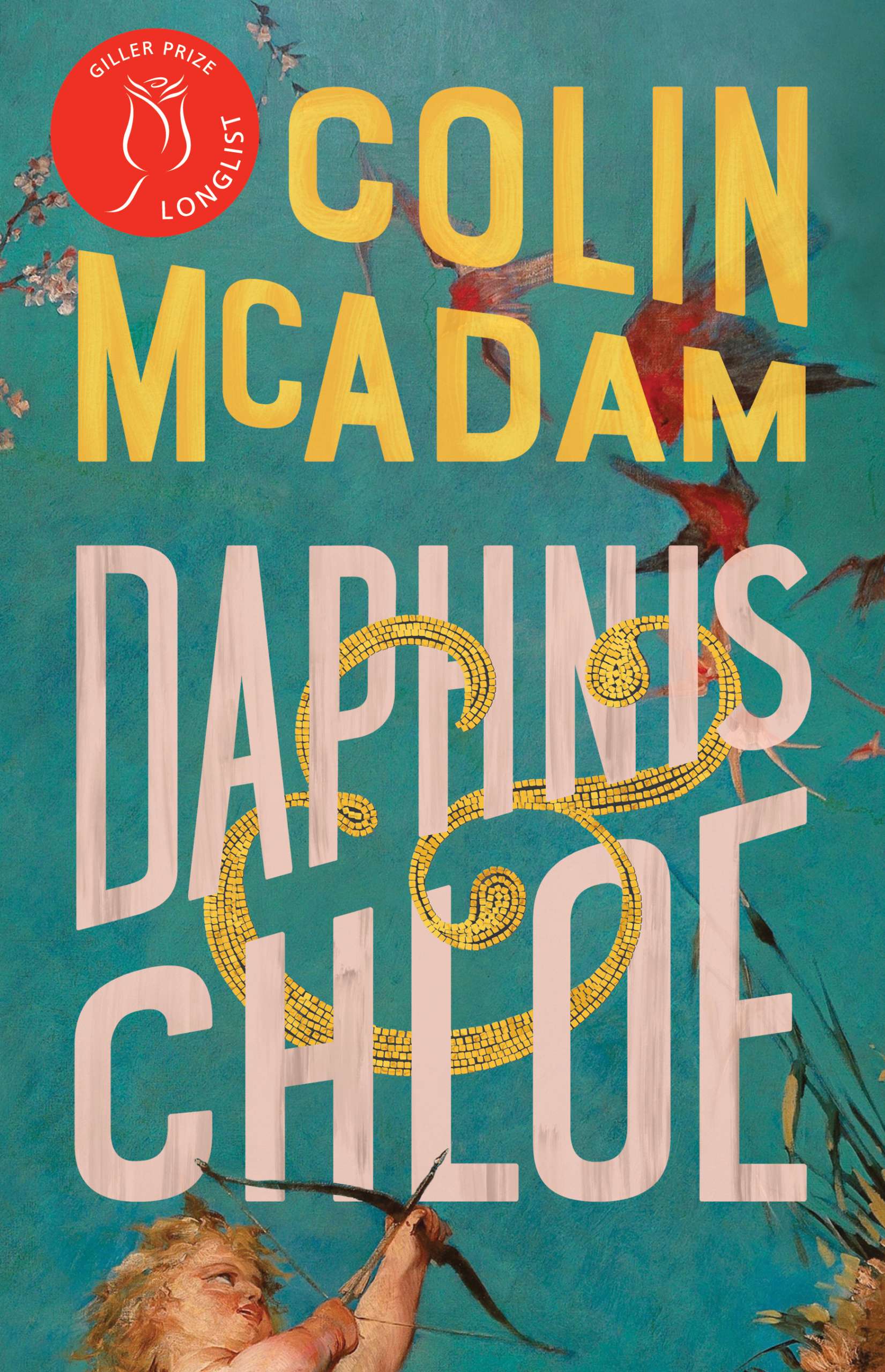
Biblioasis is thrilled to share that Colin McAdam’s Daphnis and Chloe has been longlisted for the 2026 Giller Prize! The longlist of fourteen works was selected for the first time by a jury panel of independent booksellers, and was announced this morning on September 8. View the full list here.
In a statement, Biblioasis publisher Dan Wells writes,
All of us here at Biblioasis are thrilled that Colin McAdam’s Daphnis and Chloe has been nominated for the Giller Prize. Our thanks to the jurors—independent booksellers, naturally—and to the Giller itself for recognizing the strengths of Colin’s book. Daphnis and Chloe is a book quite unlike anything else in Colin’s ouevre, and from anything else we’ve published here at Biblioasis, a hopeful book about the power of love and beauty and storytelling to create a light in the darkness, and it has as broad an appeal as anything we’ve published. We’re grateful that this nomination will help bring Colin’s gem to a wider readership.
The Giller Prize is awarded annually to a Canadian novel or short story collection published that year. The winner receives $100,000 and the shortlisted authors each receive $10,000. The 2026 shortlist will be announced on Monday, October 5, and the winner will be announced at an award ceremony on Monday, November 16 in Toronto.
Longlisted for the 2026 Giller Prize • A 2026 CIBA Booksellers’ List Selection • One of Lit Hub’s Most Anticipated Books of 2026
A fable about love and innocence and beauty, and finding a light through the darkness.
There’s a city on an island in the Pacific that can only be reached by ferry, a city where a mechanic named Frank opens a garage with his old friend Charlie. Both men marry the women they love but are unable to have children. There are drugs on the streets of this city that take away pain for strings of minutes and bring synthetic rapture; and by these streets the couples are given two babies, abandoned under strange circumstances. The boy they name Daphnis, and the girl Chloe.
And so begins a book unlike anything else, a modern retelling of an ancient story. Part Ovid and part True Romance, and narrated by Eros himself, Daphnis and Chloe offers a pulpy meditation on love and beauty, on people triumphing over darkness by wrestling deep within it, on the solace of art, and on the simple but profound pleasure provided to a blind old man as he holds his wife’s hand and listens to an increasingly familiar story.
Colin McAdam is an internationally acclaimed novelist with a PhD from Cambridge on translations of Ancient Greek—the original language of Daphnis and Chloe. He has written non-fiction for Harpers, Granta, Salon, and Hazlitt, among other journals, and his novels have won or been shortlisted for several prizes including the Amazon Best First Novel Award, the John Llewellyn Rhys Prize, the Commonwealth Writers Prize, the Governor General’s Award, the Rogers Writers’ Trust Prize, and the Giller Prize. He lives in Quebec.
https://www.biblioasis.com/wp-content/uploads/2026/09/giller_longlist_2026_mcadam-1.png8002000biblioasishttp://biblioasis.com/wp-content/uploads/2014/12/BIBLIOASIS-Logo-500x500-White-300x300.pngbiblioasis2026-09-08 11:16:512026-09-11 16:55:00DAPHNIS AND CHLOE longlisted for the Giller Prize!
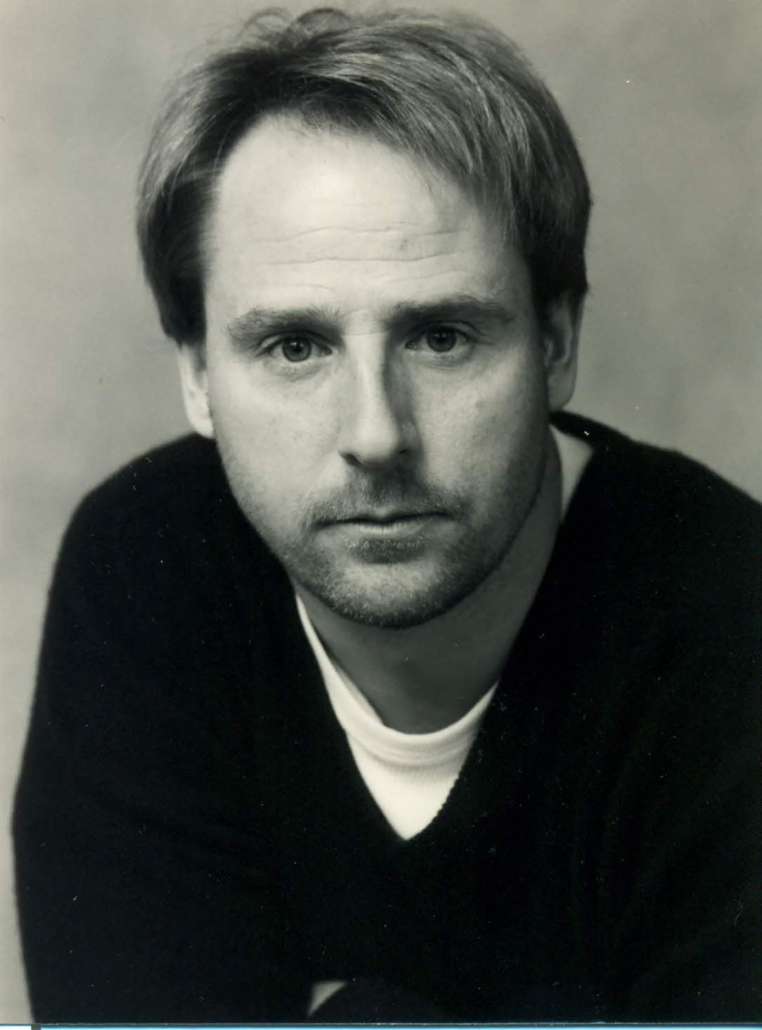
An interview with Richard Kelly Kemick, author of Decadence
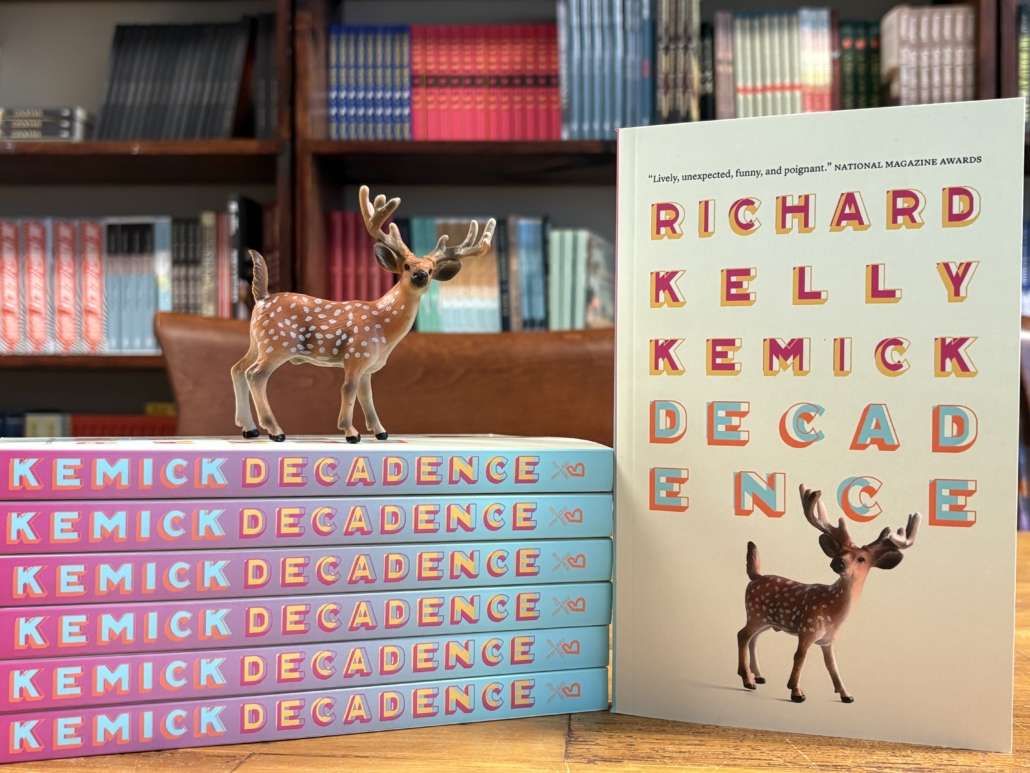
Photo: Decadence by Richard Kelly Kemick. Cover designed by Ingrid Paulson. Books supervised by the cover model.
I think what I love most about Richard Kelly Kemick’s work—regardless of whether he’s writing poetry, fiction, or nonfiction—is his emotional range. He doesn’t simply accept whatever emotion feels most natural or pressing to a scene or image. He steps back, and reconsiders the possibilities of feeling, and leads us towards feeling more. And with less certainty.
What comes out of this range is a humour that feels honest rather than fabricated—the distillation of many ways of thinking through experience. I often think of this opening to the collection’s final essay, “Rules”:
“Litia and I had been together for ten years (almost to the day) when she came home from work and told me she was gay. That summary sounds much less shocking—less plunging—than the revelation actually was. I reacted with all the clichés: the gasp, the floor falling away, the sound of the ocean in my ears. At one point, I stopped crying long enough to say, “Then I will become a woman.”’
The scene is silly, at least partly comical for its depiction of grand emotion and for its final statement, but there’s also a sweetness that makes the work ultimately feel more vulnerable than ironic. And this, in my opinion, is where humour thrives the most naturally: when the world turns on its head, and the rules have flown out the window, and the narrator is thrown into a clearing of not-knowing.
Decadenceis for readers who like a strong voice, which is to say: there’s a thoughtful, weird, nuanced personhood in this book, which is also to say: what comes through, in each essay, is the immense care of its author for the people and things occupying the Kemickian universe.
I had the pleasure of asking Kemick a few questions about Decadence, his lovely collection of personal essays coming out next Tuesday, which he answers below with his characteristic thoughtfulness, gentle self-deprecation, and wit.
Decadence spans a decade of some of your best magazine writing, and covers a wide range of topics and obsessions. Do you see a throughline, in hindsight (or even as you were writing)? And do you notice any shifts in your approach / preoccupations as time passes in Decadence?
While I was writing the pieces, I did not see any throughlines. My only preoccupations were: 1) Will an editor accept this pitch, and 2) Will they pay me for it? However, when I assembled these pieces into the manuscript, I saw that I kept coming back to similar ideas and themes, no matter the topic at hand. My relationship with Litia, my relationship with my friends, my relationships with my sworn enemies—all of it kept resurfacing throughout the decade it took me to finish this book.
My approach shifted as I became less concerned with arguing a standpoint or (god forbid) a thesis, but rather just exploring the parameters of the issue at hand. I used to start an article knowing what I thought about the topic; now, I am most interested in writing about topics that I am unsure how I feel towards. There’s nothing more obnoxious than a Canadian writer who thinks they have something to teach.
Also, halfway through writing this book (about year five), I deleted all social media and lost much of my fear of being cancelled. (I still have some fear of it, of course. Like, I am always very careful what specific insults I say to other drivers.) But I think this changed my humour overall.
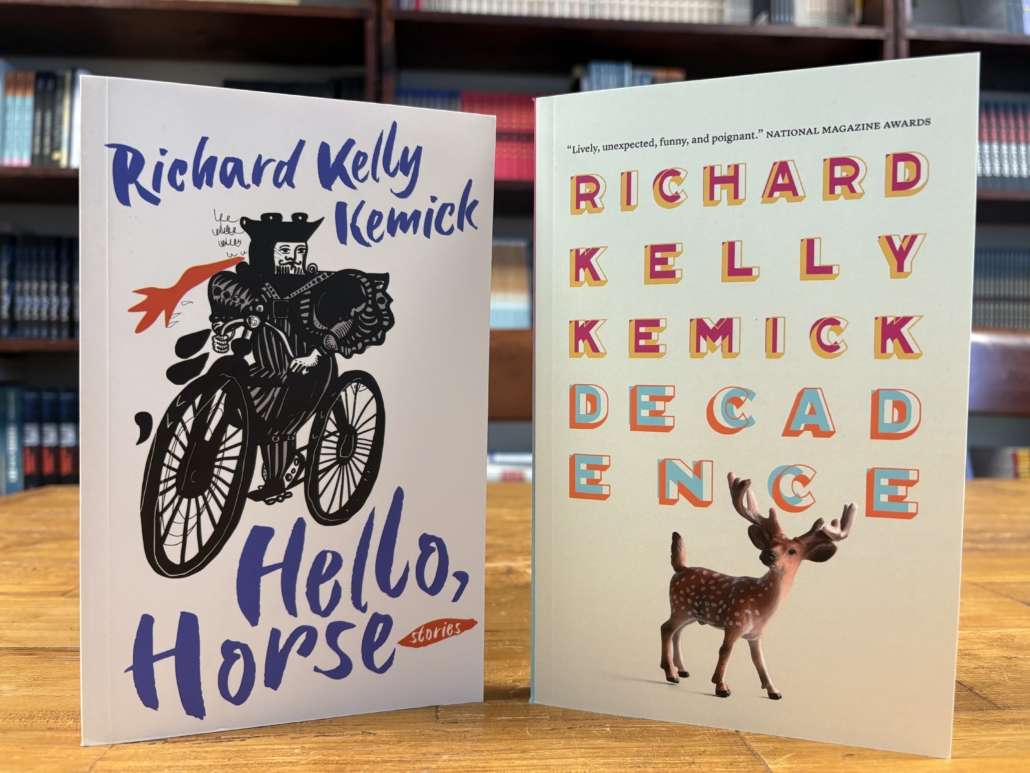
Photo: Kemick’s collection of short stories, Hello, Horse (Biblioasis, 2024), next to Decadence.
You’ve written poetry, short fiction, personal essays, and you also wrote a podcast series about your incarcerated cousin. What do you think separates the kind of nonfiction we get in Decadence from your other work? What propels this formal restlessness?
It takes me a lo(ooo)ng time to edit. When I am finally done with a manuscript, I am so over-stuffed with the genre that the idea of starting another project in the same vein is akin to ordering another cabbage when you have spent the past ten years of your life eating cabbage.
Decadence begins with an epigraph by another Biblioasis author, Marcello Di Cintio. It’s a lovely quote from his essay “Fatherhood”: “I call Heather again and she tells us to go to the hospital. [. . .] I can’t decide whether to drive very fast or very slow.” Can you tell us a little bit why you chose this as the epigraph?
I love this quotation from Marcello. I also love Marcello—how could you not adore a man who (and this is true) is named after an Italian marshmallow brand? But back to the quotation: I love how succinctly it summarizes most of the great fulcrums of our life: we know that we should do something, and we know that we shouldn’t do the other thing, but it’s always such a fine line between behaving perfectly and awfully. This, at least, is what I would tell my priest during my Catholic school days.
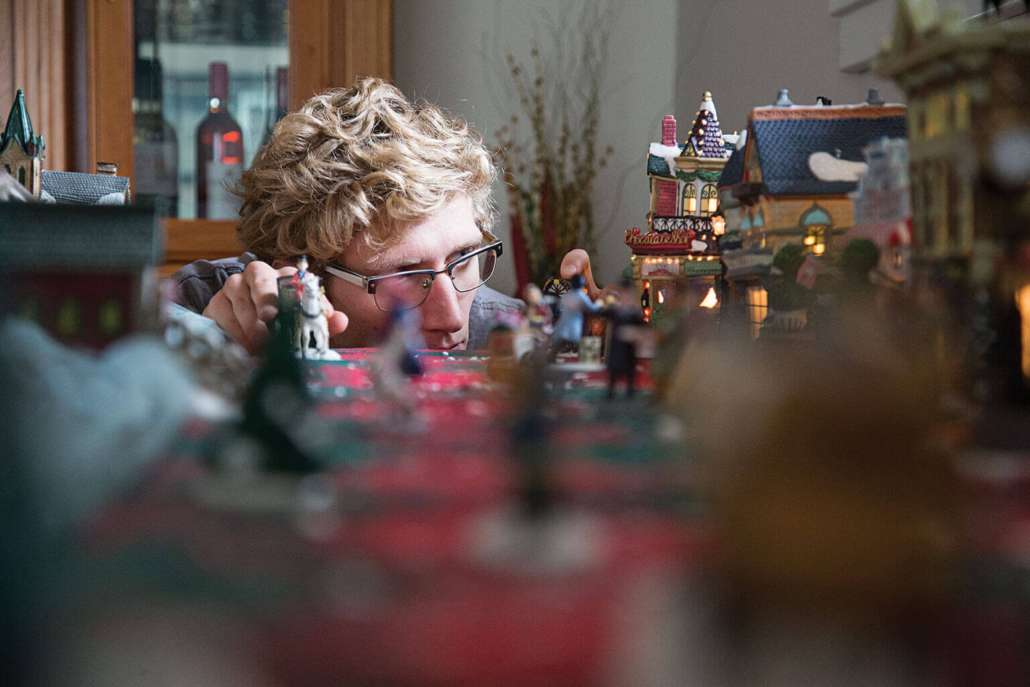
Photo: Richard Kelly Kemick with his miniature Christmas village featured in the essay “Playing God” from Decadence. Credit: Colin Way.
You’ve famously (around here) declared that “the genre of memoir is bullshit,” though Decadence of course draws heavily from your life. Could you elaborate some more on why you think it’s “bullshit”?
Sometimes I just say things and see what happens. Truthfully, I don’t even remember saying (or typing?) this, but I trust you far more than I do myself. I think most memoirs are written with a lot of clarity (admittedly, I’ve read, like, three). This clarity, however, seems disingenuous to the form because we live without any clarity—we are unsure, always, whether to drive very fast or very slow. This lack of perspective exists even when we are looking back on an event because we are just as subjective now as we were then. I’ve stumbled into writing a memoir that tries to mimic this complete lack of narrative (and marketable) form. Oftentimes, when we think we’re talking about X we are really thinking about Y. When I thought I was writing about my miniature Christmas village, it turns out I was writing about my fear of loneliness; but then, a few years later, I thought that I was actually writing about my fear of failing as a writer. Now, I think I was writing about my fears about impending fatherhood. Whatever it was, fear was involved.
What have you read or been reading lately that you’d like to recommend to your own readers?
I’ve been reading Eichmann in Jerusalem and Zolitude. Both are very good, and both I’ve been pretending to have read for years and have finally made the leap. Whatever took me so long? (Hint: The answer is two words. First word, “Vinyl.” Second word, “Cafe.”)
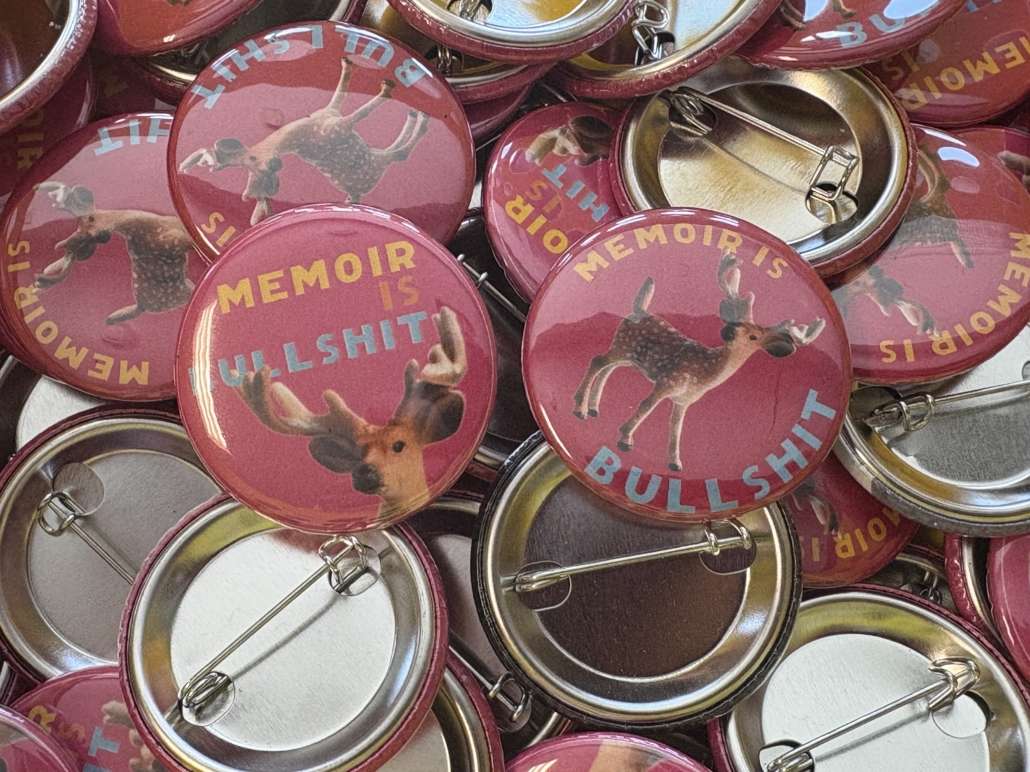
Photo: Our colourful stash of Decadence buttons.
In good publicity news:
Daphnis and Chloe by Colin McAdam (out Sept. 15 in Canada!) was included in Lit Hub’s list of Most Anticipated Books of 2026 Part Two: “A retelling, perhaps, of the titular myth—but spun through a modern Kelly-Link-sounding lens. Bring me myth, bring me love, bring me beauty! Plus, it has a Max Porter stamp of approval.”
Every Time We Say Goodbye by Ivana Sajko (trans. by Mima Simić) was featured in the Globe and Mail’s recent novellas round-up: “Sajko braids the personal and political into something both artful and quietly unsettling.”
Ducks, Newburyport by Lucy Ellman got a shoutout in The Guardian’s article, “Home is where the art is: the rise of the epic domestic novel.”: “Ellmann transforms the domestic experience into a philosophical, heroic one: the woman methodically latticing pastry over cherry pies is at the same time grappling with existence in all its light and shade.”
Precarious: The Lives of Migrant Workers by Marcello Di Cintio was included in The Tyee’s list of 2026 Summer Reads: “A stirring work of non-fiction that pulls back the curtain on the lives of migrant workers in Canada.”
https://www.biblioasis.com/wp-content/uploads/2024/08/unnamed-scaled.jpg6172560biblioasishttp://biblioasis.com/wp-content/uploads/2014/12/BIBLIOASIS-Logo-500x500-White-300x300.pngbiblioasis2026-07-02 16:57:222026-07-02 16:57:51Memoir is bullshit
In this week’s Bibliophile, we’re pleased to feature the following guest article by Biblioasis senior editor John Metcalf on the works of Alex Pugsley. Silver Lake, the third installment of Pugsley’s Aubrey McKee series, publishes next week on May 19. Find it at your local bookstore!
Photo: John Metcalf (L) with Alex Pugsley (R). Credit: Myrna Metcalf.
Some ancient readers may recall Lawrence Durrell’s Alexandria Quartet. Starting in 1957 with Justine, the subsequent novels in the quartet were Balthazar (1958), Mountolive (1958) and Clea (1960).
In a recent TLS, British author, Jonathan Keates reviewed Larry, a new biography of Durrell by Michael Haag:
Beginning with the publication, in 1957, of Justine, Lawrence Durell’s Alexandria Quartet soon hollowed out its singular niche in cultural history. The four novels, under their austere Faber jackets, seemed to encompass a dizzying range of literary tropes and flavours, blending modernist experiment with the outlines of a Bildungsroman and further enlivened by hints from spy stories, impressionistic travelogue and a touch or two of upmarket pornography. From Justine’s opening page, with its “sky of hot nude pearl” and “lime-laden dust of summer afternoons,” the author’s style gagged us perfectly with its promises of seduction.
We yearned for the place itself, that very Alexandria, a polyglot port city whose millennial allure presented it as an ideal backdrop for every kind of faithlessness and transgression.
On the basis of this achievement and the novels that followed, Tunc, Nunquam, Quinx and the rest, Durrell was seriously put forward as a candidate for the Nobel prize. He was hailed as a worthy successor to James Joyce, a British avatar of his favoured confidant Henry Miller, a virtuoso in metaphor and paradox whose masterly enchantments brought us, amid “the cicadas throbbing in the great planes and the summer Mediterranean in all its magnetic blueness,” an Alexandria more potent via his particular mise en scène than in its rundown actuality following the Suez Crisis and Nasser’s seizure of power in Egypt.
Like almost everything else Durrell wrote, the Quartet has not aged well. The air of contrivance for which Darley, their narrator, blames Justine’s “wretched expenditure of energy” nowadays seems to hang about too much of what he sought to accomplish as the sequence continued. With the exception of Mountolive (1958)—“tame and naturalistic,” as Durrell called it, intended to surprise the complacent reader with something more like Graham Greene or Eric Ambler—considerations of structure, plot and narrative did not especially bother him. What results is a flimsiness in the underlying armature of the ensemble that leaves us with the impression of an over-extended style exercise, a project that might have looked satisfying on a creative writing course, but hardly serves to engage our sympathy and imaginative absorption over the course of four volumes.
The Oxford Companion to Twentieth-Century Literature in English, edited by Jenny Stringer notes in part:
“Published in a single edition in 1962, The Alexandria Quartet, which has been both praised and condemned for the poetic opulence of its prose . . .”
The Oxford Companion to English Literature, edited by Margaret Drabble, notes in part:
“The style is ornate, lyrical and sensual, perhaps too much so for English tastes, as the Quartet tend to be more highly regarded abroad than in Britain.
“sky of hot nude pearl”
“hot pearl?”
“nude pearl?”
“nude?”
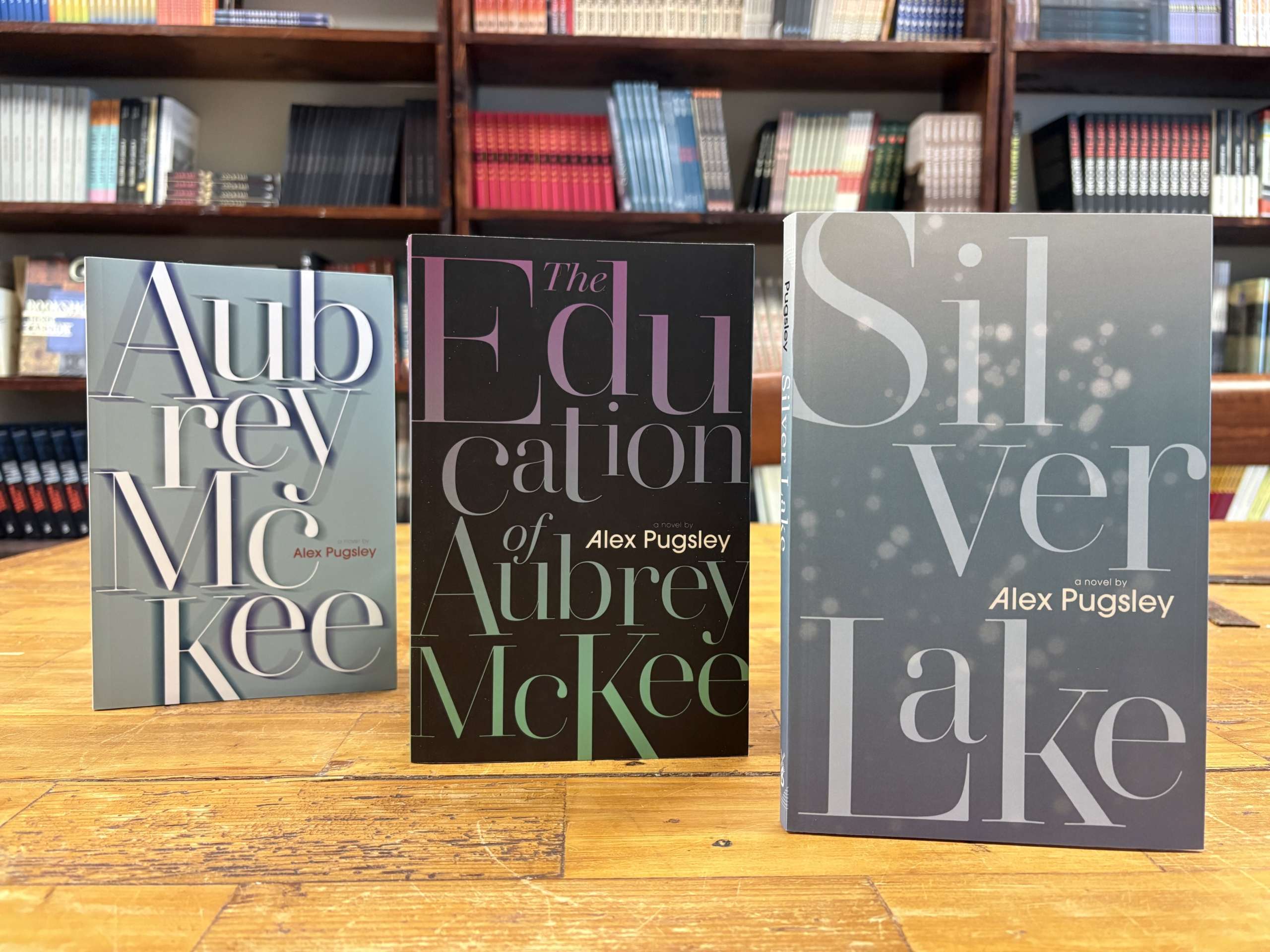
Photo: The first three books in the Aubrey McKee series, in order: Aubrey McKee, The Education of Aubrey McKee, and Silver Lake by Alex Pugsley. Series design by Ingrid Paulson.
I have been referring to Durrell’s much touted pseudo-lyrical Quartet because in stark contrast to it a series is now emerging in Canada which is far better written and far more entrancing.
Alex Pugsley’s series is made up of Aubrey McKee (2020), The Education of Aubrey McKee (2024), and appearing in spring 2026, Silver Lake. A subsequent volume, tentatively entitled Mad Hatters, is in progress.
Of the first volume, Aubrey McKee, Nick Mount, the crown jewel of the University of Toronto’s English department, wrote:
Aubrey McKee is a story about growing up mixed up and mixed in with the story of a city. I loved the characters, large and small, the good, the bad, and the weird, which is pretty much all of them: the precociously strange Cyrus Mair, the magnetic Karin Friday, the supporting cast of bullies, dealers, alcoholics, eccentrics, friends, and demented grandparents, and most of all their bemused chronicler, the unquenchable Aubrey McKee. I loved the novel’s quixotically genteel style, Aubrey’s voice, his infectious delight in words and wit and everything and everyone around him. As a story, as writing, as cultural history, it’s easily the best book about Halifax I have ever read or ever will read. My favourite book of the year, highly recommended for anyone who ever knew Halifax or was ever young and confused.
There’s only one other novelist in Canada playing on the same sort of field as Pugsley whose work rivals his and that’s Russell Smith. I still remember the immense pleasure I felt on reading the typescript of his first novel How Insensitive (1994). It is no coincidence. They both grew up in Halifax and have been friends since they were children. Both are widely read. Both have tugged a forelock to Evelyn Waugh and Henry Green.
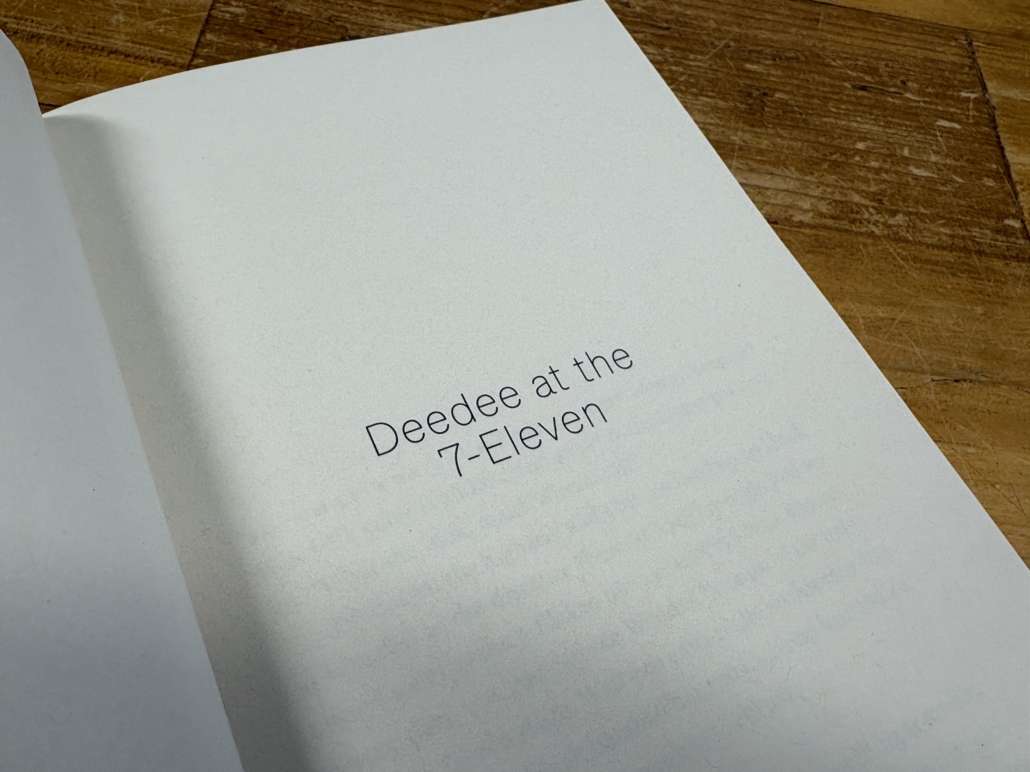
Photo: The chapter title page of “Deedee at the 7-Eleven” from Shimmer (2022).
In 1996 I read in a now-defunct literary magazine, Blood & Aphorisms, a short story, “Deedee at the 7-11” by a writer called Alex Pugsley. The story began thus:
“So what the fuck have you been doing, Veeper?” Wendell’s voice is all loud and angry in the empty parking lot. “What the fuck, man? Where is it?”
I’m out on the highway and I lift my head up and look at Wendell in the distance there. It’s Friday night and we always meet at the 7-Eleven but I guess I’m a little late. It’s pretty dark but you can see Wendell because of the lights of the 7-Eleven store. Well you can’t really see his face, but you can see his black baseball hat and his blond hair and his jacket’s undone even though it’s February.
“Veeper?”
I was startled and enraptured by the writing—so sophisticated—and got in touch with him saying that if he ever had a manuscript I’d be delighted to read him.
Twenty years later he sent me Aubrey McKee and in 2022 Biblioasis published “Deedee at the 7-Eleven” as the lead story in a collection called Shimmer which it indeed did.
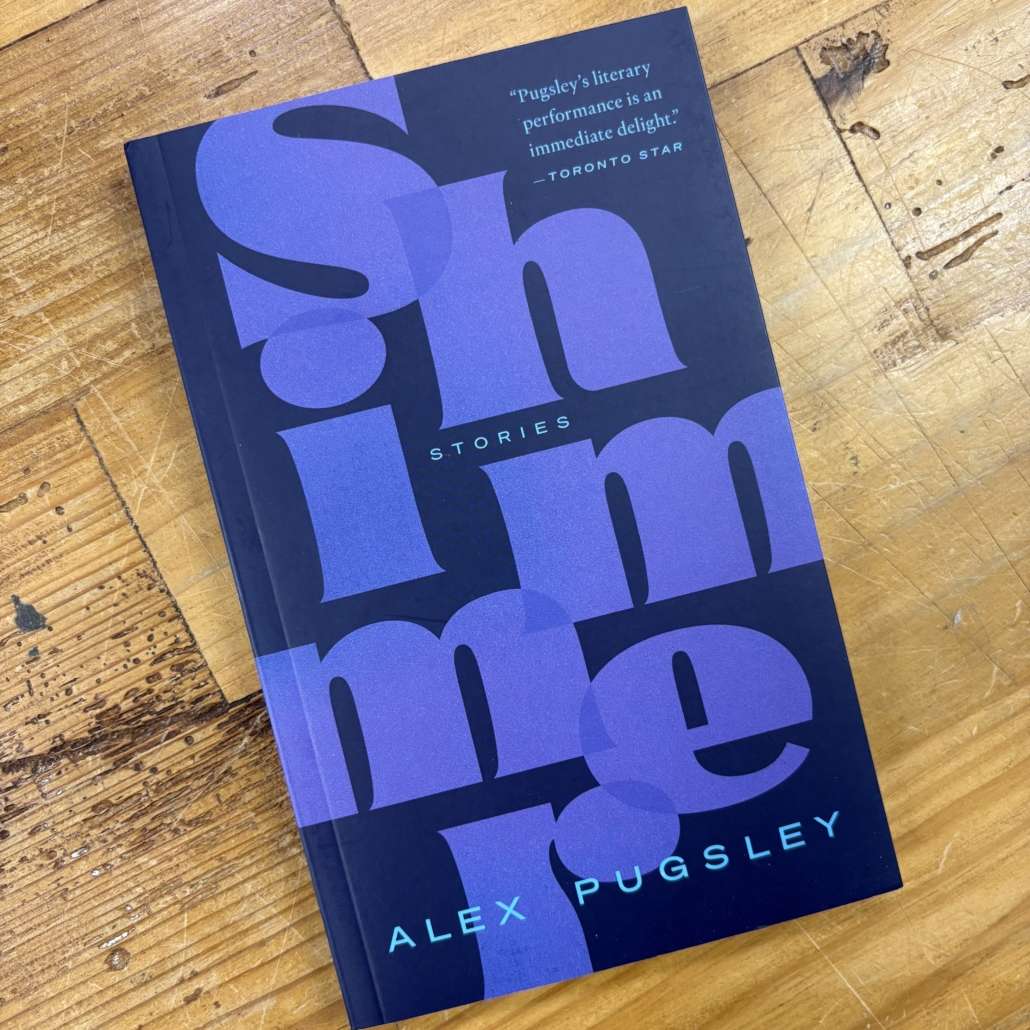
The Toronto Star wrote in review: “Pugsley’s performance is an immediate delight.”
Photo: Shimmer by Alex Pugsley. Cover design by Ingrid Paulson.
Why had I been so rash in 1996 to contact him on the strength of what I think was his first published story? The short answer is that I recognized him within a few sentences. Reading good prose requires us to listen, to listen to the voice or voices, the cadences and vocabulary the voices use. Good writers and good editors are something like cougars, solitary beasts that range over thousands of acres and find each other by scent.
Reading good prose is like touching skin or an animal’s fur. Reading good prose is like touching between thumb and forefinger a hanging rope bearing a great weight, a pallet, say, of concrete blocks; the rope is so stressed, so taut, that one can hear its inaudible hum.
In other multiple-volume works in our time, A Dance to the Music of Time, say, by Anthony Powell, we long for the appearances of the rapaciously ambitious politician Kenneth Widmerpool but even dedicated fans admit that in the twelve volumes there are longueurs.
In Alex Pugsley’s work there are no such patches. His writing sweeps along in a whitewater spate of literary pleasure.
Credit: John Lauener
Alex Pugsley is one of a tiny number of Canadian writers deserving of international reputation. This is extremely unlikely to happen if he remains a writer appreciated at home only by a tiny Canadian coterie. At Biblioasis we take huge pleasure in his prodigious talent. In the wings, awaiting publication, another story collection, Glance, and a ravishing novella, The Hungarian Ballroom.
Talking of Glance reminds me that Alex was floating the idea in recent conversation of doing a Twyla book, homage to the character Twyla, the voice in one of the Shimmer stories.
Here’s how she made her debut in a session with Dr. C.A. Symons, psychotherapist:
“I think we’re living in the Golden Age of Fuck Off. I really do. What the fuck even matters anymore? Because let me ask you a question and I’m curious about this, when you talk to your other patients, who all look fucking crazy by the way. I’ve seen them in the lobby futzing with their Kleenex and how you even talk to those freaks is beyond me—it’s called personal hygiene, people—but how many of your patients are just fed up with the rest of the world? Because you know how on your laptop the X that appears in the corner of pop-up screens? I just want one of those. But for other people. So I can click on the X and they disappear and go back into the darkness. Do you know what I mean, though? What is it with people? Ah, I fucking hate this week.”
Pugsley’s writing is obviously in company with that of Munro, Gallant, Norman Levine, Richler, Faessler, Blaise, Rooke, Russell Smith . . . a writer to be relished, one of Canada’s literary adornments.
John Metcalf Senior Editor at Biblioasis
In good publicity news:
Cherry Beachby Don Gillmor was reviewed by Margaret Cannon in the Globe and Mail: “This is one of the best Canadian crime novels of this or any year . . . Toronto now takes its place with Los Angeles, New York, and Boston as a character in the action and it’s great.”
The Given World by Melissa Harrison was reviewed by John Self in The Times: “One of the things Harrison does well is express the experiences of rural life, human and animal. Her depictions come to life. A robin “tremulously releases a trickle of song”; when church bells ring, we hear “the notes complicating themselves into a kind of ecstasy before falling back and untangling again”. These are descriptions that change how you see and hear things in the real world.”
Heaven and Hell by Jón Kalman Stefánsson (trans by Philip Roughton) was reviewed by Joy Williams in Book Post: “A perfect little novel . . . enthralling, seductive . . . Heaven and Hell embraces and defies the categories of story—adventure, historical, romance, ghost, metaphysical.”
CBC Ideas aired an episode dedicated to the books, including a final interview between Elaine Dewar and host Nahlah Ayed, and coverage of the book’s Toronto launch last month.
Reviewed in Publishers Weekly: “This riveting blend of exposé and memoir from the late Canadian journalist Dewar (The Handover) contends with the abusive experiments conducted on Indigenous people in Canada’s residential schools and segregated hospitals.”
Reviewed by Sheilla Jones in the Winnipeg Free Press: “Dewar’s writing is engaging . . . It is an apt final story for a tenacious investigative journalist who dared to open a door of revelation.”
Silver Lake by Alex Pugsley was featured on the CBC Books list of “40 new Canadian books to check out this May.”
https://www.biblioasis.com/wp-content/uploads/2024/08/unnamed-scaled.jpg6172560biblioasishttp://biblioasis.com/wp-content/uploads/2014/12/BIBLIOASIS-Logo-500x500-White-300x300.pngbiblioasis2026-05-15 16:24:542026-05-15 16:25:31John Metcalf on Alex Pugsley
An excerpt from one of the last interviews with Elaine Dewar
I was heading down I-75 in Michigan on a short family vacation almost four years ago to the day that I am writing this note when my phone rang. It was Elaine Dewar. She’d been contacted by an Indigenous psychologist and teacher of Native Studies, Roland Chrisjohn, who had worked on the Truth and Reconciliation Commission, and he had urged her to investigate what he claimed were a series of unethical experiments conducted on Indigenous students by McGill psychologist Ewen Cameron as part of MK-Ultra. I was almost embarrassed to admit that I had no idea what she was talking about. She filled me in on the background. Her nose was tingling, she said; she could smell a big story, and though she wasn’t yet exactly sure of its contours, she knew she was on the cusp of something important. I had already worked with Elaine on two previous books and I knew enough to trust her instincts. I told her to keep at it and to let me know if she discovered anything.
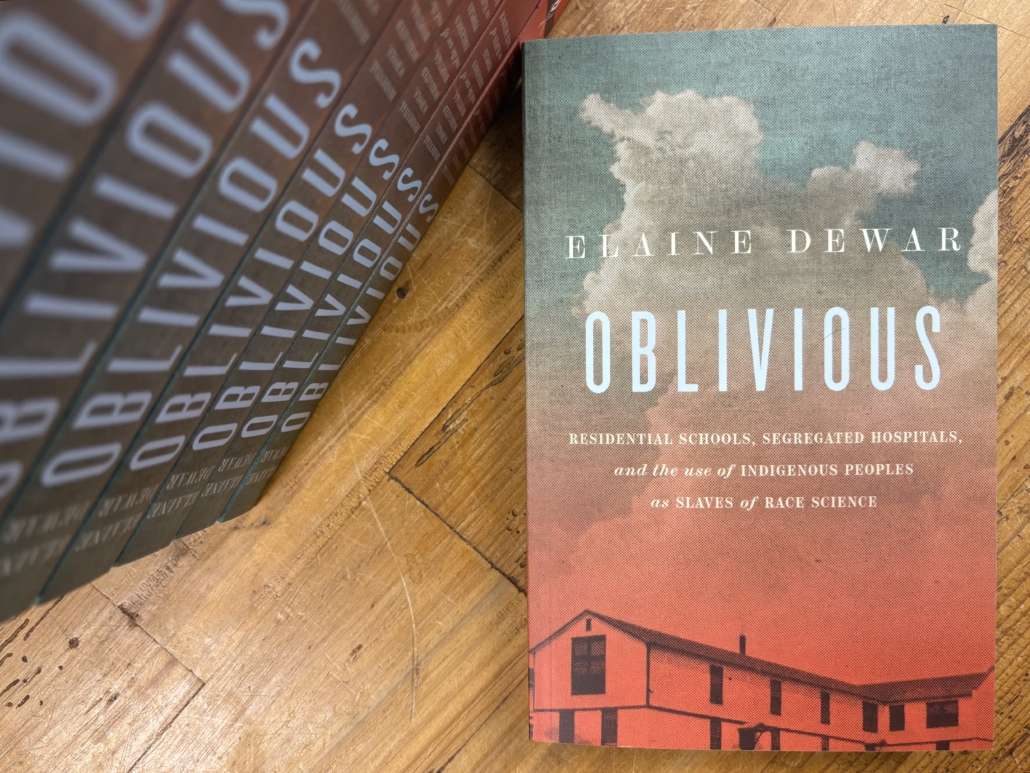
Oblivious: Residential Schools, Segregated Hospitals, and the Use of Indigenous Peoples as Slaves of Race Science by Elaine Dewar. Cover designed by Ingrid Paulson.
What Elaine discovered is the subject of her final, most personal, and arguably most important book, Oblivious: Residential Schools, Segregated Hospitals, and the Use of Indigenous Peoples as Slaves of Race Science. If she found no evidence that Ewen Cameron conducted such experiments on Indigenous students, she found ample evidence that a range of unethical and race-based experiments had been performed over several decades on large swaths of Canada’s Indigenous population, often under false pretenses, dangling health care as a lure to command obeisance. As she dug, she also learned about the segregated Indian hospital system, which brought her back to her childhood in Saskatchewan as the daughter of a doctor, and challenged her to question how it is that she had remained so oblivious to what was happening to Canada’s Indigenous people for so long. So Elaine turned her fierce journalistic eye on herself to fact-check what she knew, what she should have known, and what governmental and psychological machinery had contributed to her own (and all of our) obliviousness in what she came to think of as Mississippi North.
The resulting book is many things: it’s a memoir of a young Jewish girl who grew up in the post-war prairies—the best place and time to be Jewish in the history of her people—and the story of how she became one of the fiercest investigative journalists this country has seen. It’s also an investigation into decades of unethical race-based experiments conducted by leading academics, institutions, and the government that did irreparable harm to Indigenous communities. It’s an investigation into the segregated Indian hospital system which existed in Canada for most of the twentieth century and still remains largely unknown outside of academic study; and it reveals that we gave control of substantial parts of Indigenous healthcare in the country between the mid-50s and 70s to a former Nazi doctor immersed in that regime’s ideas of hygiene, who came to the country in the early 1950s as a farm labourer before getting his accreditation and heading to the North, where he wielded tremendous authority over Indigenous people. It’s a book about the serial betrayal of trust, and the damage that continues to the present day as a result of it; and what must be done to acknowledge it if we’re ever going to repair the relations between Canada’s Indigenous people, our institutions, and the rest of our population. And perhaps most importantly, it’s an investigation into what she calls variously the machinery and architecture of obliviousness, the policies and beliefs and institutions and stories that allowed people not to see, or to quickly forget, the evidence that our country was complicit in the genocide of its Indigenous people.
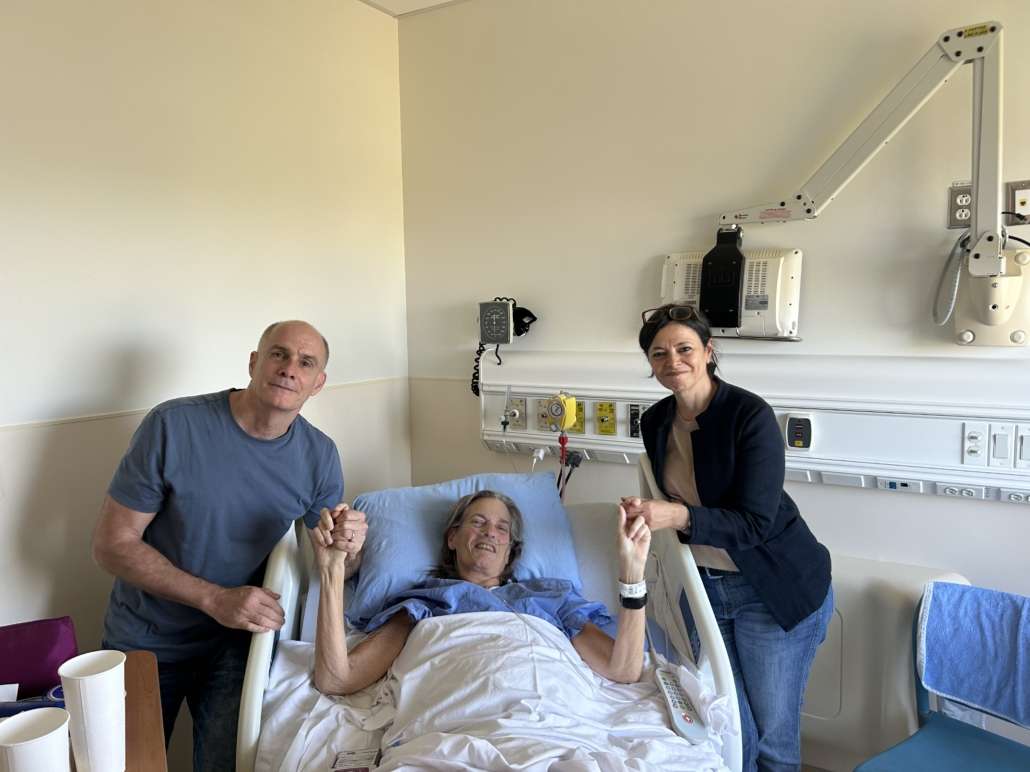
Photo: Elaine Dewar in hospice, with Greg Kelly and Nahlah Ayad from CBC.
Elaine Dewar died after a short battle with an aggressive cancer in September 2025. I went to Toronto to work with her in hospice to finalize editorial before she ended her life via MAID; working with her over those days was one of the greatest and hardest pleasures of my professional life. I try to keep her example front of mind when I feel overwhelmed: her intelligence, care, humour, and rage at injustice continued until the end. As did her faith in her readers. It was you, about to embark on this, her last book, which provided her solace; that she’d been given enough time to do this necessary work and lay out her case. In this way, Oblivious is both a private and public accounting. Like Elaine, I too place my faith in you, and together this book will teach us to face up to what most of the time we’d prefer not to see, in the perpetual hope that we can together continue to move the needle in the direction of justice.
With respect and appreciation,
Dan Wells Publisher
Don’t miss our Toronto launch of Elaine Dewar’s Oblivious next week (April 29, at 6PM) at Massey College.
Below is part of an interview between Elaine Dewar and friend and journalist Marci McDonald, recorded on September 15, 2025.
MM: How did this whole thing begin?
ED: I got an email from a guy named Roland Chrisjohn who, in his younger years, was one of the founders of AIM Canada. So, back in the 1970s, he was already an activist with regards to Indigenous people. He sent me an email demanding that I investigate the genocide of Indigenous people in Canada by the government of Canada. And I sort of looked at the email, and the question in my head was: “Delete or not delete?” Is this just another guy who has questions he can’t resolve for himself and can’t let it go, or is this a guy who actually knows something? And it turned out he knew quite a lot, starting with what a genocide really is. So that’s how it started: one email, one query.
What was the most shocking revelation to you?
That there was a whole group of so-called “Indian hospitals” that were set up, mainly in the west between 1945 and 1981, where Indigenous people were treated in substandard conditions, by doctors and nurses who often did not have qualifications. And that I had walked by one of them probably every day for two weeks and never noticed the word “Indian” hospital—as in, segregated hospital—at all.
It said that I lived in a segregated society that was so perfect in its segregation that I never noticed. It resonated with everything going on in the United States with the civil rights movement, with what happened to Jews in Germany between 1933 and 1945 . . . It was inconceivable to me that we lived in the same society.
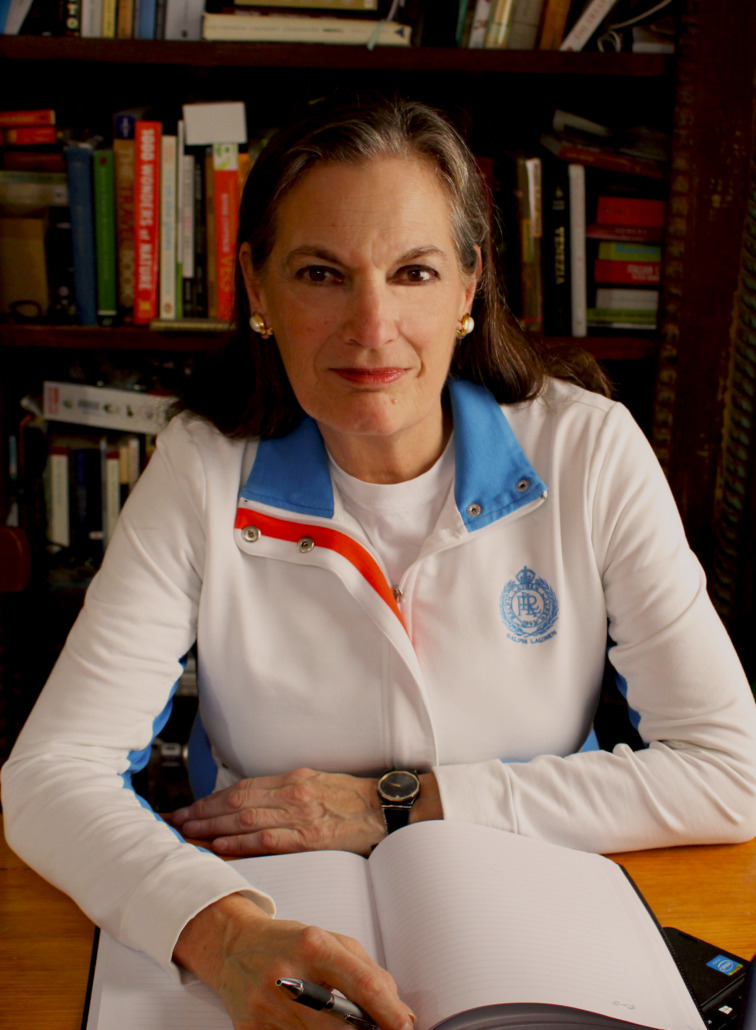
Elaine Dewar. Credit: Danielle Dewar.
Now, this began with an assignment to find out if there was a genocide, which is a very charged word. And before I read your book, I didn’t know that it was coined in relation to the Holocaust. At what point did you realize that these two seemingly disparate narratives had a link?
The thing that disturbed me about the use of the word [genocide] was numbers. I was looking at 6 million people, at least, who were murdered between 1942 and 1945. Compare that to what the Truth and Reconciliation Commission put forward as the possible numbers of deaths in the residential schools: between 3,000 and 4,500 over the course of 150 years. So 6 million in 3 years or 3,000–4,500 across 150 years. As soon as I looked at these numbers, I thought we can’t be talking about the same phenomenon. And yet, when I read John Milloy’s book—which he drew from the research he did for the Royal Commission on Aboriginal Peoples in the 1990s—the meanness, the torture, the unbelievable cruelty of the residential school system really began to change the shape of the ideas in my head about what a genocide is.
It also mattered that the Truth and Reconciliation Commission called it a cultural genocide, which is not a term in Genocide Convention law. Cultural genocide, in [Milloy’s] view, was a way of escaping the truth. I wasn’t so sure about that, because Lemkin—who actually created the word—his view was that the genocide in Germany began with the rules and laws and regulations post the Nazi election of 1933, that cultural genocide is the precursor of physical genocide. And what Canada was doing was wiping out the cultural history, the sense of self, that makes Indigenous people Indigenous people. The point was to get rid of all of it, to turn them into taxpaying, non-revenue-receiving Canadians.
So that’s a theoretical / thematic link. When did you find there might be an actual link?
I was reading up on the science done by Nazi physicians on Jews, Slavs, prisoners of war. And what I saw was a level of cruelty that was just unspeakable. But not that far off the beaten path, in northern Canada . . . entire Indigenous communities became human subjects. The lure of medical care was used to allow physicians, physical anthropologists, nutritionists, to have free access on the grounds that they were acting in a beneficent way.
They [Indigenous people] were specimens, slaves of race science . . . No permissions. We know, from the survivors, that they thought they were just being treated for medical issues . . . except that it hurt.
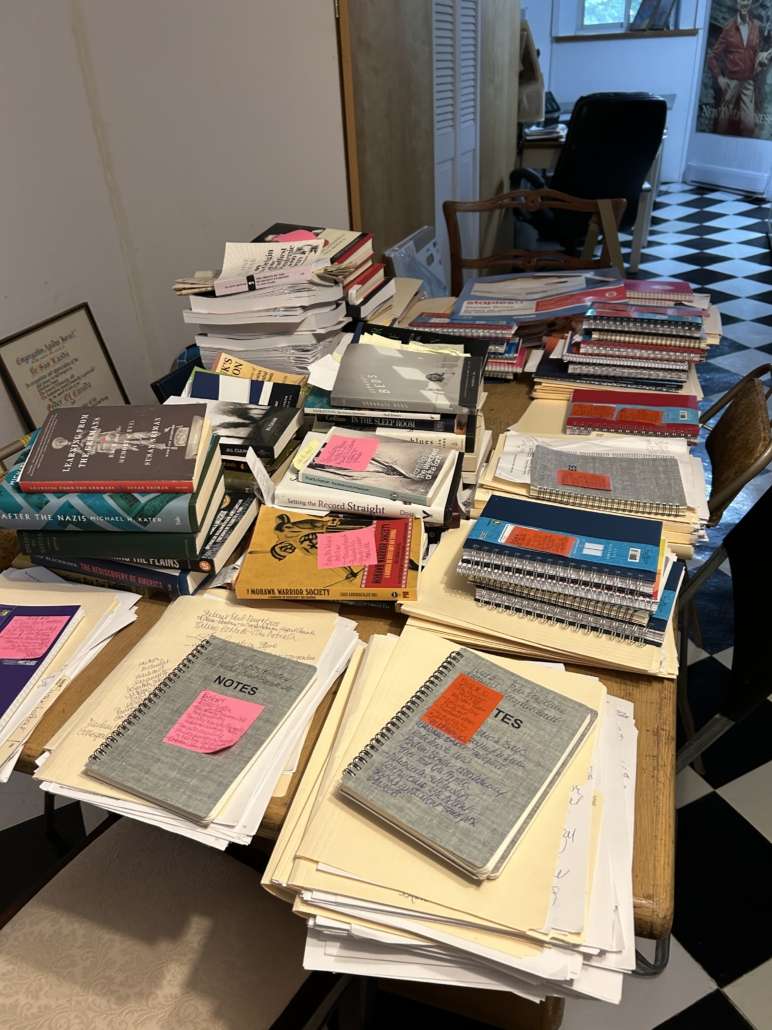
Photo: Elaine’s office table, with her research for Oblivious lined up chapter by chapter.
What about Otto Schaefer?
Otto Schaefer had a very interesting history, which he tried very hard to cover up. He was studying as a medical student in Nazi Germany, at Heidelberg. He studied under the leaders of Hitler’s hygiene program, which was their science of race. And their race science was based on the notion that Aryans were somehow the top rung of human beings, and everybody else was way down below, and at the very bottom were what were called Untermenschen, meaning ‘sub-humans’. Jews are described as sub-humans; Slavs are described as sub-humans; and to sub-humans, in Germany, anything could be done.
Photo: Otto Schaefer.
And Schaefer came to Canada why?
He apparently read Rasmussen and Boas, who were early investigators of Inuktituk societies. And he told everybody that that’s what he really wanted to do: to come to Canada and study the Inuit.
He ends up, within two years, in charge of the Arctic, in charge of medicine delivery to both Dene and Inuit communities across the North. By 1974, I believe, he’s in charge of research all across the Arctic for the government of Canada.
And he gets an Order of Canada the same year as my mum and dad. That was one of the more disturbing moments: when I realized it was the same year [1976].
This ends up as an indictment of the Canadian medical society. Willful ignorance, willful blindness . . .
Racism. The notion that some people are better than others. That some people deserve protection, and others do not. The CMA apologized to an Indigenous community in British Columbia, and I read the documents that they posted to explain the nature of their apology. What they clearly did was go through their own archival material to see how often they asked any questions about the health of Indigenous people, and what was being done and not being done. They missed almost all of it: they didn’t ask any questions. I don’t know how much deeper of an indictment I can come up with than that.
What do you want people to take away from this book?
That we can’t be oblivious to each other, that we have to respond to suffering. We have to look at it, in its face, and respond to it, and not run away.
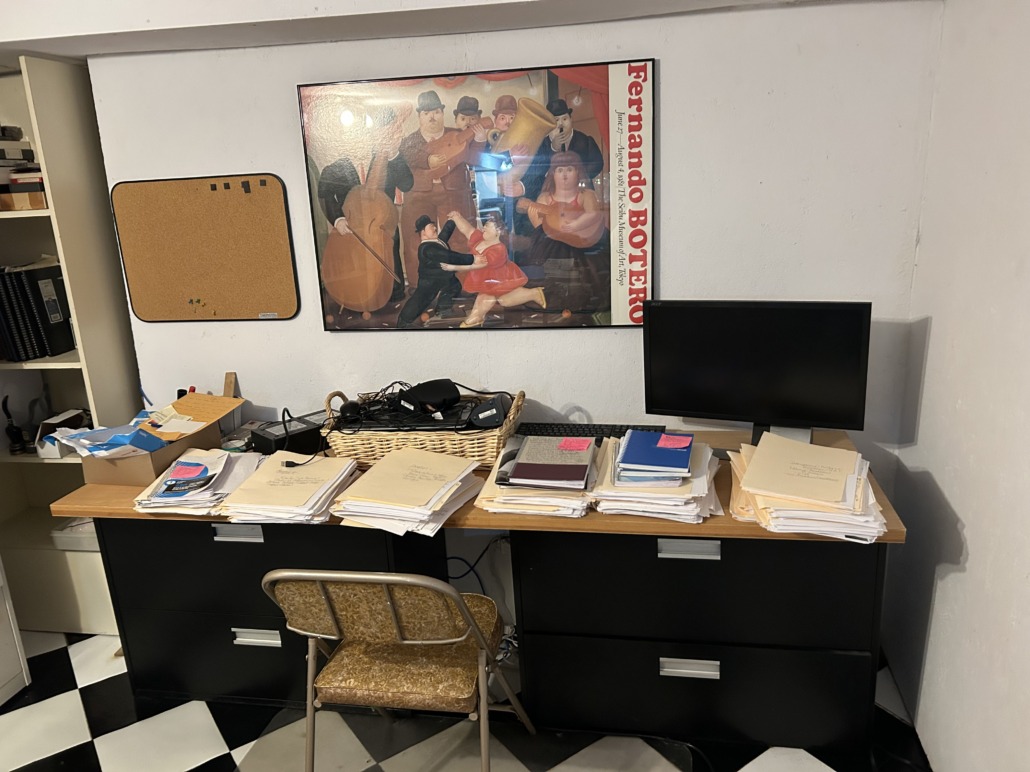
Photo: Elaine’s writing desk, with more chapters of Oblivious.
You talk about the mechanics of obliviousness. What does that mean?
One of the things I was really anxious to understand: Was any of this written about anywhere? And two things were just astonishing to me. One: there was almost no actual history written about Indigenous peoples in this country until John Milloy followed on his research for the Royal Commission on Aboriginal Peoples. And that’s in the 1990s. And the other thing: What about my senior colleagues? Did they write about this? Did they investigate it? Did they do anything about it?
The mechanics of oblivion and obliviousness seem to me about leaving things out of the narrative. And by leaving things out, you create the capacity to ignore what’s in front of your face. It’s not written about, not in a really thorough way. It’s not described with language particular to us. There is no history; there’s nothing until the 1990s.
So, all those years I’m oblivious, it’s because we’re leaving things out of the story. Because they’re uncomfortable.
So how do we change that?
We better be uncomfortable. We better be better journalists. We better remember who’s afflicted.
In good publicity news:
Smash & Grab by Mark Anthony Jarman was reviewed in The Miramichi Reader: “You may be caught in the middle of a Jarman story wondering what exactly is going on, but you will never be caught in the middle of a Jarman story bored. Jarman’s language here, as always, is pyrotechnic.”
The Notebookby Roland Allen got a shout-out from Ryan Holiday on MSN NOW, as part of his recommended reading list.
Sacred Rage by Steven Heighton was reviewed by Anne Logan in I’ve Read This: “I think of Heighton as a true artist in every sense of the word . . . It’s a fitting tribute to a writer lost too soon.”
https://www.biblioasis.com/wp-content/uploads/2024/08/unnamed-scaled.jpg6172560biblioasishttp://biblioasis.com/wp-content/uploads/2014/12/BIBLIOASIS-Logo-500x500-White-300x300.pngbiblioasis2026-04-24 16:42:532026-04-24 16:43:30The Mechanics of Obliviousness
An interview with David Macfarlane, author of On Sports
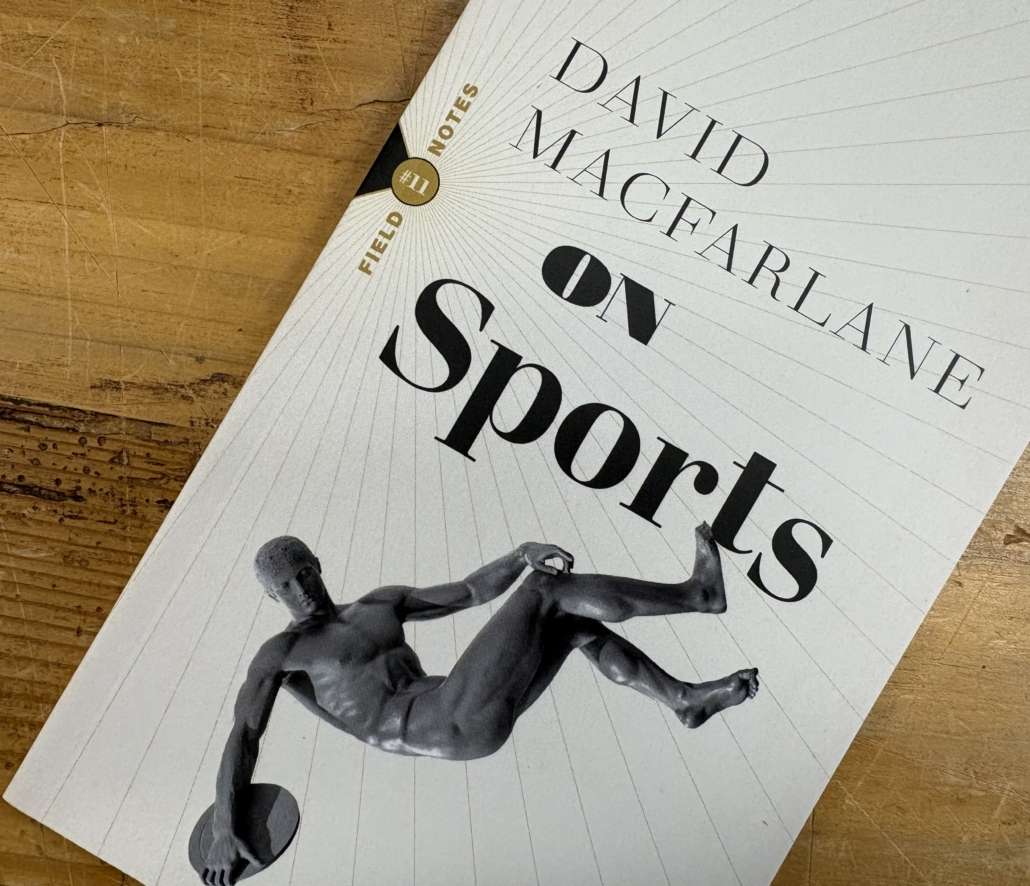
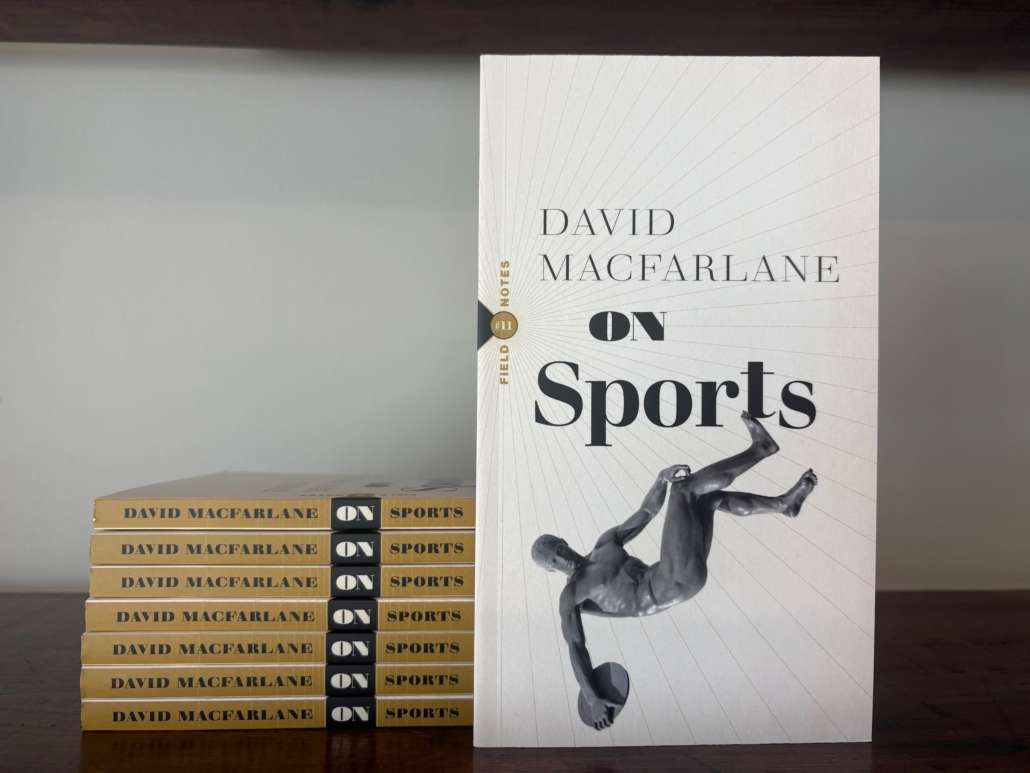
Photo: On Sports by David Macfarlane. Cover designed by Ingrid Paulson.
The other week, in The Tyee, the writer Cole Nowicki wrote an excellent essay about sports and money, using David Macfarlane’s new book, On Sports, as a way to explore the ineffable magic of sports, fandom, and the ways money spoils the fun. It’s a great piece and I recommend you all read the full thing, but I’ll highlight this lovely bit of praise from Nowicki because it describes exactly what I love about this book:
“On Sports is a showcase of [Macfarlane’s] breezy control over the nuts and bolts of professional and amateur athletics, their cultural import as well as the rhythms (and seasons) of sports writing.
The book makes its most memorable connections when Macfarlane, with his often beautiful prose, tunes into that deeper emotional frequency—the personal, communal, spiritual and profound—that sports are uniquely capable of hitting.”
On Sports eloquently examines the ways money has worsened our enjoyment of sports today, but it’s Macfarlane’s personal anecdotes, about his childhood and his days as a sports reporter, that make this a fun and special read.
I was reminded this week that the NHL playoffs start tomorrow. And I think On Sports is the perfect book to read during the game’s commercial breaks. Its chapters are short enough and Macfarlane’s words are infinitely more engaging than the gambling ads they’ll push on you.
I had the chance to ask Macfarlane a few questions about his book and you can read his responses below.
Can you start by telling me a bit about yourself and how this book came about?
From (approx.) 1980 to 2010 I worked primarily as a magazine/newspaper writer. I covered a wide range of subjects, but always enjoyed sports-writing assignments—even winning a few Sports Writing awards over the years. I’ve admired sports writers almost as long as I’ve admired athletes.
This is a book about your love of sports but also your discomfort with them today, primarily because of money (the gambling, the ticket prices, the salaries). Of sports, you write that “Athleticism is what redeems them. And money is what fucks them up.” What do you think is the worst way that money has fucked them up? What have we lost because of it?
No shortage of possible answers, but I guess it has to be gambling that is the worst—gambling as condoned by professional sports leagues and broadcasters. There are lots of other money-related problems: the cost of tickets; the demands of advertisers; the gap in earning power between male and female pros. But gambling is the nasty genie that we won’t get back in the bottle. I hope I’m wrong, but I think professional sports will be largely about gambling in the future. This is an enormous change. There was a kind of purity to sports—pure in that athleticism was the most important aspect. No more.
In the book you mention that the biggest story in sports today is the popularity of women’s sports. Why do you think that is? You also mention that going to a PWHL game was the most fun you’ve had recently at a professional game. Is because they’re not as fucked up by money yet, or is it something else?
It’s an over-used term, but I think toxic masculinity plays a big role in professional sports. But I don’t think the source, at least not the primary source, is the athletes. My theory (based entirely on anecdotal evidence) is that it is the ring of men (always men) who always surround athletes—the broadcasters, the advertisers, the publicists, the agents, the commentators, the journalists, the managers, etc.—who propagate and celebrate the bro myth. Because it gives them the kind of narrative hook that salesmen need. And perhaps there’s nothing inherently wrong with the bro myth other than how tedious it gets, but I find that it gets very tedious indeed. It was a great (and unexpected) relief to go to a PWHL game and discover that it was gone—and that good, exciting hockey remained.
Toronto readers can meet David at his other launch on May 7 at The Supermarket alongside Don Gillmor (Cherry Beach).
Can you talk about seasons? The book is broken up into seasons, and I know your friend, the writer Alison Gordon, who is mentioned throughout the book, was adamant about baseball never going over its regular schedule. And as a kid, it seems as though you would measure time by what sports you were playing. Why did you decide to structure the book as different seasons? And how important are seasons for how we think about sports?
To be born when I was, into a middle class North American family, made the overlay of sports on the calendar almost automatic. And that’s simply because kids played outside, and the weather dictated our recreational activity. Football, hockey, baseball were our seasons—summer being less single-minded in its athletic presentation. In this way, sports were almost always connected to weather. This is a deep, almost spiritual connection, and Alison was offended that baseball saw fit to extend its season, for no reason pertaining to baseball, into a season that had nothing to do with curve balls and double plays. No ball player and no fan in (let’s say) 1954 ever thought that the season was too short. It wasn’t. Like the dimensions of a baseball diamond, it was perfect. To malign perfection, for the sake of money, is (so Alison believed) a sin.
You mention that part of what you loved most about sports was reading about the games in newspapers, and you talk a lot about your favourite sports writers in the book. I see On Sports as kind of an homage to great sports writing. How did those sports writers influence how you watch and/or think about the games? And how have they influenced your own writing?
Around the time that I was starting to think I wanted to become a writer, I began noticing examples of what I now categorize as “good writing.” I’m not quite sure what that is in its specifics—some combination of cadence, clarity, wit, and love of language—but it was sports writing that first drew my attention to skillful, informative, entertaining prose. Of course, that may have had something to do with the fact that sports writing was almost all I was reading at the time. Nonetheless, until I hit James Bond, there were no books I found more exciting (thank you public library) than books about players, or teams, or coaches or games. And when I began writing for magazines, it was reading Roger Angell on baseball and Herbert Warren Wind on golf and John McPhee on tennis (all New Yorker writers) who opened the possibilities (for me) of what today is called long-form journalism. And I ended up having the same experience as a writer that I’d had as a reader. After a slog of political and business profiles, I was assigned a story on Maple Leaf Gardens. And writing about sports reminded me that writing (like reading) can be fun.
Smash & Grab by Mark Anthony Jarman was reviewed in the Literary Review of Canada: “Jarman gathers disparate threads, memories, and digressions into something greater than the sum of its parts. As much as the outside world may disturb, in these pages, readers will find a rich inner life on full display.”
Who Else in the Dark Headed There by Garth Martens was also reviewed in the print Literary Review of Canada: “The language is sensory, emotive, and inexplicably captivating. Arresting fragments emerge from a relentless invocation of half scenes, stitched together with the singular logic of poetic memory (which is to say, with mystery.)”
The Passenger Seat by Vijay Khurana was reviewed in The Fiddlehead: “The performative nature of masculinity is something that Khurana captures with skill . . . The Passenger Seat, while no light read, is a genuine artistic statement—a simple story with deep resonances. While Adam and Teddy take the road to nowhere, this story might take the rest of us somewhere, somewhere better.”
Best Canadian Poetry 2026 edited by Mart Dalton was reviewed in The Miramichi Reader: “Best Canadian Poetry is an annual treat. I love the cream-skimmed aspect, the cross-section of what people are thinking about and how they are expressing it. It’s a sort of snapshot of the Canadian poetic zeitgeist.”
An interview with Don Gillmor, author of Cherry Beach
Cherry Beach by Don Gillmor. Cover designed by Kate Sinclair.
Don Gillmor’s latest book—a layered literary crime thriller called Cherry Beach—comes out next Tuesday and has already been leading our Canadian sales for the past couple of weeks. It recently made the CIBA Booksellers’ List—a list of favourite spring releases voted on by indie Canadian booksellers. It’s always extra special when indie bookstores vote for books by indie presses, and honestly kind of annoying when they don’t. (6/20 of the books on this spring list are indie, but who’s counting?)
Cherry Beach is one of those novels that succeeds at being for all kinds of readers. Gillmor, who’s written on a wide range of topics over the course of his career—as a journalist, as well as a novelist—knows how to fill a story with the tidbits of information that make up the substance of real life. I learned some Toronto geography; I also learned how to make a nice jalapeño marinade for my pork tenderloin. On the one hand, this is a propulsive, gripping detective story. On the other, Cherry Beach has the qualities I love of a plotless literary novel, including the interiority of a lonely, slightly-delusional protagonist I can relate to.
Readers have been comparing Cherry Beach to The Wire for the ways it characterizes a city (Toronto in this case, instead of Baltimore), and the ways it balances racial and economic tensions while gradually revealing a complex, shadowy network of crime. But it’s also interesting to me that a 263-page book could even be comparable to a show that takes approximately 60 hours to watch. Yet it is. Gillmor doesn’t waste space, and I’m still thinking through some of the book’s connections, as the intensifying summer heat of the novel seeps into the hours spent away from it.
I had the pleasure of sending Don Gillmor a handful of questions about Cherry Beach, which he graciously answers below.
You’ve written many kinds of books (literary novels, a memoir, books for children, a field note about oil, a fictionalized history of Canada). What made you want to write a crime novel?
I’ve always wanted to write a detective novel. In university, I began reading some of the classic detective novels from the 1930s, 40s and 50s—Dashiell Hammett, Raymond Chandler, Ross Macdonald, Chester Hines. It was partly a relief from Eighteenth Century British Literature courses. At the time I thought it would be interesting to write one. It took me a while to get around to it.
How much of Cherry Beach is based on true events and real people?
There are parts of the novel that are informed by, if not based on, real events or people. Years ago, when I was doing a lot of journalism, I wrote an article for Toronto Life on 51 Division, which was then sometimes called the Punishment Station because bad cops from other divisions were sent there. At the time, they were also experimenting with community policing—mostly young cops on bicycles engaging with the community. So there was a clash of cultures—two very different views on policing. To a degree, I revived that idea in Cherry Beach. I went out on the night shift with the bicycle cops and there are a few scenes that are taken from that experience, including the opening conversation with the sex worker. I also went out in police cars with the hardcore cops in the division. An interesting perspective.
I wrote a magazine article that took me to Kingston, Jamaica, looking for a suspected murderer (I didn’t find him), but the trip into the red hills and the conversation with the Justice Minister are based on my own experience there.
And Torontonians may recognize aspects of a former mayor.
Toronto readers! Don’t miss Don’s launch at The Supermarket with fellow Biblioasis author David Macfarlane (On Sports).
In Cherry Beach, Toronto is essentially the main character, and we witness its character development throughout the book. How was writing the character of Toronto different from writing a human character (or was it the same)?
I wanted the city to be a large part of the book. In part because it’s a complex place, claiming to be the most multicultural city in the world. So we’re sort of a global experiment. In many ways, we’re a grand success. But there remains a lot of work to be done. There are issues of affordability and racism, and our traffic is amongst the worst in North America.
As a reader, I always enjoy seeing cities from a literary perspective, whether it’s Dennis Lehane’s Southie neighbourhood in Boston, or Elmore Leonard’s Detroit, or the Venice of Donna Leon. So I wanted to look at Toronto from the perspective of its extremes—the privileged and the underclass. There was a time when the richest and poorest neighbourhoods (Rosedale and Regent Park respectively) were essentially adjacent to one another, though the area has since gone through major changes.
Don Gillmor’s other book with Biblioasis, On Oil, was recently announced as a finalist for the Writers’ Trust Shaughnessy Cohen Prize.
Detective Jamieson Abel is a great cook, and this book is full of wonderful recipes. I’m interested to know more about your decision to include this aspect of his character.
It’s mostly an extension of my own interest in cooking. I learned to cook as a matter of survival—a series of girlfriends with many wonderful qualities, but no interest whatsoever in cooking. So I started to learn. Cooking opens up a world. I think it’s one of the reasons for the success of cooking shows; they form a kind of community and bridge cultures. Abel is quite isolated—a single, middle-aged man who has alienated much of the department he works for. Cooking is a way for him to engage with the world.
What were some of your influences for Cherry Beach, literary or otherwise?
There are two different directions as far as influences go. On the one hand, Jamieson Abel is (sort of) in the tradition of what were once called hard boiled detectives—Ross Macdonald’s Lew Archer, Chandler’s Philip Marlowe et al. But there is also a tradition of literary novelists like Kate Atkinson, John Banville, and Michael Redhill, who all write detective novels as well. I understand the appeal of crime fiction for literary novelists, but it presents certain challenges as well. As a rule, literary novelists don’t have to concern themselves with plot. But with crime fiction, you need plot, and it has given me a fresh appreciation for those writers who do it well.
Bonus pic of our office dog Sammy with his copy of Cherry Beach!
In good publicity news:
Cherry Beach by Don Gillmor has been included in the CIBA Spring 2026 Booksellers List: “If the dayglo film-filtered cover of an aging high rise on a summer day doesn’t intrigue you, maybe a comparison to The Wire but ‘make it Toronto’ will do the trick. Cherry Beach is a propulsive genre mash-up of Canadian crime and literary fiction.” (Robyn York, Beach Reads Bookshop)
On Sports by David Macfarlane was featured in The Tyee: “A showcase of [Macfarlane’s] breezy control over the nuts and bolts of professional and amateur athletics, their cultural import as well as the rhythms (and seasons) of sports writing.”
Every Time We Say Goodbye by Ivana Sajko (trans. Mima Simić) was reviewed in On the Seawall: “Mima Simić translates all of this with clarity and verve . . . alternately riveting and heartbreaking.” The book was also featured in Electric Lit’s list of 15 Must-Read Small Press Books of Spring 2026: “Every sentence sings with emotional resonance and is imbued with the protagonist’s regret . . . a master class in both economy of language and expansiveness of feeling.”
Decadence by Richard Kelly Kemick was reviewed in Publishers Weekly: “Kemick’s wit and curmudgeonly self-regard is offset by his palpable adoration of his partner, Litia, evoking the work of David Sedaris. It’s a weird and rewarding ride.”
https://www.biblioasis.com/wp-content/uploads/2024/08/unnamed-scaled.jpg6172560biblioasishttp://biblioasis.com/wp-content/uploads/2014/12/BIBLIOASIS-Logo-500x500-White-300x300.pngbiblioasis2026-04-10 12:56:532026-04-24 13:06:07Night shift with the bicycle cops
Poems from Who Else in the Dark Headed There by Garth Martens
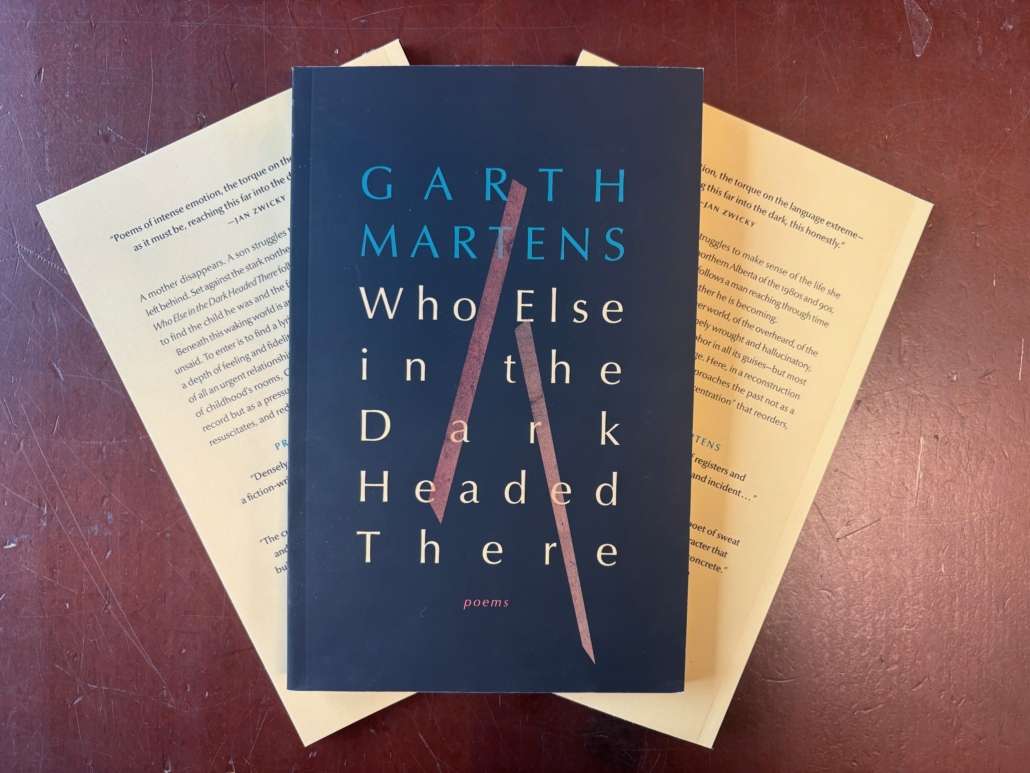
Who Else in the Dark Headed There by Garth Martens. Cover designed by Ingrid Paulson.
Since it’s Poetry Month, and we’re standing at the threshold of the long Easter weekend, I want to write a little something in defense of literary suffering.
So much of my job involves trying to get people to read our books. And there’s always a vague external pressure to swaddle my book pitches in positive language. Readers want hope to shine through our frequently bleak books. And people are often less willing to engage with difficult texts, texts that require long hours alone flailing through another’s dimly-lit interiority. There’s an unspoken publicity agreement that despair, suffering, etc. be made palatable to a potential audience.
Yet literary portrayals of suffering seem valuable and interesting to me regardless of any transcendent qualities the mind feels compelled to impose on them. And what makes suffering interesting to read isn’t its universality: it’s the weird, inaccessible, hyper-particular reaches of a stranger’s consciousness. I want more of that. Not the performative, uplifting attempt to reach as many readers as possible, for a text to be seen as a knowable quantity. I want literature that feels alien, difficult to understand, that I have to circle again and again, banging my head against the walls of, trying to get further in. Earned moments of affinity or empathy feel so much more vital than the stuff popularized in the name of the heartwarmingly universal.
This has nothing to do with needing a little escapism, which is valid. I spend a desperate amount of time, like anyone, trying to put some distance between myself and all reminders of being a body-mind complex hurtling through time. That’s why I watch as much hockey as I do. But the Victoire clinching their playoff spot last night, and the Habs’ six-game winning streak, isn’t what keeps me going. Those are small pleasures—a little thrill for the prefrontal cortex.
What does keep me going, rather, has been consistent my entire life. It’s the unusual, painful companionship I found in Woolf when I was fourteen, or again in the poet Paul Celan when I was twenty-two, or again—just last year—when our managing editor, Vanessa, sent me Garth Martens’ poetry manuscript. It’s something about what happens when I’m alone with a voice that keens its own indescribable aloneness. The ease with which understanding comes—between reader and text, author and world—has so little to do with the kind of affinity that feels miraculous and life-altering.
With that, I’ll leave you with a handful of Garth Martens poems from his forthcoming collection Who Else in the Dark Headed There (April 14). I hope they reach you with the force of their individual darkness, and keep you in strange company over the long weekend.
Dominique Publicity & Marketing Coordinator
Excerpts from Who Else in the Dark Headed There
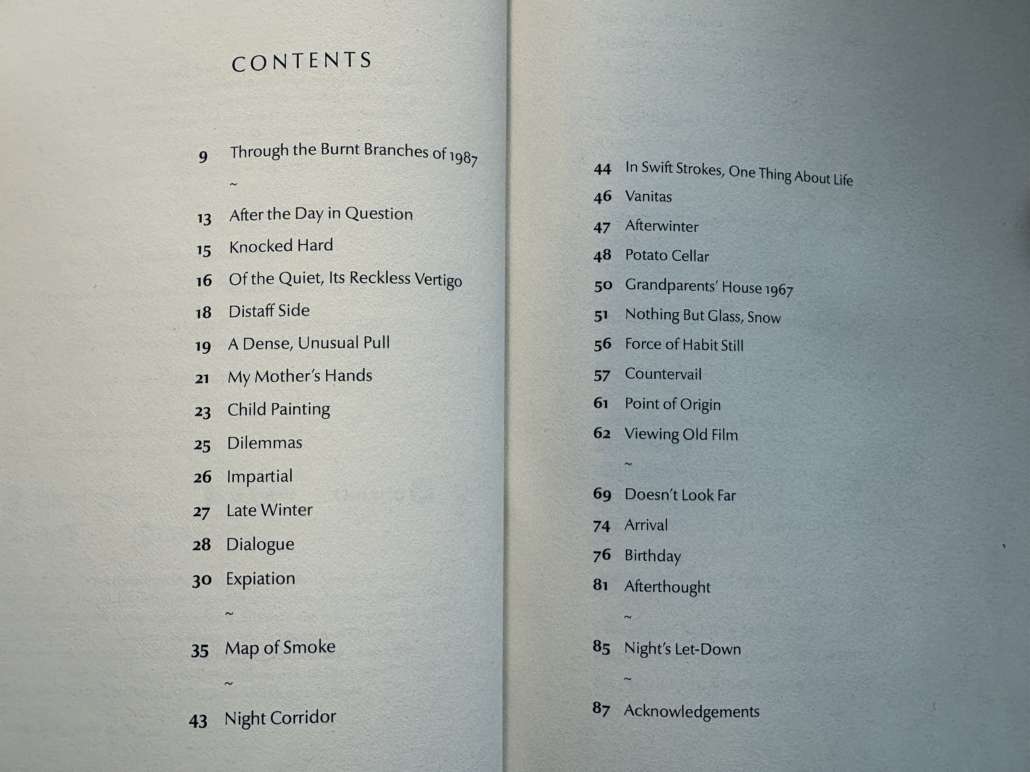
Interior table of contents for Who Else in the Dark Headed There.
Late Winter
Gloved, I undercut the snowcrust, its changeable emergencies, until the shelves fell.
Worlds that mirror this one swung like white revolving doors. Deciduous rods, snow: it lifted higher: higher.
What rough potato overrode the limit of the pail? From what precarity is it chored up?
Ice-strip on the move, on high or on my tongue, not here, but here.
A tug of breath from a tap. A snort through dense hedges. Transfusion of allusive, useless ideas.
Snow leapt and plunged. I waited for the rendezvous. I waited for the switch.
Dilemmas
Nobody asks for them. They come unpermitted. The sickroom
sweats on every hard bud and somnolent, those cut loose by those departed.
With a spade, the boy turns up a tidy padlock of steam.
A sole strand air-slips as through a keyway.
His whole life mist rinses and perspires: rock, barrel, bough. Alters
his world: a nook, a bridge, an apple tree whose full bearings
are shadowless, odd trespasser.
Distaff Side
She left behind a vanity mirror. The boy held it face-up at his chest. Walked without seeing his feet
as if upside down, as if blank, into blurred big blades, chunks of wall. Nauseous.
It bears saying he didn’t need to do it to feel—a rush, out of place or in danger in this house.
This was the closest he got to putting on make-up, erased from the waist down.
In deprived air, he detected heated dust in the drapes, a pang of flight. Wasp-like focus or glare.
From the bay window he beamed drivers. Not to hurt them. To see in their flinch a second face.
Afterwinter
Blowing gas through a wand, I see a fruitfly drift into the seal. I remember canola’s upstart gold flow. It went as far as justified, our one paved road in six directions. Past this, there is of one element not enough and of another too much. Swans in the flooded field. Investors sprinting pints of treacle among tired farmers. Gossip like crushed egg. That too, for hold-outs who refuse their glass of milk. And me? In a near playground a pink, hooded jacket foisted on a bollard like one doubled over in despair. There is inside me a Pillarist who infinitely extends this moment of the gut punch. It’s far from overrated, far from fair. So full of my own blood I am nauseous as anyone who sells too well their steal.
Cherry Beach by Don Gillmor was listed in Toronto Life, and was reviewed in The Seaboard Review: “A largely captivating novel, the sentences by turns clipped and spare or expansive and stunning. And befitting of an author who’s spent so much time in journalism, Gillmor doesn’t pull any punches. The world he gives is an ugly one, much like our own.”
Every Time We Say Goodbye by Ivana Sajko (trans. Mima Simic) was reviewed in roughghosts: “The relentless nature of the narrative style heightens the emotional intensity of this novel, allowing for an in depth portrait of one man’s past and present to emerge in a relatively limited space.”
https://www.biblioasis.com/wp-content/uploads/2024/08/unnamed-scaled.jpg6172560biblioasishttp://biblioasis.com/wp-content/uploads/2014/12/BIBLIOASIS-Logo-500x500-White-300x300.pngbiblioasis2026-04-02 11:57:132026-04-24 12:56:13In strange company
Welcoming baseball season with an excerpt from On Sports by David Macfarlane
On Sports by David Macfarlane (Field Notes #11). Series designed by Ingrid Paulson.
It’s the start of baseball season. I’m sure most of you already knew that. I don’t watch much baseball these days. To be honest, I don’t even really remember the rules, and can’t remember if I ever have. I love the movies though (Bull Durham, Field of Dreams, Angels in the Outfield, etc.) and have seen them countless times. They bring to mind happy memories. As a kid, they inspired me to play sports (badly) and watch games live, which gave me and my friends something to look forward to as the seasons and years went on. We’d rendezvous in the playground to discuss how our team (be it the Winnipeg Jets, Goldeyes, or the Bombers) were doing and what they should be doing better. Like I’m sure many of you have. But that was back then. Today watching pro sports can feel like kind of a drag. Like most things nowadays, too much money and greed has ruined a good thing. Now it’s harder than ever to enjoy sports because of online gambling, the increased cost of tickets to attend a game or even just to stream it, and the noise and spectacle that only distracts you from the game itself in an attempt to keep your attention to sell you more ads.
Something you may not know is that this week also saw the publication of David Macfarlane’s On Sports in Canada (it’s out in the US on April 7th), the latest addition to our Field Notes series. On Sports is a book that responds to our collective exhaustion with the commodification of sports, but in a charming, meandering way. This is a nostalgic book. At times it almost feels like an elegy to a time when watching sports was about the games and the athletes and less about people’s parlays and the TV incessantly hitting you with BetMGM ads. But it’s also rather funny and heartwarming. I found it to be a delightful love/hate letter from someone who cares deeply about sports and the amazing things athletes can do, and who is also deeply disappointed with the commercialisation of competition. Reflections on some of the biggest stories in the sports world are interspersed with anecdotes from his childhood and his days as a sports writer, and it’s wonderful how he’s able to weave all these threads together to paint of picture of what sports have meant to us and what they no longer mean today.
Personally, my experience with sports the last few years had been just occasionally glancing at the TV in whatever bar my friends and I happen to be in that day and sometimes commentating on what’s happening on screen but not really paying attention. Or rewatching Bull Durham. But reading On Sports, I was reminded of all the significant impressions sports have left on my own life, which is a beautiful thing a book can give you, and left me somewhat hopeful as reading how much Macfarlane cares for baseball, hockey, football or any sport really, made me pay more attention to them in a way I had almost forgotten how to do.
So to kick-off the start of the season, please find below a short excerpt from an early part of the book, where Macfarlane reminisces about attending a Blue Jays spring training game and reflects on the joys of being amongst fans just watching a baseball game.
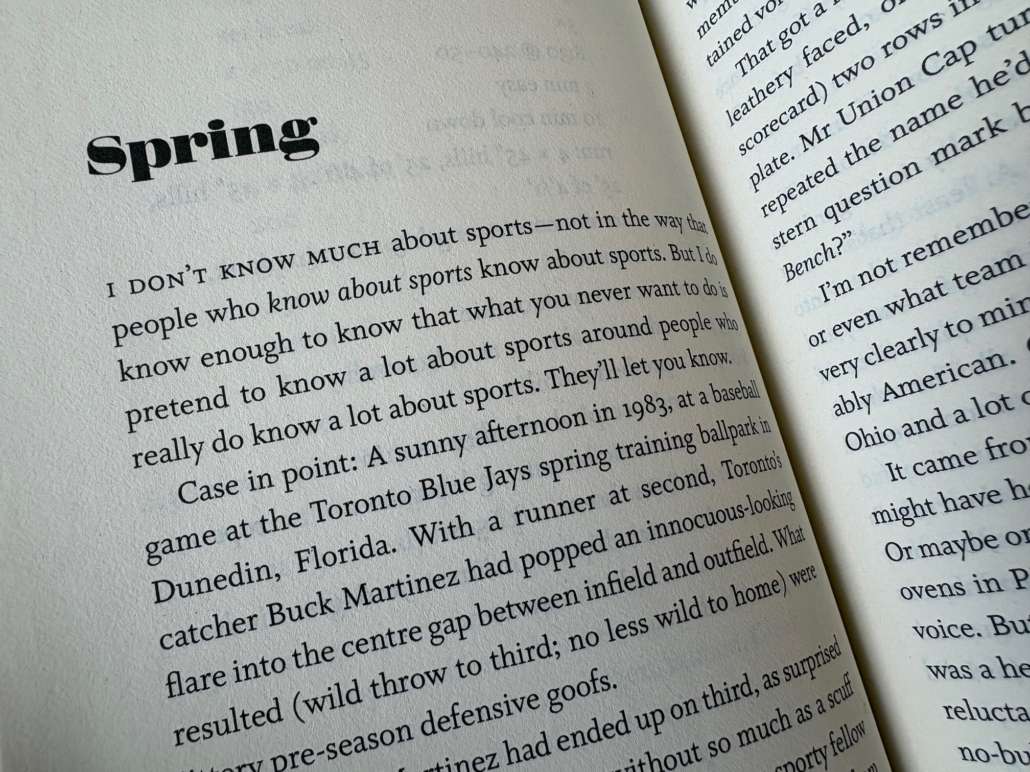
Interior of On Sports, featuring the chapter excerpted below.
I don’t know much about sports—not in the way that people who know about sports know about sports. But I do know enough to know that what you never want to do is pretend to know a lot about sports around people who really do know a lot about sports. They’ll let you know.
Case in point: A sunny afternoon in 1983, at a baseball game at the Toronto Blue Jays spring training ballpark in Dunedin, Florida. With a runner at second, Toronto’s catcher Buck Martinez had popped an innocuous-looking flare into the centre gap between infield and outfield. What resulted (wild throw to third; no less wild to home) were jittery pre-season defensive goofs.
As a result, Martinez had ended up on third, as surprised as anyone to be standing there without so much as a scuff of baseline dirt on his pants. That was when a sporty fellow (lime-green polo shirt, cargo shorts) a few rows down from my seat stood and shouted, “Attaboy, Buck.”
I don’t think Mr Lime-Green expected to be heard so clearly by so many people. His exclamation happened to coincide with a momentary pause in the cheering, as if all the happy Toronto fans were catching their breath at the same time. Mr Lime-Green was suddenly conspicuous.
Having inadvertently claimed the attention of the crowd, he felt compelled to say something more than “attaboy.” Baseball is a sport that traditionally demands a certain wit and knowledge from its more outspoken audience members. So Mr Lime-Green added, jauntily and with sustained volume, “Johnny Bench has got nothing on you.”
That got a reaction. Specifically, it got a reaction from a leathery faced, old-school baseball fan (UAW ball cap, scorecard) two rows in front of me, a little closer to home plate. Mr Union Cap turned slowly and deliberately. He repeated the name he’d just heard and affixed not just a stern question mark but also, somehow, italics: “Johnny Bench?”
I’m not remembering the game. I can’t recall who won, or even what team Toronto was playing. What I can bring very clearly to mind, though, is that voice. It was unmistakably American. Gravelly. Unadorned. At a guess, I’d say Ohio and a lot of Luckies.
It came from an older generation of voices—voices you might have heard on an aircraft carrier in the Pacific in ’43. Or maybe on the line at a Ford plant in Dearborn or the coke ovens in Pittsburgh after the war. It didn’t talk a lot, that voice. But it knew claptrap when it heard it. It knew who was a hero and who wasn’t. It was a voice that, when it was reluctantly put to use, had something to say. The voice of a no-bullshit collectivity of America that is, alas, long gone. Lost and by the wind grieved. Missing in the din of podcasts and comments and panel debate. That tough old Lucky Strike voice. Is there a sadder lyric in the American songbook than “Where have you gone, Joe DiMaggio?”?
For more on sports, check out David Macfarlane’s recent op-ed on hockey in the Globe and Mail.
Martinez getting to third without so much as a pro forma slide on a midfield bloop that should have been a single, if that, was the cause of giddy celebration among Blue Jays fan—which is to say, in Dunedin, almost everybody. A hometown crowd’s volume doesn’t distinguish much between crazy-good luck and skill. A stand-up triple is a stand-up triple.
I thought I heard something in the cheering that was more than robust applause. There was a cocky effervescence that I wasn’t sure I’d heard from a Toronto crowd before. To call it a swagger would be an exaggeration—an Americanization, in fact—but it was a happy assertion of Canadianness that you wouldn’t have heard from northern visitors to Florida of previous generations—especially in regards to something as American as baseball. At least that’s what I wrote in my article, although it should be taken into account that I was a magazine writer looking for a story and inclined, therefore, toward meaningful explanations of things that may have had no meaning at all. The crowd’s cheerfulness may only have been the burble of sun-screened holidayers. Toronto fans simply happy to be warm.
Mr Union Cap did not burst the bubble of the crowd’s enjoyment. He was on the funny side of serious, but only just. There was something good-natured in his gruffness, as if he recognized that he was a stock character—a curmudgeonly, old-school baseball fan of the sort who was (as I did not then realize) an endangered species.
Before the advent of powerful sound systems and giant screens, sporadic volleys of unscripted commentary bounced back and forth between fans in the stands. There were always a few such self-appointed colour commentators per section, some of whom were funny, some of whom were knowledgeable, some of whom were both. They had something to say in a sort-of public, sort-of performative way.
The first real baseball game I went to (meaning a game with lights, players in uniform, umpires, ads on the outfield fence, green grass, red-dirt base paths, and thirty-five cent admission) was in the summer of 1960, in Grand Falls, Newfoundland. I was eight years old, in the company of my grandfather. Not a small man. Rarely seen without battered fedora and briar pipe. Known by everybody in Grand Falls. He was, shall we say, a colourful figure, and his voice was a voice with audibility in a crowd—perhaps because it was a few octaves lower than most.
“No need for a mound,” he garumphed as Corner Brook’s lanky pitcher unfolded his beanpole of a frame from the visitors dugout. “Dig him a hole, lads. Dig him a hole.”
Not the funniest line in the world, but one that has stayed with me all my life because I think it was the first time I heard somebody talk like that—a joke, a comment, an observation, made at a volume intended for public consumption but as if in a living room of friends, which is how ball parks used to sound.
By the end of the Grand Falls game, I’d concluded that half the fun of baseball was what my grandfather said about the players on the field and what the people around us said to my grandfather.
A lost art—killed by the kiss-cam. Drowned-out by ads and promotions. But there was a time when the expression of deep baseball insight from somebody a couple of rows over was part of the general fun of a ball game. They were characters, those guys. It was hard to know with old-school baseball fans if they were acting like they were in a Damon Runyan story or that’s the way they really were.
Mr Union Cap had something to say. It was what you used to expect at a ball park—a voice that knew baseball cutting through the cheerful hubbub of a crowd. Possibly, the tremolo of excitement in the Dunedin stands that afternoon was only the fun (rare then, almost extinct now) of going to a non-blaring, non-big-screen-dominant, non-merch- selling, non-ad-blasting ballpark to watch ballplayers play baseball. On a nice spring day. Undistracted by electronic loudness and pixelated screens and ads and contests and walk-up songs and who knows what all.
Photo: David Macfarlane.
My friend, the writer Alison Gordon, who died unexpectedly in 2015, covered the Blue Jays for the Toronto Star for five seasons. (By way of establishing Gordon’s unusual range of life experiences, I shall here insert a segue-defying biographic detail: Some years before Alison Gordon became the first female reporter in the American League, she was in the hotel bedroom in Montreal with Yoko Ono and John Lennon when they recorded “Give Peace a Chance.” One of those voices is hers.)
Gordon had her likes and dislikes, and much as she loved baseball she didn’t care for the bombast of a contemporary ballpark. She once proposed to Blue Jays executives that a single home-game per season be designated Old-Fashioned Day and the ballpark be allowed to sound like ballparks used to. Ballparks where you could say something, if, that is, you had something to say. Ballparks where you could cheer when you felt like cheering. And jeer when you felt otherwise.
And what happened to her proposal, I asked her at the last baseball game we attended together. She passed me the unshelled peanuts while Mötley Crüe or AC/DC or Metallica loudly walked-up the next batter. What do you think happened, she shouted pleasantly.
A quaintly lower decibel level was one of the things that made spring training so much fun. Those old Florida ballparks were smaller, friendlier, quieter, more intimately idiosyncratic.
Spring training was a magical idea. It was proof to the skeptical Canadian that, even though it might seem otherwise (in the north, in February) planet earth wasn’t frozen in space. Winter, as far as Alison Gordon was concerned, was the dark side of the moon—a time to sip a whisky by the fire, talk with friends, laugh, and wait for the season to turn. As it would, of course. Eventually. But spring came earlier in Florida than it does in Toronto. It used to be fun to meet it at a ball game.
The Passenger Seat by Vijay Khurana has been flying through one round after another in the 2026 Tournament of Books! This morning itwon the Zombie Round and will advance to the Championship final. Go Vijay!
Cherry Beach by Don Gillmor received a starred review in Kirkus: “Gillmor really knows his stuff—in a dazzling range of areas. A layered portrait of a changing city in the guise of a gripping crime novel, for fans of Tana French and Dennis Lehane.”
Silver Lakeby Alex Pugsley (The Aubrey McKee Novels #3) also received a review in Kirkus: “Pugsley’s tone throughout is wry and self-aware, the ideal combination for capturing Aubrey’s mix of ambition and angst . . . A smart, witty Hollywood tale.”
Smash & Grab: Stories by Mark Anthony Jarman was reviewed in the Winnipeg Free Press: “Jarman continues his mastery of the form, with seemingly no limits to his fervid imagination . . . brilliantly and seamlessly tackling any genre, from memoir to offbeat sci-fi to manic surrealism.”
https://www.biblioasis.com/wp-content/uploads/2024/08/unnamed-scaled.jpg6172560biblioasishttp://biblioasis.com/wp-content/uploads/2014/12/BIBLIOASIS-Logo-500x500-White-300x300.pngbiblioasis2026-03-27 11:41:002026-04-24 11:52:04The sound of the crowd
“Ira Wells offers direct and incisive writing that brings suppressed voices into the light and challenges readers to question the moral authority of censorship. Refusing both academic detachment and easy provocation, Wells presents rigorous research with clarity and balance, pairing the ridiculous with the brilliant. His work is passionate and compassionate, inviting sustained reflection on freedom, responsibility, and the imperfect humanity behind all writing, and leaving readers with a deeper, more self-aware engagement with literature.”
About On Oil, the jury wrote:
“At once a memoir, a meditation, and a polemic, Don Gillmor drills deep into one of Canada’s most controversial natural resources in On Oil. Drawing on his experience as a roughneck during the 1970s Alberta oil boom, he explores the central role the petroleum industry plays in Canadian politics and business. Stories from Gillmor’s life on the rig ground his examination of the ongoing tension between oil as a driver of prosperity and values held by many other Canadians. With humour and polite insistence, Gillmor asks the questions that are at the heart of Canada’s relationship with its resource bounty.”
The two books are part of the Biblioasis Field Notes series, which explores timely issues of public interest and features writers and thinkers from a range of disciplines: philosophy, public policy, history, economics, cultural criticism, and more.
The annual $40,000 prize, now in its 26th year, recognizes literary nonfiction about a political subject that is relevant to Canadian readers. The winner of this year’s prize will be announced in Ottawa at the Politics and the Pen gala on April 29.
A Finalist for the 2026 Writers’ Trust Shaughnessy Cohen Prize for Political Writing • A Winnipeg Free Press Best Book of 2025
The freedom to read is under attack.
From the destruction of libraries in ancient Rome to today’s state-sponsored efforts to suppress LGBTQ+ literature, book bans arise from the impulse toward social control. In a survey of legal cases, literary controversies, and philosophical arguments, Ira Wells illustrates the historical opposition to the freedom to read and argues that today’s conservatives and progressives alike are warping our children’s relationship with literature and teaching them that the solution to opposing viewpoints is outright expurgation. At a moment in which our democratic institutions are buckling under the stress of polarization, On Book Banning is both rallying cry and guide to resistance for those who will always insist upon reading for themselves.
Ira Wells is a critic, essayist, and an associate professor at Victoria College in the University of Toronto, where he teaches in the Northrop Frye stream in literature and the humanities in the Vic One program. His writing has appeared in The Atlantic, Globe and Mail, Guardian, The New Republic, and many other venues. His most recent book is Norman Jewison: A Director’s Life. He lives in Toronto with his wife and children.
A Finalist for the 2026 Writers’ Trust Shaughnessy Cohen Prize for Political Writing
A journalist, and former roughneck, considers our long, complex, tortured relationship with oil.
Oil has dominated our lives for the last century. It has given us warmth, progress, and life-threatening pollution. It has been a gift and is now a threat. It has started wars, ended wars, and infiltrated governments—in some cases, effectively become the government. And now oil’s enduring mythology is facing a messy, complicated twilight.
In On Oil, Don Gillmor, who worked as a roughneck on oil rigs during the seventies oil boom in Alberta, looks at how the industry has changed over the decades and illustrates the ways our dependence on oil has led to regulatory capture, in Canada and elsewhere, and contributed to armed conflict and war across the world. Gillmor documents the myriad ways that oil companies have misdirected environmental action and misinformed the public about climate concerns and illuminates where we went wrong—and how we might yet change course.
Don Gillmor is the author of To the River, which won the Governor General’s Award for nonfiction. He is the author of five novels, Cherry Beach, Breaking and Entering, Long Change, Mount Pleasant, and Kanata; a two-volume history of Canada, Canada: A People’s History; and nine books for children, two of which were nominated for the Governor General’s Award. He was a senior editor at The Walrus, and his journalism has appeared in Rolling Stone, GQ, Saturday Night, Toronto Life, the Globe and Mail, and the Toronto Star. He has won twelve National Magazine Awards and numerous other honours. He lives in Toronto.
https://www.biblioasis.com/wp-content/uploads/2026/03/writers-trust-scp.png8002000biblioasishttp://biblioasis.com/wp-content/uploads/2014/12/BIBLIOASIS-Logo-500x500-White-300x300.pngbiblioasis2026-03-18 17:03:172026-03-18 17:03:37ON BOOK BANNING and ON OIL finalists for the 2026 Writers’ Trust Shaughnessy Cohen Prize!


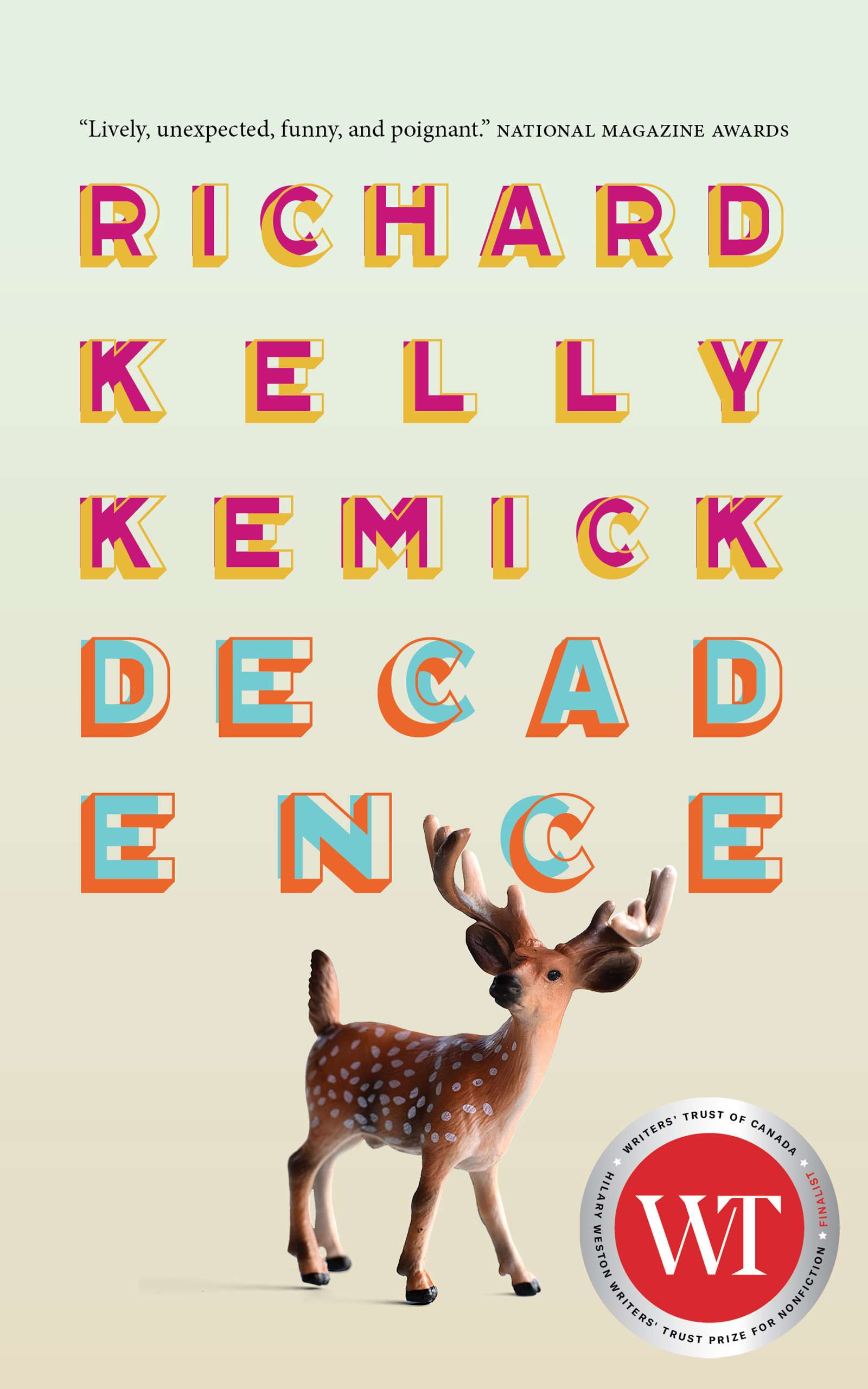 Biblioasis is thrilled to share that Decadence by Richard Kelly Kemick has been announced as a finalist for the 2026 Hilary Weston Writers’ Trust Prize for Nonfiction! You can check out all five finalists here.